These business casual outfits for fall include a denim jacket over a shirt dress and leather blazer suiting that benefits from tailoring, and the deciding factor is how strictly your office interprets the term.
For the most relaxed workplaces, a midi shirt dress in olive cotton with a wide belt handles temperature swings; a brown leather blazer over a full black suit with slim tie satisfies environments where jackets are still expected.
1. Casual Work Dresses
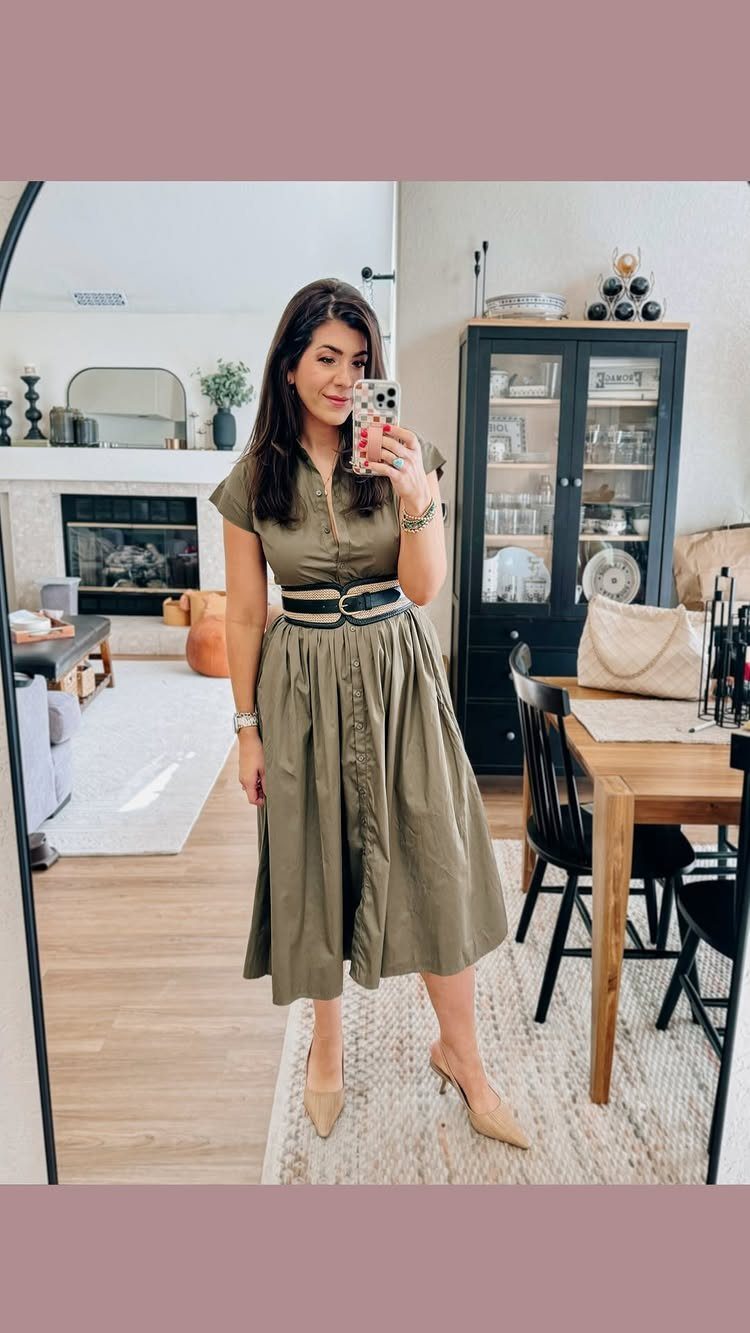
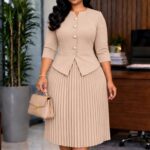
A midi shirt dress in a solid color or subtle pattern handles the temperature swings of fall offices without looking like you tried too hard.
Olive reads as neutral without being boring, and a wide belt keeps the shape from going sack-like on smaller frames.
I reach for cotton or a cotton blend with a bit of structure; anything too clingy or too stiff fights you all day.
A short sleeve works under a cardigan now and comes into its own when the heat kicks on mid-afternoon.
If your office leans casual, a denim jacket on top and loafers below dial the formality back without crossing into weekend territory.
For stricter environments, swap the slingback for a closed-toe pump and add a thin turtleneck underneath once November hits.
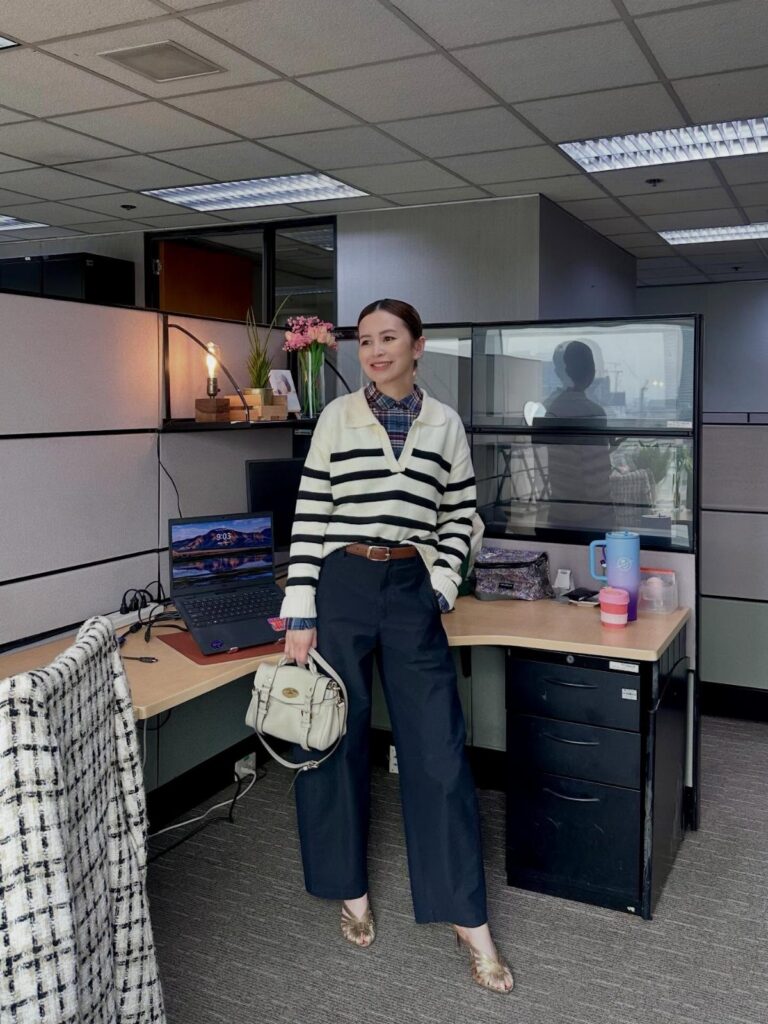
2. Wide Leg Trousers
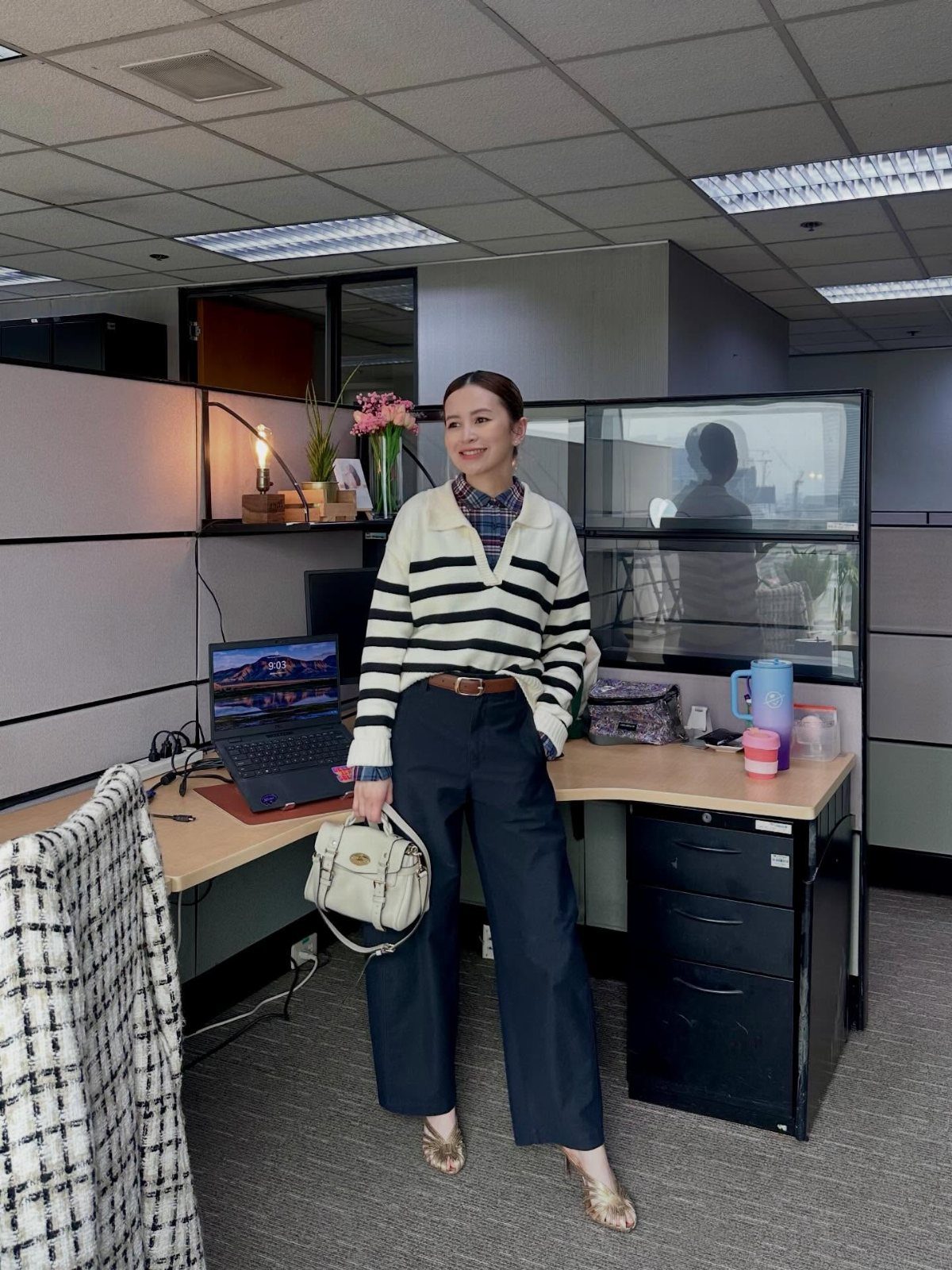
A high waist pairs with a cropped sweater without exposing anything, and the width balances a heavier knit on top.
I like them in a heavier cotton twill or lightweight wool for fall; the fabric needs enough body to hold the line from hip to hem or the silhouette collapses into a shapeless column.
A striped polo layered over a plaid shirt gives the look more interest than a standard blouse, and the combination works because both patterns share a color family.
For a more polished take, a collarless blazer in a soft fabric keeps the outfit from feeling like a costume from a power-dressing manual.
The key fit point is the waistband: too tight and you will not sit comfortably through morning meetings; too loose and the trousers pool at the ankle in a way that reads sloppy, not relaxed.
3. Oversized Blazer
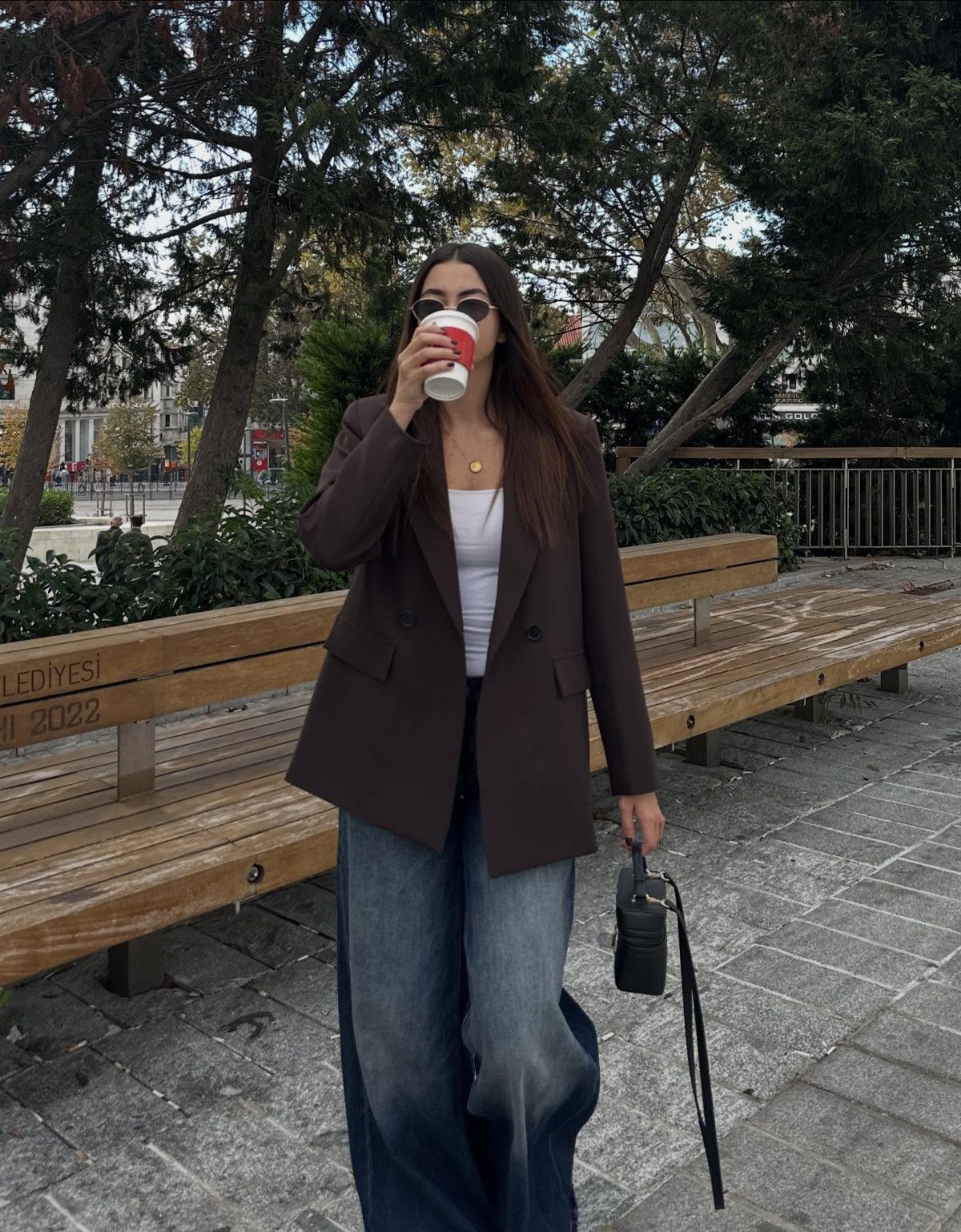
A brown blazer that hits mid-thigh is the length that actually works with wide-leg jeans rather than fighting them.
I look for one with a small percentage of elastane or a similar stretch fiber; without it, the extended cut restricts your arms when you reach for a coffee or a train pole.
The extra room through the body means you can layer a thin knit underneath in October and a heavier one by December without sizing up.
I treat this as my bridge piece between weekend and weekday.
Over a white tee and jeans with a structured bag, it passes for most offices that allow denim; over the same tee with sneakers, it reads as intentional rather than borrowed.
The danger is letting "oversized" become "swallowed." If the shoulder seam hangs more than an inch past your natural shoulder, the jacket is wearing you.
4. Blazers with Jeans
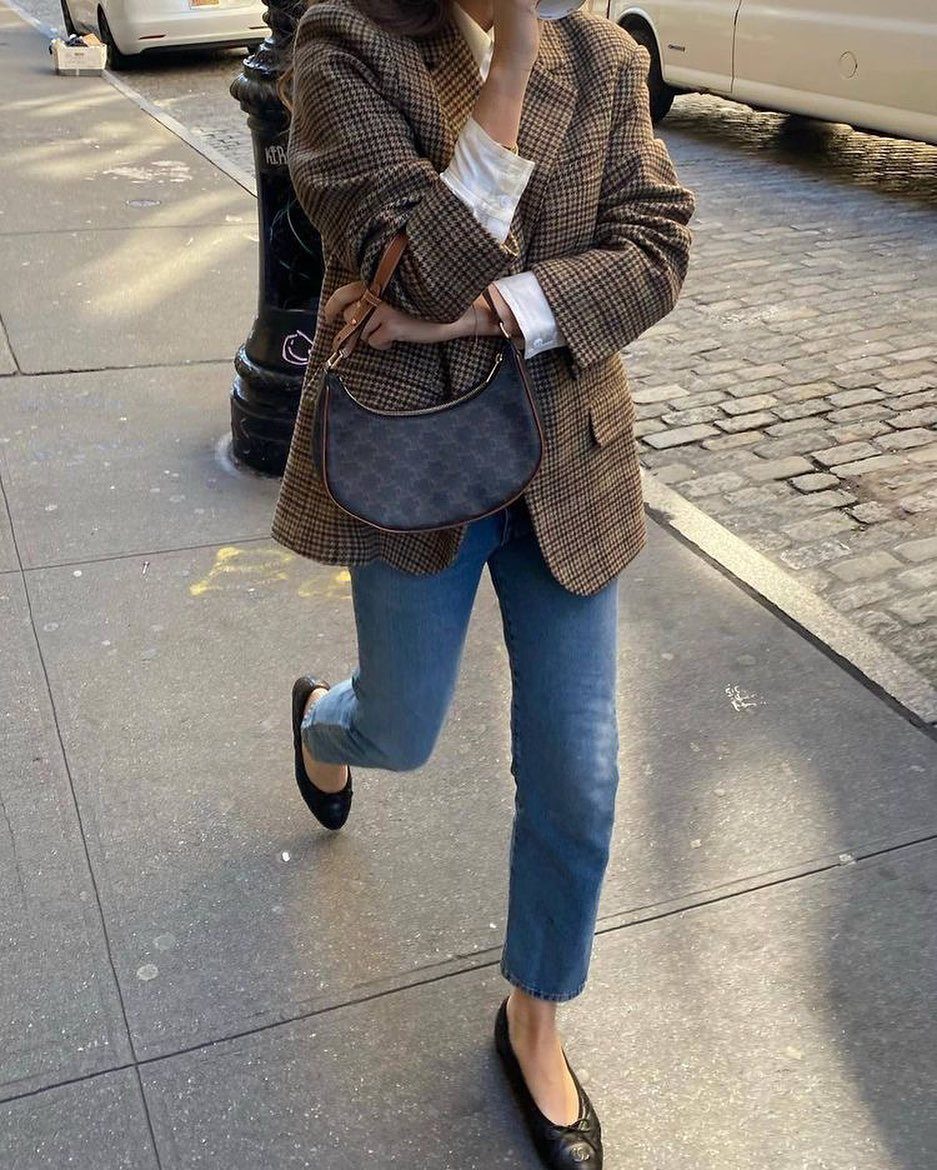
A houndstooth or plaid blazer above dark cropped jeans pulls the casual element toward the office without stranding you in either world.
The structured shoulder and nipped waist of a traditional blazer does the heavy lifting here; the jeans just need to be dark enough and neat enough that they do not read as Saturday afternoon.
I avoid any wash with heavy fading or distressing, and I hem them to show a sliver of ankle, which keeps the line clean with a flat shoe.
A ballet flat is a practical choice for commuting, but a low block heel or a pointed slingback sharpens the look for days with client meetings.
A simple white shirt underneath avoids competing with the pattern; let the blazer be the statement and keep everything else quiet.
Collarless blazers are having a moment this fall, and for good reason. Softer and more feminine than a traditional blazer, they still add an air of polish and professionalism to any look.
— Vogue
5. Monochrome Outfits
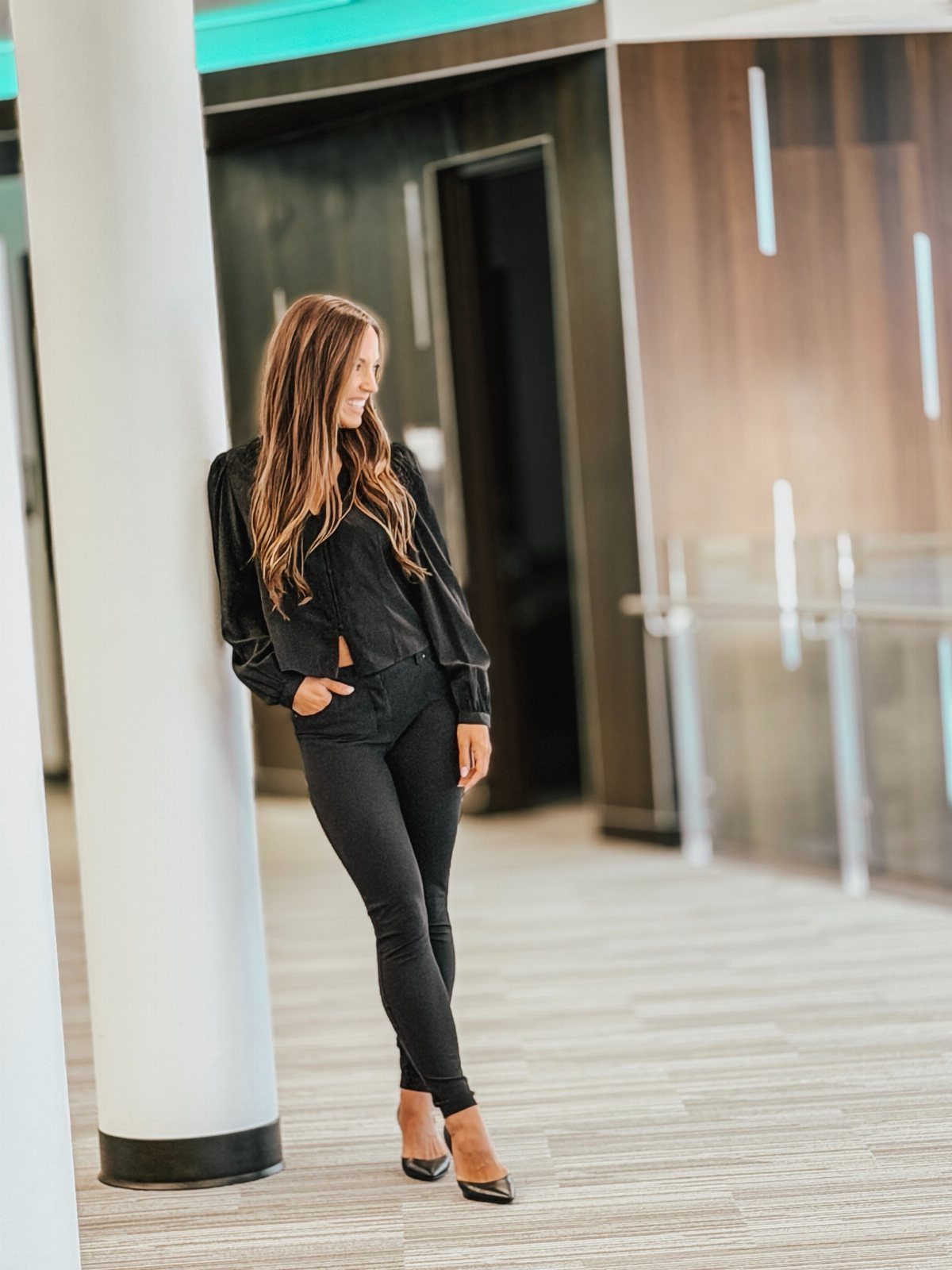
Head-to-toe black streamlines your morning decision-making and disguises the fact that your trousers came from a different store than your top.
A skinny cut works with a tucked or half-tucked knit to define a waist, though I find this silhouette suits straighter figures best; curves can disappear into a column of one color without some architectural detail like a peplum or a belt to break the vertical.
For fall, I vary the textures to keep it from reading as funeral attire: a matte jersey top against a slight sheen on the trousers, or a ribbed knit against smooth crepe.
The pointed toe of a heel or flat extends the leg line, which matters more when there is no color change to mark where your foot begins.
If you tire of black, navy or charcoal works the same way and shows less lint.
6. Suede Jackets
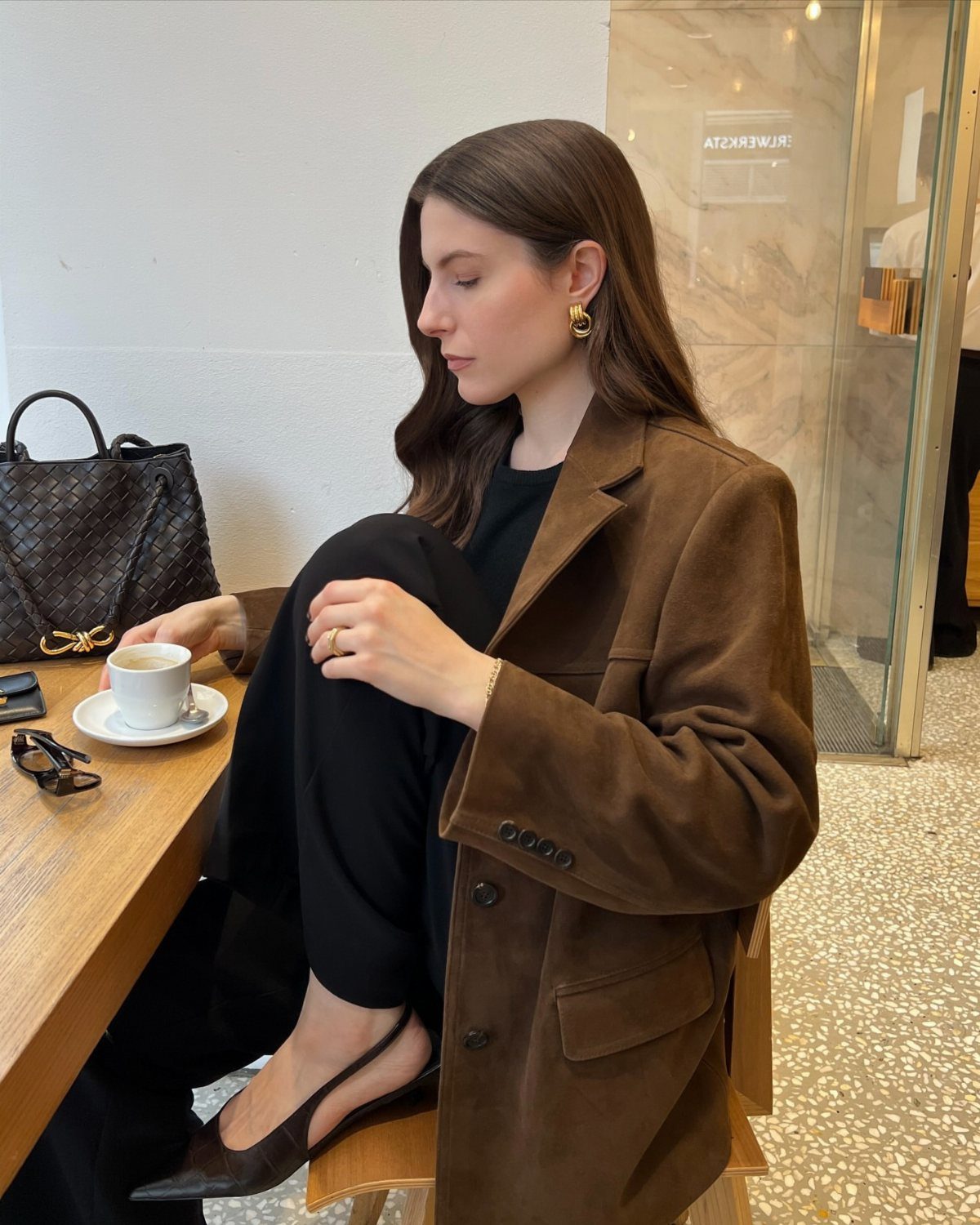
Suede reads as softer and less aggressive than leather, which makes it easier to wear in offices that tolerate casual outerwear but draw the line at motorcycle styling.
Brown suede pairs with black without the stark contrast of black leather against black trousers, and the matte surface catches light differently throughout the day in a way that keeps the look alive.
I treat mine as a blazer replacement on mild fall days. A cropped length at the hip works with mid-rise or high-rise trousers; a longer suede jacket risks reading as a costume piece unless your office is genuinely creative.
Suede needs more care than leather: water stains it permanently, so I check the forecast before committing and keep a soft brush in my desk drawer for midday touch-ups.
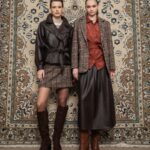
A midi skirt with a longer hemline, borrowed from a more ’70s-inspired take, is an option if your office runs formal and the jacket alone feels too casual.
7. Leather Blazer Layering
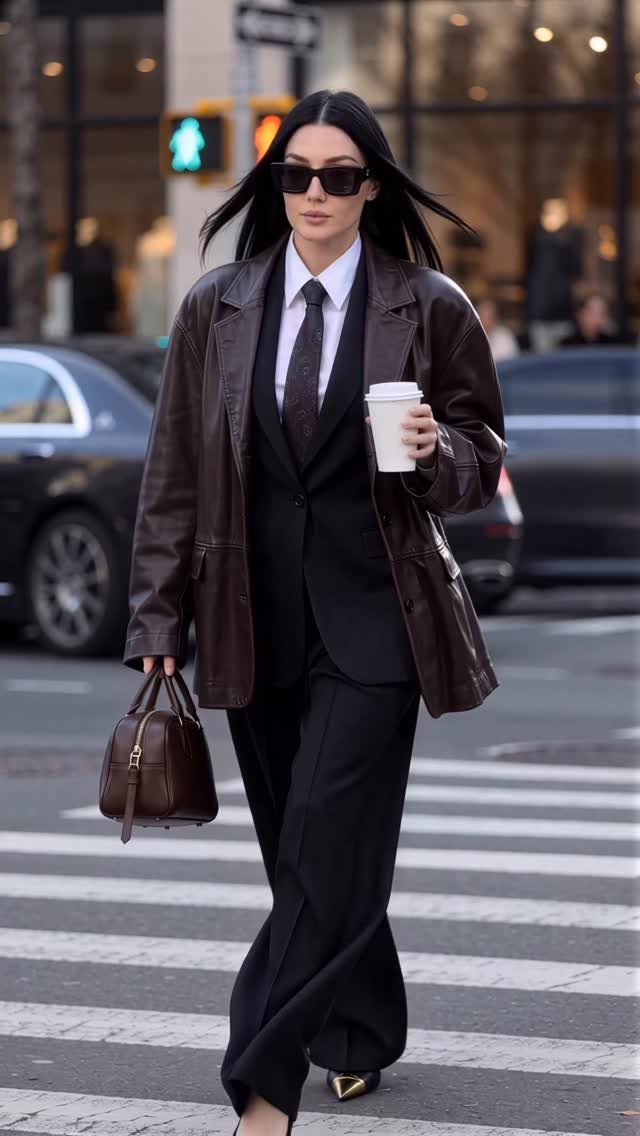
A brown leather blazer over a black suit with a slim tie gives you the structure of traditional suiting with a texture that reads as deliberate rather than rebellious.
The leather replaces wool without abandoning the shape your office expects, and the matte finish keeps it from looking like you are headed to a concert after work.
I prefer this to black leather, which can feel stark against office neutrals and draws more attention than a Tuesday morning needs. Brown sits with charcoal, navy, and black trousers without the high-contrast clash.
The fit matters here because a leather jacket won’t give the way a softer fabric will, so the shoulders and sleeves need to sit right when you try it on.
If your office leans conservative, keep the rest of the suit tailored and the accessories minimal; a structured handbag and clean sunglasses finish the look without pushing it further toward fashion editorial than your commute allows.
For days when a full suit feels like too much, the same blazer over a white button-down and slim trousers carries the edge without the formality.
Color Coordination
Two neutrals plus one accent color builds a fall office wardrobe that mixes without much thought.
One printed piece in a business casual outfit reads as personality; head-to-toe print tends to read louder than most offices need. I like burgundy flats for the accent, or a deep green bag if shoes feel like too much commitment.
Navy works as a near-neutral, though I keep it separate from black unless the piece is intentionally bridging the two. Gold reads as jewelry rather than clothing color and warms up a neutral base without demanding attention.
Dress Code Flexibility
There is no single national standard, and American offices use the term loosely enough that watching what actually gets worn beats reading the handbook.
Law and finance lean closer to formal: matched sets, closed-toe heels, jackets required. Tech and creative land nearer casual: clean jeans, neat sneakers, optional layers.
Most workplaces fall in the middle, where trousers and a collared top or clean knit pass and the jacket is optional rather than expected. Offices that only ‘dress down’ on Fridays run stricter than the term business casual usually suggests.
Comfort Vs. Style
A matching set gives cohesion without working for it; even simple pieces read as intentional when the fabric and color line up.
The uniform feel is real, so a blazer layered on top or a different shoe breaks it enough for my taste.
Fabric choice matters more in a minimal outfit than most people credit: a quilted vest against tailored chinos with rolled sleeves and loafers lands understated where the same pieces in cheaper cloth would read as bland.
Weight and weave matter to me because nothing undermines polish like a knit that bags at the knees or a trouser that creases to the calf by 3 PM.
The rolled sleeve and the loafer are small moves, but they are the line between looking like you dressed yourself and looking like you were dressed by a handbook.