These 9 ideas run from cotton poplin shirtdresses to belted long-sleeve midis, and the one that belongs in your closet depends on whether your office leans toward blazer-level formality or sweater-level warmth.
A thin merino cardigan under a boyfriend blazer handles the thermostat wars of November through March without adding bulk, and that layering trick works best with the structured denim midi and belted long-sleeve pieces that keep their shape through the day.
1. Cotton Poplin Shirtdress
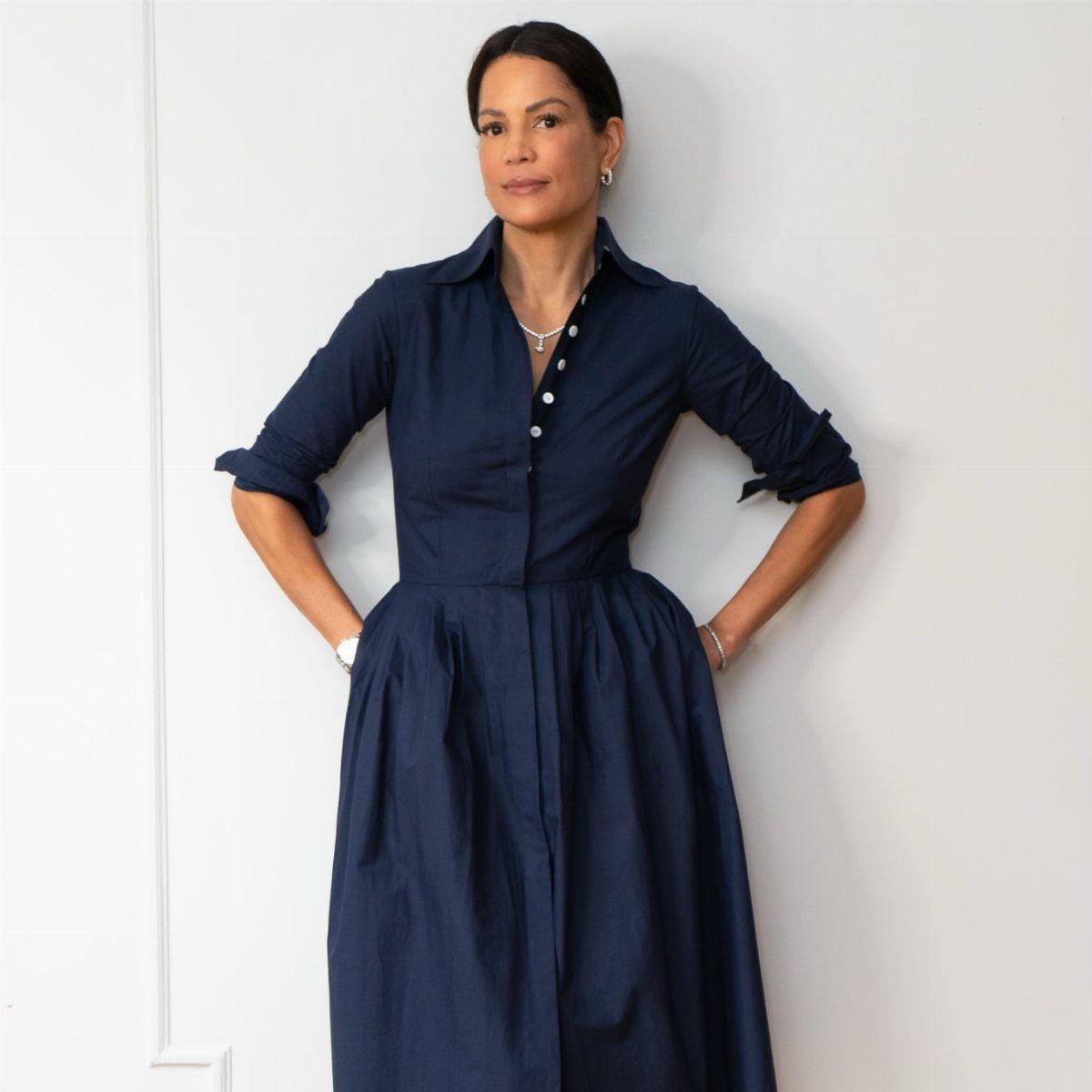
A cotton poplin shirtdress carries its own structure so you do not have to think too hard in the morning. A drawstring waist lets you cinch the fit yourself, no belt required.
Quince makes one in enough colors that you can find a navy that reads office-appropriate rather than weekend.
The tie sits at the back, which keeps the front looking clean for meetings. For chillier commutes, knee-high boots underneath add coverage without changing the dress itself.
Size down if you are between sizes; poplin does not stretch and a too-loose waist defeats the point.
2. Structured Denim Midi Dress
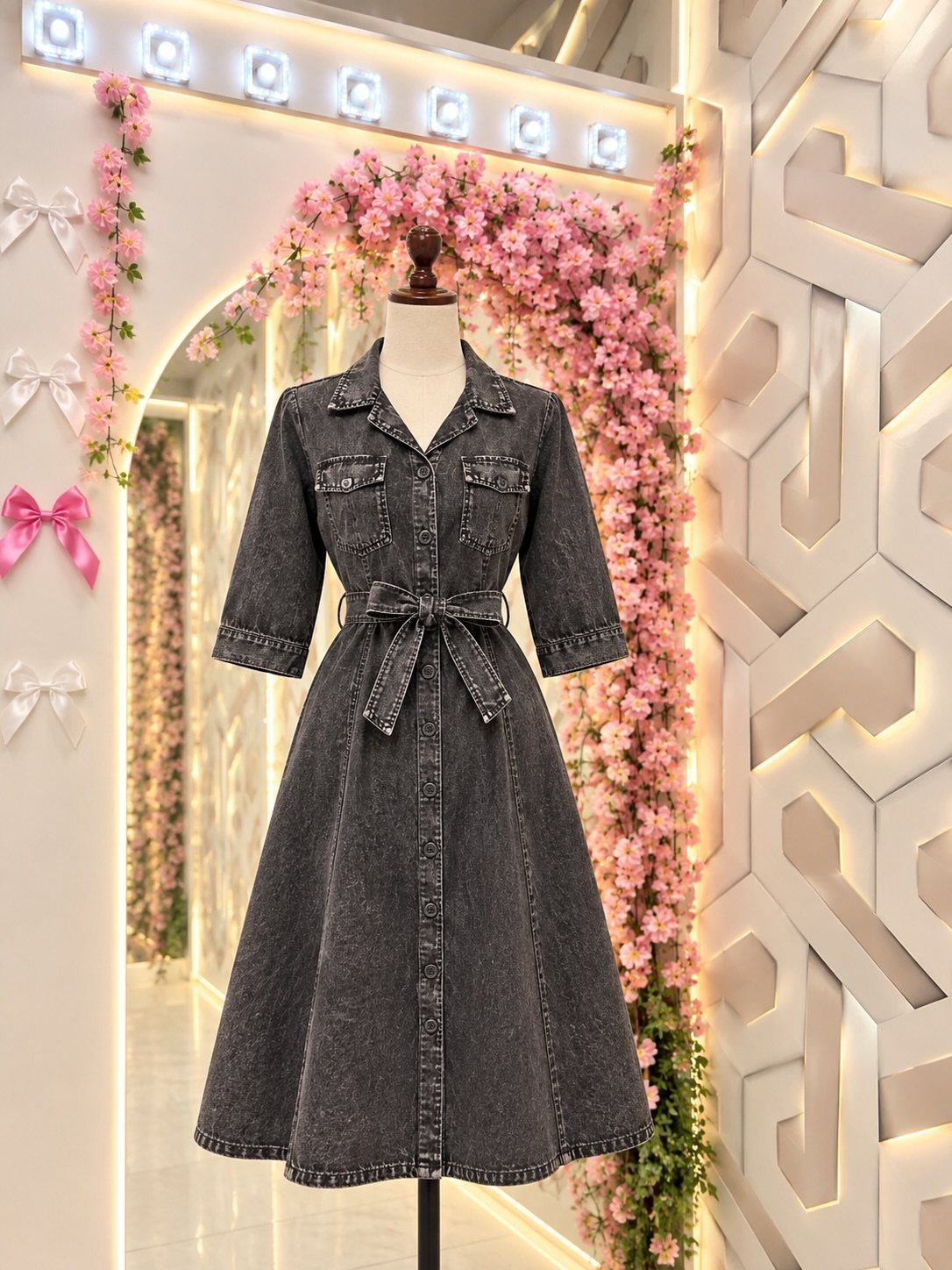
Structured denim works for fall offices when the cut borrows from tailoring rather than weekend wear. The dark wash and collar handle most of the polish on their own.
What to check before buying: the fabric weight. Heavier denim keeps this structure through the day; lighter weights go slack and look off-duty by lunch.
A built-in belt removes one decision, though I would still layer a jacket for warmth and wear leather boots that can take real weather.
3. Ruched Cowl-Neck Dress
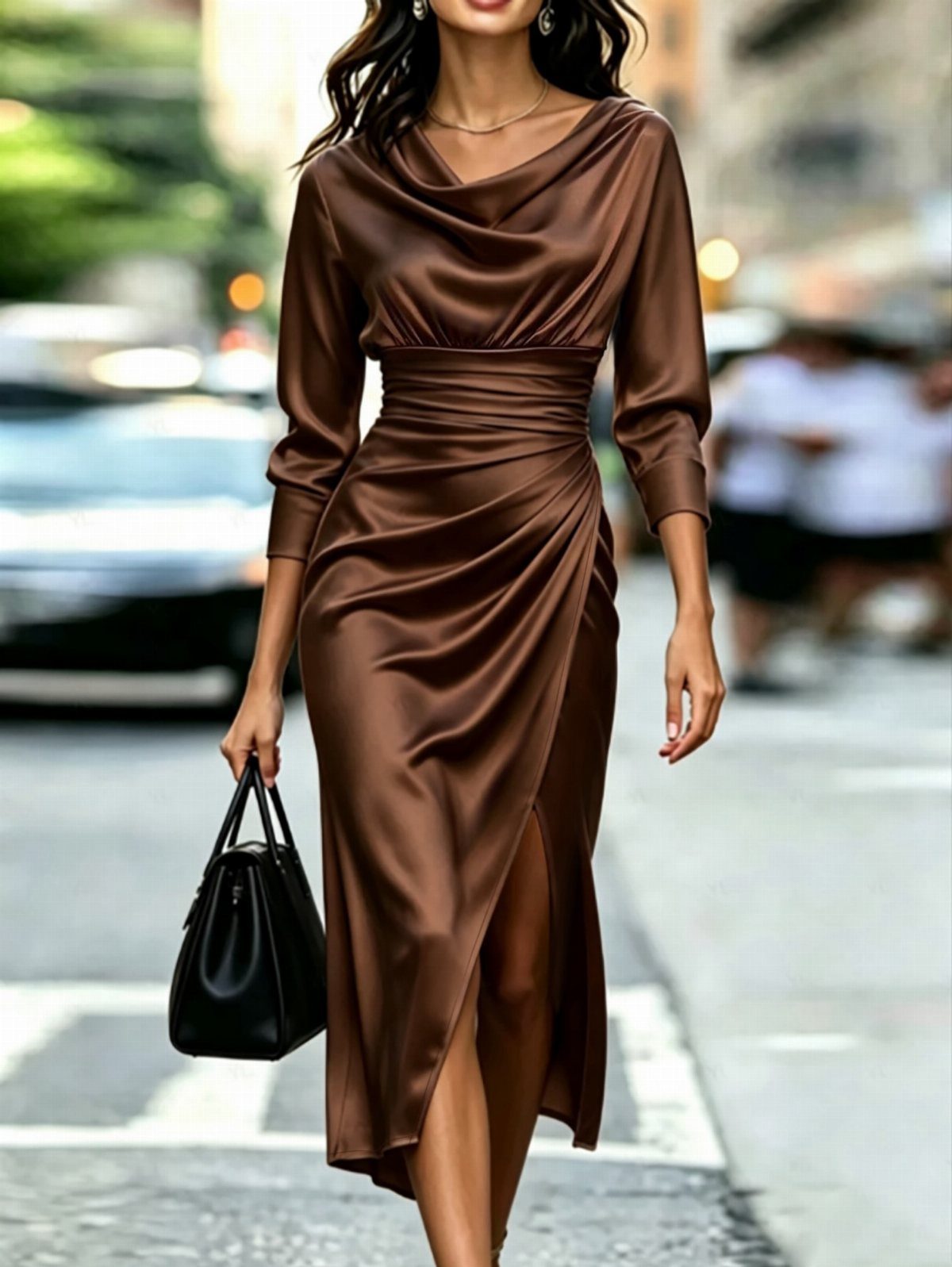
Chocolate satin reads richer than black under office fluorescents, and the ruching along the sides gives you shape without requiring a separate layer.
The cowl neck sits high enough here that you will not be adjusting it through a presentation.
A trench coat handles the commute; that slit needs tights once it drops below 60. I would reach for boots with a low block heel for city walking, since the dress length already does the formal work.
4. Sweater Dress
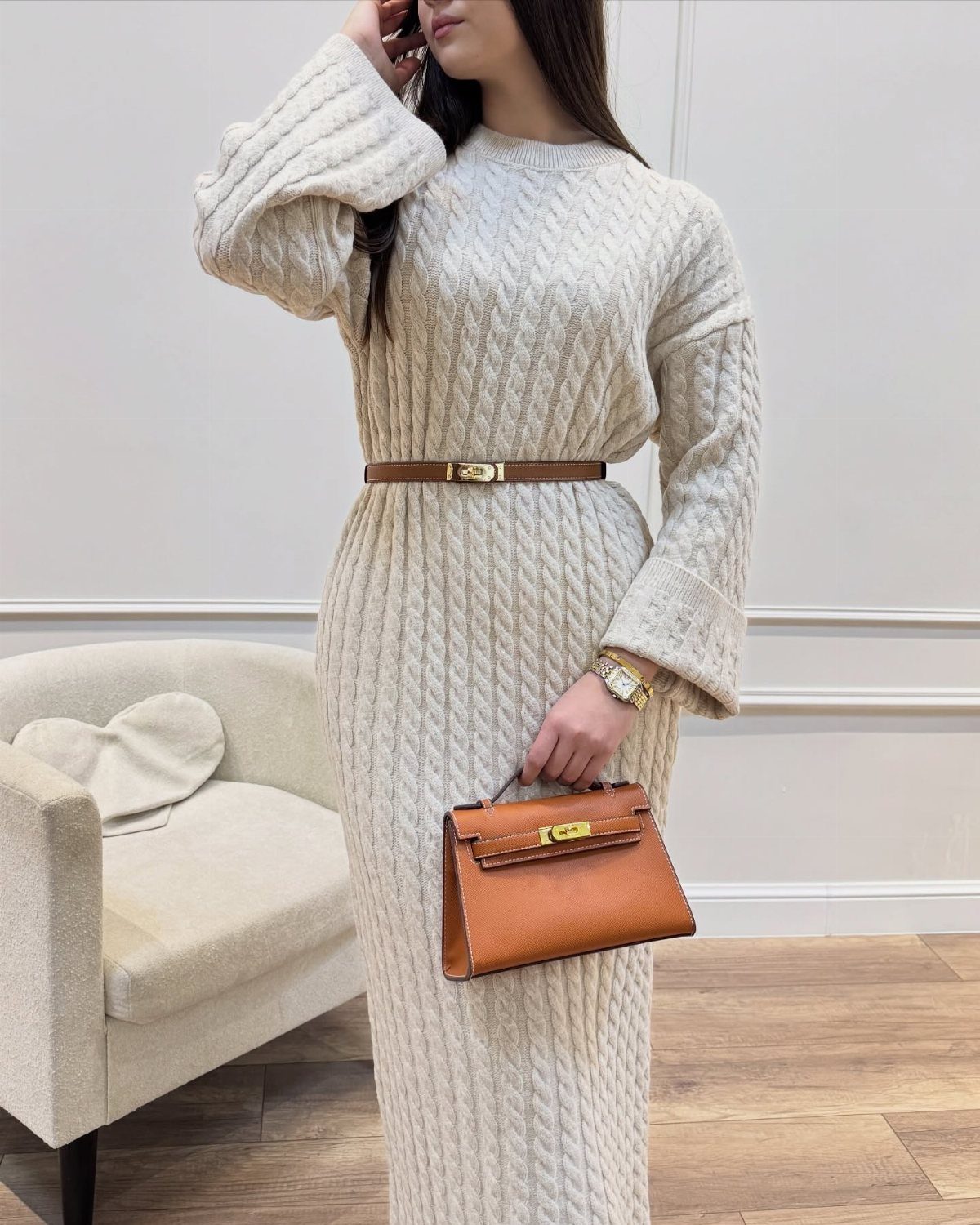
Cable knit as a full dress can go bulky fast, which is why the belt matters more than the accessory usually does. It breaks the volume at the waist so the shape reads intentional, not borrowed from a blanket.
Look for a fit that skims rather than clings; you want room for a thin base layer underneath when the office heater overcorrects.
A matching knit layer on top is an option some brands sell separately if you want the set.
5. Wrap Dress
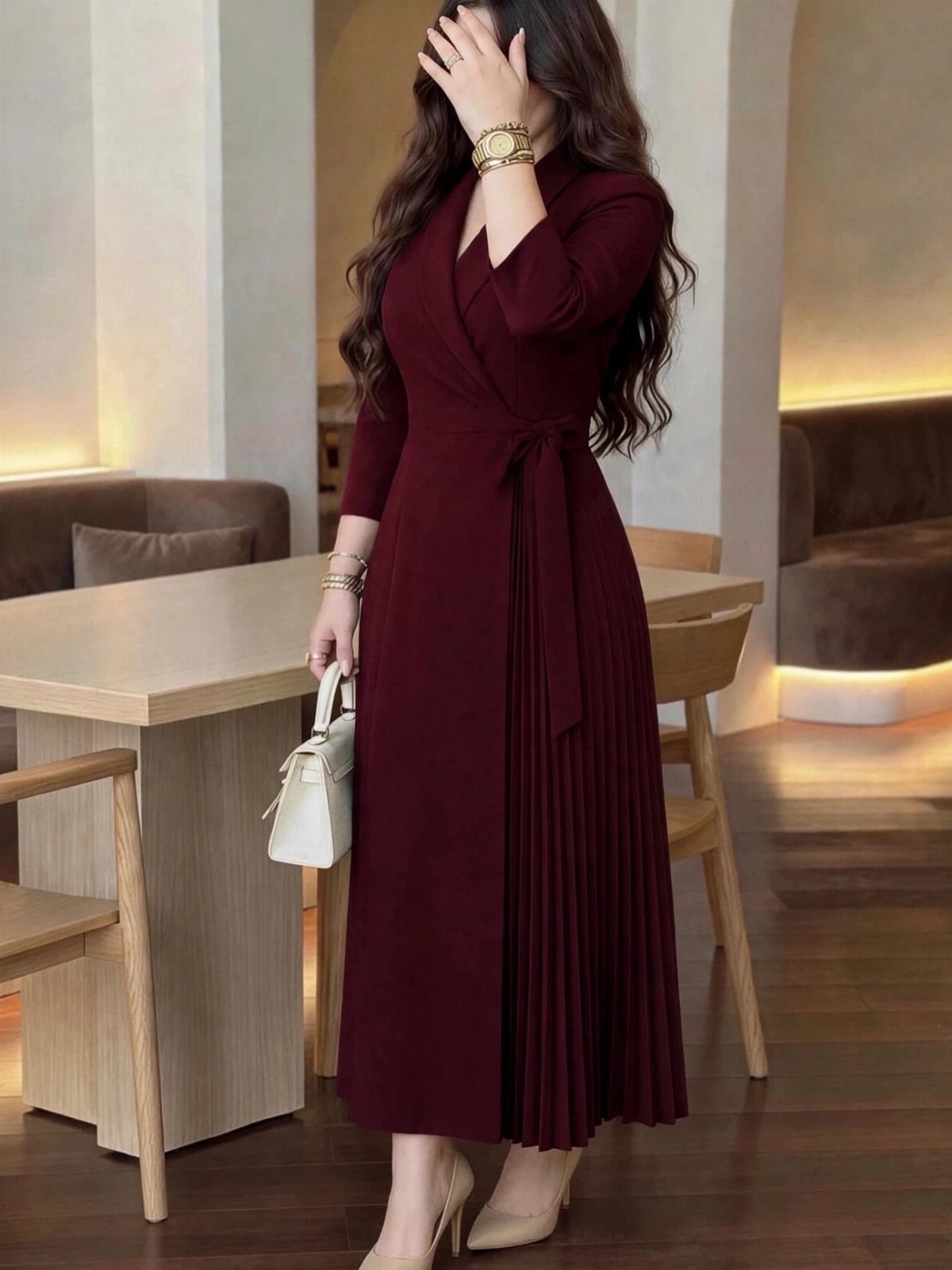
The wrap dress survives as an office staple because the closure adjusts with you through a day of sitting, standing, and lunch that never lands exactly at one. Burgundy says fall without tipping into holiday territory.
A windowpane or small check print freshens the shape if you have already owned 3 solid versions. A small structured bag keeps the look pulled together for client meetings.
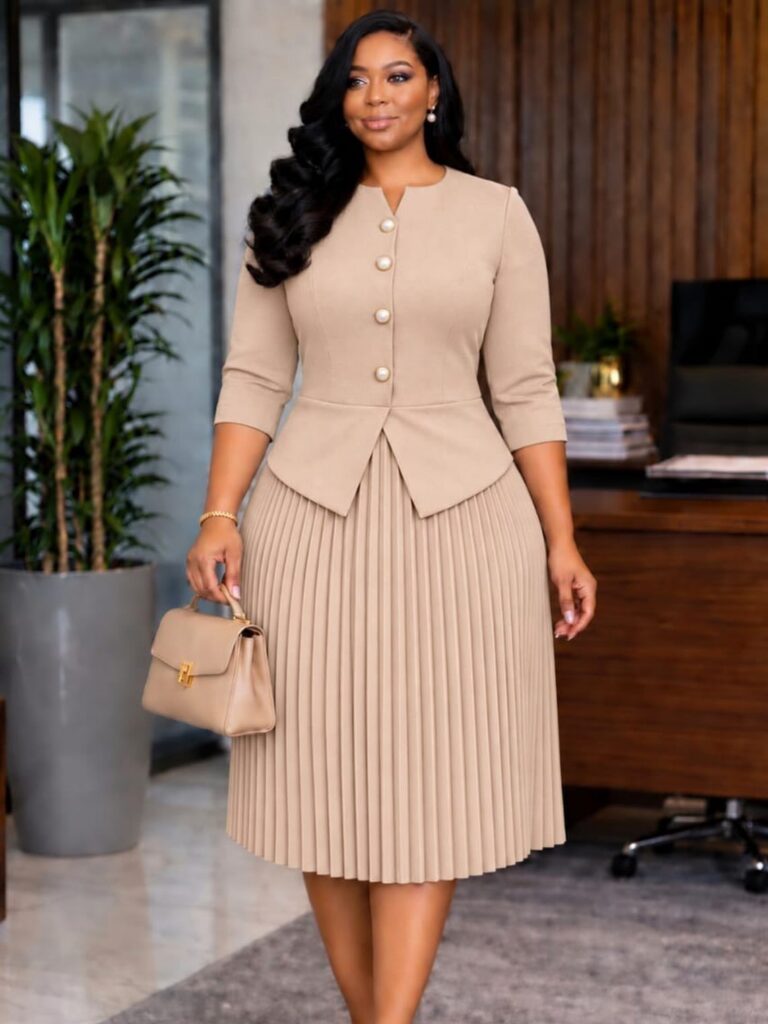
6. Pleated Burgundy Midi Dress
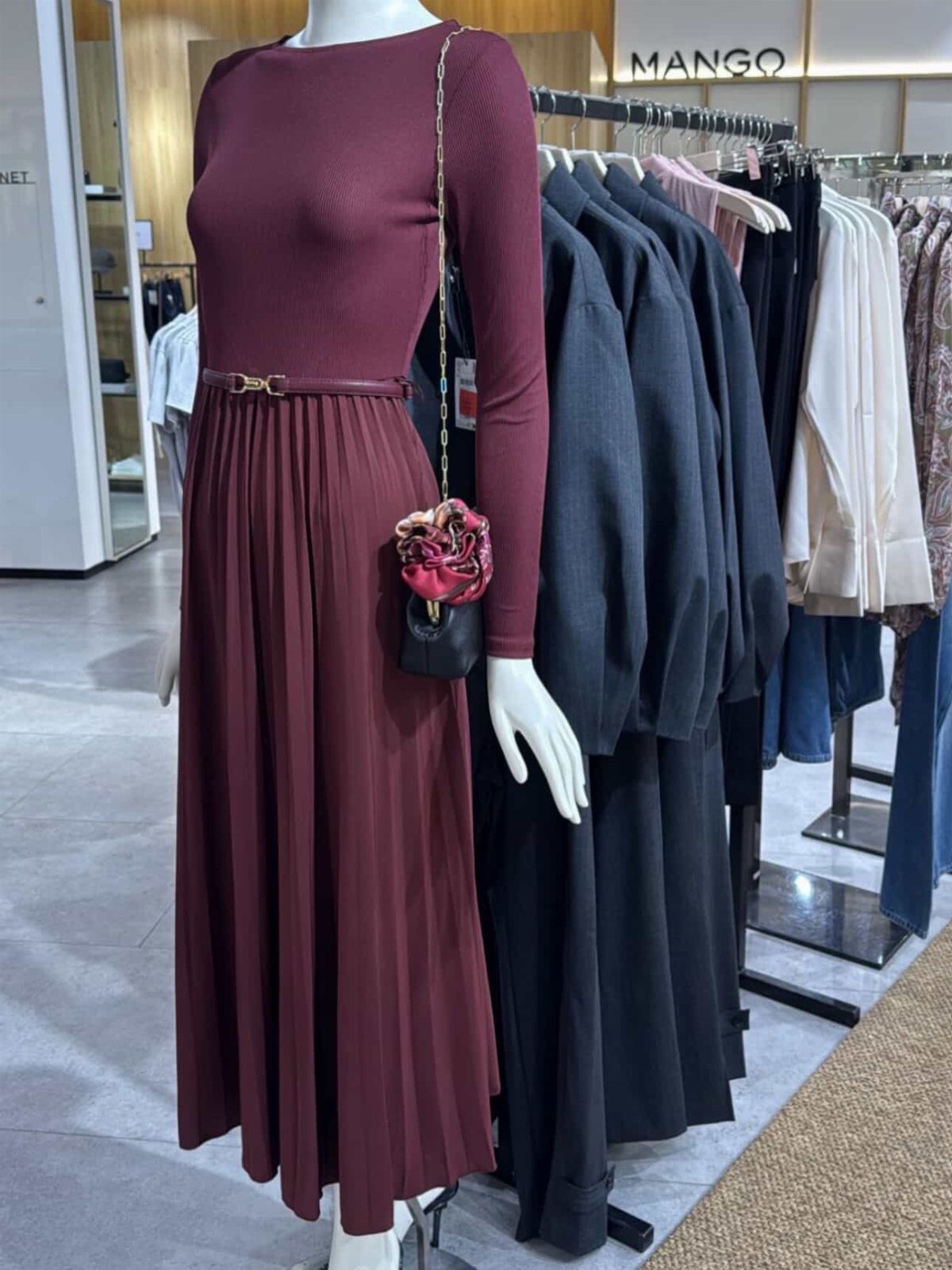
Fine pleats need a belt to anchor them, or the volume below the waist can overwhelm a petite frame. The thin matching belt on this version solves that without adding a second color to coordinate.
Burgundy pairs with navy or charcoal outerwear more easily than true red, and the long sleeves mean you are not negotiating a cardigan over the shoulders all day.
If your office runs warm, the fabric weight is worth testing; some pleated synthetics trap heat. I would wear this with closed-toe pumps or a low boot, saving open styles for when the hemline hits above the knee.
7. Bow-Neck Floral Midi Dress
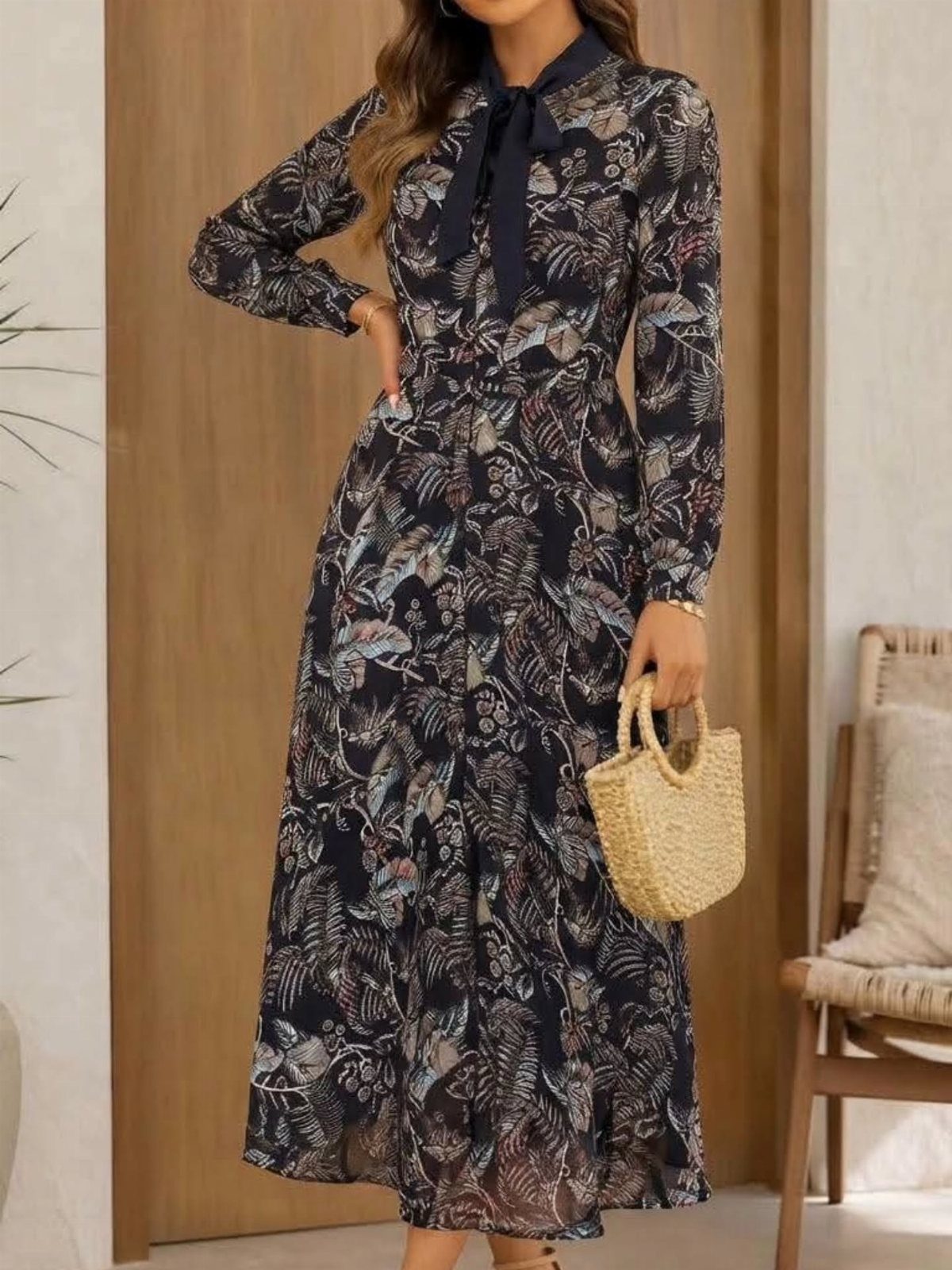
A bow-neck floral midi dress carries print to the office when the background stays dark and the tie sits high enough to read as collar, not accessory. The long sleeves handle fall temperatures without a cardigan.
Small-scale florals on navy or black feel easier to wear repeatedly than large blooms.
Check that the neck tie is attached; a separate scarf becomes one more thing to adjust before a meeting. A structured bag keeps the line intentional.
8. Vertical Striped Shirt Dress
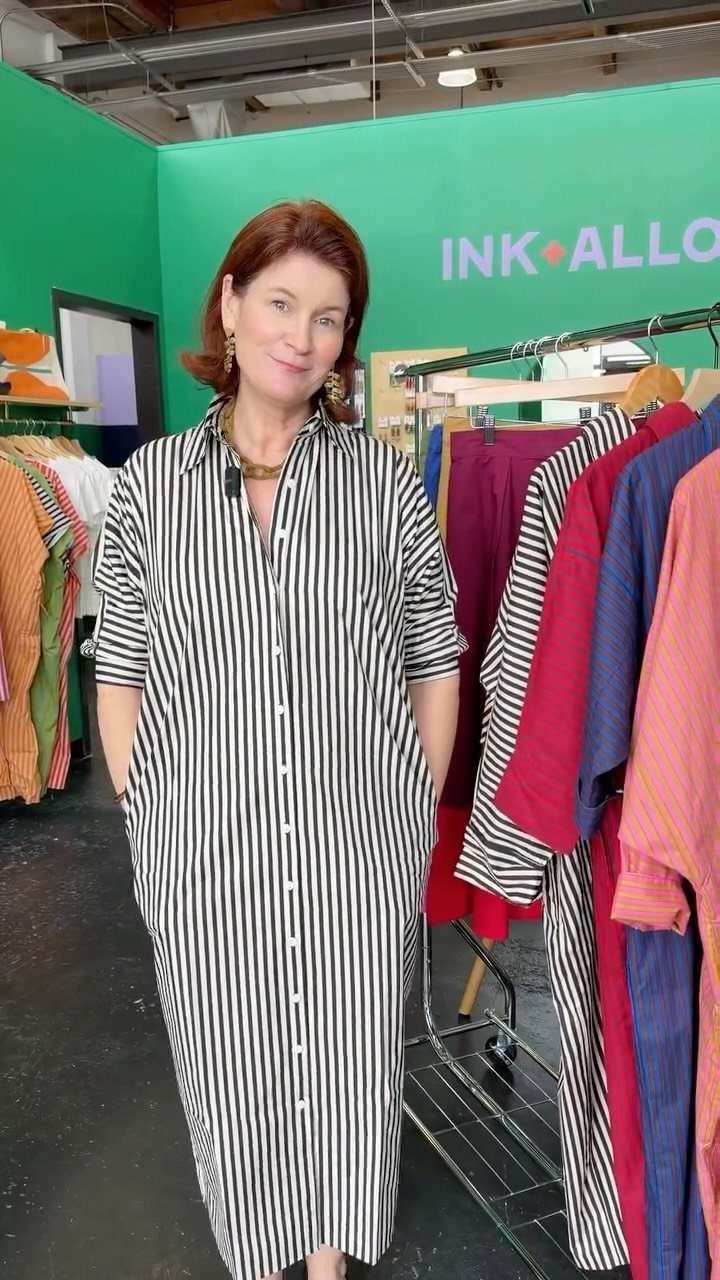
Vertical stripes run head to toe on a shirt dress that borrows its polish from menswear. The length here hits mid-calf, so the stripe has room to work; shorter cuts can feel carnival rather than tailored.
Black and white needs only a solid shoe and minimal jewelry, which keeps the morning routine short.
The stripe width matters: anything wider than 2 fingers and the eye stops reading vertical. I would add a thin leather belt if the waist seam sits high enough to break the line cleanly.
9. Belted Long-Sleeve Midi Dress
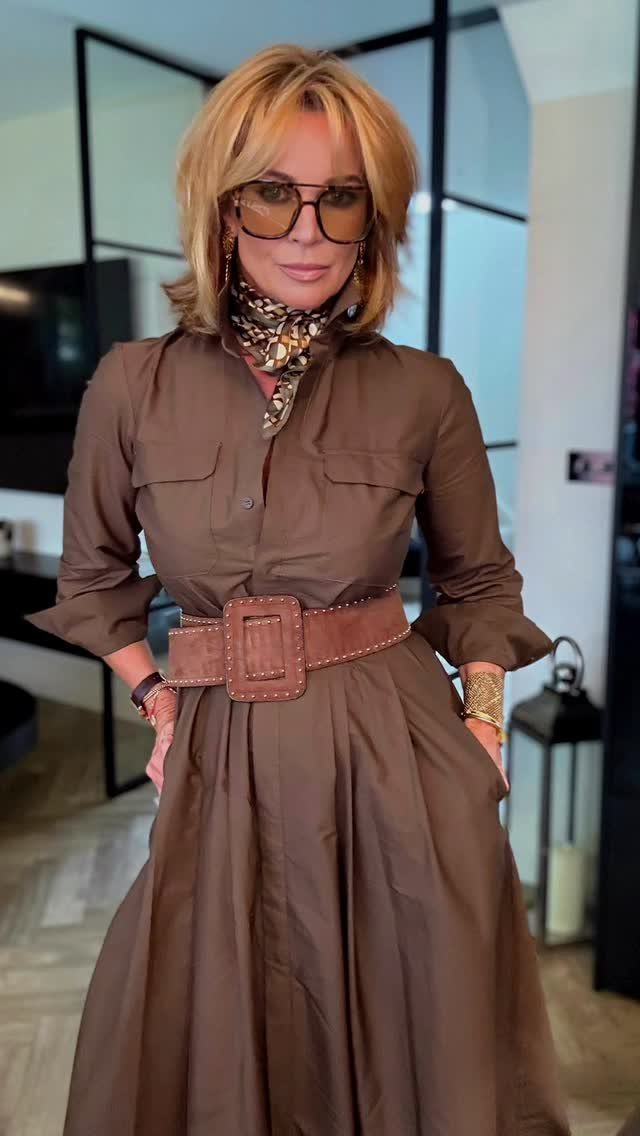
A brown midi dress with a wide belt and scarf at the neck turns a simple shape into something considered.
The long sleeves and button front give you layering options; the belt is doing the structure work since the fabric itself looks soft.
Quince makes a version in several colors with a tie at the back that pulls the waist in without hardware.
A pair of knee-high boots carries the line straight through for a winter commute, which I find makes the whole outfit feel longer and more pulled together.
The scarf is optional, but without it the neckline can read plain; a patterned silk square costs little secondhand and changes the whole dress.
Layering for Colder Weather
A blazer or cardigan over your dress handles two problems at once: the office thermostat that runs ten degrees too cold, and the walk from the parking garage when the wind has turned.
Weight matters more than shape when you’re adding layers under a dress for November through March. A thin merino cardigan layers under a blazer without bulk; a boyfriend blazer worn open works over anything with a defined waist.
I find this especially useful with the cotton poplin shirtdress and the belted midi, where the boot shaft continues the vertical instead of cutting it.
For the sweater dress, skip the extra layer on top and add a base layer underneath.
A thin long-sleeve tee in a matching tone keeps the cable knit from itching and gives you coverage if you need to remove the dress belt later in the day.
Accessorizing Work Dresses
Shoe choice should answer the weather first, then the dress. Calf-length or knee-high boots with a midi dress carry the sixties influence that is current this fall without requiring new anything.
A low block heel on the ruched cowl-neck or pleated burgundy dress gets you through city walking; save thinner heels for above-the-knee hemlines.
Bag structure matters more than bag size.
The wrap dress and the bow-neck floral both need a bag with some shape to them, a small structured style that keeps the look intentional for client meetings. A slouchy tote undoes the polish that the dress built.
Jewelry stays minimal on the vertical striped shirt dress; the stripe is doing the work. For the simpler shapes, the brown belted midi or the chocolate satin, a single piece at the neck or ears is enough.
Don’t be afraid to have fun with your workwear dresses. This color-blocked option from Sea feels professional, with a minimalist neckline and longer hemline to adhere to HR dress codes, yet the designer detailing gives it a fashion-forward upgrade.
Versatility of Work Dresses
The same boots that carried you to the office carry the dress into evening if you switch the bag and maybe add a earring.
I have worn the ruched cowl-neck out after work by trading the trench for a shorter jacket and the low block heel for something narrower; the dress itself did not change.
For the shorter dresses in the list, the slit on the cowl-neck or any above-the-knee style, tights are a fall requirement that becomes an evening choice.
Remove them and the dress opens up. The sweater dress works the same in reverse: add a thin base layer for the office, remove the belt for a looser evening shape.
Comfort and Fit
Breathable fabric matters in fall too, especially when office heating runs high and outdoor air stays crisp.
Cotton poplin and structured denim both let air move; cable knit does not, which is why the sweater dress needs that skimming fit with room for a base layer underneath.
The drawstring waist on the shirtdress and the built-in belt on the denim dress both remove the guesswork of fit through the day.
A separate belt on the pleated midi or the simple brown dress requires more attention; if it shifts, the whole proportion shifts with it.
For between sizes, the rule I follow is simple: size up in anything without stretch, and up again in anything that clings. The ruched satin and the wrap dress have more give, so fit there is more forgiving.