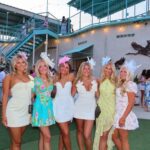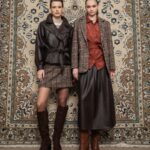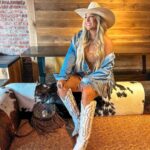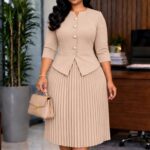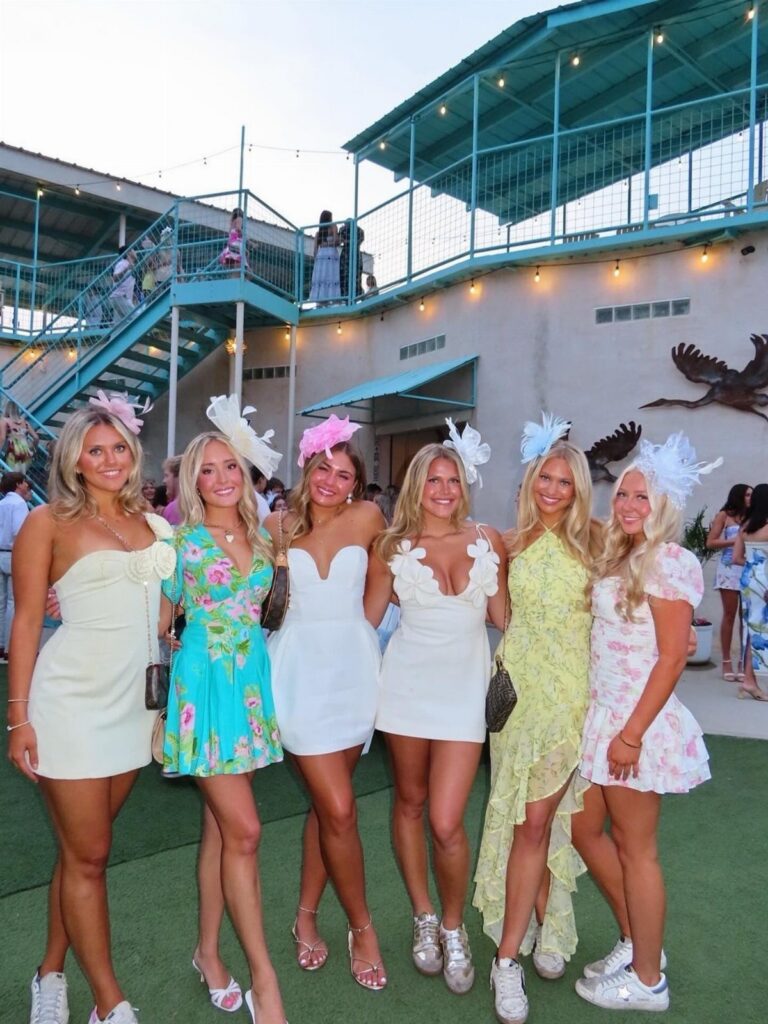
The 11 ideas below split between letting the hat do the talking, letting the dress take over, and a few practical notes on what to expect once you get there.
The 11 ideas below range from a white dress that serves as a blank slate for statement millinery to a saturated red ruffled dress that is the outfit, with budgets and formality levels split across both approaches plus what to pack for the day itself.
3 fascinators of mine have been claimed by the paddock wind over the years, so every recommendation here accounts for how Churchill Downs actually performs in May humidity and uneven grass.
1. Floral Prints
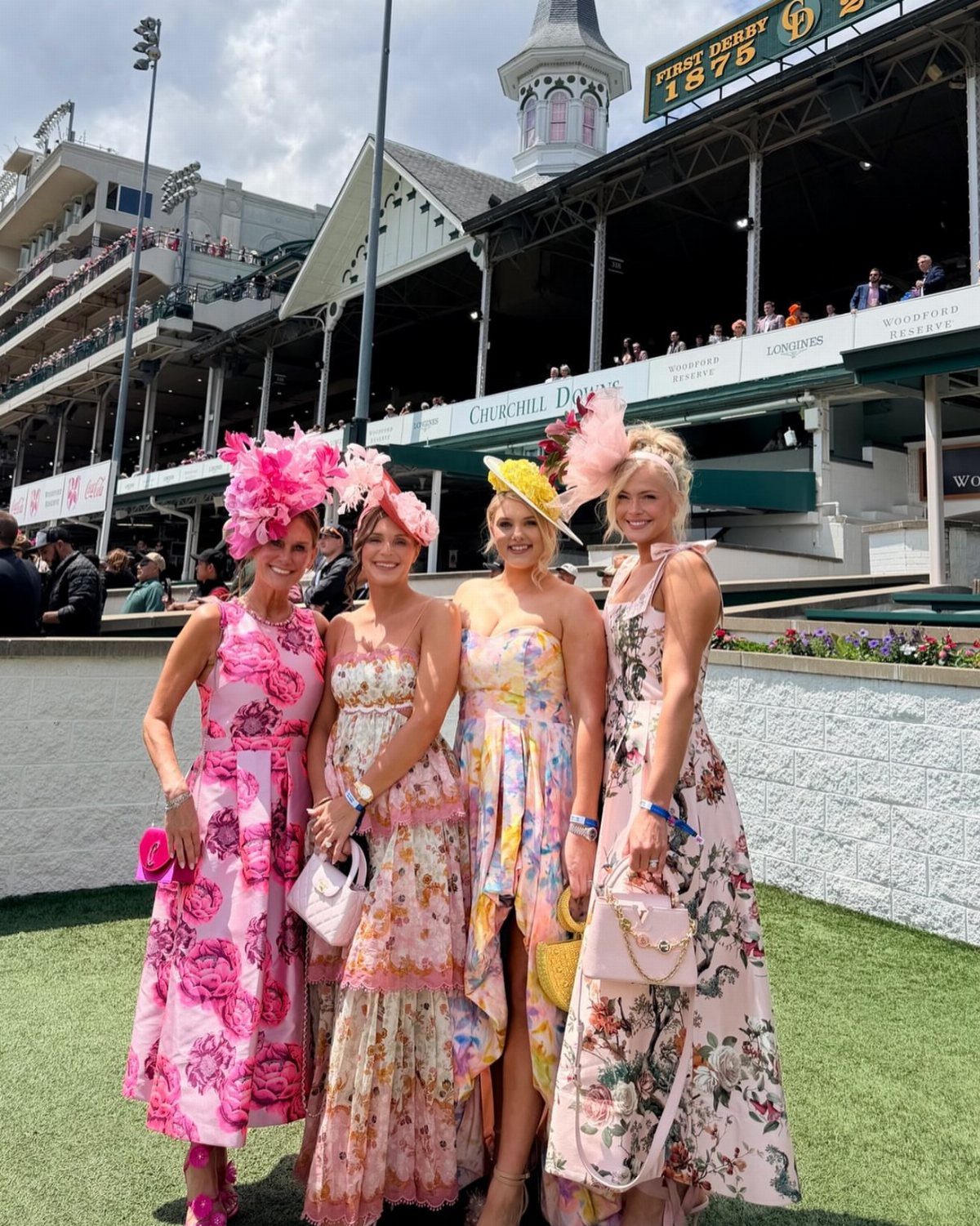
Florals at the Derby run bigger and louder than anywhere else I dress. A busy print carries the whole look, so I keep the silhouette simple: fit-and-flare or sheath, nothing fussy that fights the pattern.
Pair it with a fascinator that picks up one color from the print rather than competing with all of them.
Gingham and tile motifs work the same way if you want something less expected than blooms.
2. Dramatic Red Ruffled Dress
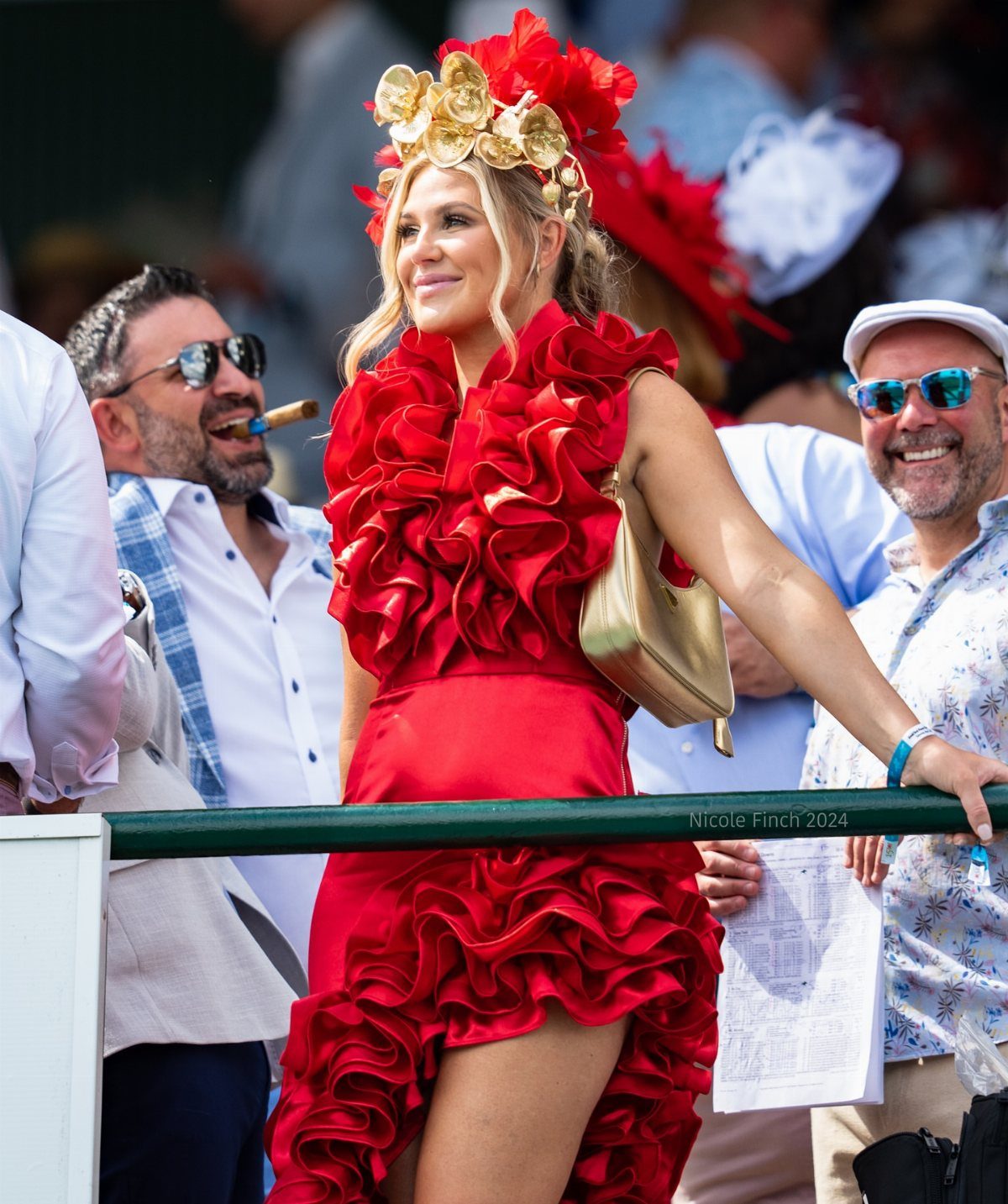
A ruffled dress this saturated reads as the outfit itself, so I would commit fully and match the headpiece to it.
A metallic bag warms this all-red look up; without that gold note, red on red can go flat. Check that the ruffles sit where you actually want attention, because volume draws the eye directly.
3. White Dress with Statement Hat
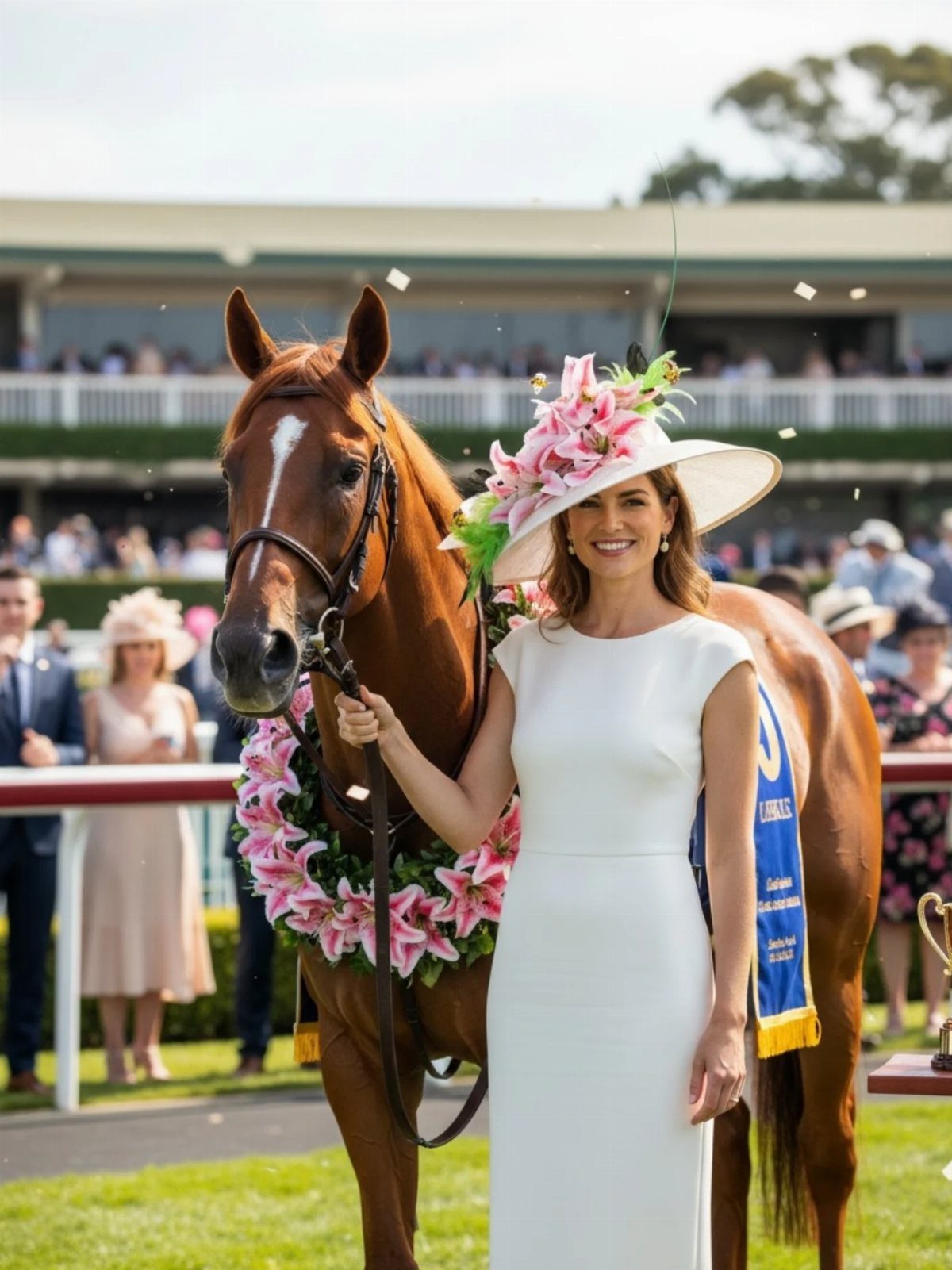
A white dress is the closest thing to a Derby blank slate. The hat does all the statement work, which means the cut underneath stays clean: sleeveless or minimal sleeve, no competing trim.
I would try this only with a hat I am genuinely excited to wear, not a safe default; without that lift, it is just a white dress in the dirt.
4. Glamorous All-Black Ensemble
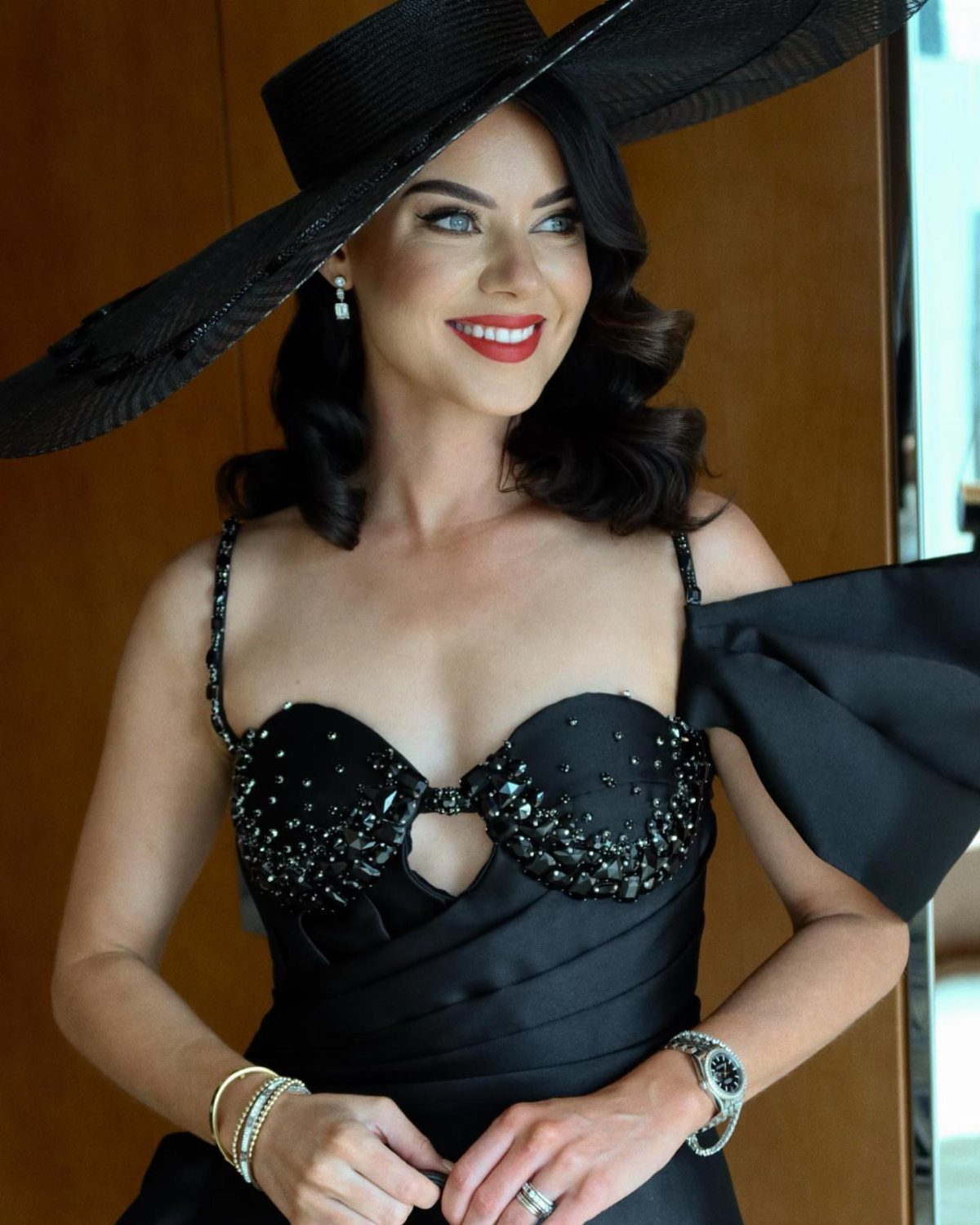
Black at the Derby breaks a pastel rule that nobody wrote. To make it read festive rather than funeral, I need one theatrical element, and the oversized structural hat here handles that completely.
The embellishment on the dress catches light; matte black would require heavier accessories to avoid looking like a gap in the crowd. Lipstick helps too.
5. Equestrian-Inspired Coat and Boots
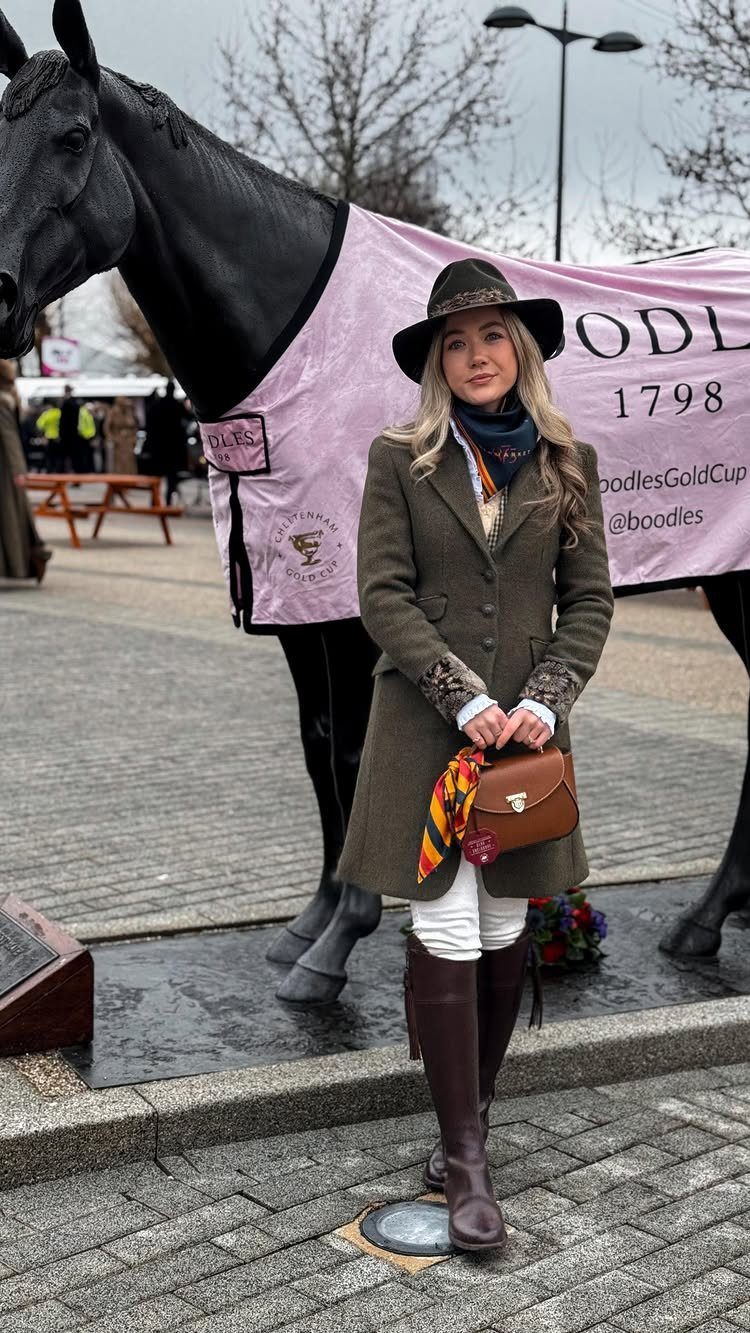
This borrows from actual riding kit without looking like costume; the fedora pulls it together rather than veering into costume territory.
The olive coat and tailored white trousers are office-appropriate pieces most of us already own; the tall boots and wide-brim hat push it toward the track.
I would check that the boots hit just below the knee, not mid-calf, to keep the line long.
6. Monochrome Pastel Blue Dress
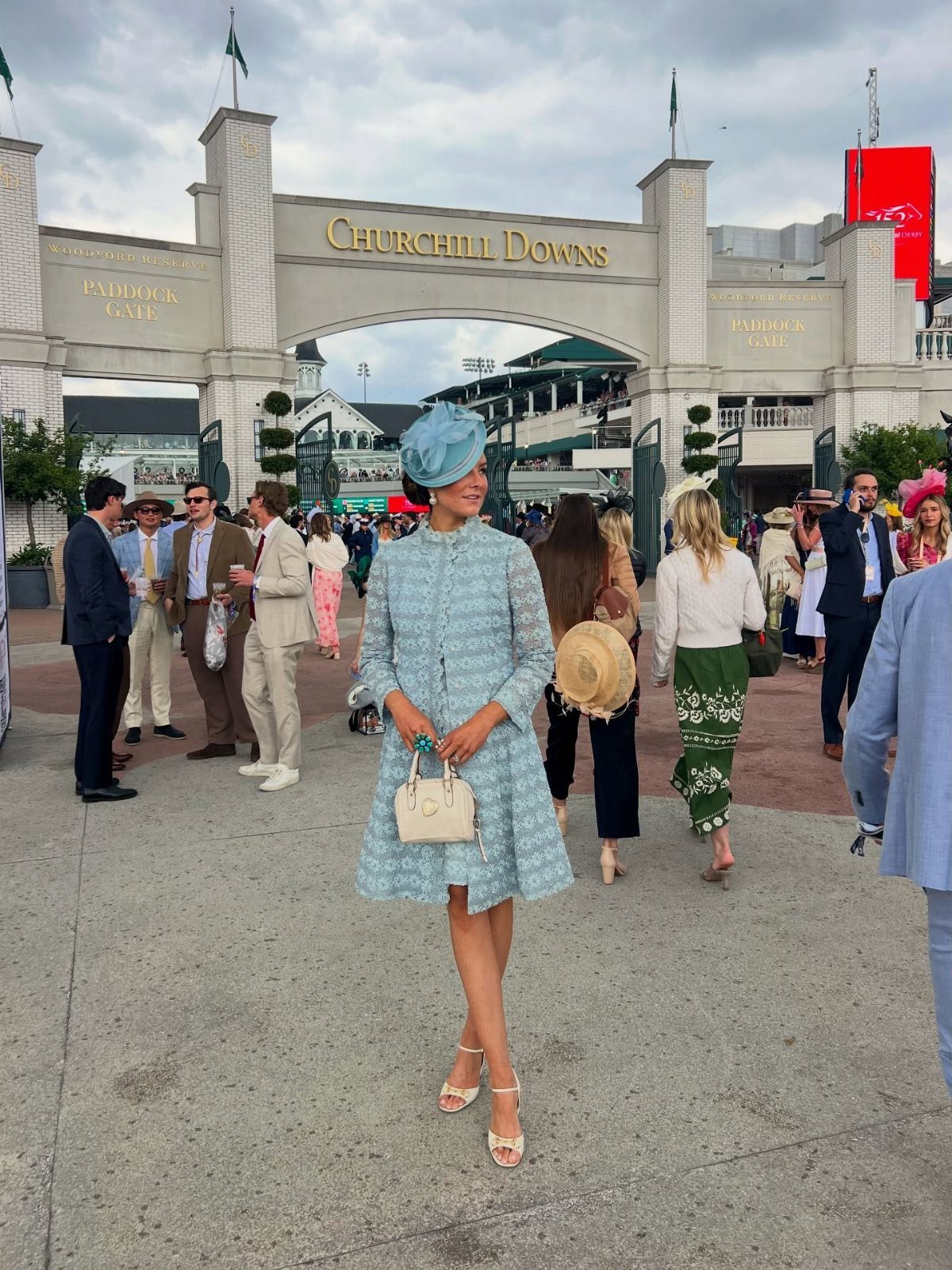
A single pastel shade head to toe photographs well against the crowd at Churchill Downs.
Texture keeps monochrome pastel from reading flat; I would look for seersucker, eyelet, or a subtle weave rather than a slick fabric. White heels ground it without breaking the color story.
7. Dark Green Velvet Dress
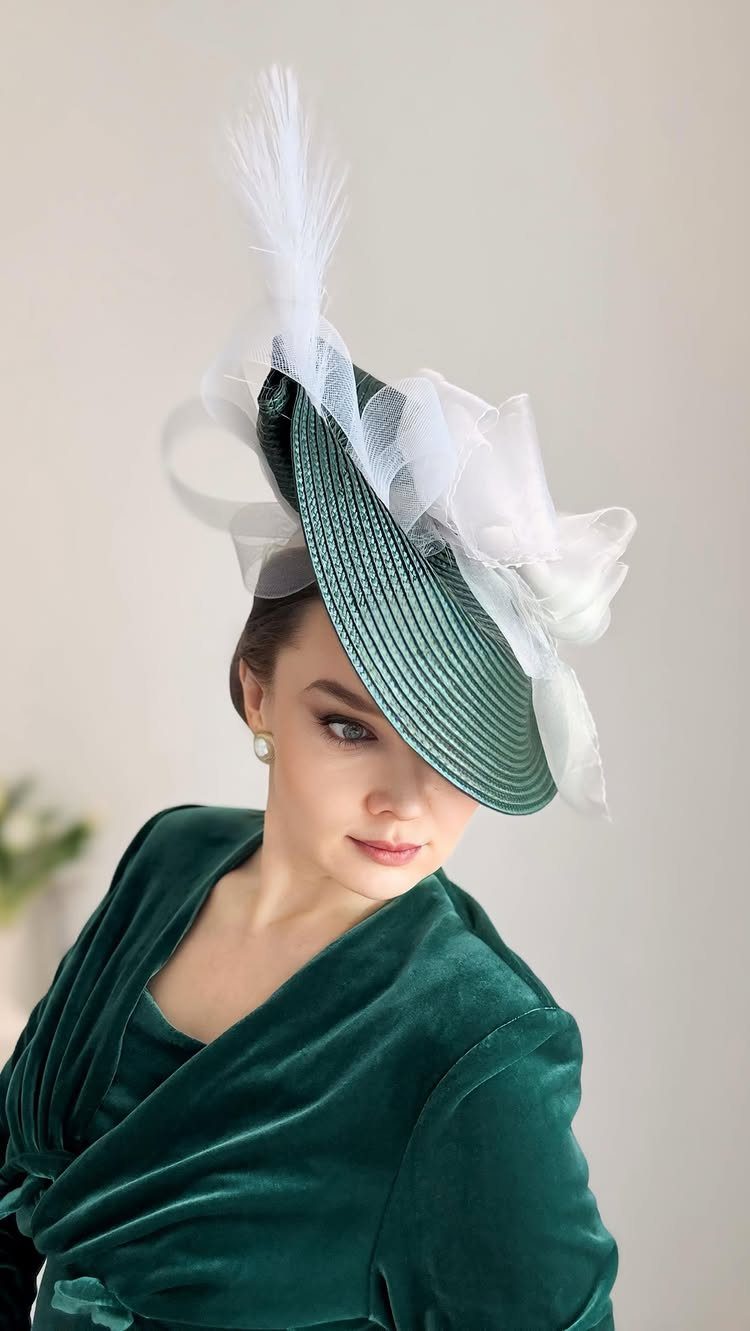
Velvet absorbs light rather than reflecting it, so a deep green reads richer under the May sun than a lighter shade would.
The texture itself becomes the detail; I would keep jewelry small and metallic, letting the fabric and the matching headpiece do the work.
Check that the dress is lined; unlined velvet against skin in Kentucky humidity is a mistake I have made at other events.
White accents on the fascinator echo the dress without competing.
8. Navy Dress with Turquoise Fascinator
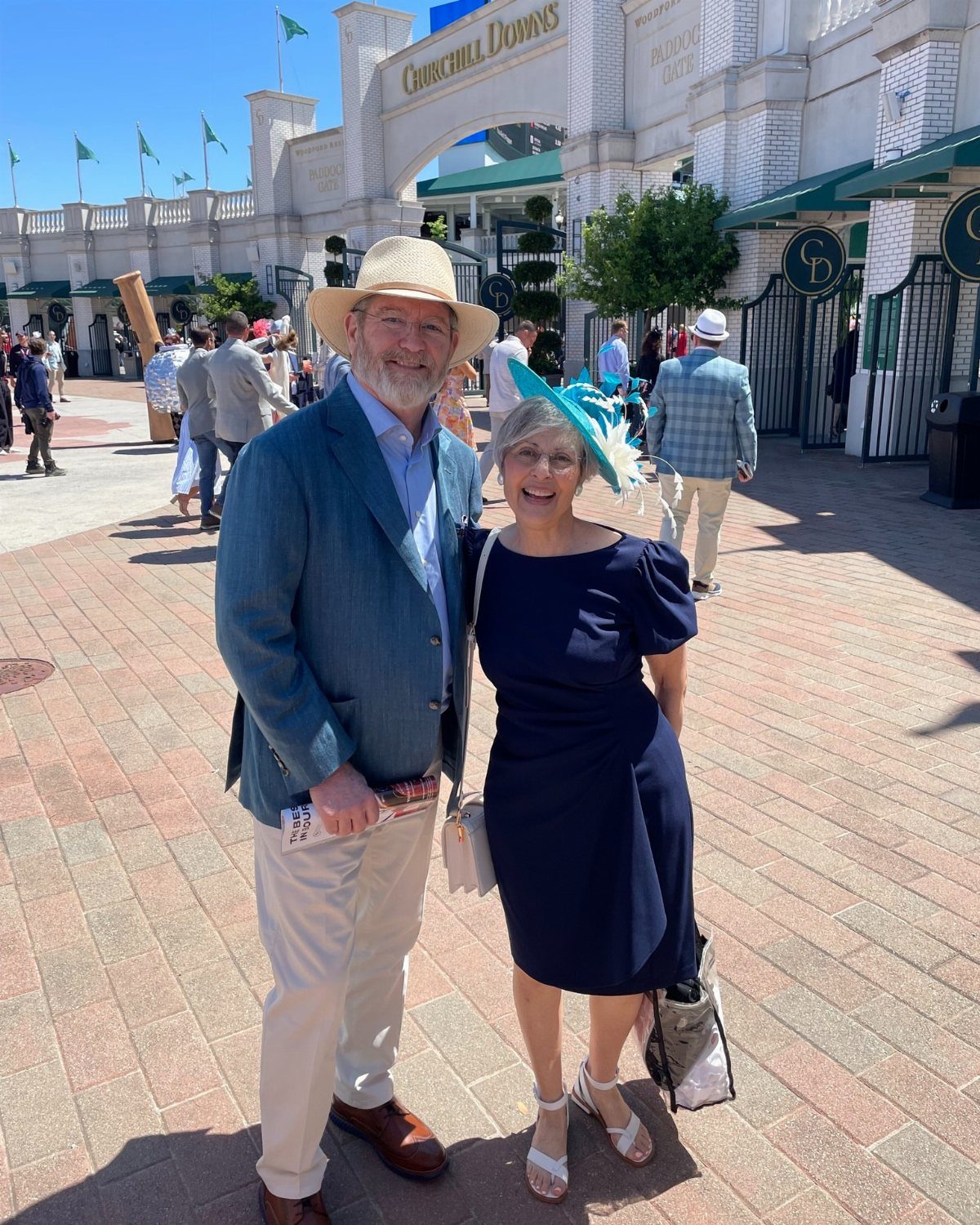
Navy is quiet enough to let a turquoise fascinator carry the whole look; the pairing reads as intentional rather than matched.
A linen blazer on a companion keeps the formality level even without dressing him in costume. Derby dressing for men runs toward seersucker and straw, so the fedora here is a step sharper than the usual field.
I would make sure the fascinator fastens securely; the wind across the paddock has claimed three of mine over the years.
9. White Polka Dot Dress with Veil
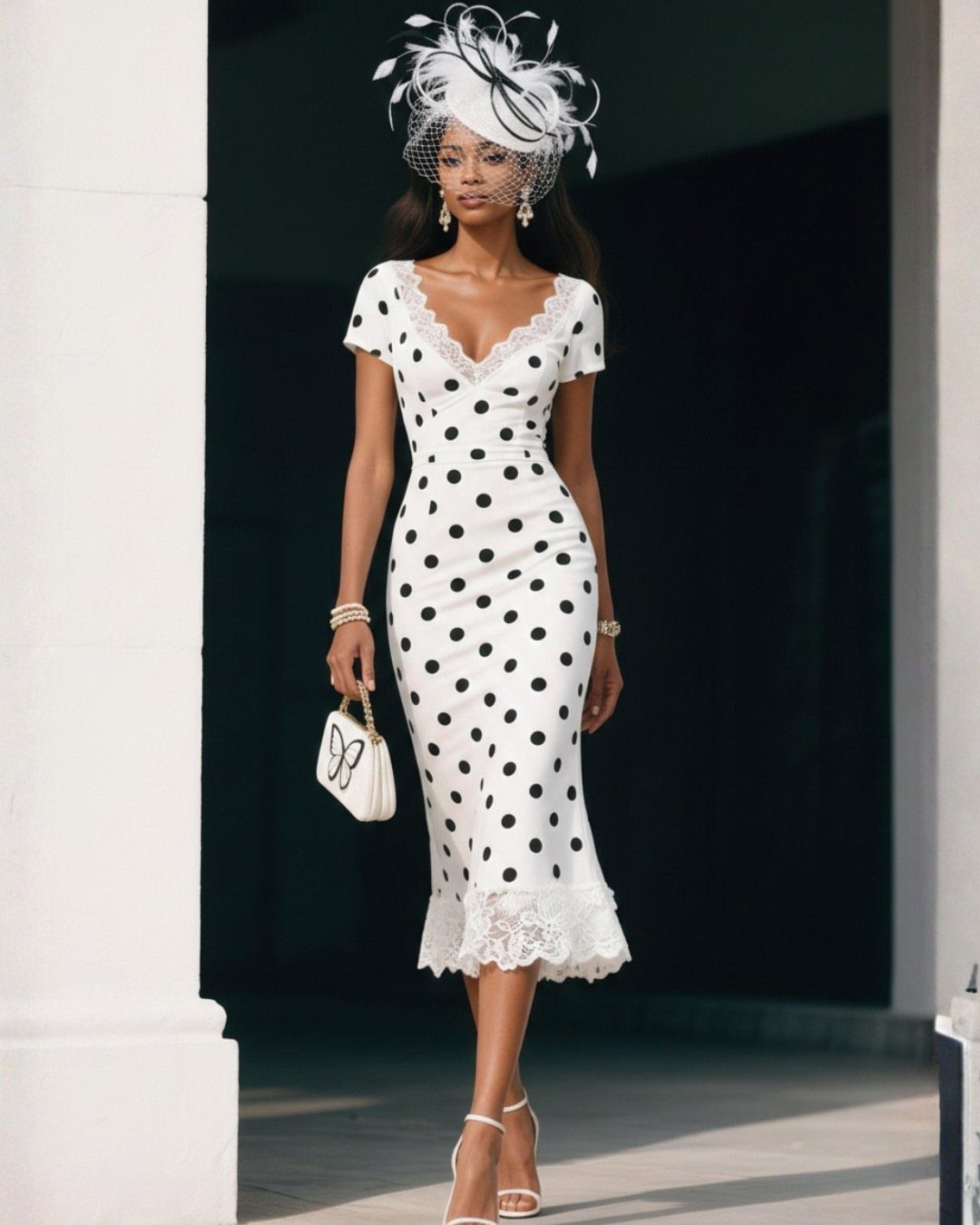
Polka dots this large scale the eye differently than a small print; the spacing needs to flatter your frame, so I would try the dress seated before committing.
Lace trim at the neckline softens the graphic contrast. The veil on the fascinator is a dress-code moment; without it, the hat reads garden party, with it, Derby.
Tights in a sheer black keep the monochrome going; bare legs break the line.
10. Plaid Waistcoat and Trousers
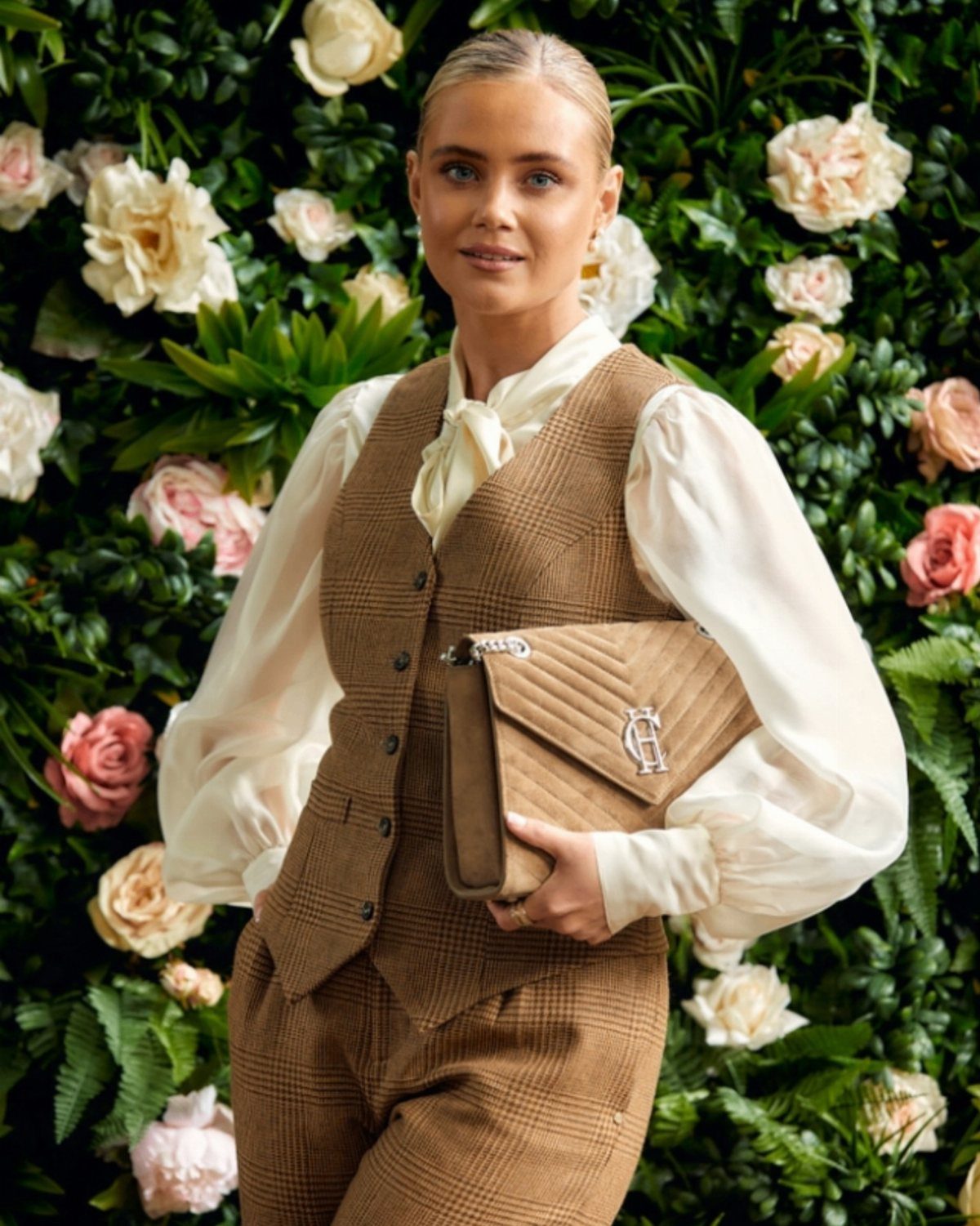
A waistcoat and trousers in matching plaid treats tailoring as the accessory itself; the cream blouse underneath stays plain so the suit pattern has room. Puff sleeves balance the narrow line of the vest.
Derby separates allow for color play that full suits do not; tan, light gray, or even a pale salmon trouser could sub in if the full plaid feels too formal for your section of the stands.
The clutch in a solid tan rests the eye.
11. Coordinate Outfits
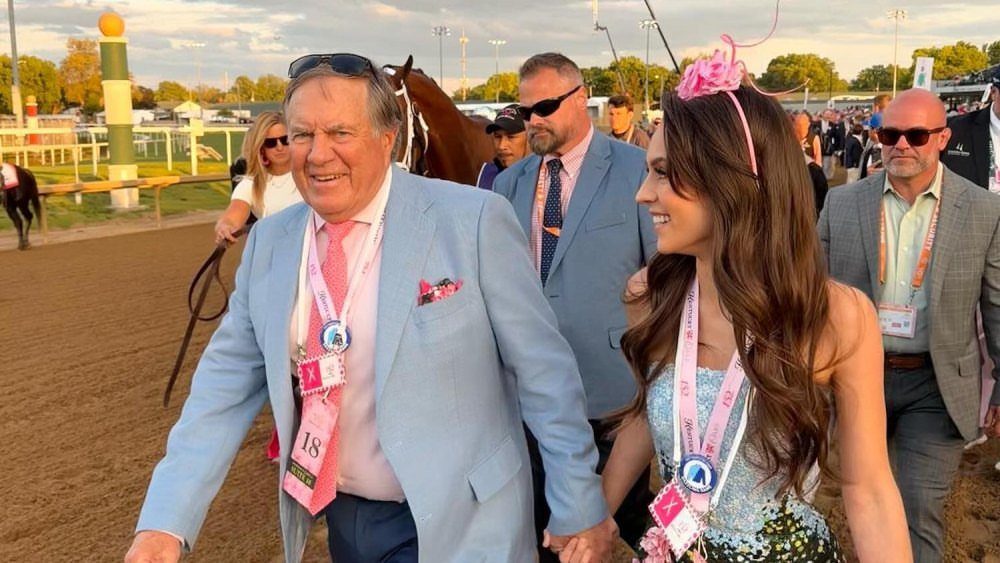
Coordinating without matching means one color pulled across two outfits, not identical shades head to toe.
A pastel suit in light blue and a pink floral dress read as coordinated without the matchy look of identical colors; the tonal family does the work.
Event lanyards will sit over whatever you choose, so plan around them; a crowded neckline fights the badge.
I would agree on a palette before either of us shops, then split the colors so one wears the dominant hue and the other picks it up in accessories.
Event Duration
The Derby runs long enough that your outfit has to work at 10 am and still hold up at 6 pm.
I start with breathable fabrics: linen and tropical wool let air move through without looking underdressed. A cardigan or light shrug layers over if the morning stays cool, then ties at the waist or stashes in your bag by afternoon.
Shoes matter most for stamina.
The stands and paddock involve more walking on grass and uneven ground than most spring events, so I reach for loafers with no-show socks or a block heel that will not sink. Save the stilettos for the after-parties.
Bring a bag that holds sunscreen, sunglasses, water, and a stain stick without bulging past the venue’s size limit. A lint roller lives in mine too; grass and mint julep stains both announce themselves early.
Weather Considerations
May in Kentucky means you may need every layer you packed.
Morning temperatures can sit in the 50s and climb past 80 by post time, so a dress that works with a blazer or wrap at 8 am and stands alone at 3 pm saves the day.
Rain is common enough to plan for, but not common enough to let it ruin the hat.
I carry a compact umbrella in my bag and choose shoes that handle damp grass: leather soles leather soles leather soles slide, rubber grips. White linen in a downpour is a lesson learned once.
Humidity is the factor nobody photographs. Velvet, unlined against skin, turns into a sauna by the second race.
If I wear it, I check the lining first. Synthetics that look crisp in air conditioning do not breathe; natural fibers or a lining that wicks moisture keeps the silhouette from collapsing.
Historical Significance
Derby fashion carries the weight of a tradition that started in 1875, when attendees first showed up in their spring best.
The Southern formality of that era still shapes what works: bold color, careful tailoring, a hat that announces you made an effort.
The modern freedom is what interests me.
Men in particular get a rare pass to wear pastel pink blazers and floral accessories without anyone questioning their judgment. That balance of heritage and individual choice is what separates Derby dressing from costume.
I see the evolution most clearly in how women treat the hat now. It began as standard spring headwear and grew into the single most deliberate choice of the outfit.
Hats at the Kentucky Derby started as ordinary dress-up and grew from there; guests kept raising the stakes each year until the headpiece became inseparable from the day itself.
Instead, the Derby is all about capital-S "Style." While the ladies are busy picking out towering hats and coordinating dresses for the big day, men’s style is equally important at the Run for the Roses, and deserves just as much of your attention.
Local Boutiques
A headpiece from a local Louisville shop carries details you will not find in mass-market stock.
Mamili Boutique, Peacock Boutique, Lulubelle’s, and Darling State of Mind all stock Derby week with pieces built for the specific scale and wind conditions of Churchill Downs.
Local buyers understand the dress code in practice, not theory.
They know which fascinator bases grip securely enough for the paddock breeze, which weight of linen will not wilt by the fifth race, how a brim should angle for the grandstand seats versus the infield.
That knowledge is worth the trip.
If you live outside Kentucky, calling ahead works. Most Derby-focused boutiques field phone orders and ship with enough lead time for a fitting at home.
The difference between a fascinator adjusted by someone who has watched them fly off at the track and one sized by a general occasion-wear clerk is the difference between a complement and a rescue mission.