The outfits below move from a single silk scarf that freshens a suit you already own up to full pattern-mixing with gingham trousers and a striped cardigan.
Your office’s position on the formality spectrum, not the season, is what makes one choice right and another too dressed up or too relaxed.
A quarter-zip lands anywhere on the business-casual spectrum depending on its weight and what you wear it with: fine merino and pressed trousers read meeting-ready, while a chunky hand-knit with running shoes does not.
1. Business Casual Attire
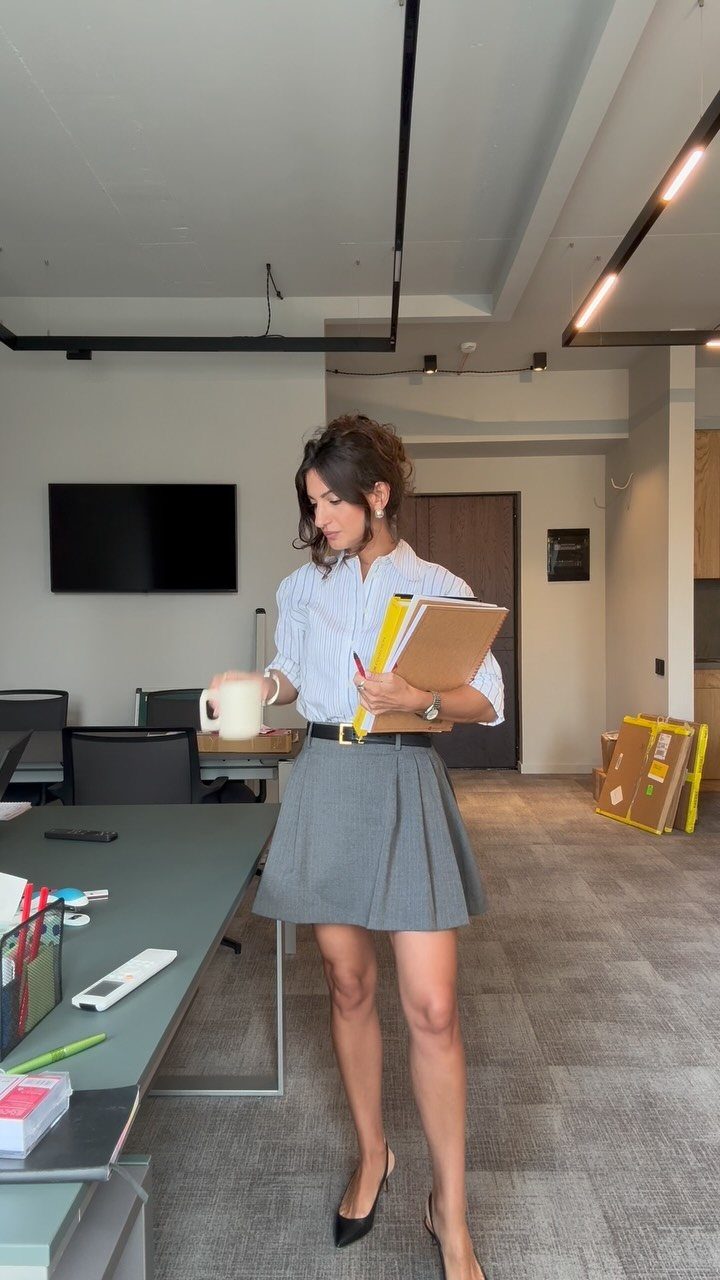
The phrase covers a lot of ground, which is exactly why it confuses people. For most offices, it means slacks or khakis, knee-length skirts, dark jeans on the relaxed end, and tops that read as intentional: button-downs, sweaters, blouses.
A button-down with slacks and a belt handles the commute, the coffee run, and the first meeting without looking like you tried too hard or not enough. This is clothing that lets you walk into a meeting without changing.
If your office leans formal, keep the jeans at home. If Fridays are loose, dark denim with a blouse usually passes.
The mistake is treating business casual as casual with a blazer on top. It is business wear that has relaxed, not the other way around.
2. Jackets and Blazers
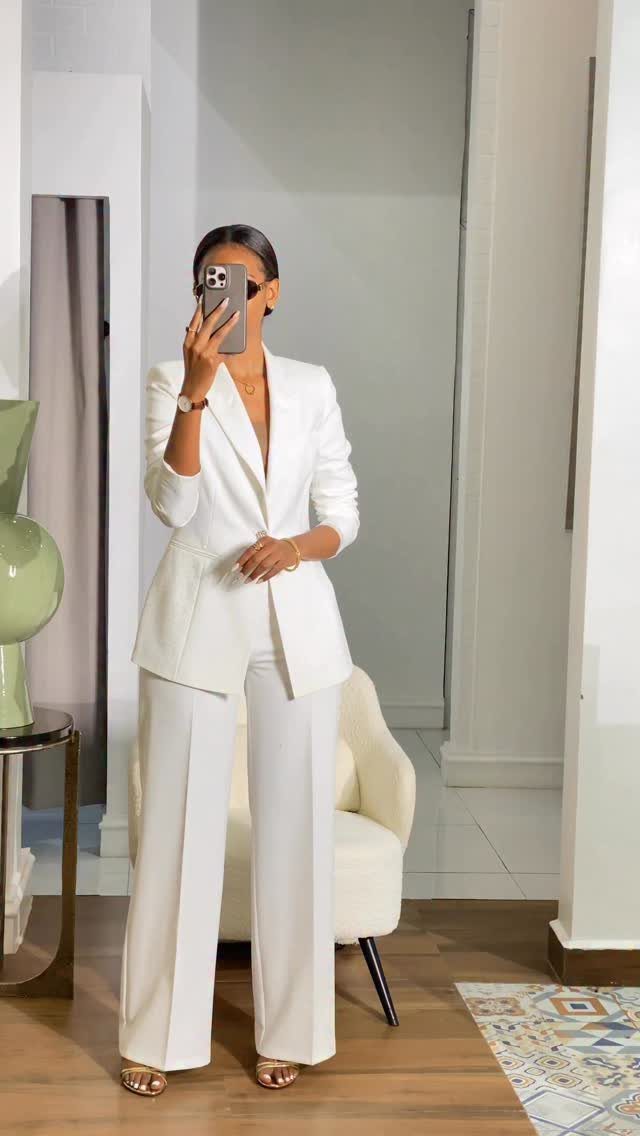
A white blazer with matching wide-leg trousers reads as pulled-together without trying too hard.
The cut matters more than the color. Slim or slightly relaxed shapes work across seasons; oversized shoulders that read as fashion editorial, not colleague-appropriate.
Material is where you relax the formality. A structured blazer in cotton, linen, or a soft crepe sits lighter than wool suiting and moves through offices that run warm.
Stripes, plaids, or houndstooth add interest if the rest of the outfit stays neutral. Denim jackets, kimono styles, and bombers belong outside this category entirely.
3. Shirts and Blouses
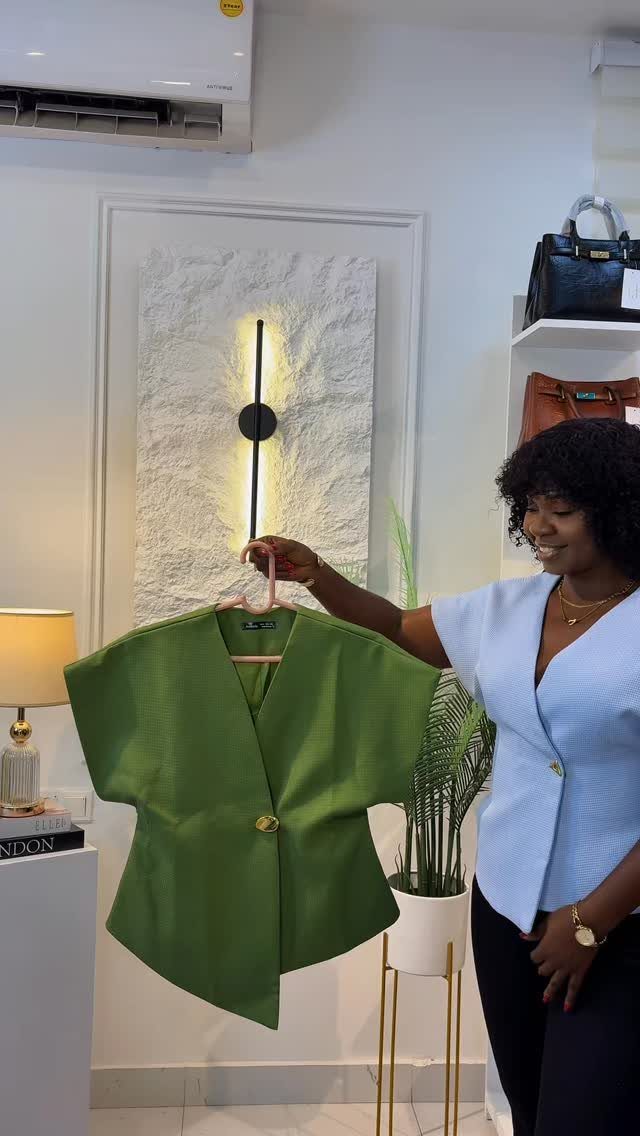
A short-sleeved tailored blouse in a solid color sits right in the middle of what works for most offices.
Business casual blouses, button-downs, polo shirts, and turtlenecks all qualify if they avoid the obvious traps: too tight, too sheer, too loud, or too casual.
I would skip thick heavy knits, hoodies, and anything with a slogan or cartoon. A patterned top can work if the bottom half is quiet.
A fit consistent enough to buy in multiple colors is worth noting when you find it; this silhouette is one to hold onto. That reliability matters more than a single interesting piece.
4. Dresses and Skirts
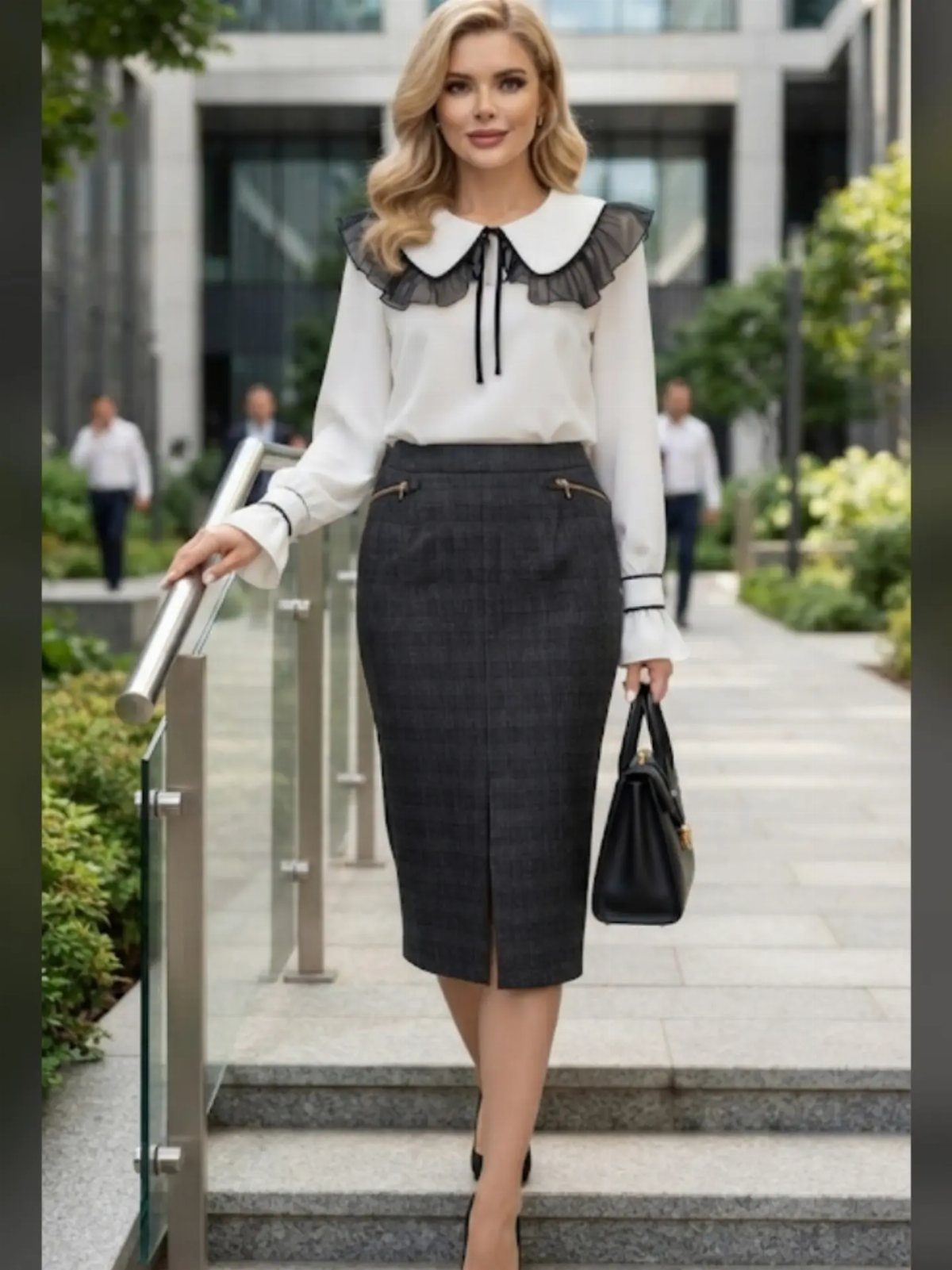
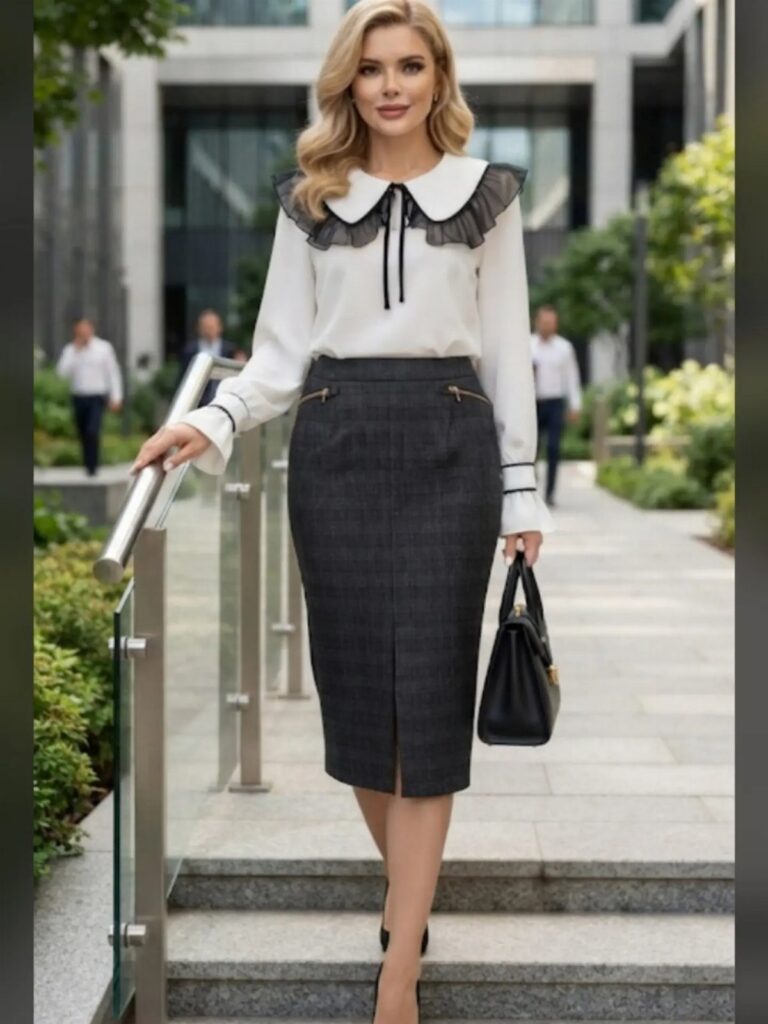
A pencil skirt in dark plaid with a white ruffled blouse hits the right note for offices that still expect some polish.
Length is the usual place people misjudge. Knee-length or midi covers the range that reads as professional; anything shorter starts to compete with the outfit rather than complete it.
Sundresses, even expensive ones, usually carry too much weekend energy for this dress code.
The same cut in a heavier fabric with a darker print shifts the register entirely. Tights and closed-toe shoes extend the season for skirts that would otherwise sit in your closet from November through March.
5. Cardigan Layered Over Button-down
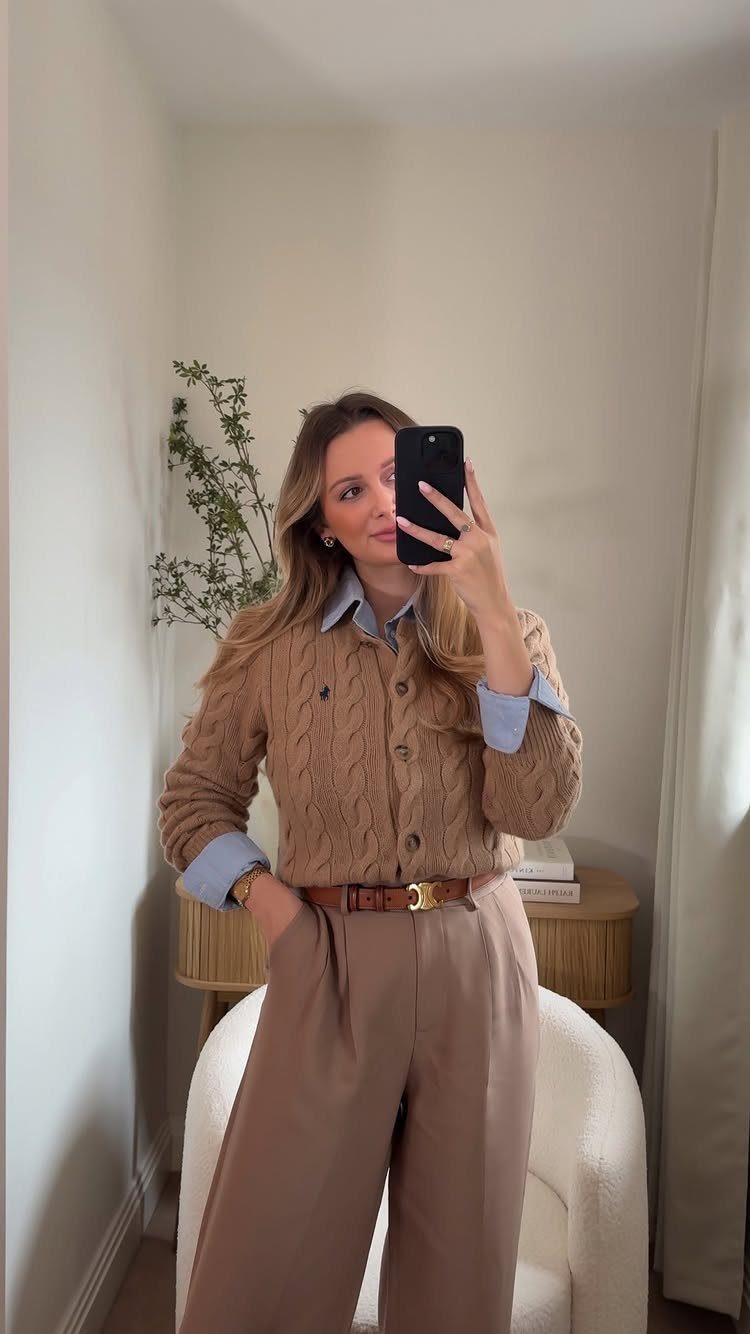
Cable knit over a collared shirt with matching trousers is a combination that solves the air conditioning problem without looking like you grabbed whatever was warm.
A thick cardigan reads as outerwear when the shirt collar stays visible and a belt keeps the waist defined rather than swallowed.
Check that the cardigan is long enough to meet the trousers without gaping.
A too-short layer breaks the line and looks accidental. This works best when the cardigan is the statement and the shirt underneath is a solid, pale color that does not fight it.
6. Quarter-zip Sweater and Trousers
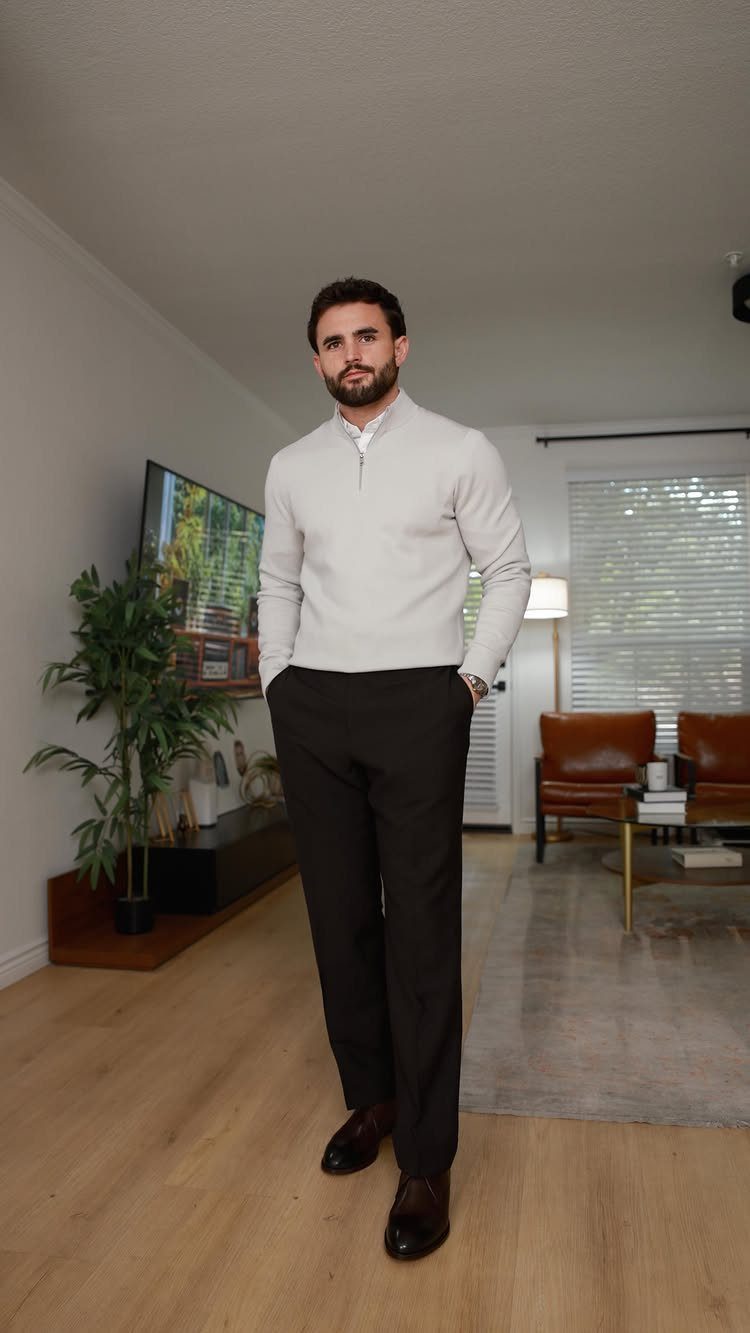
A cream knit with dark brown trousers and leather dress shoes sits at the dressier end of business casual. A quarter-zip reads as more pulled-together than a crewneck because the collar structure references sport shirts and jackets.
This particular combination works for men in offices where a full suit would be overdressed but a sweatshirt would be under.
The sweater should be fine-gauge enough to tuck slightly or sit cleanly at the waistband; bulky knits bulge and shift throughout the day. Leather shoes rather than sneakers are what signal intent here.
7. Wide-leg Trousers with Draped Sweater
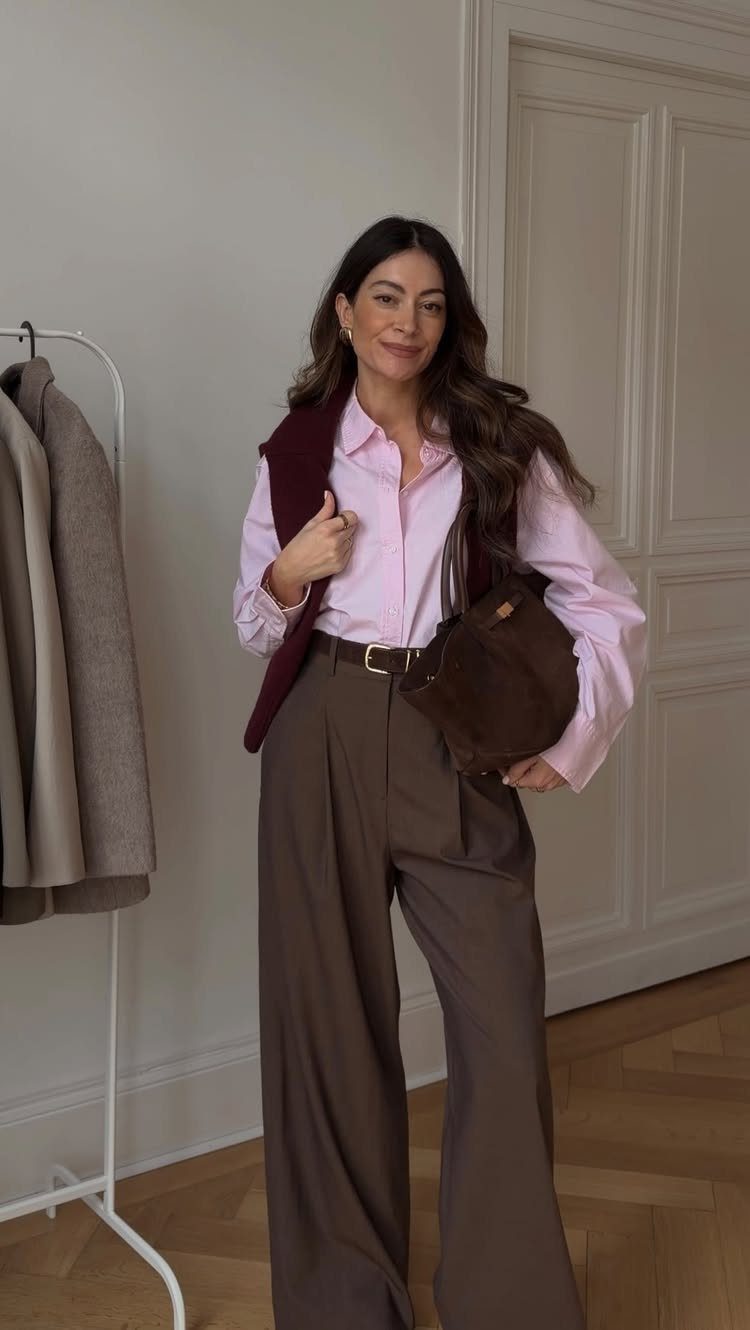
Brown wide-leg trousers with a light pink button-down and a maroon sweater draped over the shoulders reads as intentional without looking like you tried.
The sweater-over-shoulders move adds warmth for an over-air-conditioned office and gives you something to put on if the temperature drops.
Check that the sweater color relates to something else in the outfit; here the maroon picks up no other red, which works because the brown and pink are quiet enough to let it sit alone.
A tote in a matching leather keeps the palette grounded. This layering trick fails when the sweater is too bulky or the shirt collar collapses under it.
8. Short-sleeve Sweater Over Collared Shirt
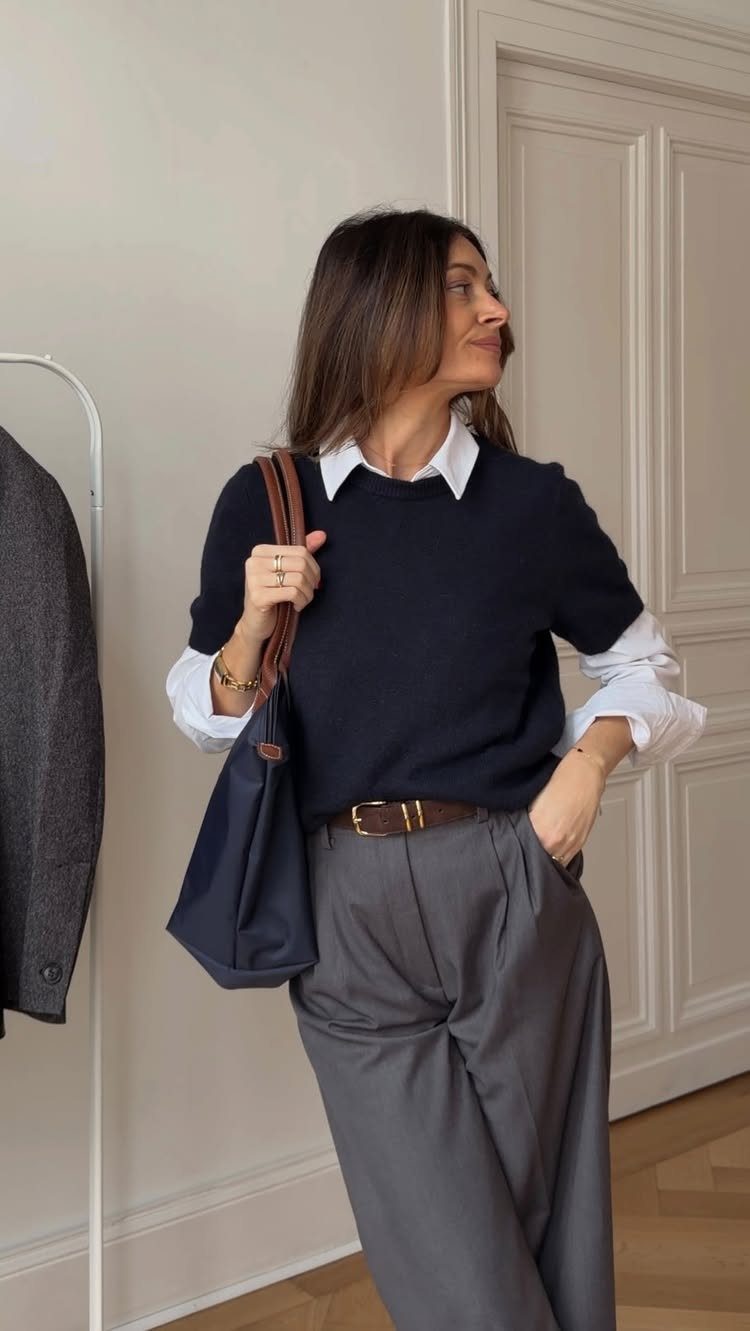
A navy short-sleeve sweater over a white collared shirt with grey pleated trousers gives you the structure of a button-down without the full coverage.
The short sleeves on the knit layer are the detail that makes this feel current rather than borrowed from a uniform.
The shirt collar should stay crisp and visible; a floppy or oversized collar fights the clean line of the sweater. Pleated trousers add movement that balances the fitted top half.
I would keep the shirt sleeves slim enough to disappear under the sweater without bunching. A tote in a matching navy pulls the look together without adding another color to manage.
9. Sleeveless Knit with Wide-leg Trousers
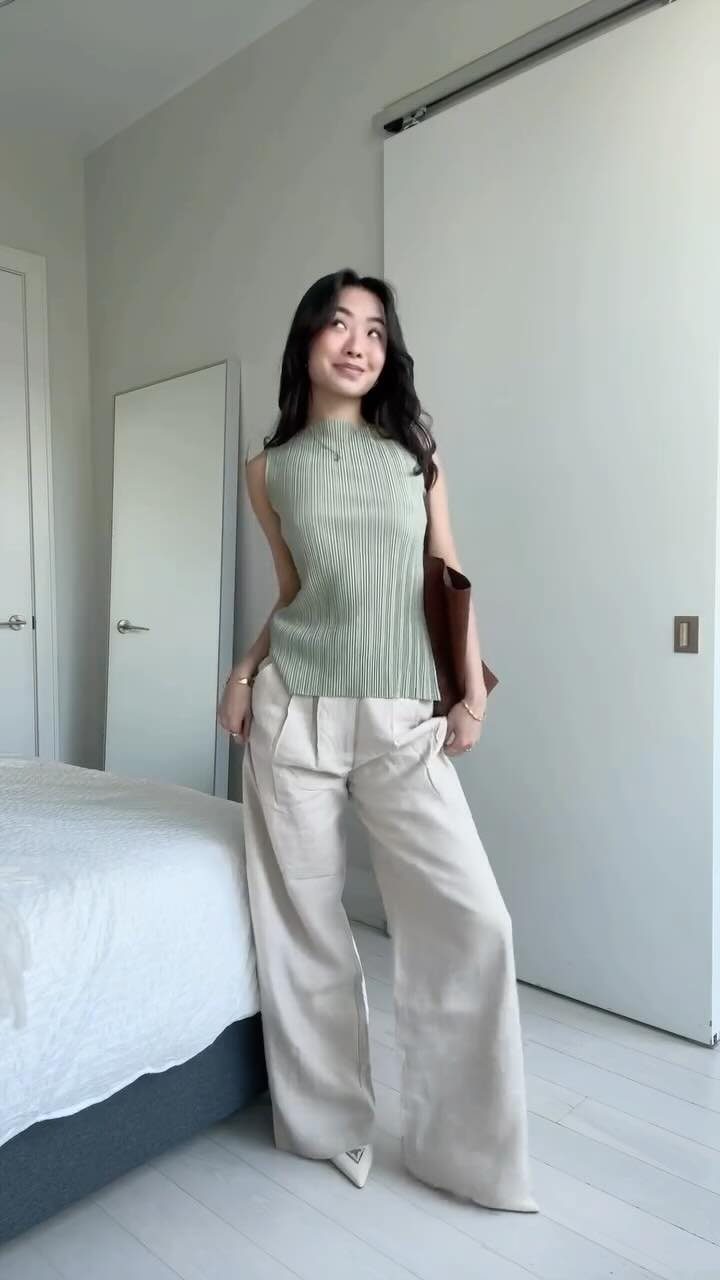
A sleeveless green ribbed knit with high-waisted beige wide-leg trousers is a warm-weather business casual option that still reads as covered-up. The ribbed texture gives the knit enough presence to hold its own against the volume of the trousers.
Pointed-toe shoes extend the leg line, which matters when the trousers sit at the waist and the top is cropped or tucked. A shoulder bag rather than a crossbody keeps the silhouette clean.
This combination works best in offices that run hot or for months when sleeves feel like a punishment. The trousers need to be long enough to skim the shoe; anything shorter starts to look like a flood.
10. Cardigan with Gingham Trousers
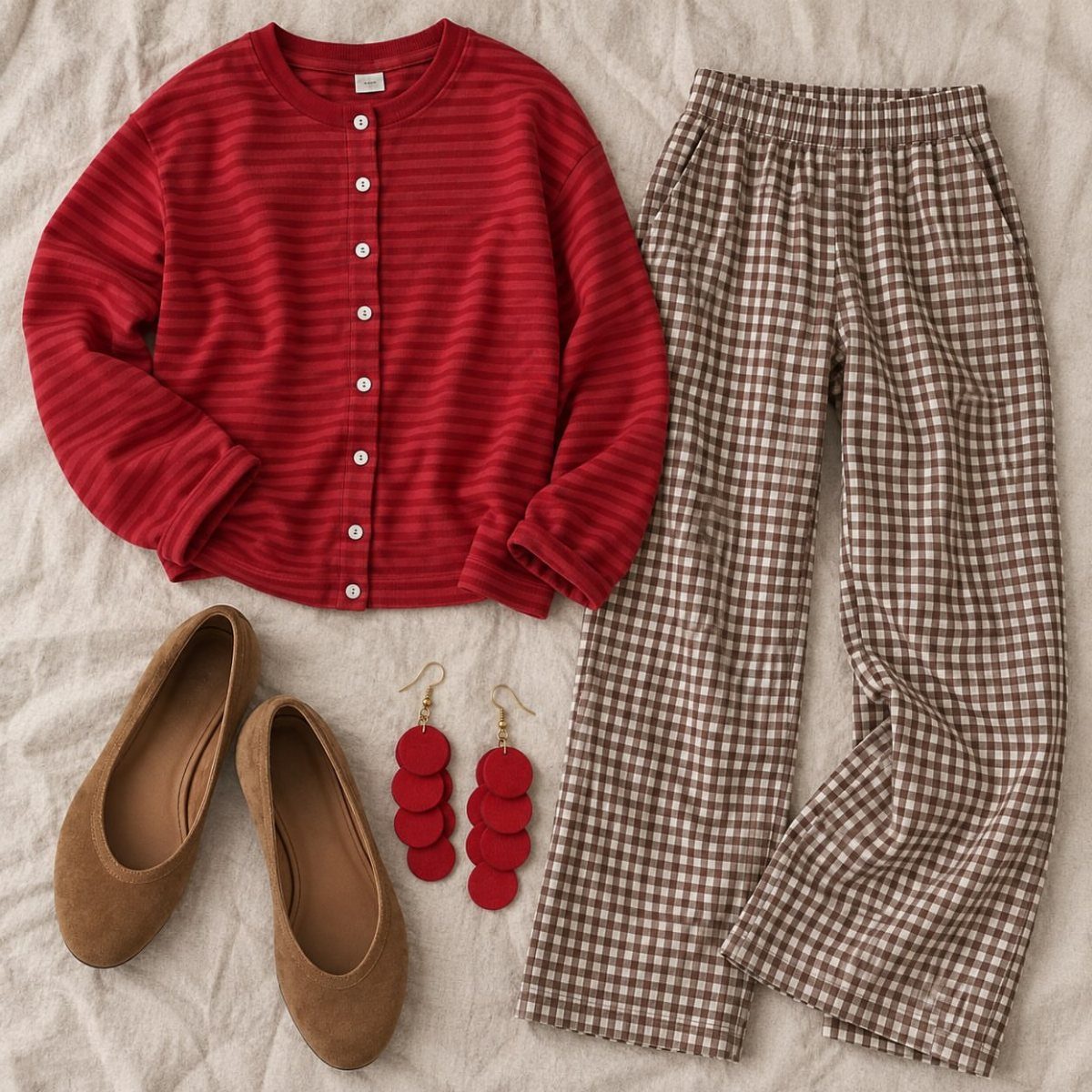
A red striped button-up cardigan with brown-and-white gingham wide-leg pants and suede ballet flats is a flat lay that depends on the scale of the patterns working together.
The stripes on the cardigan are narrow enough to read as texture from a few feet away; the gingham is small enough not to compete.
Both patterns share a color, which keeps them from clashing.
I would wear this with the cardigan fully buttoned and tucked slightly at the waist, or left open over a solid top if the shirt underneath is the same tone as the trousers.
The red earrings pick up the cardigan without matching exactly. This much pattern is not for the first day at a new job.
11. Patterned Neck Scarf Accent
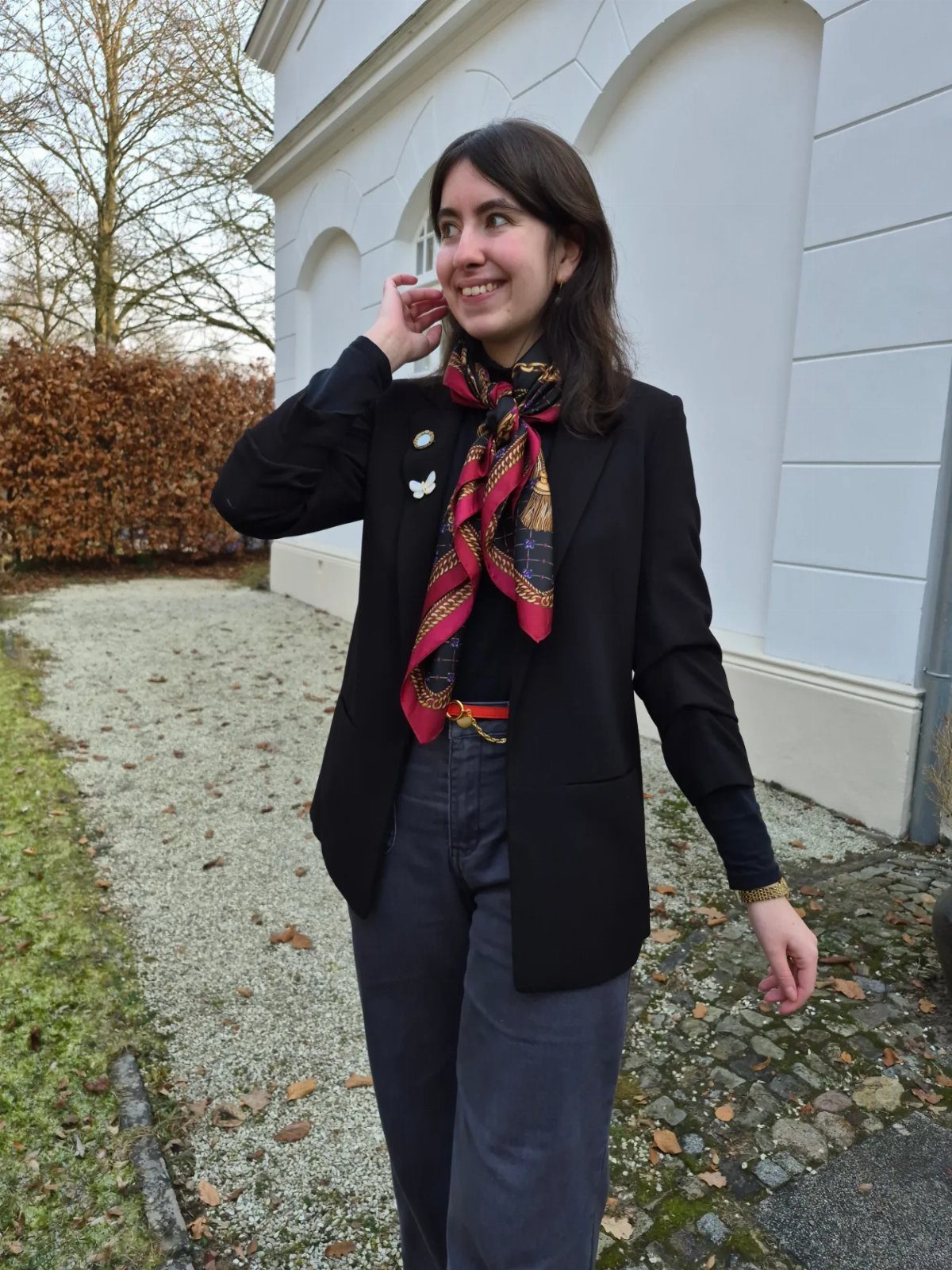
A black blazer and grey trousers with a colorful patterned silk neck scarf is the simplest way to make a neutral suit feel personal.
The scarf does all the work here; the rest of the outfit is deliberately quiet so the pattern can sit center.
Tie it close to the neck rather than letting it drape loose, which keeps the look office-appropriate rather than artistic.
Silk has the right weight to knot cleanly and stay put through a day of meetings. I would choose one color from the scarf and repeat it nowhere else, letting it stand alone as the accent.
This is an easy addition if you already own the blazer and trousers and want to stop looking like everyone else in the elevator.
Business Casual Definition
Business casual sits in the space between a full suit and what you would wear to run weekend errands.
Creative agencies sometimes allow more room: a patterned tie, a brighter color, or a shirt with some personality. The core idea is that you still look like you are there to work, even if nobody expects a jacket and tie.
Dressing for Interviews
For a job interview, the safer move is to dress more formally than the day-to-day dress code. If the role lists business casual, wear the more formal end of that range or step up one notch.
You can always relax after you have the job and have seen how people actually dress. Showing up underdressed is the harder mistake to recover from.
Color Coordination
Color in business casual works best when one piece carries the interest and the rest stay quiet. A bright blue, white, or burgundy jacket paired with neutral trousers reads as intentional rather than loud.
One patterned piece is enough; a jacket with some visual interest over a solid shirt and solid trousers holds together, while competing patterns across multiple pieces fight each other.
Comfort Vs. Professionalism
The balance between comfort and professionalism in business casual comes down to fabric and fit rather than giving up on either.
The pieces that work are the ones you can sit in through a long meeting, stand in for a coffee run, and still look like you thought about what you put on that morning.
Frequently Asked Questions
What dress code is business casual?
Business casual sits between a full suit and what you would wear to run weekend errands.
In most workplaces, this translates to slacks or khakis, skirts that hit at the knee, dark wash jeans if the culture allows, and tops that look chosen on purpose: button-downs, sweaters, and blouses.
You want to signal that you showed up for the job, even if nobody is asking for a jacket and tie.
Can I wear jeans for business casual?
Dark, non-ripped jeans in classic styles can work for business casual on the relaxed end of the spectrum or on looser days like Friday.
If your office trends formal, leave the denim in your drawer. Business casual is not casual with a blazer slapped on top; it is business wear that has loosened up, and the direction matters.