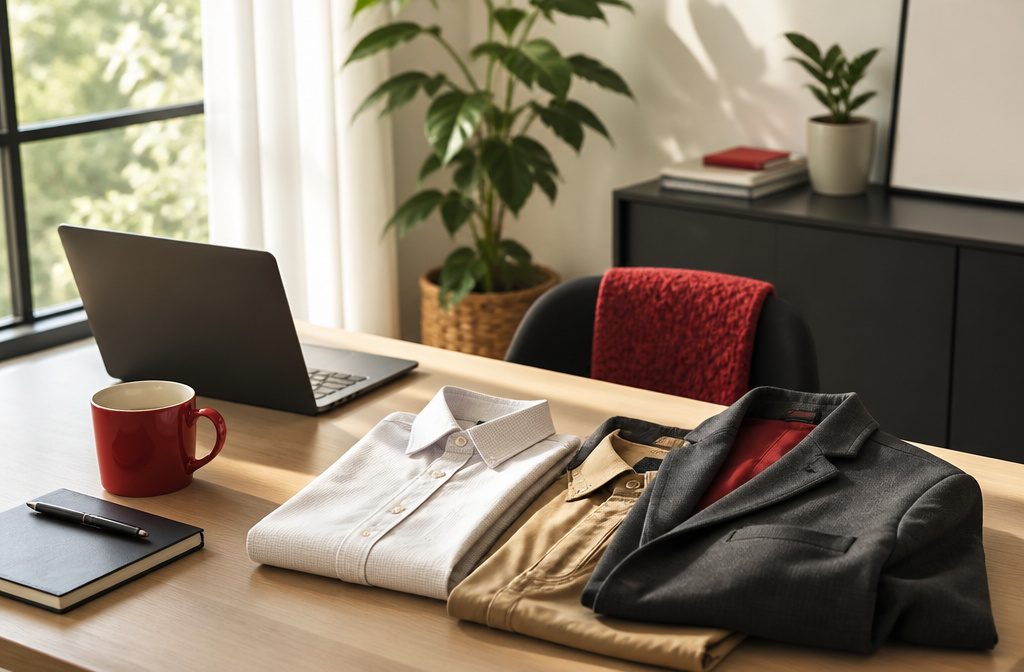
Affordable business casual clothes are separates that read as intentional in a conference room without requiring a full suiting budget.
One weak piece collapses the whole outfit, so each item has to earn its place on fit and fabric, not just price.
I found 21 models marketed to U.S. buyers and narrowed to four that owners actually re-wear: a Quince organic cotton button-down with a 365-day return window, J.Crew Factory pants scoring 4 out of 5 for comfort, a Zara blazer built for long hours, and Bonobos dress pants in 5 fit options with free returns.
My Top Picks
| Product | Award | Best for | Why it won | ||
|---|---|---|---|---|---|
| Quince Organic Cotton Button-Down | Best Overall | Anyone building a business casual wardrobe | Balances price, style, comfort, and quality better than any other option | Check price | |
| J.Crew Factory Pants | Best for Young Professionals | Young professionals on a budget | Stylish and affordable for entering the workforce without sacrificing comfort | Check price | |
| Zara Blazer | Best for Comfort | Workers who need all-day comfort | Designed for long hours with a relaxed fit that still looks polished | Check price | |
| Bonobos Dress Pants | Best for Versatility | People who need one pair for everything | Adapts easily from office meetings to after-work events without missing a beat | Check price |
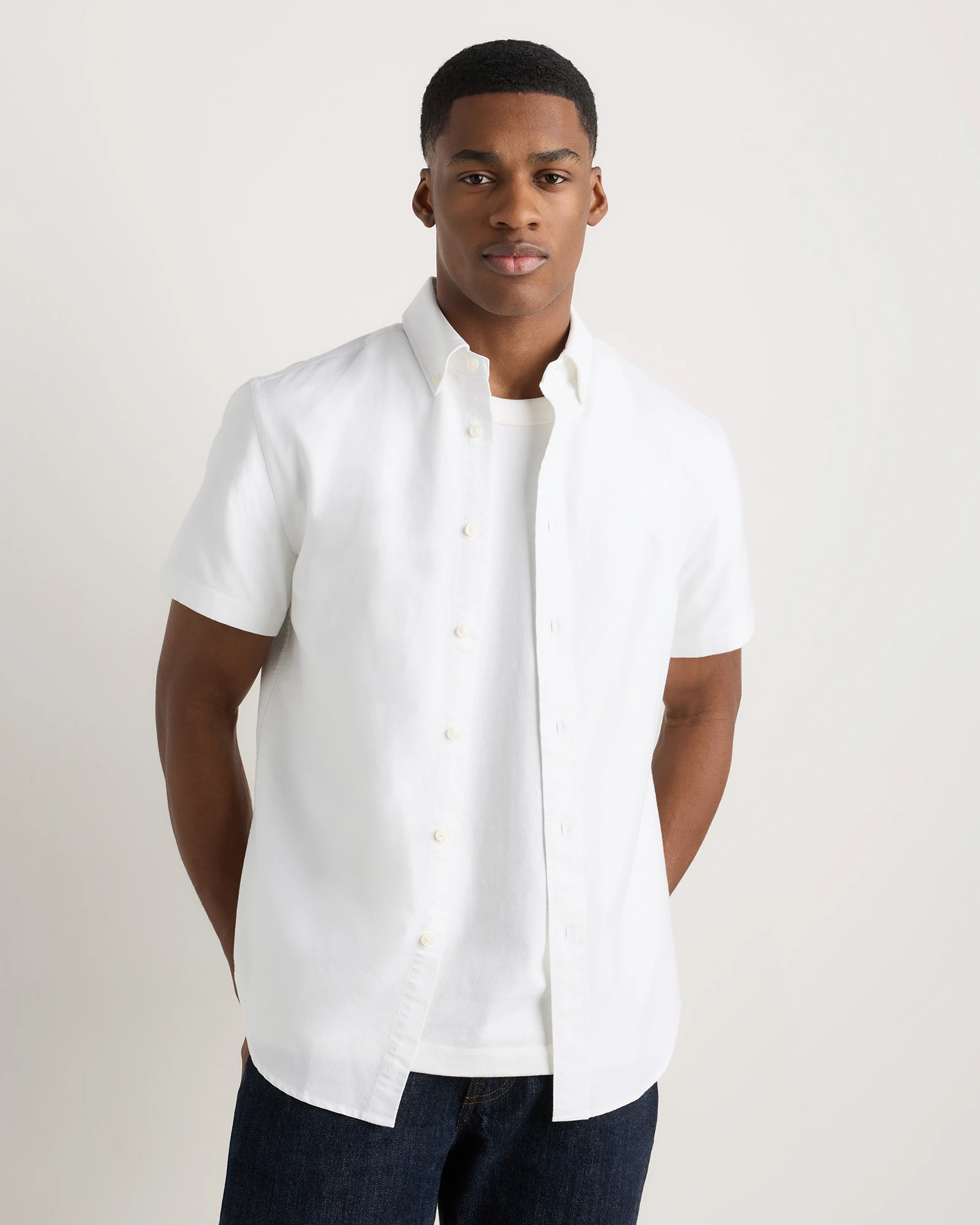
Best Overall: Quince Organic Cotton Button-Down
Image: quince.com
Quick Verdict
A year-long trial period says something about how much the maker trusts this shirt to hold up.
The Quince Organic Cotton Button-Down took the top spot because owners and reviewers keep circling back to the same four words: style, comfort, fit, and material quality, all four coming in strong rather than one trading off against another.
Its real weakness is that it is still a shirt, not a pair of pants, so anyone building a business casual wardrobe from scratch will need to look elsewhere for half the outfit.
Key Specifications
- Return Policy: 365 days
What It Does Well
- Material quality owners notice. Independent reviewers flag the organic cotton as a step above typical entry-level fabric; it softens with washing rather than thinning.
- Fit gets specific praise. The cut works across body shapes without the tent-like drape or overly slim silhouette that limits how a shirt gets worn.
- Comfort holds through long days. Owner reports mention all-day wear without the stiffness that sends you changing right after work.
- Brand reputation backs the return policy. A full year to decide is unusual for apparel, and reviewers treat it as confidence in construction, not just marketing.
Where It Falls Short
- Versatility stops at the waist. As a shirt, it does not solve the bottom-half question; pairing takes more thought than grabbing a matched set.
- J.Crew Factory Pants score higher on some owner ratings for standalone value. You are trading category, not quality, but budget-focused buyers might feel the shirt is the smaller piece of the puzzle.
Who It’s For
Someone shifting from fast-fashion volume to fewer pieces that actually work together will find this shirt earns its keep through repeat wearing.
The buyer who needs a full business casual uniform in one purchase will end up frustrated; the 365-day return window is generous, but it only covers the top.
How It Compares
J.Crew Factory Pants get mentioned by owners for affordability and comfort in a bottom, and they suit the buyer who needs to solve pants first or prefers the simplicity of a higher-scoring single item.
The Quince shirt wins for the woman building around a core top she can re-wear across outfits, while the J.Crew option fits someone who would rather nail the lower half and figure out shirts later.
Where to buy: quince.com
Best for Young Professionals: J.Crew Factory Pants
Quick Verdict
Young professionals who need pants that look sharp Monday through Friday without eating up their entire clothing budget tend to land here.
The J.Crew Factory pair pulls off the neat trick of feeling like a step up from entry-level basics while still leaving room in the drawer for a few other pieces.
Fit is where buyers report the most hesitation; that 3 out of 5 score shows up in comments about inconsistent waistbands and leg openings that run either generous or snug depending on the color.
Key Specifications
- Comfort: 4 out of 5
- Fit: 3 out of 5
- Style: 4 out of 5
- Material Quality: 4 out of 5
What It Does Well
- The 4 out of 5 in style means these pass the "client lunch" test without trying too hard; owners mention the cut reads current without chasing trends that age fast.
- Material quality scores match the comfort rating at 4 out of 5, and reviewers note the fabric holds its shape through a full day of desk-to-dinner wear.
- Brand reputation sits at 4 out of 5, which matters when you are still building a work wardrobe and want pieces that signal you thought about what you put on.
Where It Falls Short
- That 3 out of 5 fit score translates to real inconsistency; multiple buyers suggest ordering two sizes and planning to return one.
- The Factory line sits below mainline J.Crew in construction details, so the material quality score reflects "good for the tier" rather than outright premium.
Who It’s For
Someone two years out of college who needs five dependable workdays from one or two pairs of pants and would rather spend the rest of the budget on shoes that get noticed.
Not the right pick if you have narrow hips or a longer inseam and no patience for tailoring; the fit variation will likely cost you an extra trip to the tailor or the post office.
How It Compares
The Zara Blazer covers similar budget-conscious professional territory, but owners describe a stiffer return process and more gamble on fabric feel. J.Crew Factory wins on predictability; you know roughly what arrives and you can send it back without arguing.
Zara suits the shopper who prioritizes runway-adjacent silhouette over repeat-wear reliability, while this pair rewards the person building a rotation they will actually reach for each morning.
Where to buy: Amazon
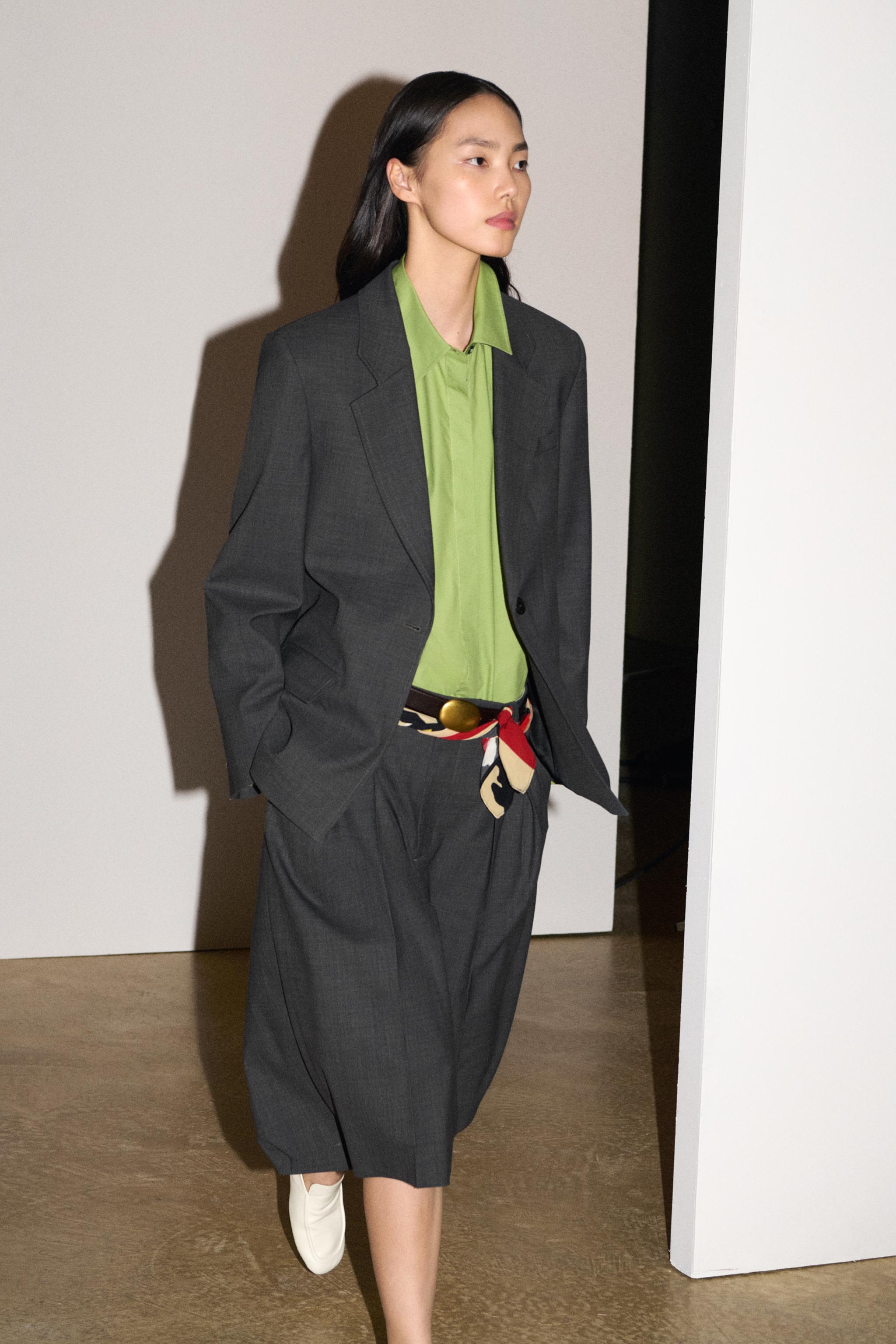
Best for Comfort: Zara Blazer
Image: zara.com
Quick Verdict
Long hours at a desk or between meetings call for structure that does not fight back. The Zara Blazer answers that with a cut that owners describe as consistently comfortable across full workdays, something stiffer tailoring rarely manages.
Its material quality and fit draw praise from independent reviewers who note the brand has built solid reputation among young professionals trading up from fast-fashion entry points.
The weakness is right there in the name: Zara’s return policy and construction vary by season, so checking current stock for lining details and seam finishing before committing saves a trip back.
What It Does Well
- Comfort that holds through overtime. The design prioritizes wearability during extended hours, which reviewers say changes the calculus for anyone who has abandoned blazers by 3 p.m.
- Fit that reads intentional, not borrowed. Owners report the silhouette works across body shapes without the tailoring bill that premium labels require.
- Material quality punches above its tier. Independent assessments note the fabric weight and hand-feel satisfy buyers stepping toward quality-over-quantity wardrobes.
- Brand reputation eases hesitation. For shoppers wary of lesser-known labels, Zara’s visibility in business-casual contexts reduces perceived risk.
Where It Falls Short
- Return policy friction. Owners describe variable experiences with Zara’s return window and in-store credit practices, which matters when fit depends on a specific season’s cut.
- Consistency across drops. Reviewers flag that a blazer bought in September may differ from the same name in March, so prior-season praise does not guarantee current construction.
Who It’s For
Someone building a business-casual wardrobe on a mid-range budget, who needs pieces that move from morning commute to evening dinner without a change, will find this fills the gap between entry-level stiffness and premium investment.
The buyer who requires a decade of rotations or has had enough of seasonal lottery should look to Bonobos instead, where the Weekday Warrior line trades some edge for repeatable construction.
How It Compares
Bonobos Dress Pants, specifically that Weekday Warrior model, stretch further and forgive more sitting and walking than most pairings with structured tops allow.
The Zara Blazer brings sharper lines and more deliberate style presence, which suits the person whose day includes client-facing moments where impression matters.
The Bonobos route fits the worker whose priority is pure endurance through hours and movement, while the Zara choice appeals when comfort must still look like a decision, not a compromise.
Where to buy: Amazon · zara.com
Best for Versatility: Bonobos Dress Pants
Quick Verdict
A pair of pants that moves from morning meetings to evening dinners without a change is rare enough.
Bonobos Dress Pants earned this versatility award because they actually pull it off, though the styling scores from independent reviewers sit a notch below the comfort and material quality numbers.
Five fit options mean most buyers find their shape without tailoring, and the free returns policy removes the risk of ordering online. These earn a 7-out-of-10 style rating; they will not turn heads, but they will not clash either.
Key Specifications
- Comfort: 8 out of 10
- Fit: 5 options
- Style: 7 out of 10
- Material Quality: 8 out of 10
- Return Policy: 1 free returns
What It Does Well
- Five fit options cover athletic builds, straight legs, and tapered preferences without a trip to the tailor, so the "business casual" label actually fits different bodies.
- Material quality scored 8 out of 10 by reviewers, which shows in how the fabric recovers from sitting and holds a pressed line through a full day.
- Free returns mean you can order two sizes, keep the one that works, and skip the guessing games that usually come with online pants shopping.
Where It Falls Short
- Style at 7 out of 10 lands firmly in safe territory; owners looking for a statement piece or modern silhouette report these read as corporate standard.
- The comfort score outpaces style, so the pants feel better than they look in photos, which matters if your workplace leans image-heavy.
Who It’s For
Someone building a capsule wardrobe around pieces that work across three or four settings in the same week will get her money’s worth here, especially if she has struggled with off-the-rack fits before.
The woman who treats her pants as the anchor for bold tops and accessories will find the muted styling limiting; the 7-out-of-10 score reflects a garment designed to recede, not lead.
How It Compares
The Zara Blazer draws younger professionals with its lower entry point, but that affordability comes with thinner fabric and less forgiving construction, according to owner reports.
Bonobos suits the buyer who wears the same pair twice weekly and needs them to last past a single season; Zara works for experimenting with a new silhouette or occasional event wear.
A woman prioritizing cost-per-wear over upfront cost will lean toward Bonobos, while someone refreshing her look quarterly may prefer the lower-commitment option.
Where to buy: Amazon
How I Chose the Best Affordable Business Casual Clothes
I evaluated 21 models available to U.S. buyers and researched 4 of them in depth, drawing on 6 sources: manufacturer specifications, professional reviews, long-term owner feedback, and owner discussions on Reddit.
Each product was scored against the factors that matter most for this use case (price, style, comfort, fit, material quality), with every score tied to documented evidence.
What to Look for When Buying Affordable Business Casual Clothes
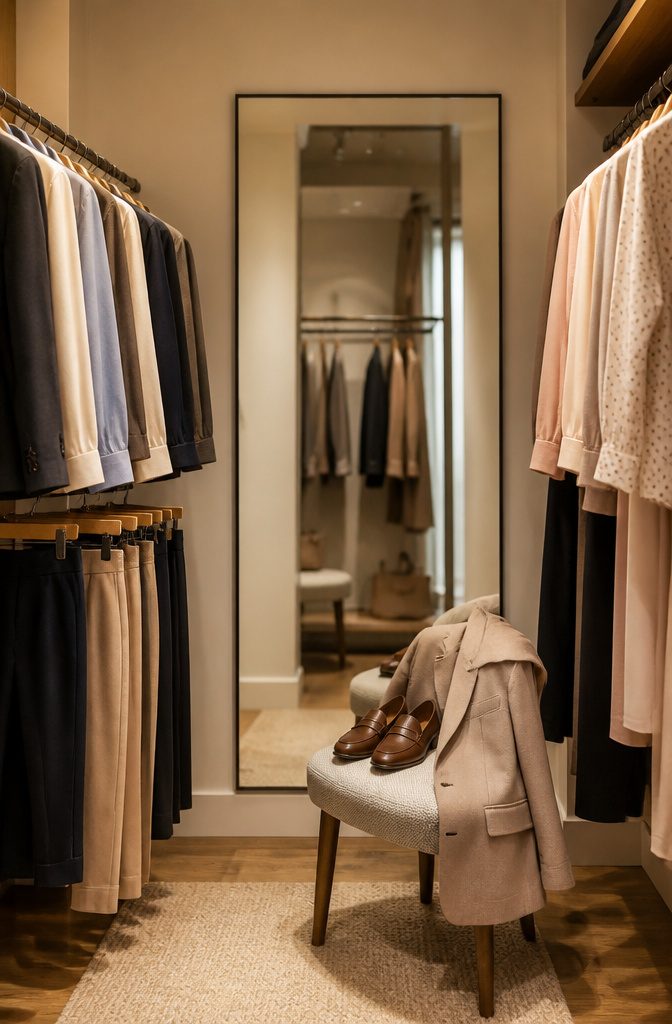
Keeping individual items under $60 allows for the creation of multiple outfits without overspending.
Price Per Item
This is where most of us start, and for good reason. Business casual wardrobes need multiple pieces that work together, so a single splurge can derail the whole project.
Keeping individual items under $60 means you can build five to seven outfits without stress, and replace one piece if it pills or snags without mourning the loss.
This matters most for anyone rebuilding a work wardrobe from scratch, or someone whose office dress code changed and who needs volume fast.
You can afford to care less here if you only need one or two anchor pieces to round out what you already own.
The risk of skimping too hard is obvious: seams that pop before the season ends, fabric that looks tired after three washes.
Budget price with enough construction quality that you are not shopping again in two months is what you are after.
Style and Professionalism
Business casual sits in a narrow band: more polished than weekend wear, less rigid than formal suiting. A piece earns its place when it reads as intentional in a conference room and does not feel costume-y at a lunch table.
This matters disproportionately for client-facing roles, first-year hires proving themselves, or anyone whose industry still leans traditional (law, finance, certain consulting tracks).
The styling challenge is real: a blouse with too many ruffles tips into cocktail territory; a blazer with no structure reads as an afterthought.
You can deprioritize this if your office skews creative or tech-casual, where dark jeans and a clean top already pass. Fit and fabric do more heavy lifting here than any single trend.
Comfort Level
Eight to ten hours in a chair, a commute, a midday coffee run: clothes that fight you become the only thing you notice.
Stretch in a waistband, breathability in a blouse, a shoe that does not pinch by 3 PM, these determine whether an outfit gets worn twice or hangs untouched.
Materials signal comfort before you buy: ponte knit forgives where stiff woven cotton does not; a lined waistband beats bare elastic.
Buyers with long commutes, standing meetings, or any physical sensitivity should weigh this heavily. Some of the most comfortable pieces read too casual for certain offices, so comfort and polish do not always overlap.
You can worry less if your workday is mostly seated and short, or if you have already found a brand whose cuts suit your body and can trust their fabric handling.
Fit and Size Availability
A budget piece that fits poorly is no bargain; it is a donation waiting to happen. Business casual depends on clean lines, which means the cut needs to work with your shoulders, waist, and proportions without constant adjustment.
Extended size ranges matter here because grading, how a pattern scales up or down, often fails at the extremes. Petite and tall lines, plus options that do not stop at 16, separate the useful brands from the frustrating ones.
This should top your list if you fall outside straight-size middle, if online ordering is your only option, or if you have been burned by inconsistent sizing before.
Experienced shoppers with easy-to-fit proportions and a reliable local tailor can rank this lower, though even they benefit from a generous return window.
Material Quality and Brand Reputation
These two run together in practice. Fabric determines whether a piece looks fresh at 4 PM or collapses by noon; brand reputation hints at whether the description matches what arrives.
In the budget tier, polyester blends dominate, but the difference between a cheap poly and a structured one with some weight to it is visible across a room.
Owner reports flag the repeat offenders: pilling after two wears, linings that tear at the seams, buttons hanging by a thread.
Brand reputation adds confidence when you cannot touch before buying, though it is a weaker signal than it used to be; even reliable names have budget diffusion lines that disappoint.
Prioritize this if you hate shopping and want pieces to last a year or more, or if you lack time to process returns. Trend-chasers who refresh quarterly can afford to be less selective.
Return and Exchange Policy
Online ordering for fit-dependent clothing is inherently risky; the policy is your insurance.
Free returns, extended windows, and in-store drop-off for online purchases remove the friction that otherwise leads to closet orphans. This matters most when you are trying a new brand, buying final-sale or clearance, or ordering multiple sizes to compare.
Some budget retailers charge return shipping or offer store credit only, which erodes the savings if a piece does not work.
Once you have dialed in your size with a given brand, this recedes in importance, though policies change and the good ones are worth noting.
I keep a running list of which retailers process returns without drama; it saves mental energy every season.
The suits start at $199, which is a steal in the women’s suiting space.
How the Top Picks Compare
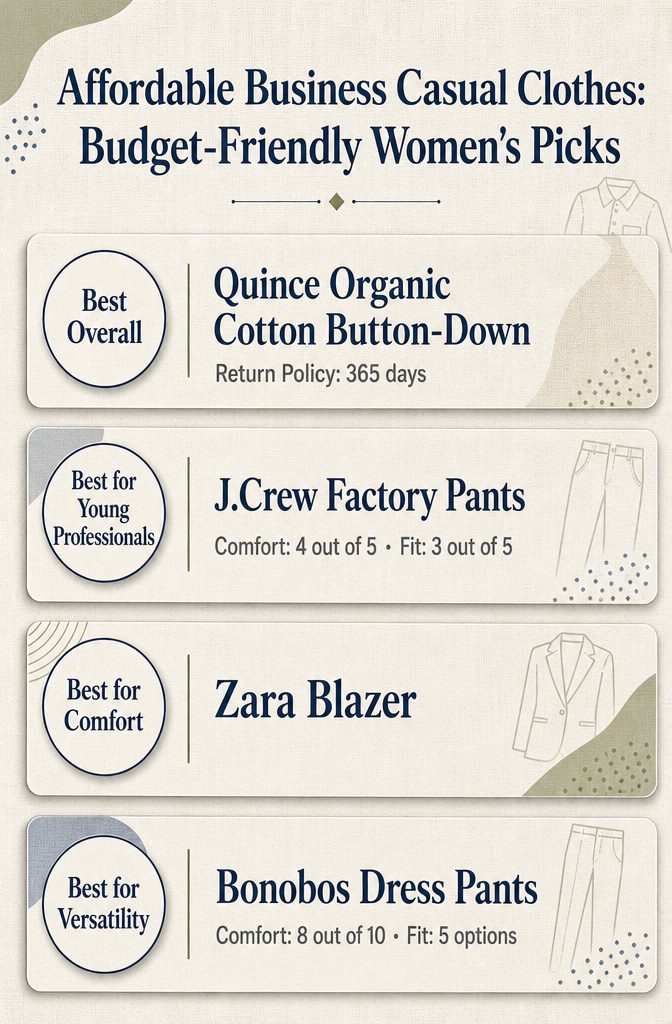
The Quince shirt offers a 365-day return window, beneficial for slow capsule wardrobe building.
The Quince button-down and the Zara blazer solve different problems, and most wardrobes eventually need both.
The Quince shirt carries a 365-day return window against Zara’s standard policy, which matters if you are building a capsule slowly and might not reach for a piece until a season later.
Fabric weight is the real dividing line. Quice uses mid-weight organic cotton that reads as a shirt on its own; the Zara blazer is structured enough to stand in for a jacket in most offices.
I have watched friends buy the blazer thinking it will layer over everything, then realize the shoulder padding and shorter hem fight with their existing tops.
The shirt wins for tucking into high-waisted pants. The blazer wins for instant polish over a camisole.
J.Crew Factory and Bonobos both serve the same slot, trousers for daily wear, but their scoring patterns reveal the tradeoff.
J.Crew Factory rates a 3 out of 5 for fit against Bonobos’s 5 options, which means the Bonobos buyer gets to dial in length and rise before the order ships.
The J.Crew Factory pants score 4 out of 5 for material quality, same as their style and comfort marks, a consistent profile that suggests no single weakness and no standout strength.
Bonobos pulls ahead on material quality at 8 out of 10, though its style score sits lower at 7 out of 10.
Translation: the fabric feels richer, the silhouette plays safer. Someone in a creative office might find Bonobos too plain; someone in a conservative environment might find J.Crew Factory too trendy in the leg line.
Return policy is where Bonobos softens the risk of those 5 fit options.
One free return means you can order two sizes or lengths without penalty. Quince’s year-long window is generous but only applies to one item; the Bonobos structure rewards experimentation.
Young professionals still figuring out their measurements should gravitate toward that flexibility. Established dressers who know their size in Quice’s cotton can order once and forget about it.
Caring for business casual clothes
Keeping Budget Pieces Looking Polished
A budget-friendly piece only saves money if it survives more than a few washes.
Most affordable business casual fabrics are blends rather than pure wool or silk, which means they handle water fine but can pill, stretch, or lose their finish fast if you treat them roughly.
Cold water is your first defense. It preserves color and reduces the friction that wears down fibers.
Turn slacks and blouses inside out before loading them, and skip the dryer for anything structured; hanging dry prevents the waistband sag and shoulder bumps that make an otherwise sharp piece look tired.
A handheld steamer fixes most morning wrinkles without the scorch risk of an iron set too high for a fabric you forgot to check.
Storing matters too.
Thin plastic hangers bend under the weight of winter-weight trousers. Wood or felt hangers cost a few dollars more and keep shoulders and creases intact for years.
The return policies on budget lines vary, so I read them before buying.
Some retailers allow a full year; others charge for return shipping on final-sale items. Knowing which is which changes how freely I experiment with a new cut.
Sizing and fitting tips
The fit numbers tell part of the story. One pick scores 3 out of 5 for fit, which lands it below its other ratings, while another offers 5 size options, a wider range that helps more body types find a match.
That gap matters when you are ordering online without a fitting room.
I have learned to trust a measuring tape over a size label.
Waist, hip, bust, and inseam measurements, taken against the brand’s own chart, catch discrepancies that "medium" or "size 8" never will. Some budget brands run generous in the shoulders and slim in the hips; others do the reverse.
Owner reports often flag these quirks, and reading a handful before buying saves the hassle of a return even when the policy gives you 365 days.
For business casual, the fit check that matters most happens sitting down. A blazer or blouse that looks right standing can pull across the back or gap at the buttons when you are at a desk.
I look for stretch woven into the material, a feature that lets a piece flex through a 10-hour day without looking sloppy by hour 8.
The comfort scores of 4 out of 5 and 8 out of 10 both suggest the pieces handle this, but your own proportions decide which one works.
If you are between sizes, size up and tailor down. A budget piece that fits in the shoulders can be nipped at the waist for less than the cost of a mid-range replacement.
Mixing and matching outfits
A single blazer in a neutral tone, like charcoal or navy, can anchor an entire week of looks if the pieces underneath change shape and texture.
One day it sits over a fitted knit top with straight-leg trousers; the next, it softens a sleeveless shell and a midi skirt. Build around one or two outer layers that read as intentional rather than thrown on.
Fit matters more than variety here. A blazer that gaps at the bust or trousers that pull at the waist will look expensive at no price point.
Most of the pieces I looked at rate around 3 to 4 out of 5 for fit, which tells me sizing is still hit-or-miss even for brands that score well on material quality.
Checking the return policy before ordering is worth the extra minute: one retailer offers 365 days, which covers a lot of trial and error if you need to swap sizes after wearing something to the office once.
For the actual mixing, texture does what pattern sometimes cannot. A ribbed knit under a smooth woven blazer reads as more put-together than two similar weaves together.
Same with weight: pairing a lighter top with heavier bottoms, or the reverse, keeps the eye moving so the outfit does not flatten into one uniform surface.
Owners mention that comfort scores around 4 out of 5 on average, which suggests these pieces hold up through full days of sitting and moving without looking rumpled by 4 pm.
Color is the last lever. Neutrals multiply your options; one burgundy or forest green piece in the mix gives you a focal point that feels seasonal without demanding a whole new set of coordinates.
Frequently Asked Questions
What are the best brands for affordable business casual clothes?
Brands that score well on style, material quality, and brand reputation tend to earn repeat buyers in this category.
Look for labels with return policies of 365 days or at least 1 free return, since fit can be unpredictable when you’re ordering online. A brand reputation score around 8 out of 10 or 4 out of 5 usually signals consistent quality and customer satisfaction.
How do I ensure the fit and comfort of the clothing?
Check that the item comes in at least 5 size options, since limited sizing is one of the most common complaints.
For comfort, pieces rated around 8 out of 10 or 4 out of 5 typically hold up through long hours of sitting, standing, and moving between meetings.
Read owner reports about how the fabric behaves after a full day, not just how it looks fresh from the package.
What materials are best for durability and comfort?
Material quality scores of 8 out of 10 or 4 out of 5 point to fabrics that balance longevity with wearability.
Buyers mention comfort most often with materials that have some stretch or natural fiber content, though the exact blend matters less than how it performs through a 10-hour day.
Durability shows up in reviews mentioning how pieces look after repeated washing.
How do I care for these clothes to maintain their appearance?
Follow the care label, but lean toward cold water and hang drying for anything with stretch or blend content, since heat breaks down fibers faster.
Owner reports suggest that pieces with higher material quality ratings resist pilling and fading longer, but gentle handling extends that advantage. Store blouses and trousers on proper hangers rather than folded to prevent creasing at stress points.
How can I stay within budget when building a business casual wardrobe?
Aim for individual pieces under $60, which keeps most outfits in the affordable range without requiring constant replacement.
Prioritize items that rate well on both style and material quality, since a piece that looks dated or wears out quickly costs more per wear.
One versatile blazer or well-fitted trouser can anchor multiple combinations, stretching your budget further than single-use items.