Jeans qualify as business casual in five specific situations, but only when your workplace actually permits them. A tech startup may treat dark indigo denim as standard dress, while a corporate law firm still expects tailored slacks.
The 13 oz fabric weight that holds its shape through a full workday is one detail that separates office-ready pairs from weekend wear.
1. Are Jeans Business Casual?
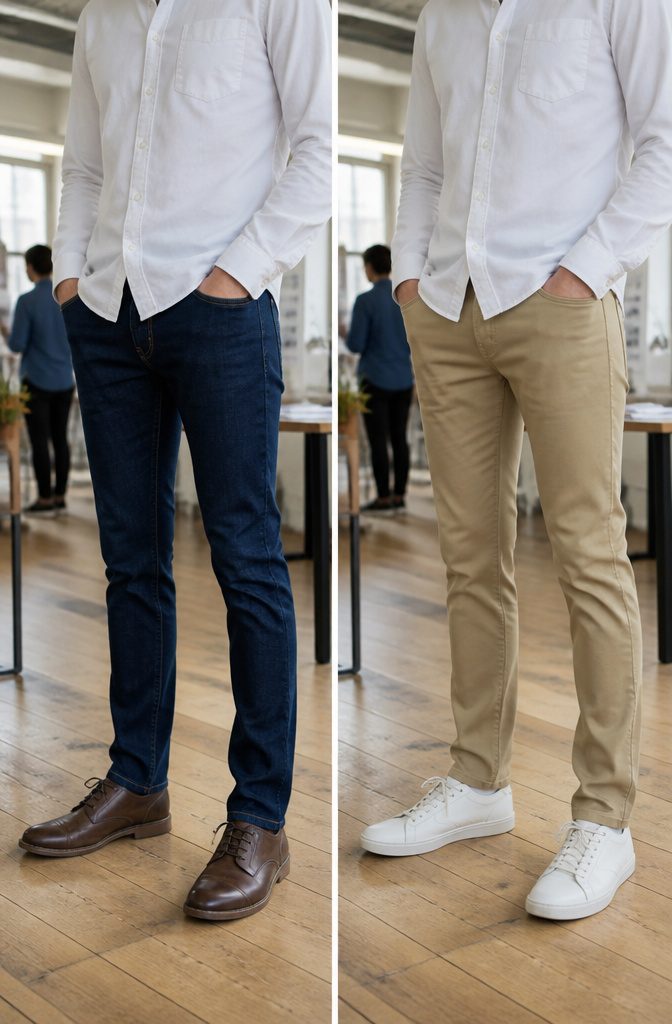
Yes, jeans can be business casual when the workplace allows it and the pair is chosen with care. "Business casual" sits between formal office wear and everyday clothing, but its exact meaning shifts depending on industry, region, and company culture.
A tech startup might treat dark-wash denim as standard, while a corporate law firm expects chinos or tailored dress pants instead.
Workplace culture matters more than any single rule. Creative or relaxed environments usually welcome jeans as part of the dress code.
These offices prioritize comfort and flexibility, so employees can express individuality without looking out of place. More conservative fields like finance or law tend to hold stricter lines, though even there, specific departments or roles may bend toward the casual.
Before wearing jeans to the office, read the room. Casual Fridays, informal networking events, and relaxed dress-code workplaces are safer bets than client-facing days or formal presentations.
The question is not whether jeans can ever qualify, but whether your particular setting treats them as acceptable. That judgment call belongs to you, not to a universal standard.
2. Jeans Acceptability by Workplace

Workplace culture decides whether jeans belong in business casual long before you pick a wash. In tech, creative agencies, and startups, jeans often sit right there in the standard dress code.
The same pair that feels ordinary on a Tuesday in a design studio would read as underdressed in a law firm or finance office where traditional attire still rules.
Casual Fridays remain the safest entry point in mixed environments. Many offices relax the code at week’s end, and that is your signal to wear denim without testing unspoken limits.
Formal meetings with executives or high-profile clients call for a step up. Even in jeans-friendly workplaces, slacks or a skirt read as more polished when stakes are high.
Creative fields accept jeans; conservative industries do not as a reliable rule, and the gap between them is not narrowing as fast as casual dress trends suggest. Watch what leadership wears to similar occasions before deciding your own standard.
3. Color and Wash
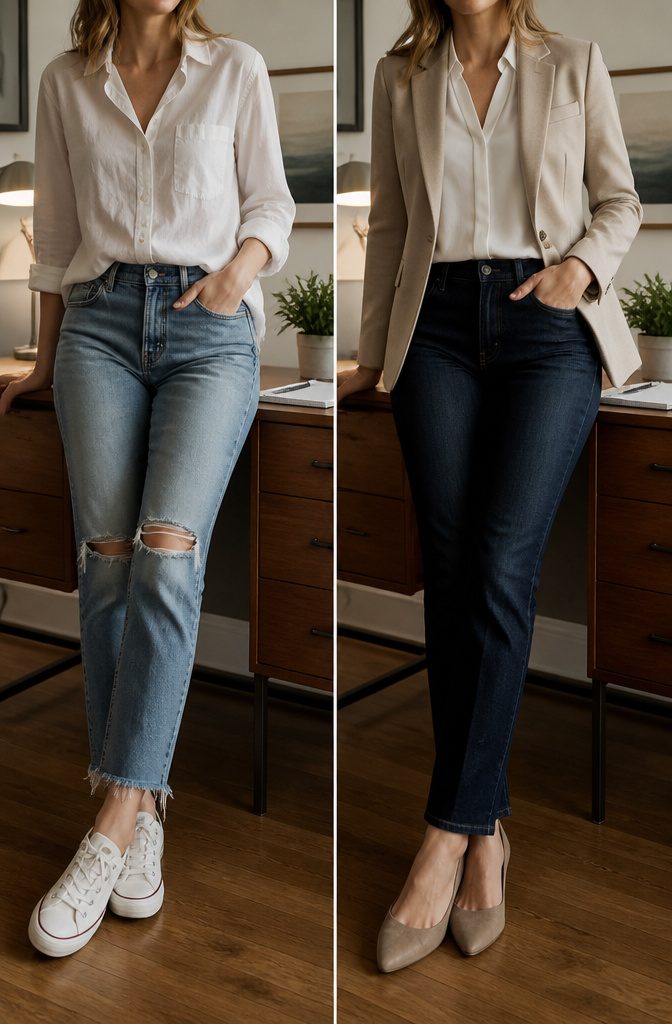
The first thing anyone notices about denim in an office is the wash, and dark indigo or black is what reads as intentional rather than accidental.
Indigo or deep black jeans carry enough formality that, paired with a blazer, they can pass for dress pants from across a room.
Light washes and any distressing, even minimal fraying, pull the whole look toward weekend territory; most workplaces that allow jeans draw the line right there.
Black jeans deserve their own mention because they sit at the edge of the business-casual conversation.
Their color reads more refined than traditional blue denim, and they pair cleanly with structured pieces like button-downs or lightweight knitwear. The same rules apply: no rips, no heavy fading, no embellishment.
A slim or straight cut in black denim, kept pressed and clean, is often the safest entry point for someone testing whether their office actually means it when the dress code says "business casual."
4. Fit and Quality
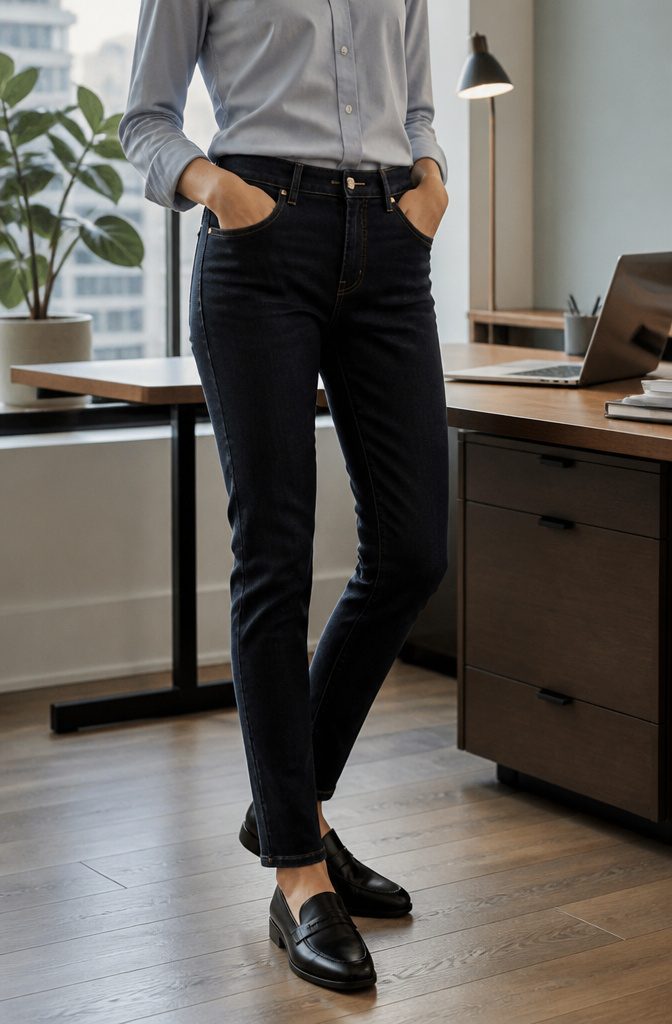
The difference between jeans that pass for business casual and ones that get a second look from HR usually comes down to fit and fabric weight, not the price tag.
Slim or straight-leg cuts hold a clean line from hip to ankle, which reads more trouser-like than the taper of skinny styles or the pooling excess of baggy fits.
I learned this the hard way after wearing a pair of stretch denim that bagged at the knees by 2 PM and looked like I’d slept in them by 4.
Waist fit matters just as much as the leg line.
Jeans that sit at the natural waist or just below, without gaping or pinching, let you tuck a shirt cleanly and move through a day of sitting and standing without adjusting.
A mid or high rise pairs better with blouses and lightweight knits than low-rise cuts that expose hardware or skin when you reach for something.
Quality denim holds its shape through wear. Cheap or overly stretchy jeans lose structure quickly, sagging and creasing in ways that read as sloppy rather than relaxed.
Look for sturdy stitching and a fabric that feels substantial in hand; premium denim may cost more upfront, but it maintains the crisp profile that makes jeans office-appropriate in the first place.
5. Styling Jeans for Business Casual

A tailored blazer turns denim into something that reads as intentional rather than lazy. The structure does the heavy lifting: shoulders, lapels, and a clean line down the front signal that you dressed for the room.
Underneath, a collared shirt or a refined blouse in a neutral keeps the look grounded. A fine-gauge sweater works too, though it reads softer than a button-up.
Footwear is where most outfits tilt one way or the other. Loafers, sleek ankle boots, or clean dress shoes keep jeans in business-casual territory.
Sneakers pull them out of it unless your office explicitly welcomes athletic shoes. A block heel adds polish without the wobble of a stiletto for anyone walking between desks.
Jewelry and accessories should stay minimal.
A classic watch or simple pieces finish the outfit without competing with it. Structured handbags also help, though they matter less than the blazer-and-shoe combination that actually frames the look.
What to Avoid
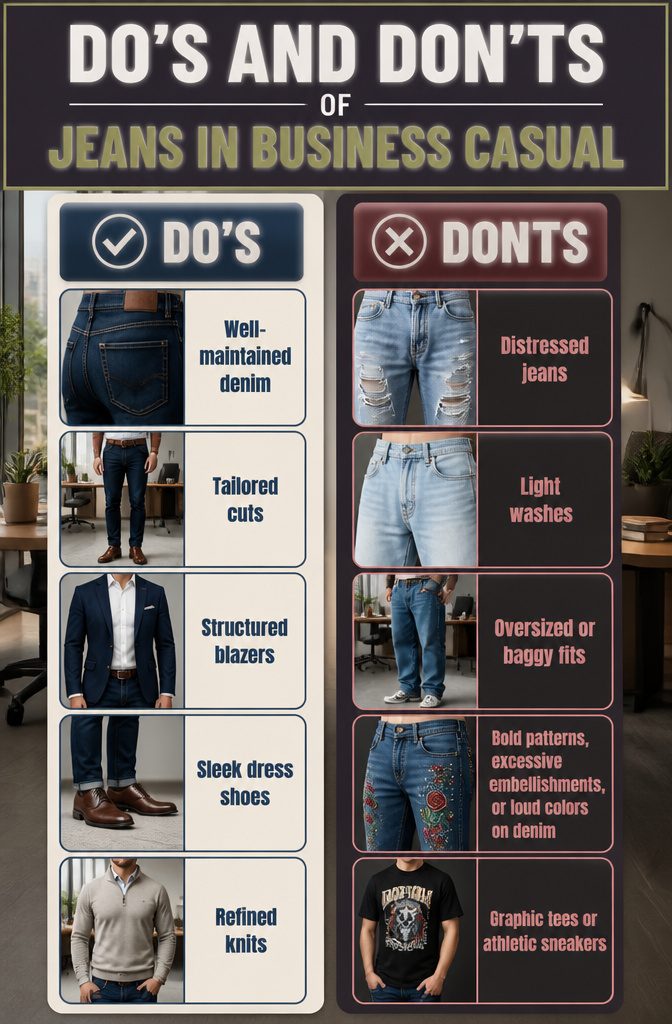
Some details matter even more than the jeans themselves. A few specific missteps push denim past the business casual line:
- Distressed or ripped jeans are the clearest no. Fraying, tears, or heavy distressing read as weekend wear in almost every office.
- Light washes and overly faded colors tend to look too casual against the polished backdrop business casual demands.
- Oversized or baggy fits give off a sloppy silhouette; a more tailored cut keeps the look sharp.
- Bold patterns, excessive embellishments, or loud colors on denim distract from the professional tone.
- Pairing jeans with graphic tees or athletic sneakers undoes the effort; a structured blazer and sleek dress shoes or a refined knit pull the outfit back into line.
Grooming and accessories fill the gap between acceptable and polished. Well-maintained denim, clean lines, and intentional pairings signal that the choice was deliberate, not lazy.
Regional Differences

Acceptability of jeans in a business casual setting shifts noticeably depending on where you live and work.
A tech startup on the West Coast tends to read the dress code more loosely than a corporate law firm in the Northeast, where classic chinos or tailored dress pants still dominate.
Creative agencies and startups generally set the bar lower than finance or law, though even within the same industry, office culture varies block by block.
What this means practically is that the same dark-wash jean outfit can read as polished in one city and underdressed in another.
If you are new to a workplace or visiting a regional office, observing what people actually wear on Tuesday morning matters more than any written policy.
When I am unsure, I default to the more formal side of business casual for the first few meetings and let the room tell me when I can relax.
When Jeans Work and When They Do Not
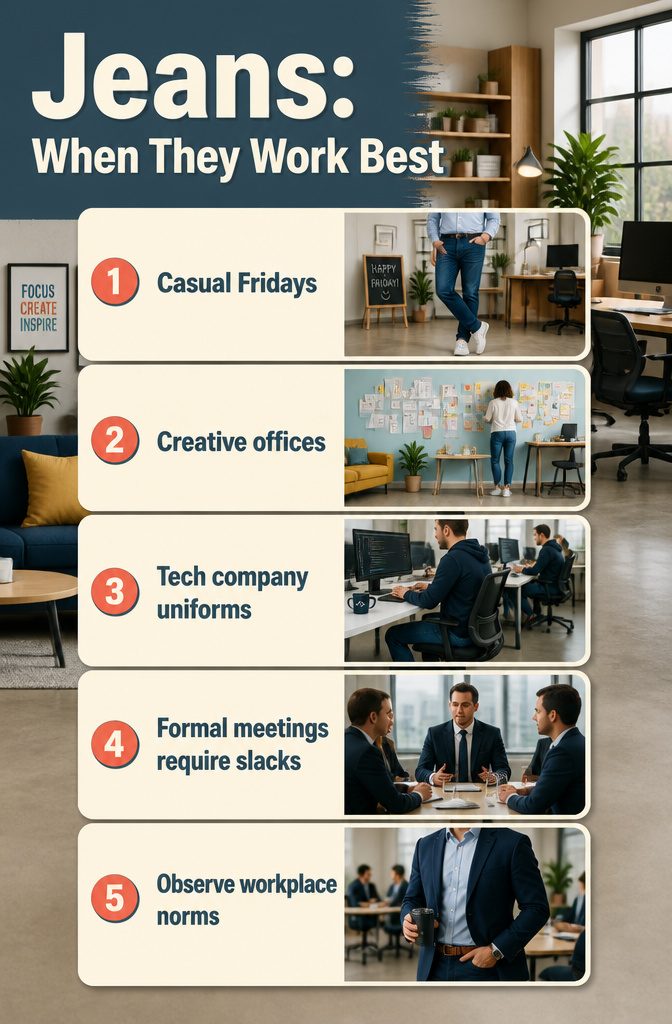
Casual Fridays and creative offices are where jeans usually pass as business casual without a second thought.
Tech companies and startups tend to treat clean, well-fitted denim as everyday workwear. But formal client meetings and conservative fields like law or finance still expect traditional slacks or suits, and that is not changing anytime soon.
If you are unsure which side your workplace falls on, observe what your direct manager wears to similar occasions and dress one step above that.
When the stakes are high, like an important presentation or meeting with executives, the risk of looking underdressed outweighs the comfort of denim.
Building the Outfit
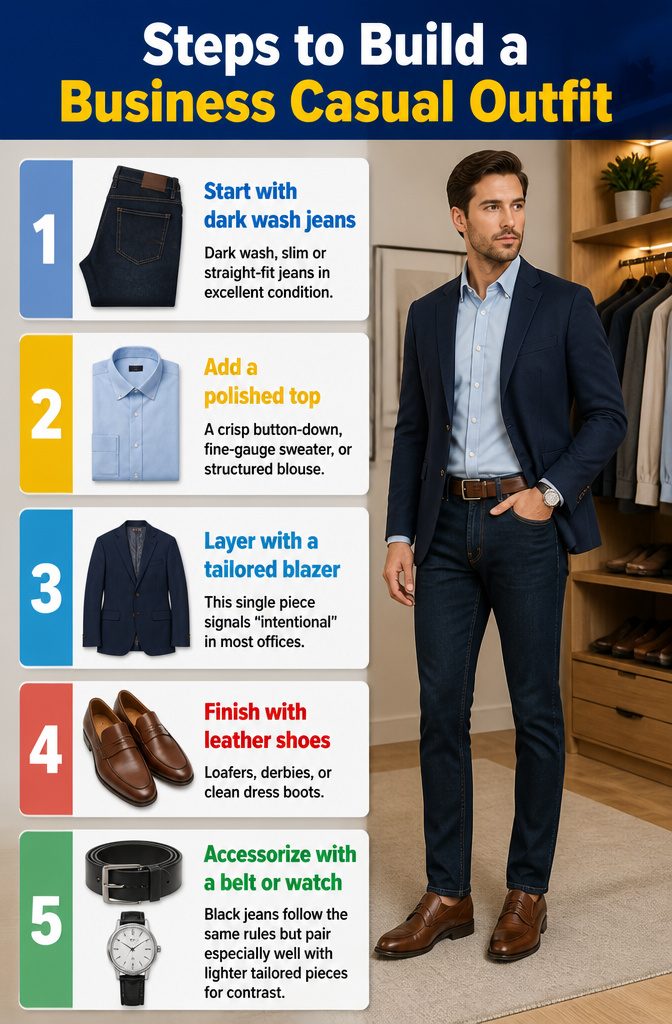
- Start with dark wash, slim or straight-fit jeans in excellent condition. No distressing, no fading, no baggy silhouettes: clean lines read as put-together before anything else gets added.
- Swap in a polished top. A crisp button-down, fine-gauge sweater, or structured blouse does the heavy lifting. Graphic tees and overly casual knits belong elsewhere.
- Layer with a tailored blazer. This single piece signals "intentional" in most offices, bridging the gap between the jeans beneath and the professionalism expected above them.
- Finish with leather. Loafers, derbies, or clean dress boots keep the look grounded in business territory. Athletic sneakers, even new ones, tilt the whole thing casual.
- Add a sleek belt or understated watch if the outfit still feels unfinished. Black jeans follow the same rules but pair especially well with lighter tailored pieces for contrast.
Quality Markers to Check
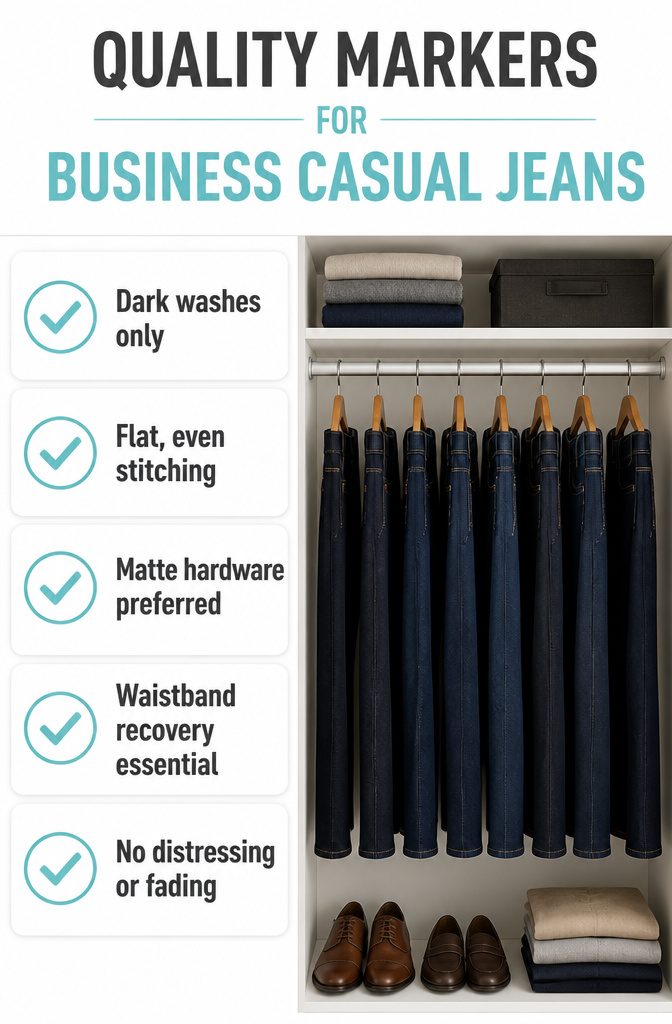
Fabric weight separates office-ready denim from weekend wear. At 13 oz, a classic mid-weight jean holds its structure through a full workday and still looks pressed by 5:00.
Go lighter, around 11 oz, only if your office runs warm or you need something softer against the skin; lighter denim relaxes faster and can look limp by afternoon.
A quick checklist for what already hangs in your closet or your cart:
- Dark washes only: midnight navy reads more refined than standard indigo, and low-contrast stitching keeps the line clean from a distance.
- Stitching should lie flat and even; loose threads or contrasting topstitching turn casual fast.
- Hardware matters more than people think. Matte or tonal buttons and rivets disappear into the outfit; anything shiny or branded pulls focus.
- The waistband should recover after sitting. Premium denim with a clean, well-fitted silhouette skims without gripping; too tight and the knees bag, too loose and the whole look collapses.
- No distressing, no fraying, no heavy fading. Condition is part of the quality equation.
Italian-milled denim is one place the investment shows, but the origin matters less than whether the pair keeps its shape through two years of Tuesday meetings.
Brand Notes
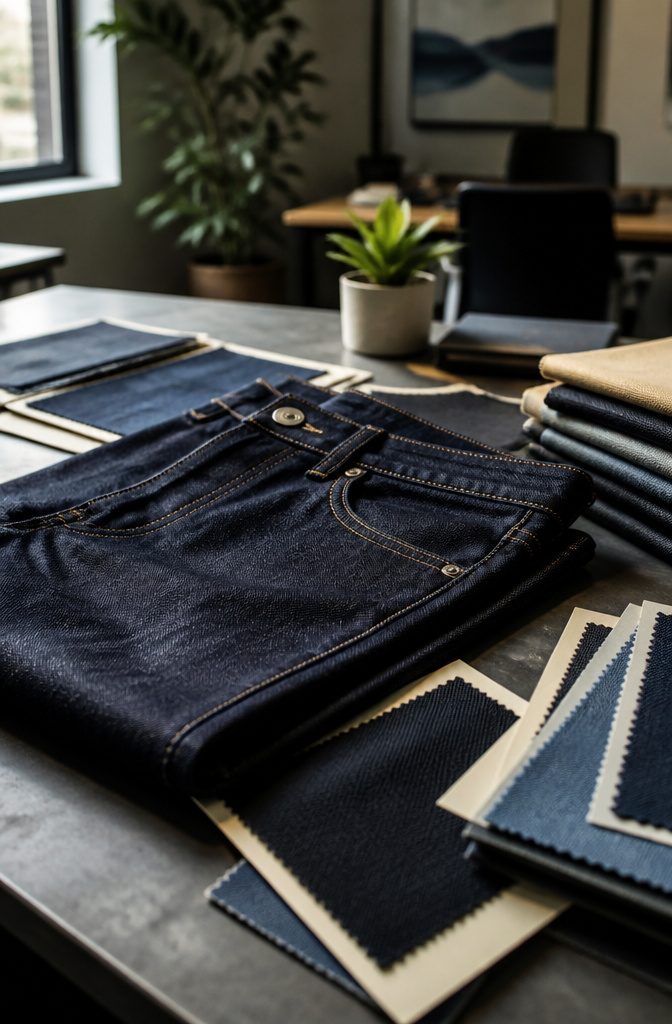
Some denim labels have spent decades earning a reputation for fabric weight and construction that hold up under office lighting rather than leaning into weekend-wear trends.
The cut matters as much as the name: a manufacturer known for crisp, structured silhouettes will read differently than one chasing stretchy, lived-in looks.
I tend to steer toward houses that built their name on trouser-like denim, the kind that sits cleanly at the waist and keeps its line through a full day of sitting and standing.
Cheap or overly stretchy jeans lose structure fast. After a few washes they bag at the knee and fade unevenly, which pushes them straight out of business-casual territory.
Higher-quality denim holds its shape, looks crisp pressed or not, and rarely needs the kind of babying that becomes its own office conversation.
If you find one brand whose rise and leg opening actually match your frame, that relationship is worth more than chasing seasonal labels. Fit is the quality that shows first.
Grooming and Accessories
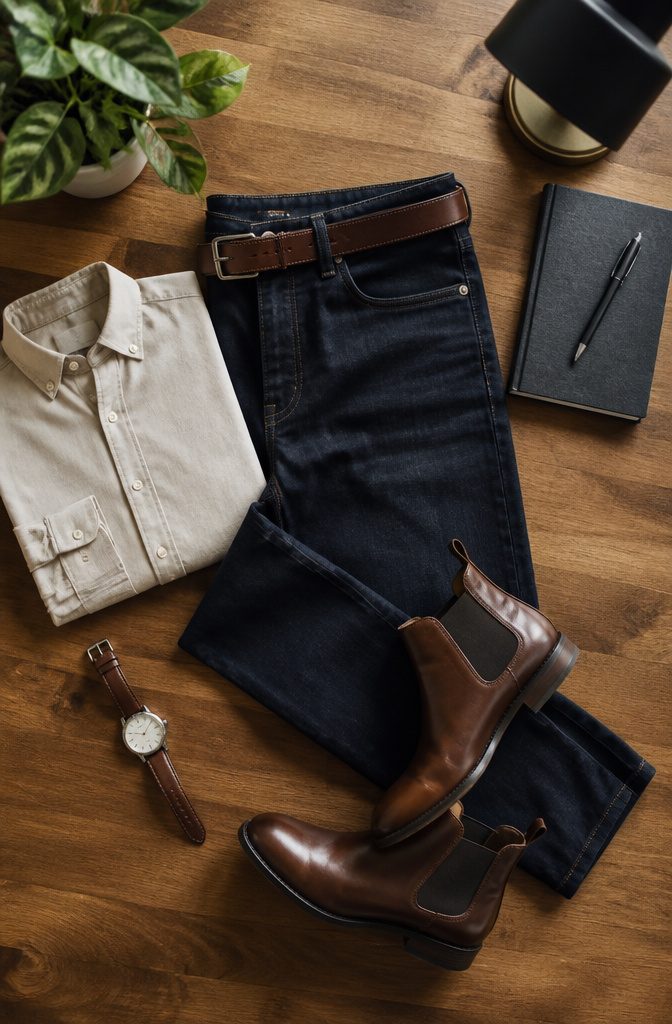
Jeans in a business casual setting need the same attention you’d give a dress pant outfit. A short list of finishing moves pulls denim toward polished.
- A leather belt that matches your shoes is the fastest way to signal intention. Black with black, brown with brown. A modest buckle keeps the focus on the overall look rather than the hardware.
- Leather loafers, Oxfords, Derbies, or clean Chelsea boots all work. Material and condition matter most. Scuffed suede or worn heels undo whatever the jeans and top achieved.
- A simple watch adds structure without competing. Metallic or dark finishes read more office-appropriate than oversized or brightly colored sport styles.
- Hair, nails, and overall tidiness fill gaps that clothing cannot cover. Faded denim already sits at the edge of acceptability in most offices; anything less than clean grooming tips it into too casual.
Frequently Asked Questions
Are jeans business casual?
Yes, jeans can be business casual when your workplace allows them and you choose the pair with care.
Dark, tailored jeans without distressing or rips are generally acceptable, while ripped, baggy, or overly casual styles are not. The exact standard depends on your industry, region, and company culture.
What types of jeans are acceptable for business casual?
Dark indigo or black jeans in a slim or straight-leg cut are the safest choice.
The fabric should be mid-weight, around 13 oz, with no distressing, fading, or embellishment. Clean lines and a proper waist fit let you tuck a shirt cleanly and move through the day without adjusting.
How should I style jeans for a business casual look?
Pair dark jeans with a collared shirt or refined blouse, then add a tailored blazer to signal intention.
Finish with leather loafers, sleek ankle boots, or clean dress shoes. Sneakers and graphic tees pull the look too casual for most offices.
When is it appropriate to wear jeans in a business casual setting?
Casual Fridays and relaxed offices in tech, creative, or startup environments are the safest bets. Avoid jeans for formal client meetings, presentations to executives, or any day in conservative fields like law or finance where traditional slacks still dominate.
What not to wear for business casual?
Skip distressed or ripped jeans, light washes, baggy fits, bold patterns, and loud colors on denim.
Pairing jeans with graphic tees or athletic sneakers also pushes past the business casual line. Even in jeans-friendly offices, these details read as weekend wear.
What type of pants are business casual?
Business casual pants include chinos, tailored dress pants, and dark, well-fitted jeans in workplaces that allow them. Structure and intention set the tone: clean lines, proper fit, and fabric that holds its shape through the workday.
Can I wear jeans to a business casual restaurant?
Dark, tailored jeans styled with a polished top, blazer, and leather shoes will usually pass at a business casual restaurant.
The same rules apply as the office: no distressing, no light washes, and no sneakers unless the setting explicitly welcomes them.