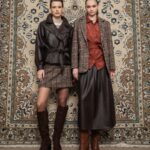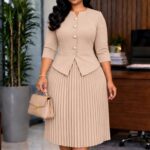
Winter workwear for women ranges from a tweed suit layered over a turtleneck to a full-length camel coat that pulls together whatever is underneath, with skirts and dresses, classic trousers, warm overcoats, and monochrome looks all playing a part.
The right choice depends on whether your office runs hot enough to strip layers or cold enough that you never take your coat off, which is where layering techniques and the versatility of pieces really matter.
1. Skirts and Dresses
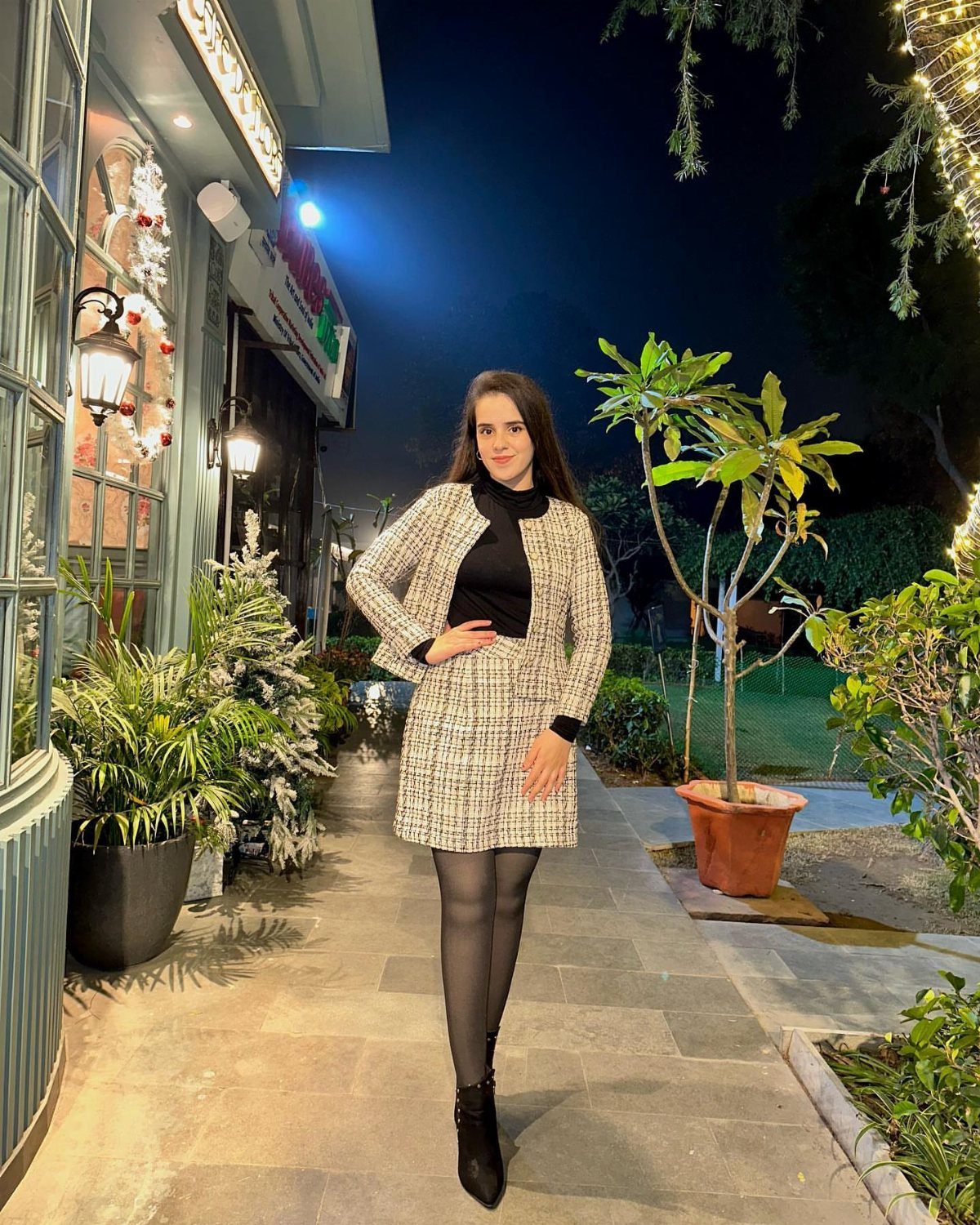
A tweed suit over a turtleneck turns a summer staple into something you can wear straight through January. A thin knit underneath adds warmth without bulk, and black tights keep the line clean from hem to boot.
I used to pack away my dresses come November until I tried brown tights with brown boots as a neutral base. That pairing works with nearly anything in my closet, but it looks especially right with a plaid twill shirtdress.
For belts that come with the dress, I double the fabric and knot it in back when I am tired of a front bow.
If you prefer a dress that stands alone, a structured coat worn as a dress with cropped trousers and a kitten heel has the same polish. Tights underneath are non-negotiable for warmth.
2. Classic Trousers
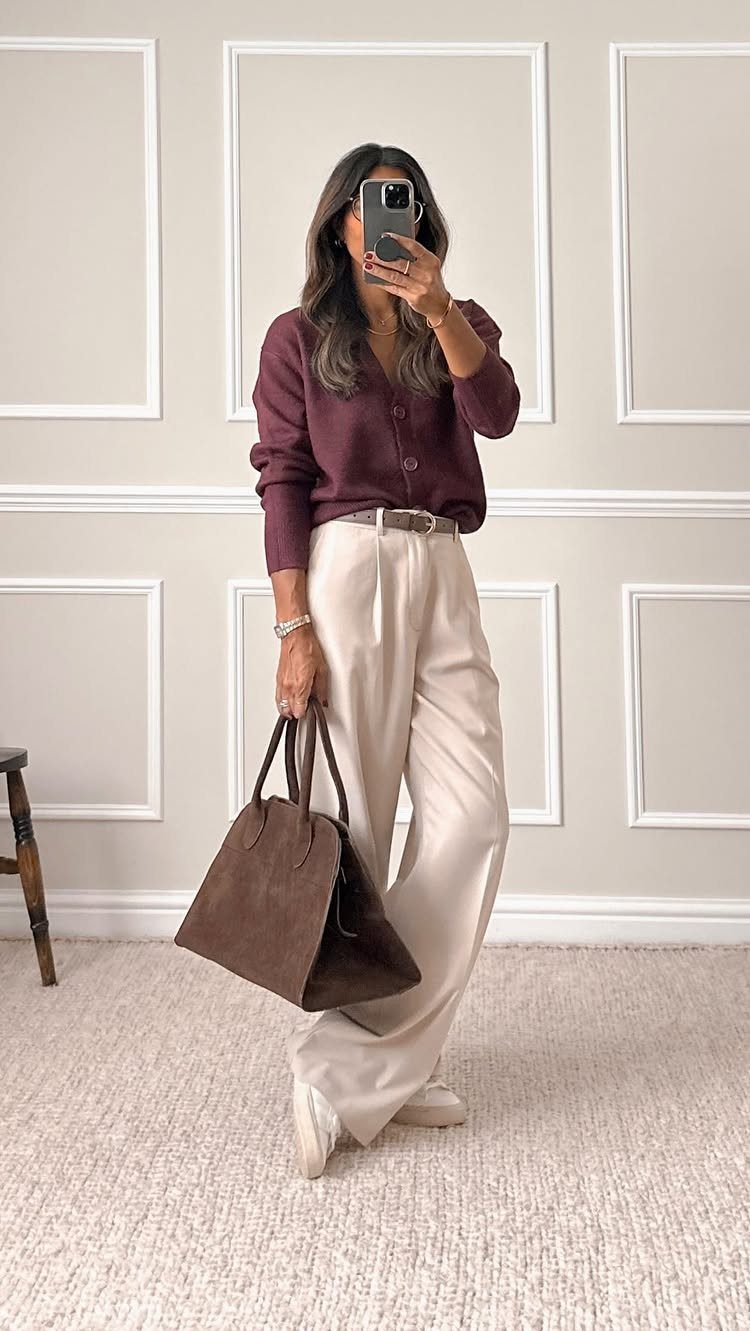
Wide-leg trousers in a warm fabric give you the structure of a suit without the stiffness of a skirt. High-waisted trousers that break just above the shoe keep the silhouette intentional even with flats.
I reach for black, gray, or navy in winter weights: wool blends hold their shape through a full day and do not read as seasonless the way lightweight crepe does.
A tissue turtleneck or cashmere T-shirt underneath handles the temperature without adding bulk at the waist, and a colorful tank beneath a matching gray suit updates the look for offices that run warmer inside than out.
Leather boots finish it. The most reliable winter outfit is often the simplest one.
3. Warm Overcoats
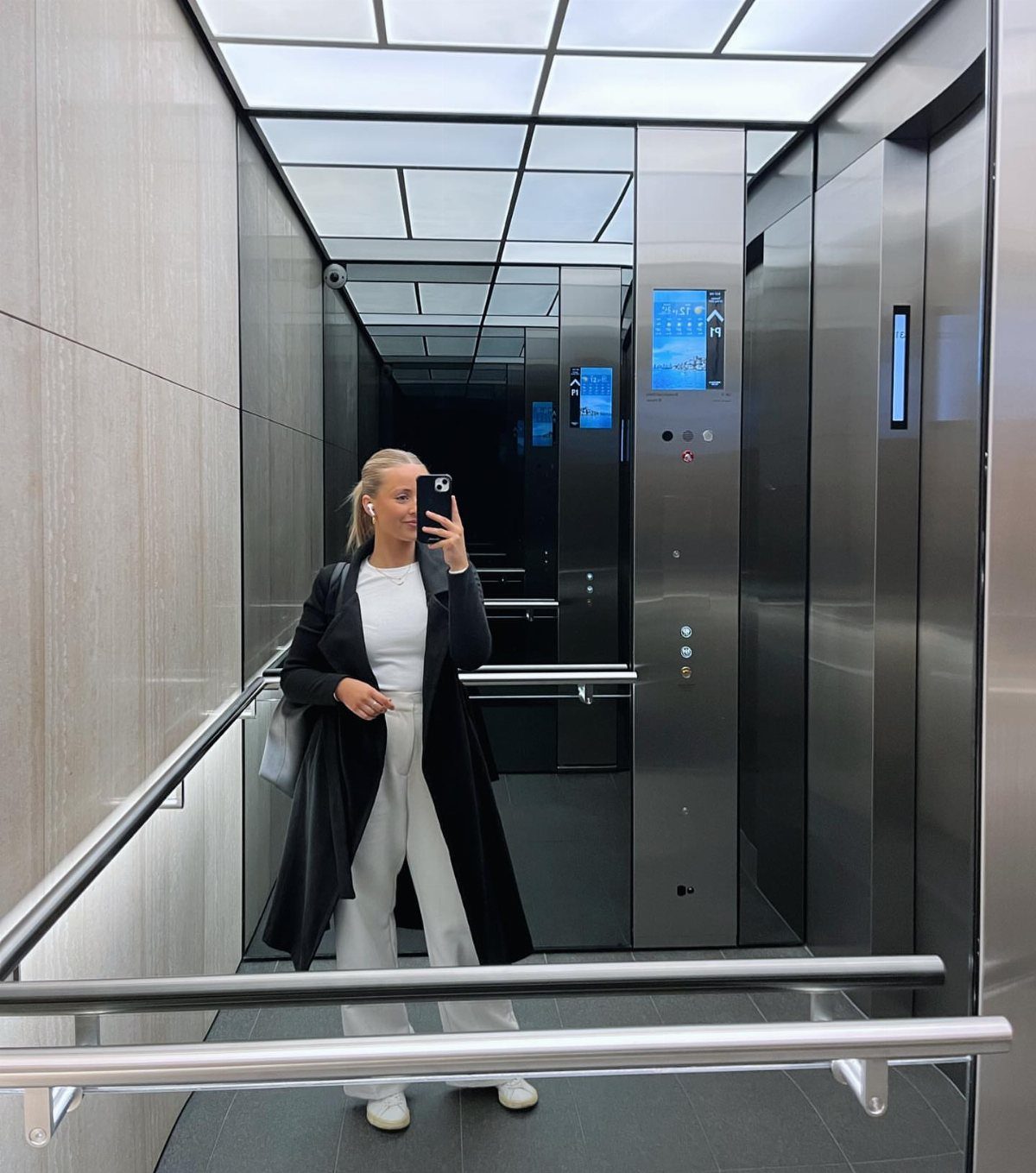
A full-length overcoat is the piece that makes the rest of the outfit read as intentional, even when what is underneath is basic.
A black coat that hits at the ankle wraps the whole look into one column, which is useful on days when you are running between meetings and the coat never comes off.
Wool or cashmere in camel, black, or gray pairs with everything you already own.
I have worn the same camel coat 3 winters running because the neutral goes with navy suits, burgundy knits, and the occasional bright trouser I pull out when gray skies start to wear on me.
A hooded jacket in army green is worth keeping in rotation for snowy walks from the station. The hood saves your hair and makeup without requiring an umbrella that will not fit in your bag.
4. Monochrome Looks
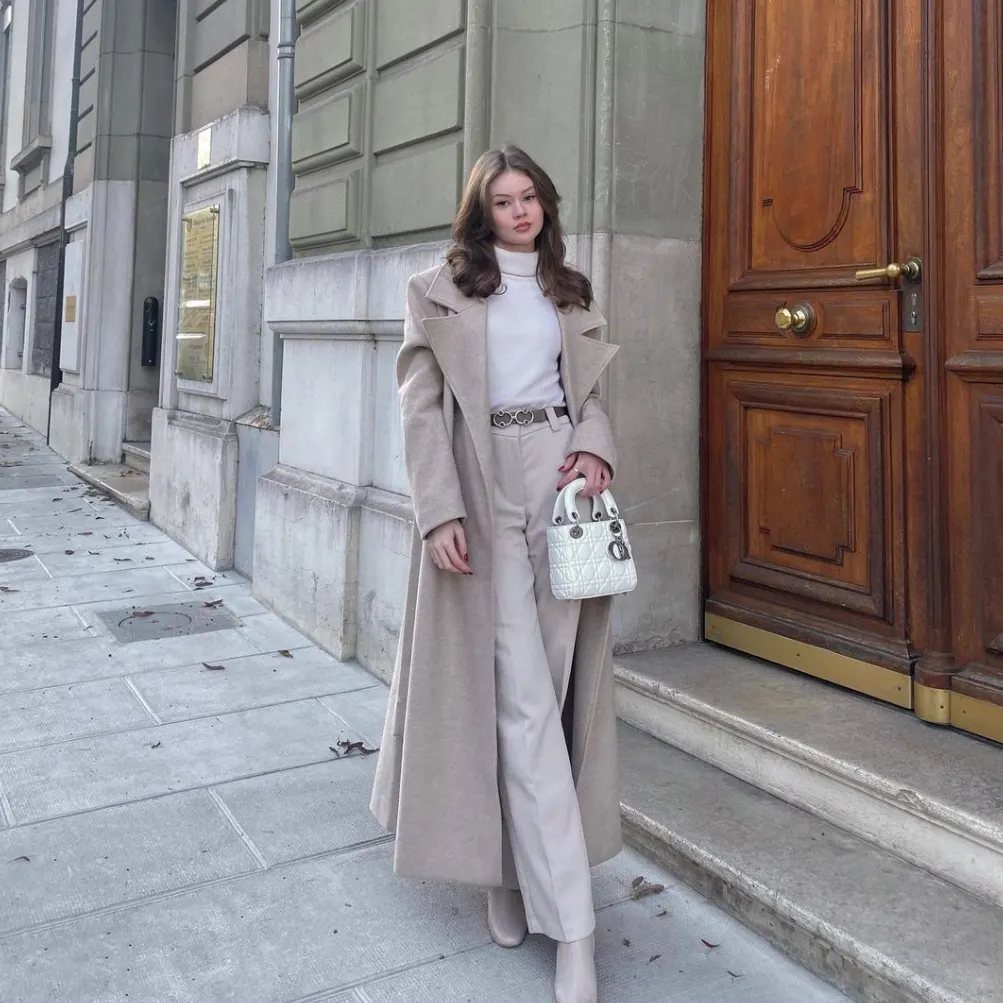
Wearing one color head to toe solves the problem of what matches when you are dressing before dawn.
Cream, beige, and white in different textures, a wool coat, a knit turtleneck, tailored trousers, and leather boots, read as one intentional outfit without requiring an exact match.
The depth comes from the variation, not the contrast. A ribbed knit against smooth wool reads as considered where a single flat fabric would look like a uniform.
I find this easiest to execute in neutrals: camel, gray, or winter white. Color is possible, but it requires more pieces in the same family, and most of us do not own 3 shades of burgundy trousers.
If you are building this from scratch, start with the coat and work inward. It is the largest surface area and the piece you will wear most.
Importance of Comfort
A study cited by several style publications found that feeling comfortable in what you wear has a measurable effect on how you perform at work.
The finding tracks with what most of us already suspect: when you are not tugging at a waistband or counting the minutes until you can take off your shoes, your attention stays where it belongs.
Winter makes this harder. Bulky layers read as cozy at home but can feel restrictive under fluorescent lights.
Choosing pieces that hold heat without fighting your body means a thin knit base layer that does not bunch, trousers with enough stretch to sit in for hours, and boots that do not pinch by 3 PM.
I look for wool blends with a small percentage of elastane, enough to move but not so much that the fabric bags by noon.
Once you are wearing them, your clothes should be forgettable. That is when they are doing their job.
Layering Techniques
The temperature gap between the sidewalk and your desk can be thirty degrees or more, so every winter outfit needs to work in both places without a complete change of clothes.
A thin base layer changes everything. I wear a cotton turtleneck or bodysuit under nearly everything from November through March; it adds warmth without the bulk of a heavy sweater and comes off easily if the radiator is cranked.
A button-down shirt worn open over that base layer gives you 2 removable degrees of heat, plus the collar frames your face on video calls.
Your summer pieces can pull double duty with this approach. Linen trousers work in January with leggings underneath; the fabric you bought in May gets a full additional season.
I ask myself, when I am tempted by a lightweight piece, whether it will take a layer beneath it. If the answer is no, I pass.
For the office specifically, breathability matters as much as warmth. A cotton turtleneck under a cotton button-up breathes better than a synthetic blend that traps sweat.
Whether you’re back in the office full time or barely left, winter work outfit ideas aren’t always easy to conjure up. With climate shifts, constantly fluctuating humidity, and random bouts of precipitation, the season requires a bit of wardrobe play.
Color Combinations
Navy and black together read as more deliberate than either color alone, a combination I borrowed from Scandinavian street style and have worn ever since.
Keeping the textures distinct is what makes it work: a black wool turtleneck against a navy corduroy skirt, or navy trousers with a black cashmere crewneck. Silver jewelry bridges the two without softening the effect.
Vary the texture, keep the tone close but not identical, and let the differences in surface do the work of contrast.
White accessories break up brown cleanly if you want to try the newer direction. I have not bought into it fully; my accessories are mostly black or camel, and replacing them for one color story feels like a project.
But a white leather belt or cream bag is a lower-commitment entry point than trousers in an unfamiliar shade.
Versatility of Pieces
Every piece I buy in September needs to answer for itself in February. A cashmere sweater that works with a midi skirt, wide-leg trousers, and the occasional jeans-on-Friday is worth more to me than 2 trend pieces with narrower range.
The camel coat mentioned earlier is the best example I own.
It has covered navy suits, burgundy knits, and bright trousers I wear when the gray days drag on. 3 winters of constant wear, and the cost-per-wear is down to pennies.
Travel days are where versatility gets tested. An outfit that works on a train, in an airport, and straight into a meeting without a change saves luggage space and decision fatigue.
Emma Watson has been photographed in this kind of transition-ready layering; the look depends on pieces that are polished enough for professional settings but comfortable enough for hours of sitting.
A cashmere sweater you can throw on when the office chills is the final piece that makes it work.
When I am unsure about a purchase, I count the outfits it makes with what I already own. Below three, it stays on the rack.
Frequently Asked Questions
What colors should I incorporate into my winter office wardrobe?
Black, gray, and navy are the most useful because they match nearly everything and read as intentional rather than leftover.
Camel has become my default bridge color; it softens navy suiting, warms up burgundy knits, and keeps bright trousers from feeling too loud against February gray.
Navy and black together need different textures to read as intentional: a black wool turtleneck against navy corduroy, or navy trousers with black cashmere, never 2 similar weaves side by side.
Muted pastels or jewel tones can work, but neutrals give you more mileage per piece.
Are jeans appropriate for winter business casual outfits?
Yes, if the denim is dark, in good condition, and cut close enough to look deliberate rather than weekend. I wear mine on Fridays with a cashmere sweater and boots that have some polish to them.
What type of outerwear should I wear over my office outfit in winter?
A full-length wool or cashmere coat in camel, black, or gray is the most reliable choice; it wraps your whole look into one column and reads as planned even if the outfit underneath is basic.
A teddy coat or longline cardigan works if your office runs casual, but the tailored coat is the piece that elevates everything beneath it.