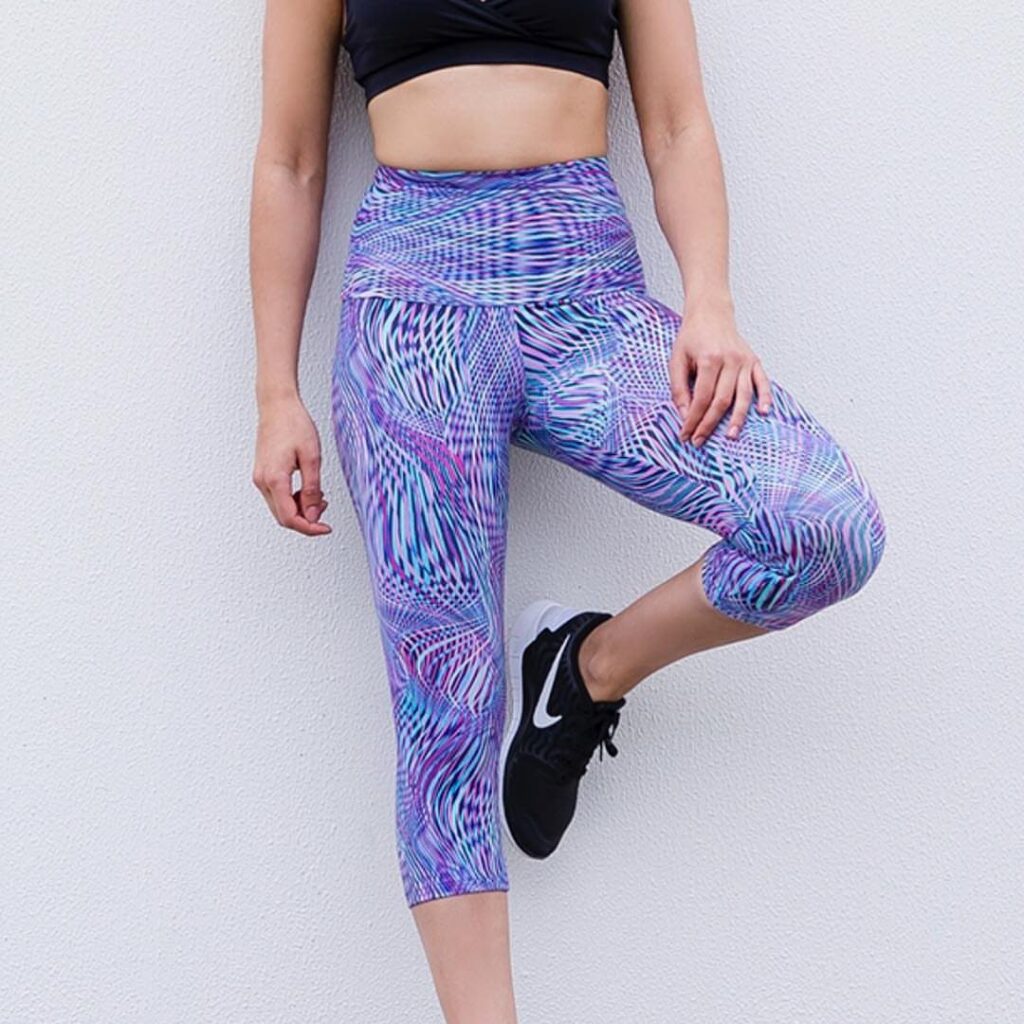
The right Pilates outfit depends on one thing: whether you need to leave class looking like you planned it that way or you have time to change.
These 11 ideas run from high-waisted leggings and grip socks to a wrap skirt layered over compression bottoms, with matching sets, rompers, and button-downs over biker shorts in between.
A squat test in good light saves you from sheer leggings in a mirrored studio, and a waistband that stays put through teasers on the short box keeps your focus where it belongs.
1. High-waisted Leggings
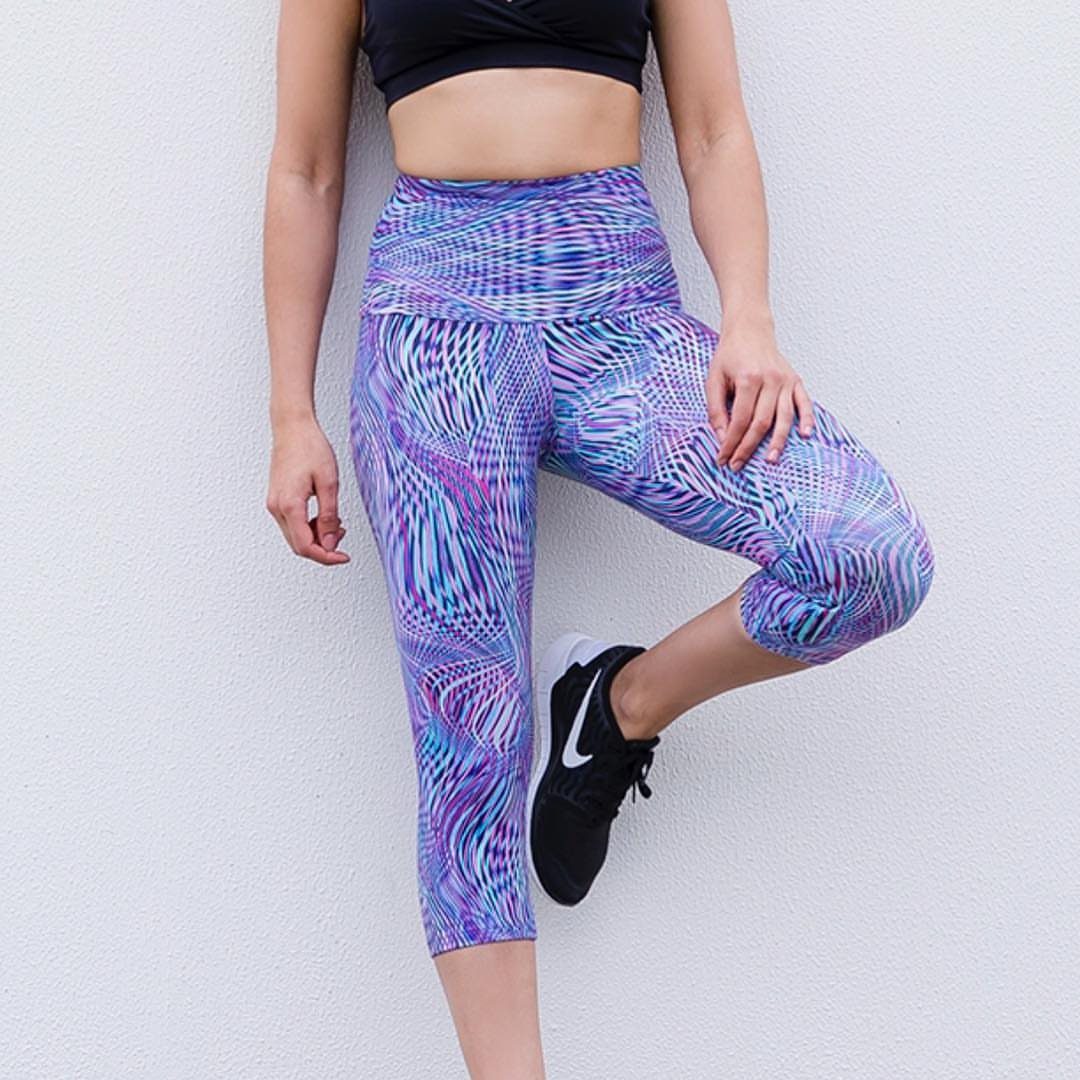
High-waisted leggings stay put through every roll-up and leg circle, which matters more than you might think until your waistband folds mid-teaser.
The compression holds you in without digging, and the rise keeps everything covered when you’re upside down on the short box.
Before you commit to a pair, do a squat in good light to check they aren’t sheer.
I learned that one the hard way in a mirrored studio. If leggings feel too exposed, compression shorts under gym shorts work, though you’ll miss the sleek line that lets an instructor check your form.
2. Grip Socks
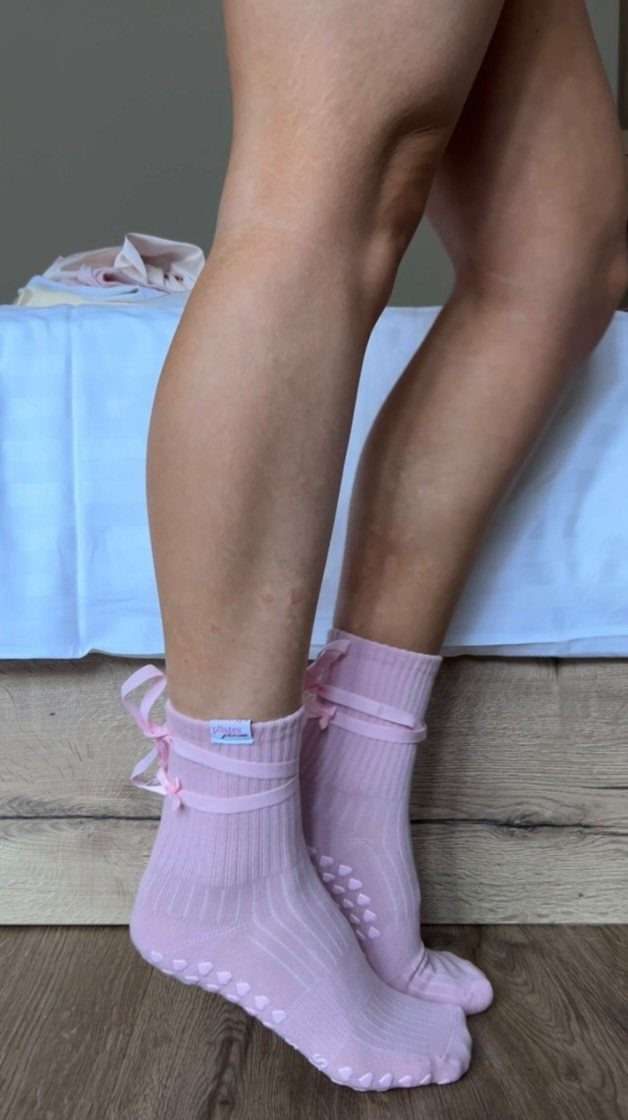
Reformer platforms slide. Grip socks keep you from sliding with them.
Some studios require them; even where they don’t, the stability difference is immediate. Toeless versions breathe better if you run warm or the studio cranks the heat.
3. Matching Sets
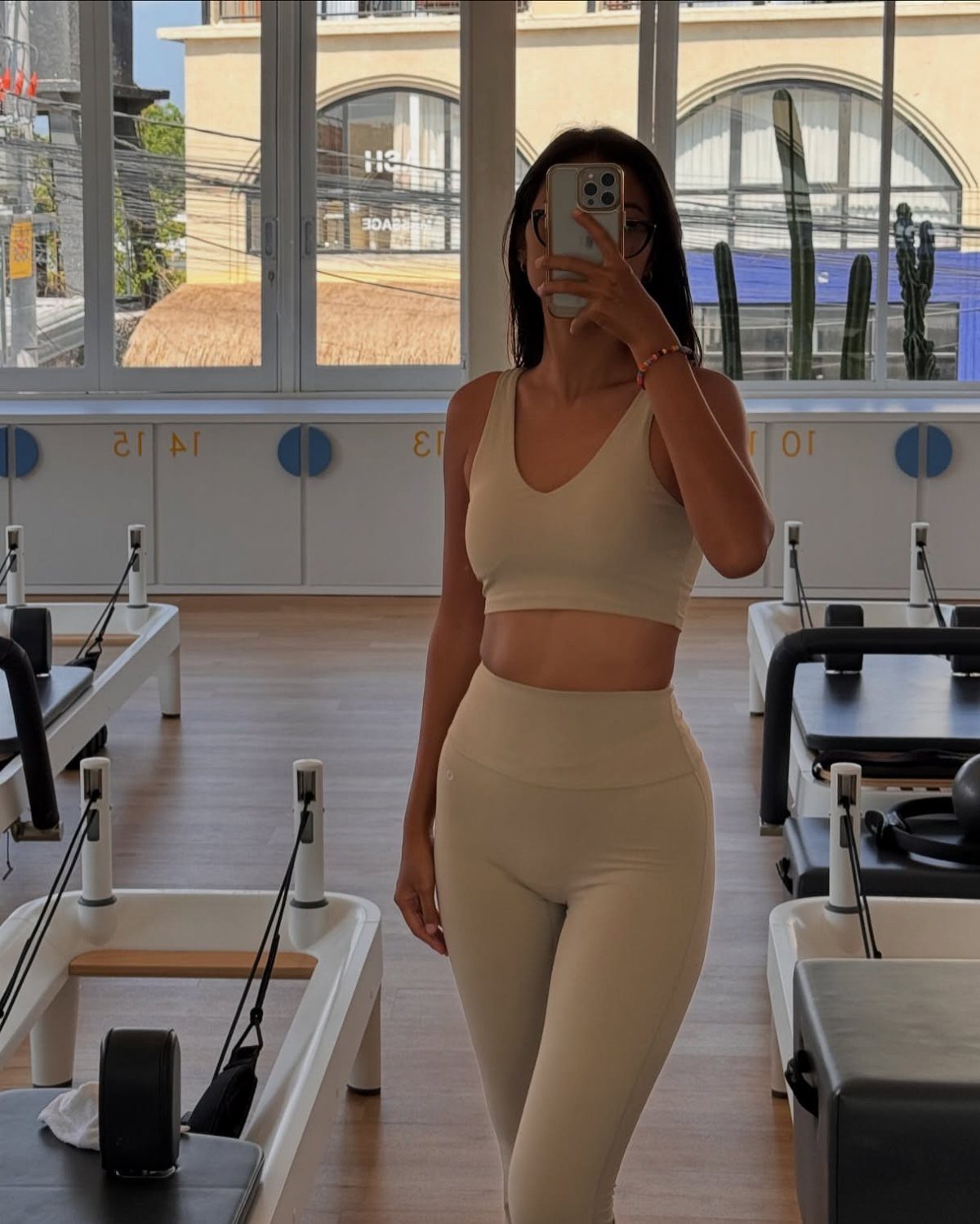
A matching set reads as intentional even when you grabbed it in the dark before an early class. The coordination does the styling work so you don’t have to think.
Beige, black, or soft grey feel most studio-appropriate and travel straight to coffee afterward without looking like you forgot to change.
The clean lines suit Pilates particularly well: nothing to catch on the carriage, no competing colors to distract in a mirror-check.
4. Supportive Sports Bras
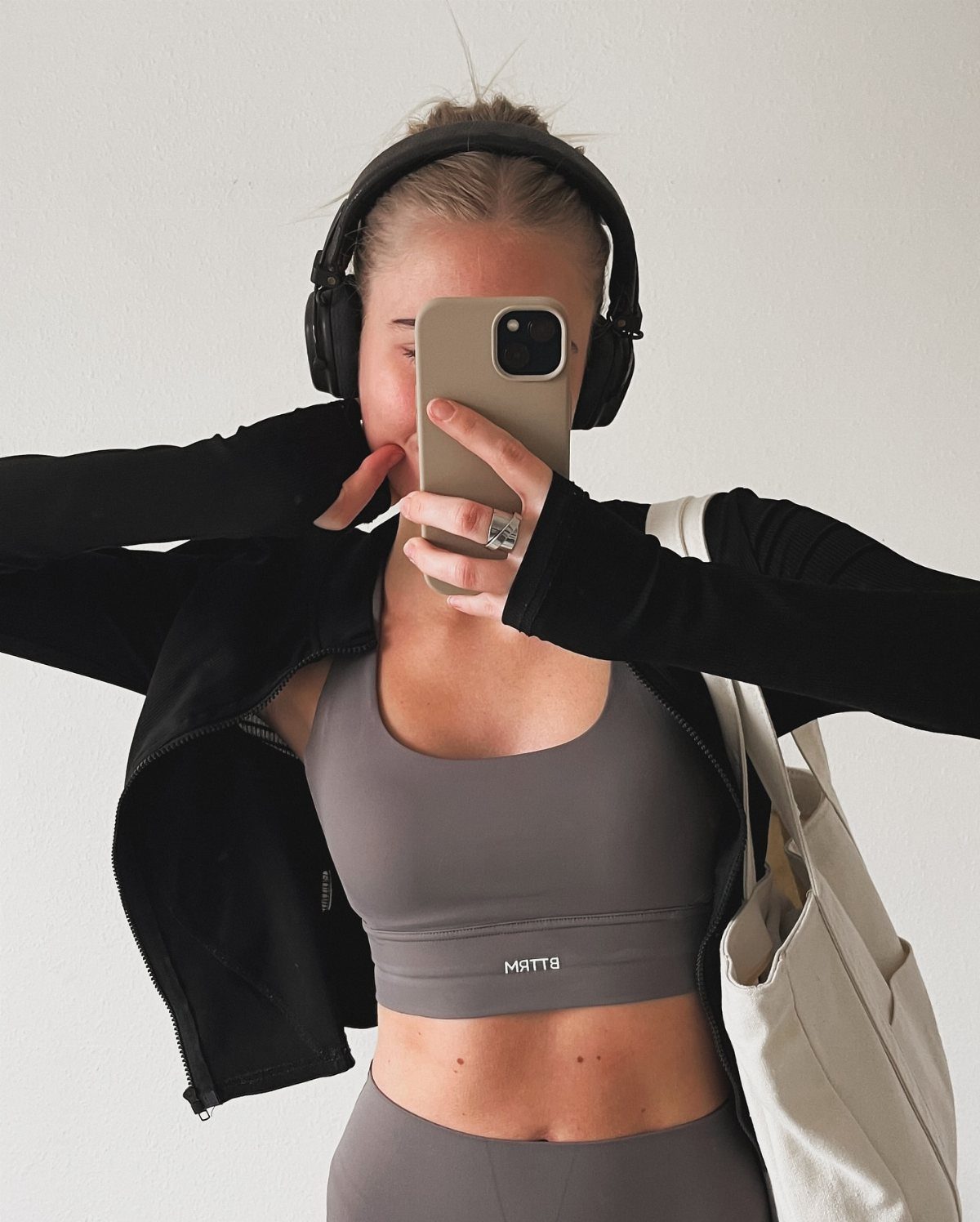
Pilates is low-impact, but a loose bra still annoys through long holds and repeated pulses. Soft, flexible styles without underwires let you fold and extend without anything digging in or riding up.
Thicker straps help if you want more support; skip anything with rigid clasps at the back that press when you lie flat. The test is the hundred: if you can hold it without adjusting, the bra is doing its job.
5. Athleisure Outfit
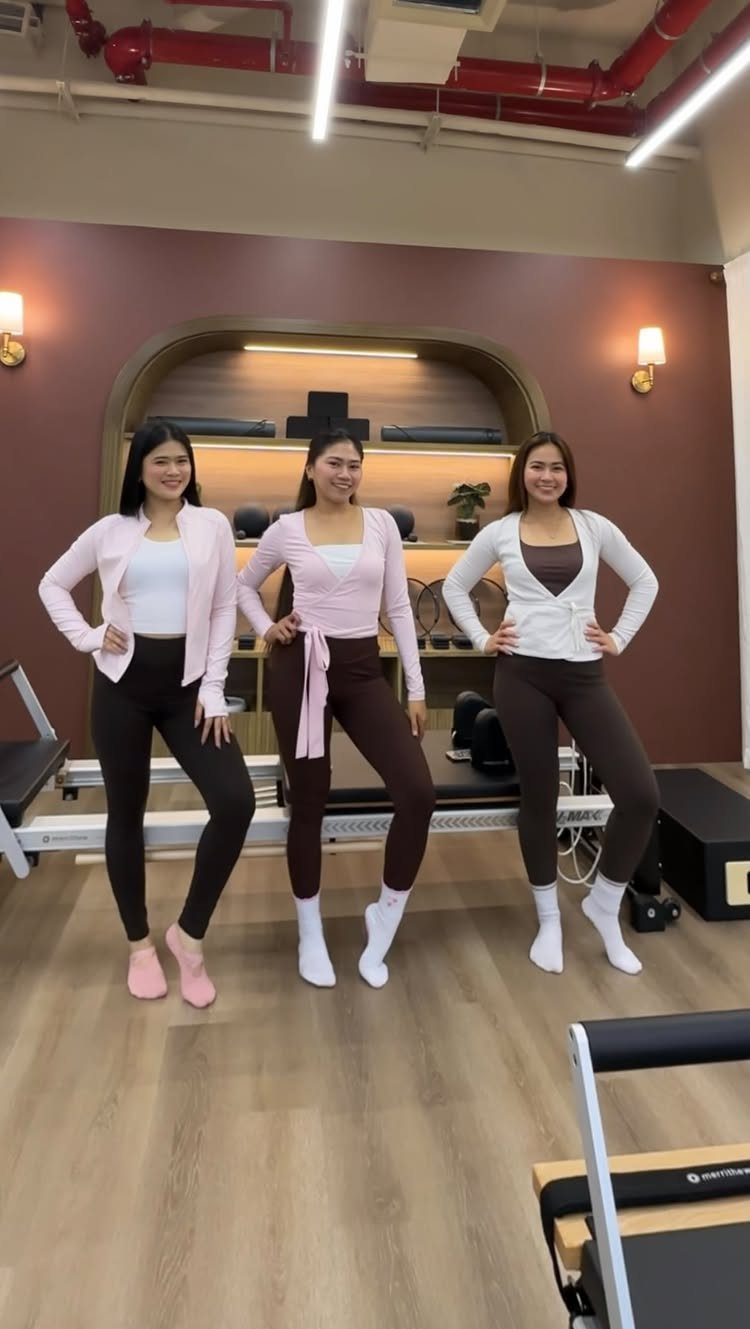
Athleisure outfits bridge the gap between workout and the rest of your day, which matters when you have no time to change between class and your next commitment.
The same set that works on the reformer passes as put-together with a coat thrown over.
Look for clean lines and neutral palettes that don’t read as strictly gym. Mediterranean-inspired minimalism travels well: soft fabrics in tones that don’t compete with whatever you layer on top.
6. Rompers
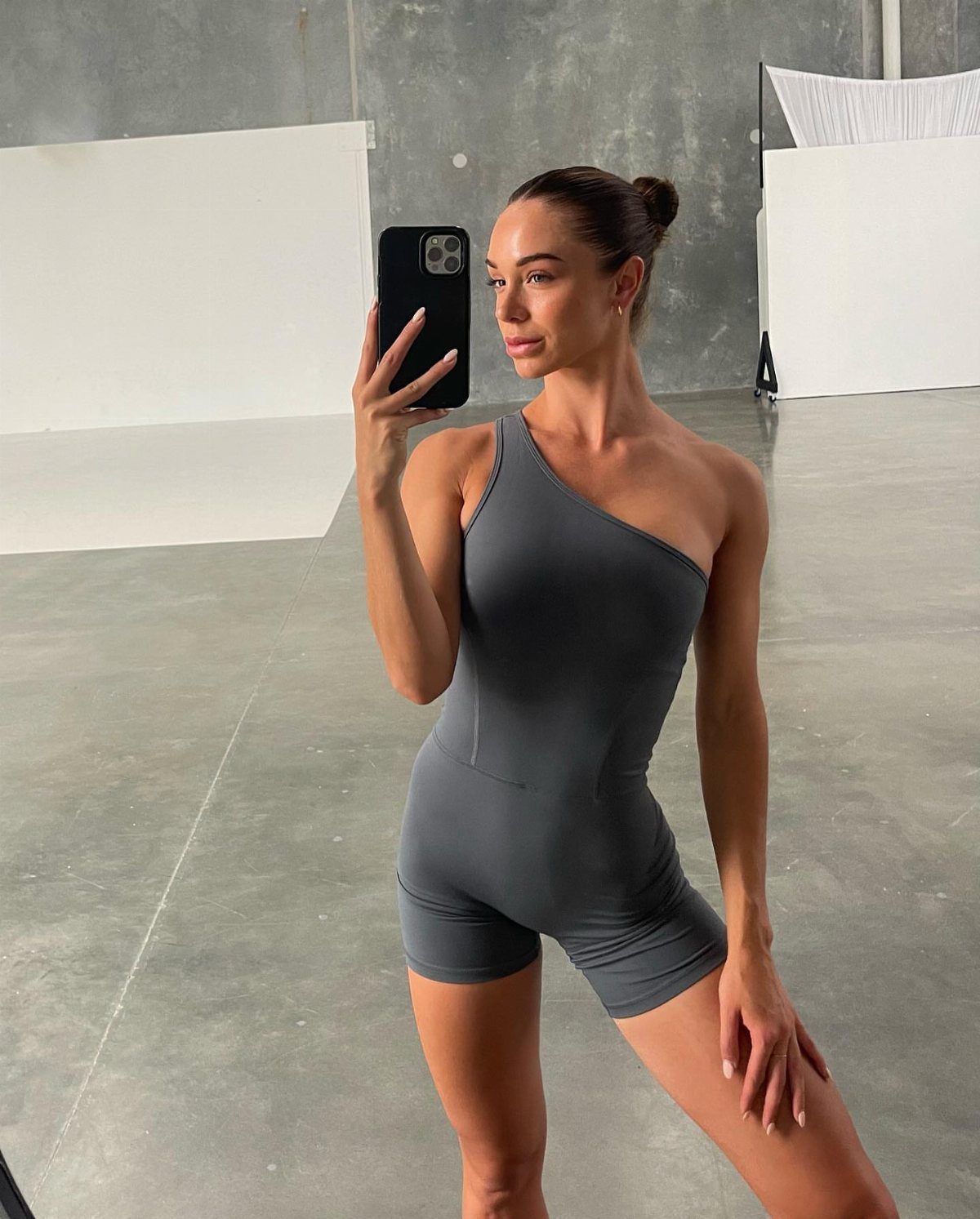
A romper gives you full coverage in one piece, no waistband to adjust, no top to retuck after shoulder bridge.
Short lengths work for heated studios; the stretch lets you move freely through every range. If you live in your romper, you’ll want a second in rotation, and neutral packs light for travel.
7. Two-piece Sets
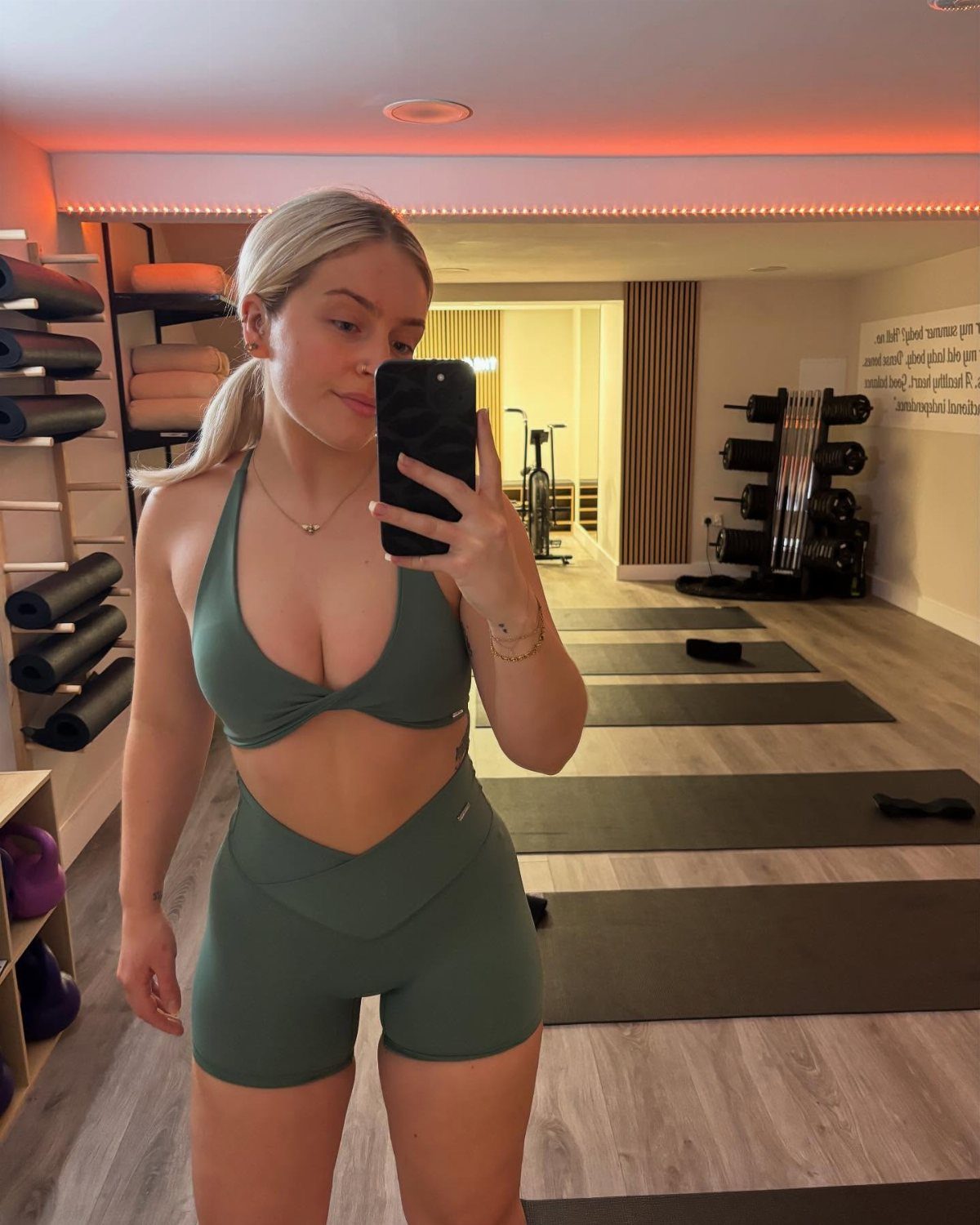
Two-piece sets with a top and shorts give you the same coordination as a romper with more mixing room.
Olive and other earth tones hide studio dust better than black shows it. A short-sleeved version with a longer shirt and high waist adds abdomen coverage if you prefer that; polyester-spandex blends cling without constricting.
8. Crop Tank and Athletic Shorts
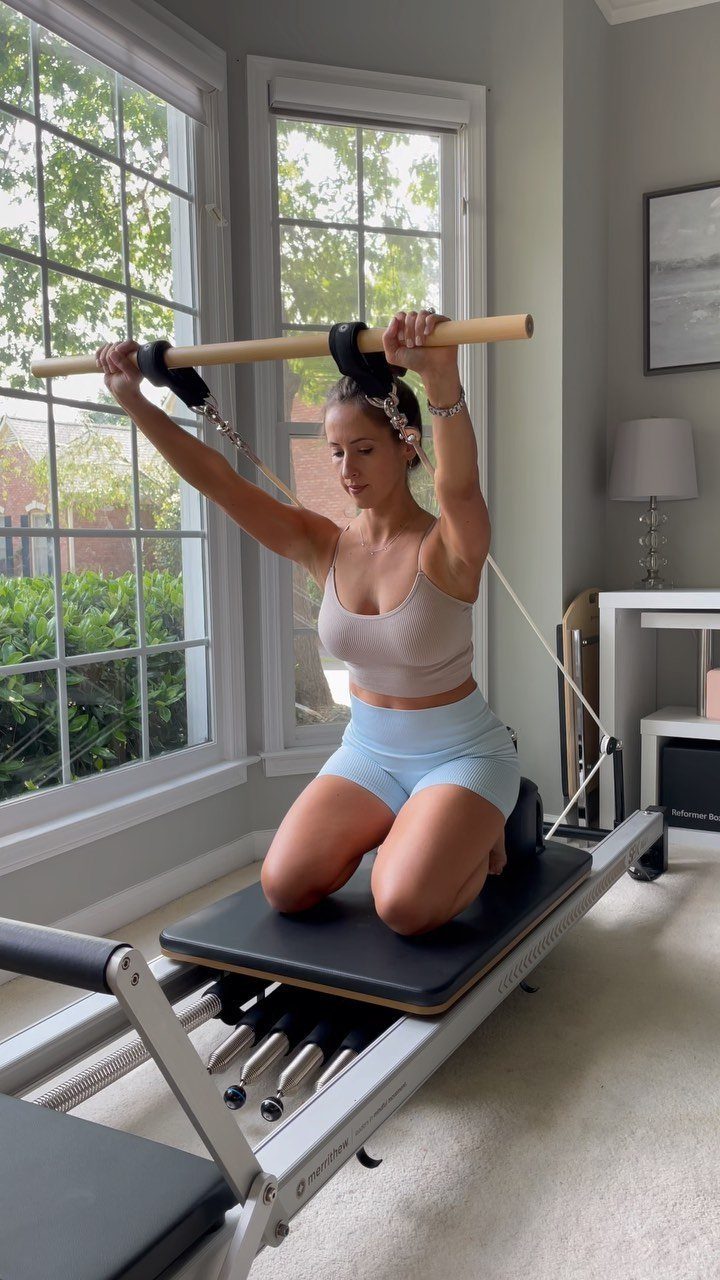
Ribbed fabric holds its shape through repeated stretches and looks pulled-together even when you’re the one being corrected. A cropped tank and shorts that sit close let an instructor read your alignment without anything loose to feed into the machine.
Moisture-wicking matters if you run warm; reformer work builds more heat than it looks like it should.
Matching ribbed sets are easy to find now, and the texture reads as intentional rather than leftover gym clothes. If you want more coverage, a fitted tee with the same shorts works.
9. Graphic T-Shirt with Leggings
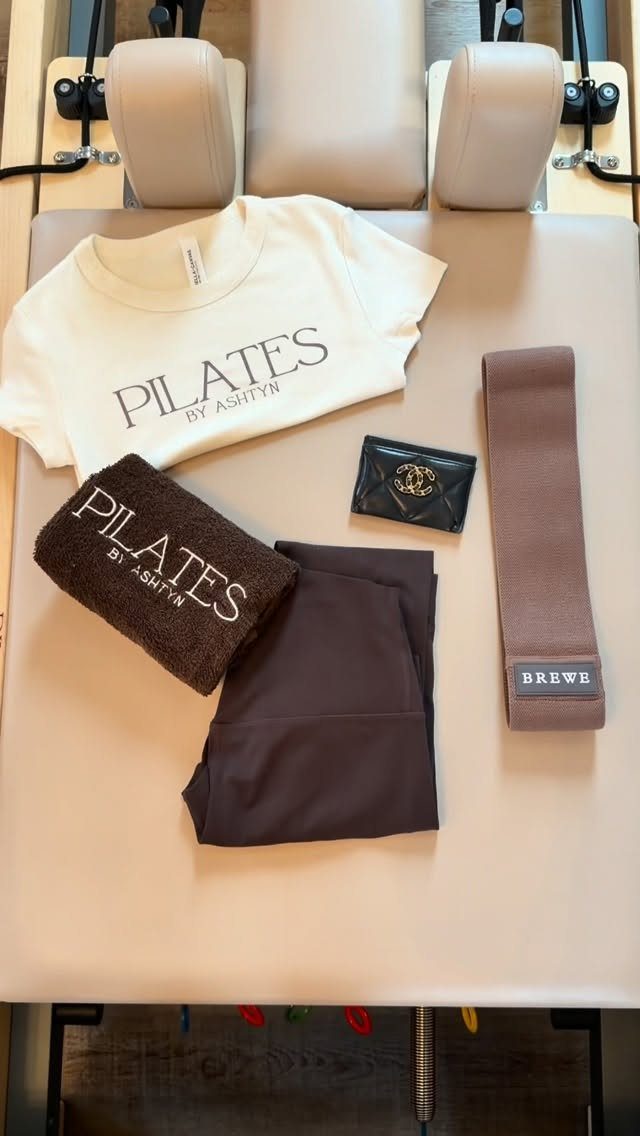
A graphic tee with leggings is what you wear when you want to feel like a person who does Pilates, not an athlete in training.
The flat lay shows the formula: soft tee, dark leggings, and accessories that make it yours.
The shirt should hit at or below the hip so it doesn’t ride up during rollback. Cotton or cotton-blend breathes but stays damp; a performance fabric with some stretch dries faster.
Check the leggings for sheerness in good light before you commit. The graphic itself is the fun part; pick one that makes you want to show up.
10. Wrap Skirt Over Leggings
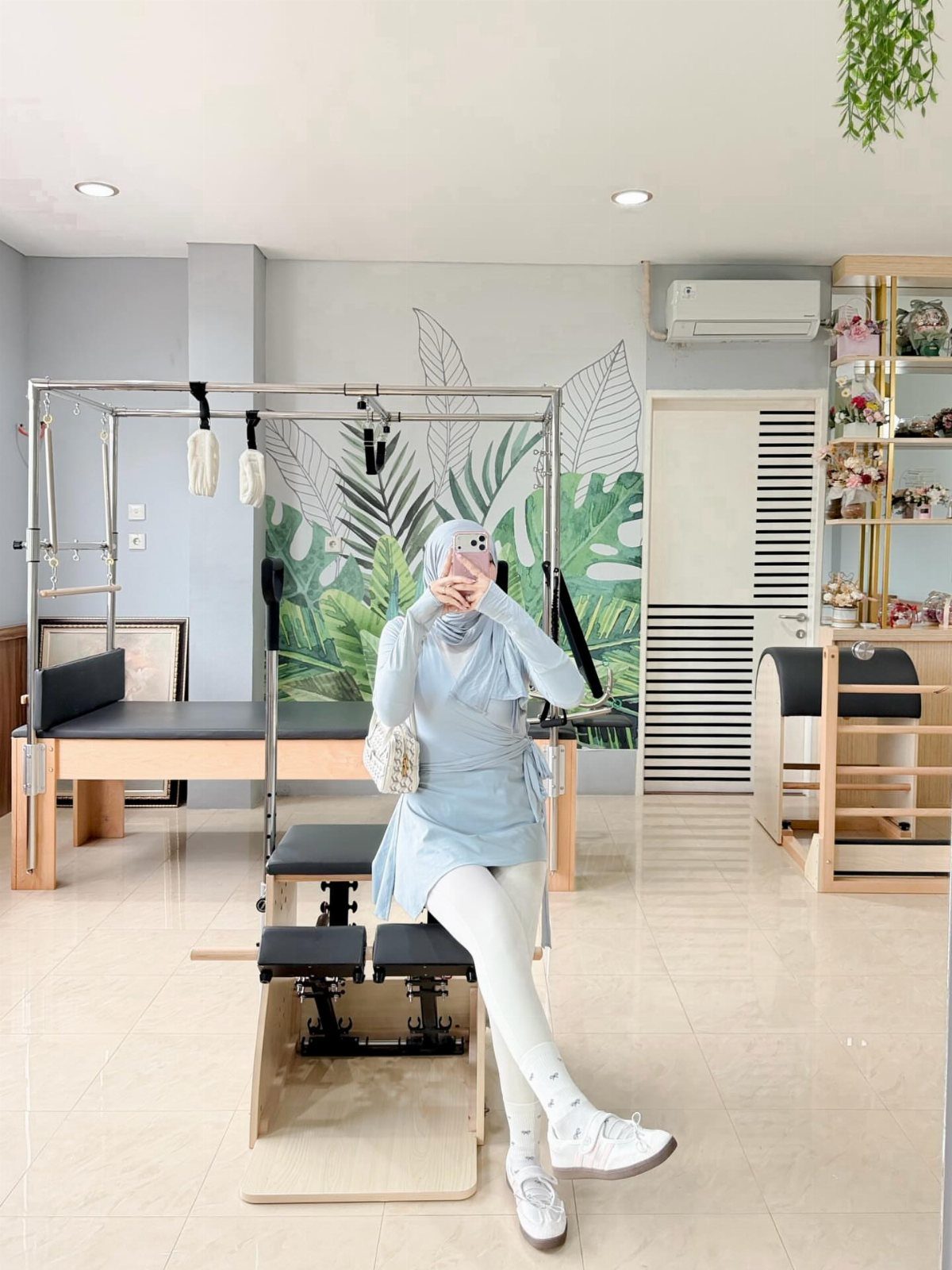
A wrap skirt over leggings lets you adjust the tied waist as you move, and the skirt adds a little coverage if you want it for the walk to class.
A ballet-length wrap skirt flares just enough to look deliberate, not like you forgot your other pants.
White leggings underneath keep the look light; darker base layers work too but read more studio, less street.
The skirt should tie or wrap securely, nothing to unwrap mid-hundred. This is the option for days when you want to walk into class feeling dressed rather than just outfitted.
11. Button-Down Layered Over Biker Shorts
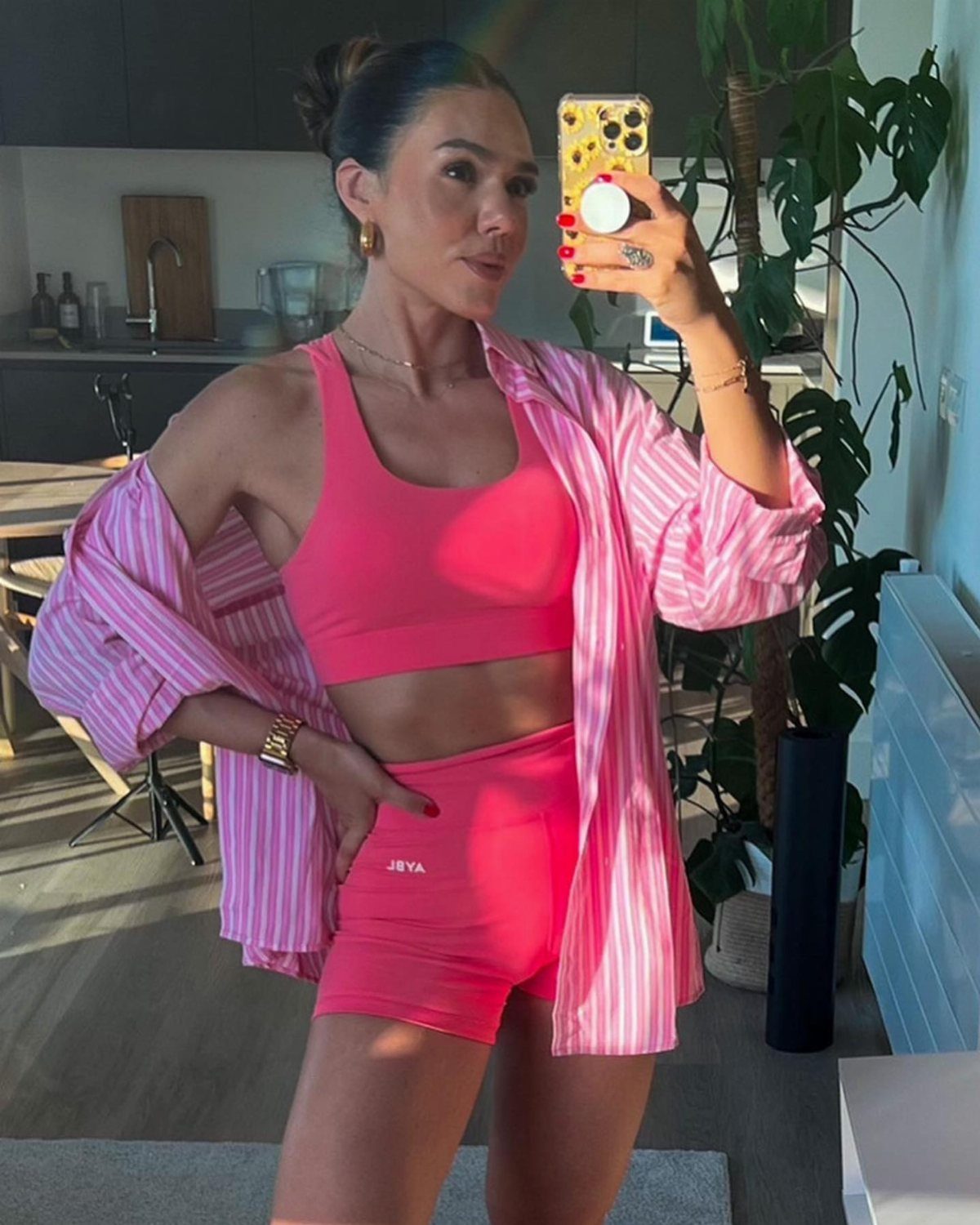
An unbuttoned button-down over biker shorts is a layering trick that turns gym clothes into an outfit on the way out.
The shirt needs to be long enough to cover what biker shorts cover; mid-thigh or below works.
Linen or a soft cotton blend breathes and drapes better than stiff poplin, which can look like you grabbed work clothes by mistake. Leave it unbuttoned; the frame it creates matters more than the closure.
Importance of Comfort
Stretch matters more in Pilates than in most workouts because the movement is the point: you are not covering distance, you are articulating through it. Fabric that fights your range turns every roll-up into a negotiation.
Breathable material keeps sweat from pooling during holds that look gentle but spike your heart rate all the same.
Test any new piece with a full roll-down and a seated twist before you trust it in class. What stretches on the rack may still bind at the shoulder or waist.
Skip anything with tassels, drawstrings, or dangling details. They catch on reformer ropes and carriage edges, and the interruption breaks concentration you spent money to maintain.
Pilates Class Etiquette
Leave jewelry at home. Rings and bracelets scratch reformer wood and snag on straps; the damage is real and the replacement cost falls on studios or you.
Heavy makeup clogs pores once sweat starts, and Pilates will make you sweat. Full foundation breaks down unevenly and leaves you checking mirrors for the wrong reason.
Jeans and tight cotton have no place here. Zippers, buttons, and rhinestones press into your back and hips through floor work, and the discomfort builds over an hour.
Restrictive clothing does not just limit movement; it can end your session early. Prioritize comfort because the work is hard enough without your outfit working against you.
Testing Outfits
Before you wear anything new to class, test it at home. Bend forward, sit on the floor, stretch in every direction the outfit will see.
Move through a mock session: roll back, extend long, fold at the waist.
Watch for waistbands that shift, straps that slip, or seams that pull. What feels fine standing still can bind or gap in motion.
A few minutes of lunging and rolling on your own floor at home will tell you whether an outfit actually stays put, long before you find out the hard way in class.
The outfit that passes this test is the one you pack.
Frequently Asked Questions
What is a proper Pilates attire?
You want clothes that move with you and stay put: fitted enough that the fabric doesn’t bunch or flap when you’re rolling through a spine stretch, soft enough that you forget you’re wearing them.
The fabric needs to stretch through your full range of motion and stay put while you move, since a waistband that shifts or a seam that binds will pull your attention out of the exercise.
High-waisted leggings, fitted tops, and soft sports bras without underwires are the pieces I reach for most often.
Is it okay to wear makeup to Pilates?
Heavy makeup is not worth it. A thin layer of BB cream or just concealer where you need it keeps your skin from suffocating under full coverage once the heat builds.