The 9 ideas below run from a thrifted cardigan to a full earth-tone set you may already own, so the deciding factor is what you need the clothes to do after the orchard.
If your afternoon continues to a lunch or a market run, start with the pieces that photograph clean and wear well through both.
The FRAME cords and lug-sole boots that handle mud between rows work just as well for the stop after.
1. Plaid
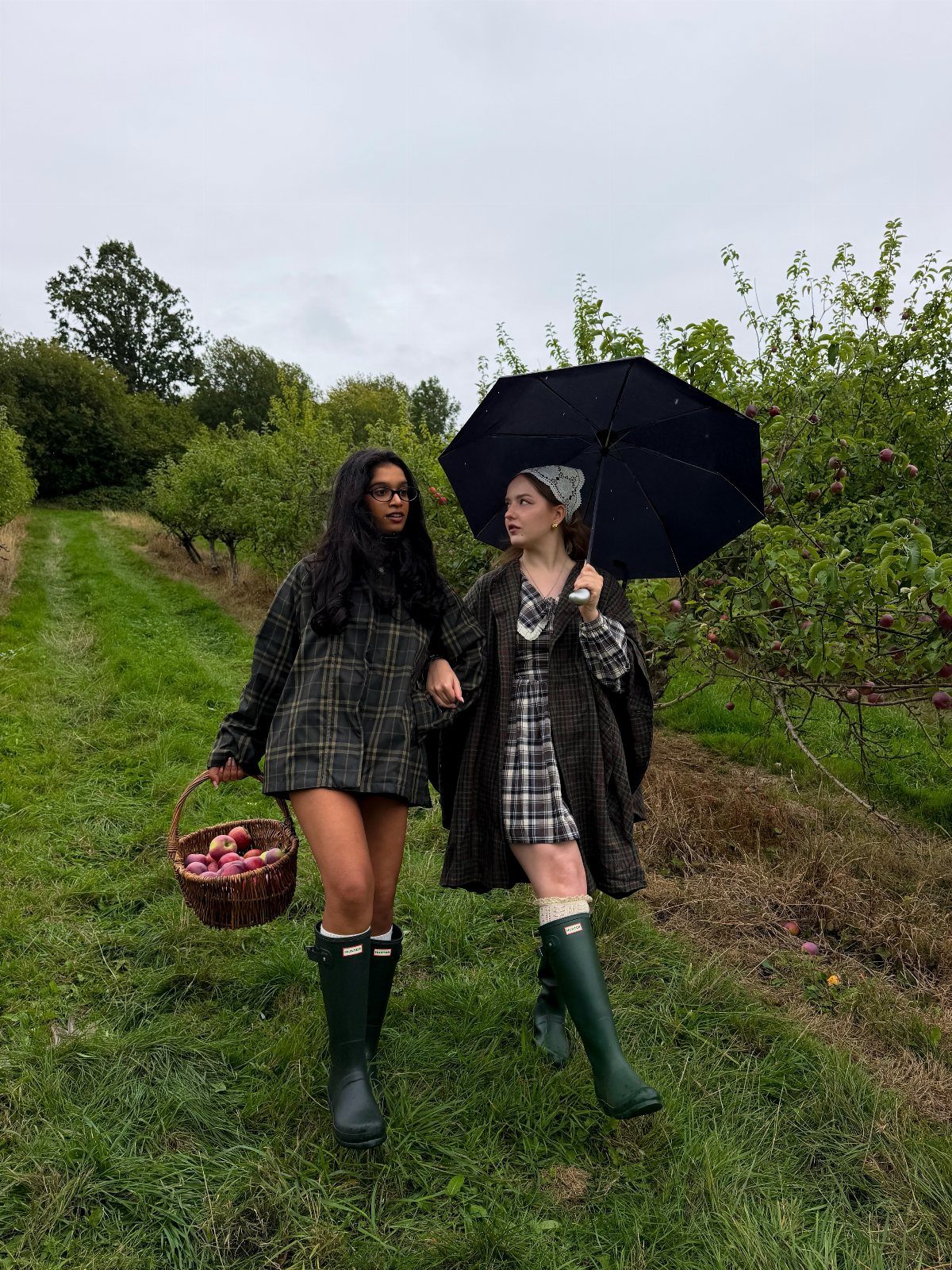
Plaid reads orchard instantly, but the cut matters more than the print.
I reach for flannels and shackets over skirts; the ground is uneven and you will be reaching between branches. A plaid shacket over a solid tee gives you the photo without the adjustment breaks.
Pair it with boots that can handle mud. The look works for the market run after, too.
2. Durable Boots
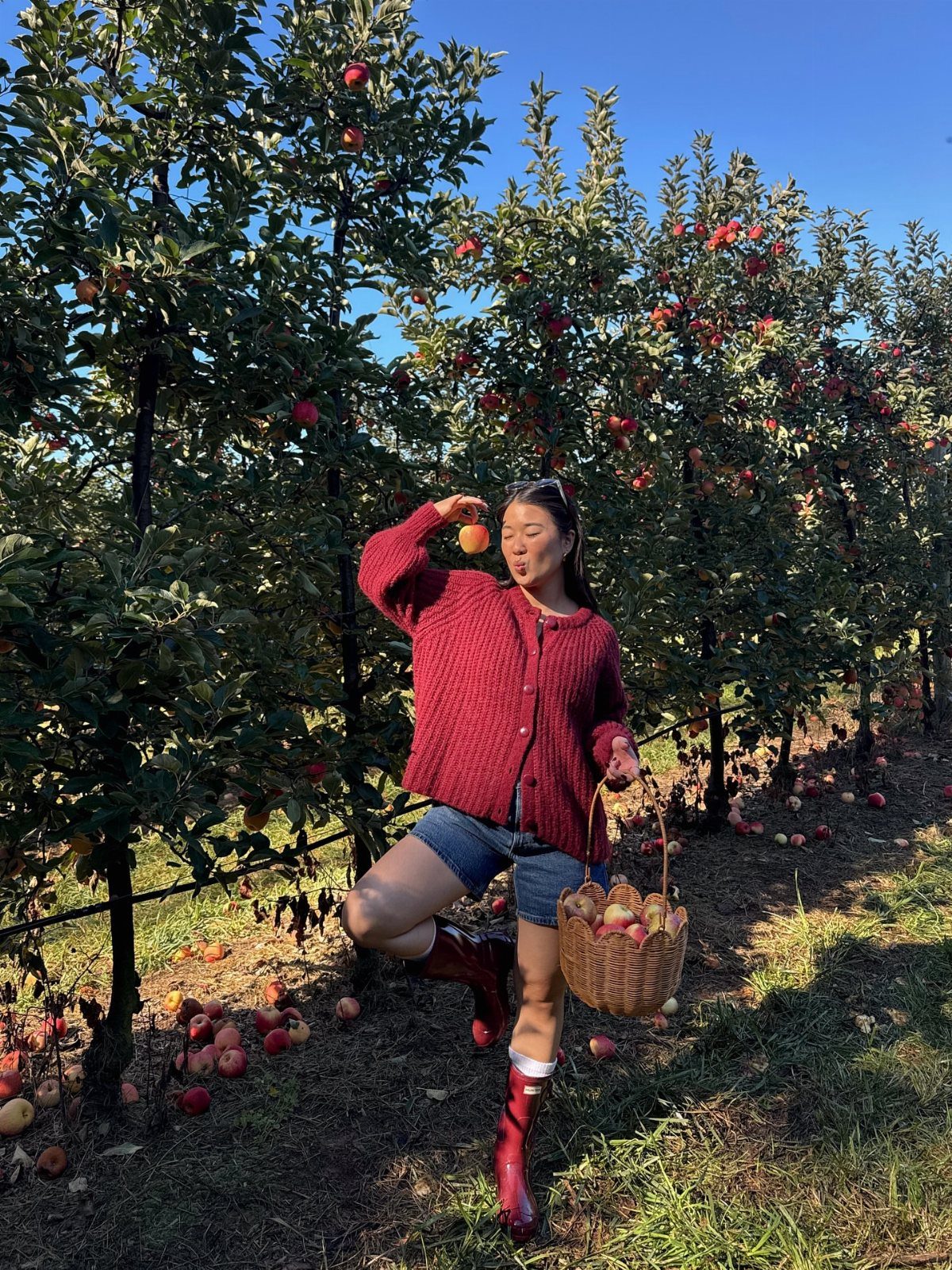
Your cute new booties stay home for this one. I learned that the wet way a few seasons back.
Rubber or lug sole boots handle the mud between rows, and hiking boots work if that is what you already own. Red rubber boots make a statement, but any color keeps your socks dry through wet grass and mud.
Shorts or jeans both work; the boot is doing the heavy lifting here.
3. Denim or Corduroy
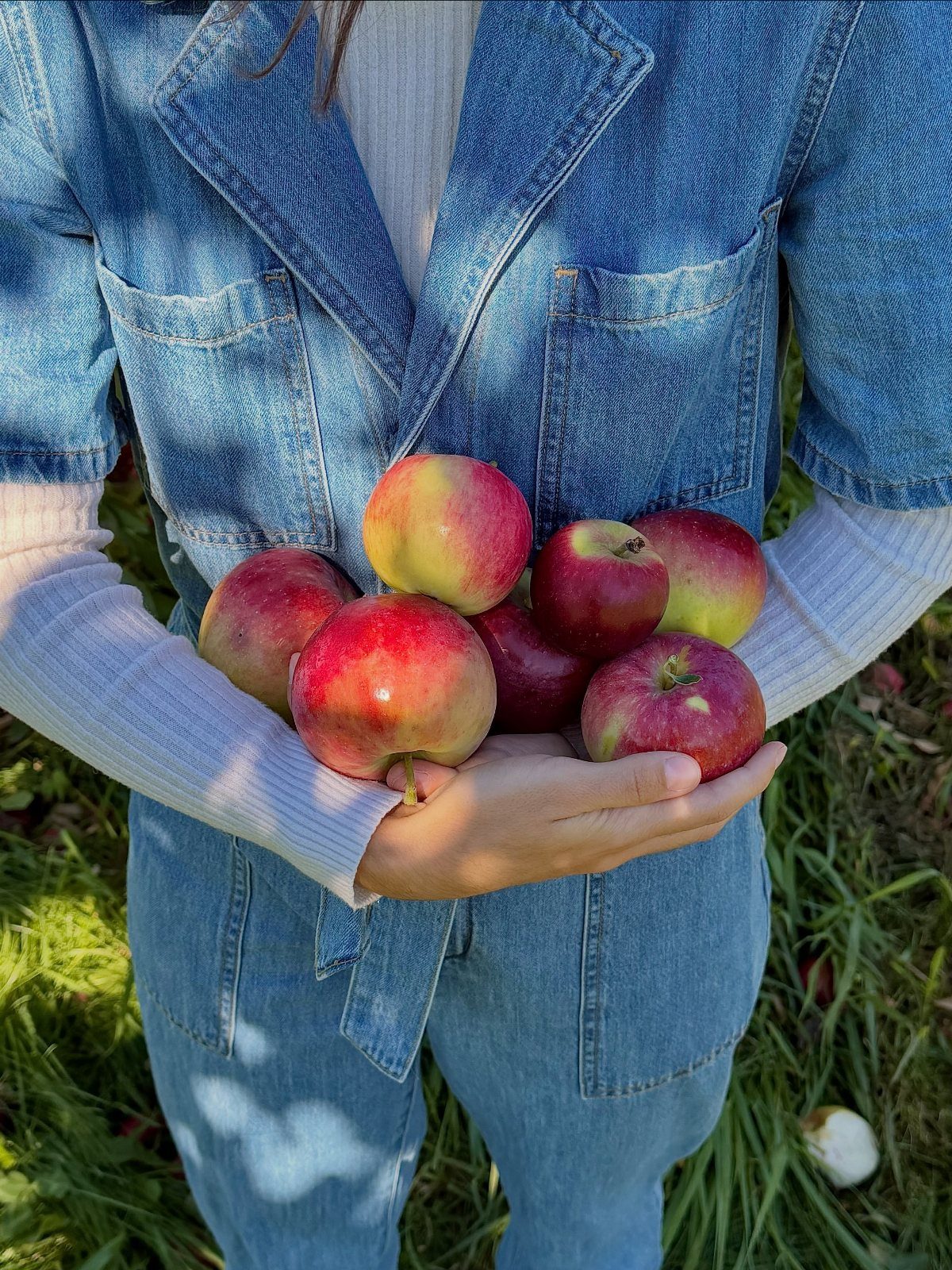
Denim and corduroy both hold up against branches and rough bark without snagging or tearing.
I like them as pants for the full day, but a denim jacket over a lighter layer handles temperature swings the same way. Corduroy trades a little stretch for that softer hand feel; either lasts past this single outing.
Buy or use what you already own. These are not delicate fabrics.
4. Quilted Jackets
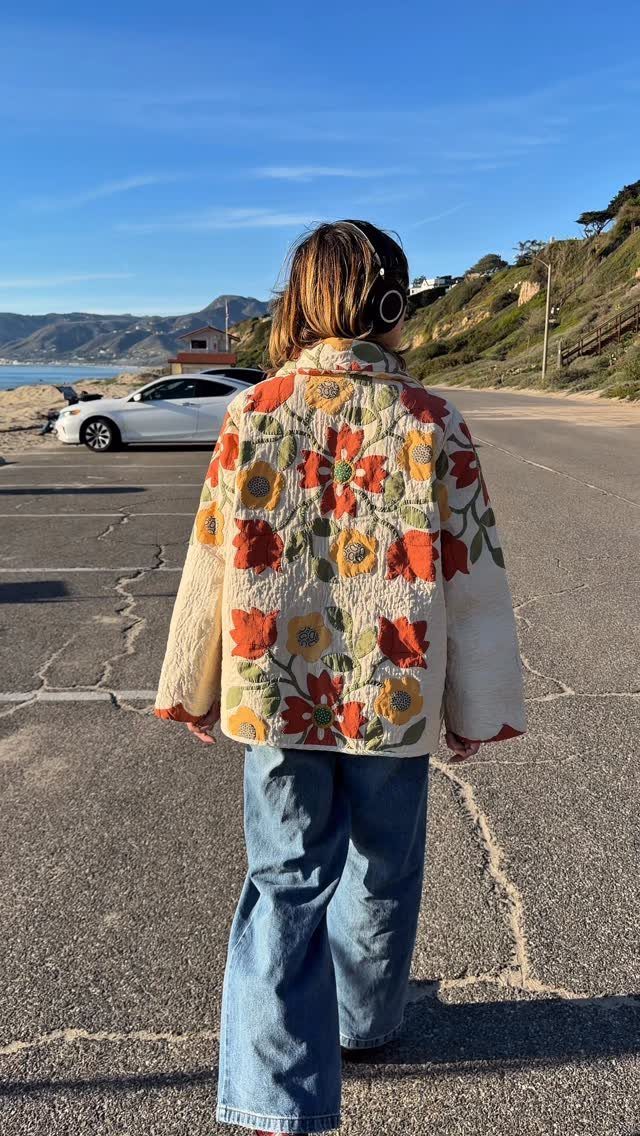
A quilted jacket layers neatly over a turtleneck or flannel without the bulk of a puffer, and the stitched channels keep filling in place through real wear.
I like the look of the floral version here for something less field jacket, more weekend.
It is warm enough for morning starts, light enough to tie around your waist by afternoon.
5. Earth Tones Outfit
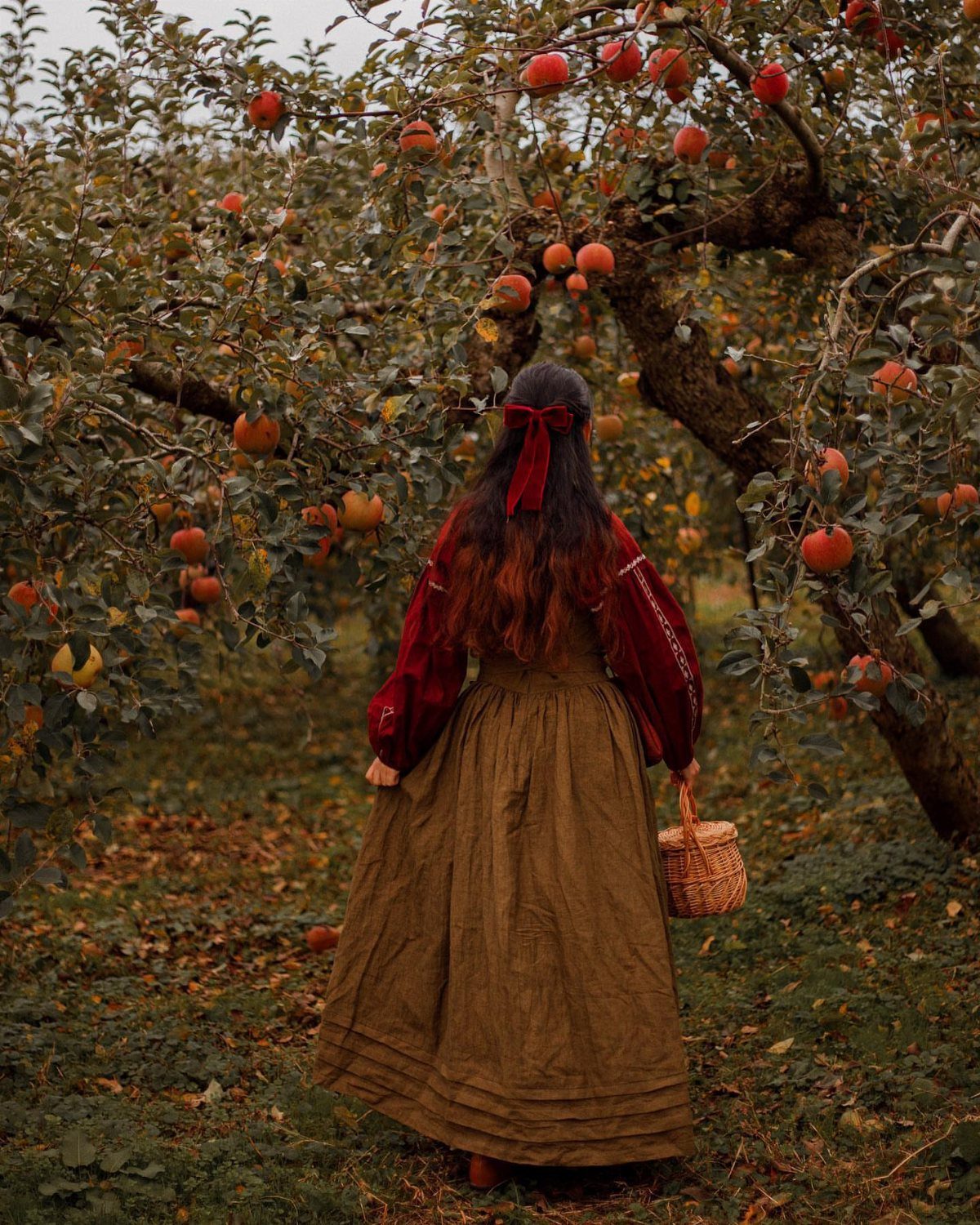
Olive, rust, chocolate, and cream all read fall without needing a print.
This entry is short by design: the color story does the work, so choose pieces in those tones that you already reach for. A midi skirt or wide-leg trousers in the same earth-toned range keeps the look pulled together.
Check that your fabrics can handle outdoor wear before you commit to the look.
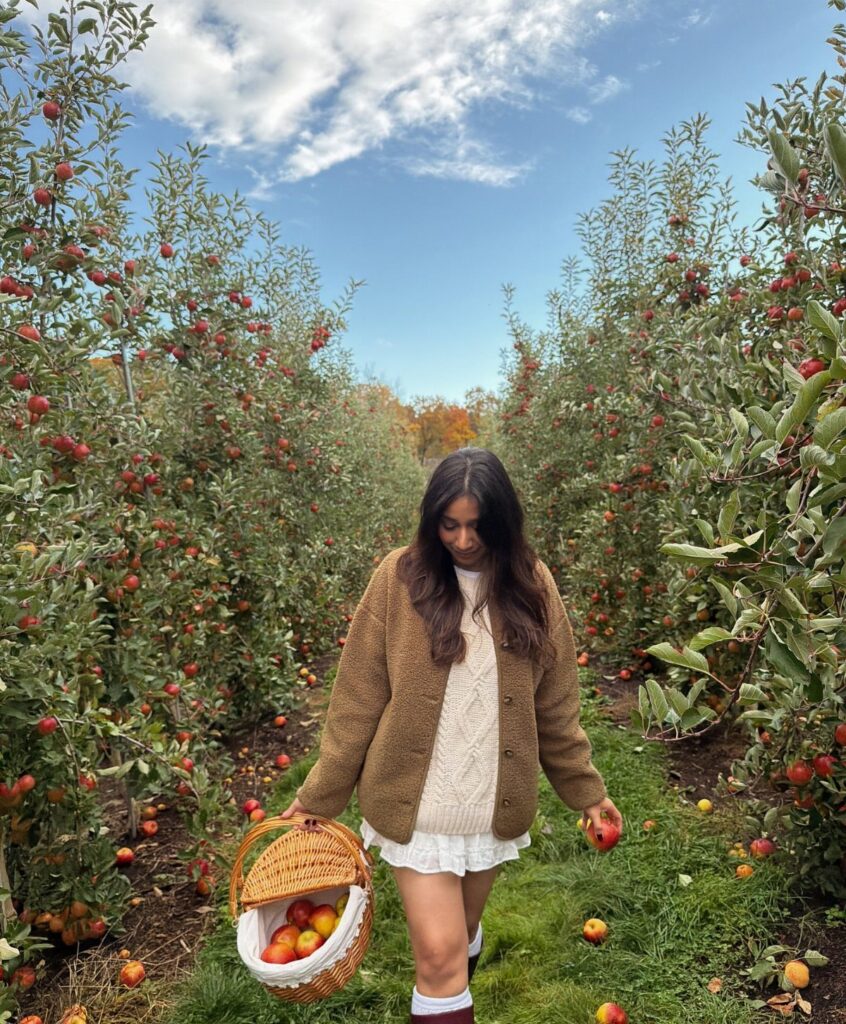
6. White Cable-Knit Sweater and Jeans
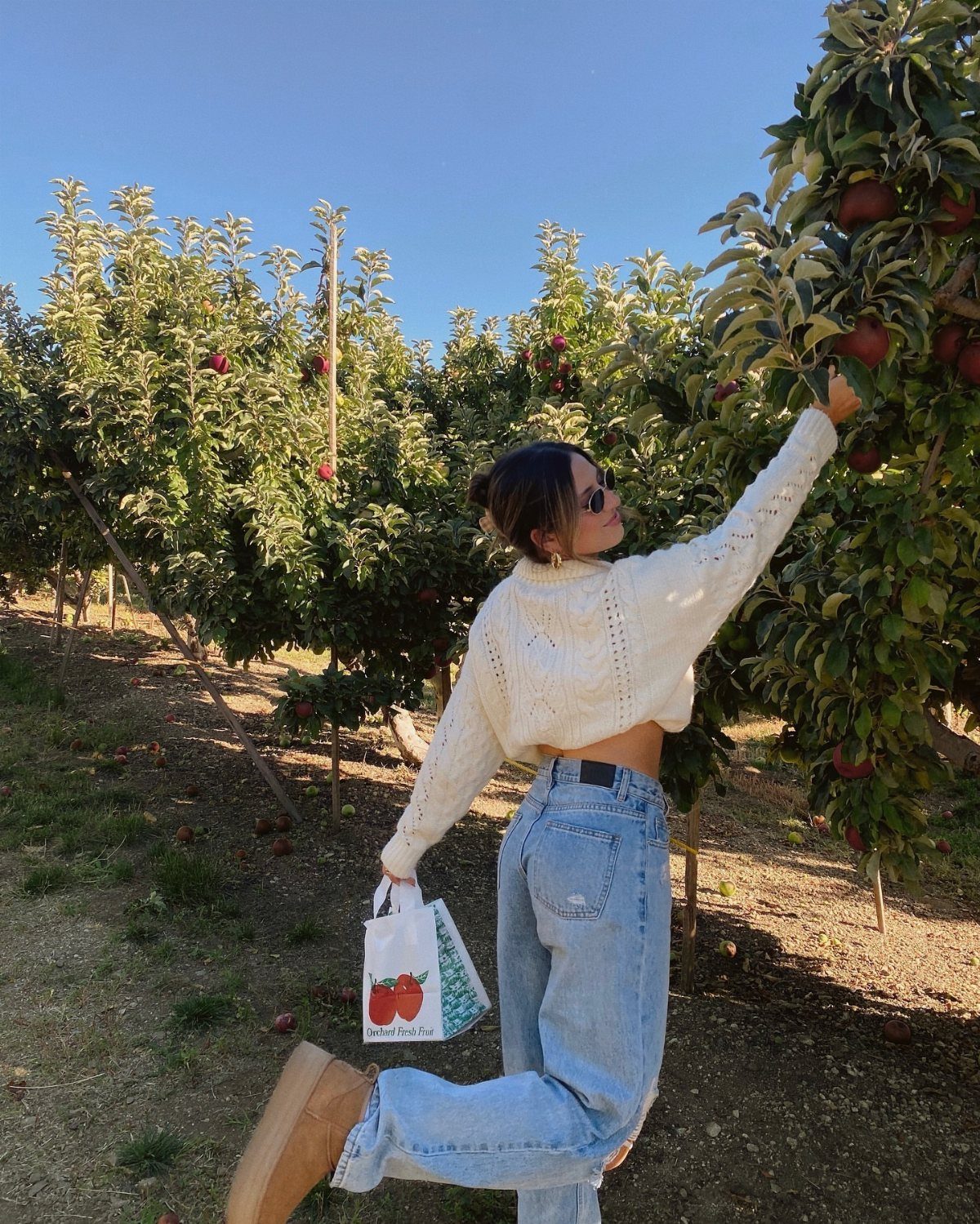
A white cable-knit against the red and green of the orchard gives the photo a clean focal point.
I would wear this with light-wash jeans and tan mini boots, keeping the sweater cropped so the waistband sits right where it should for a day of reaching and bending.
Keep a stain pen in the car. White and apple juice share a history.
7. Cardigan with Pink Rain Boots
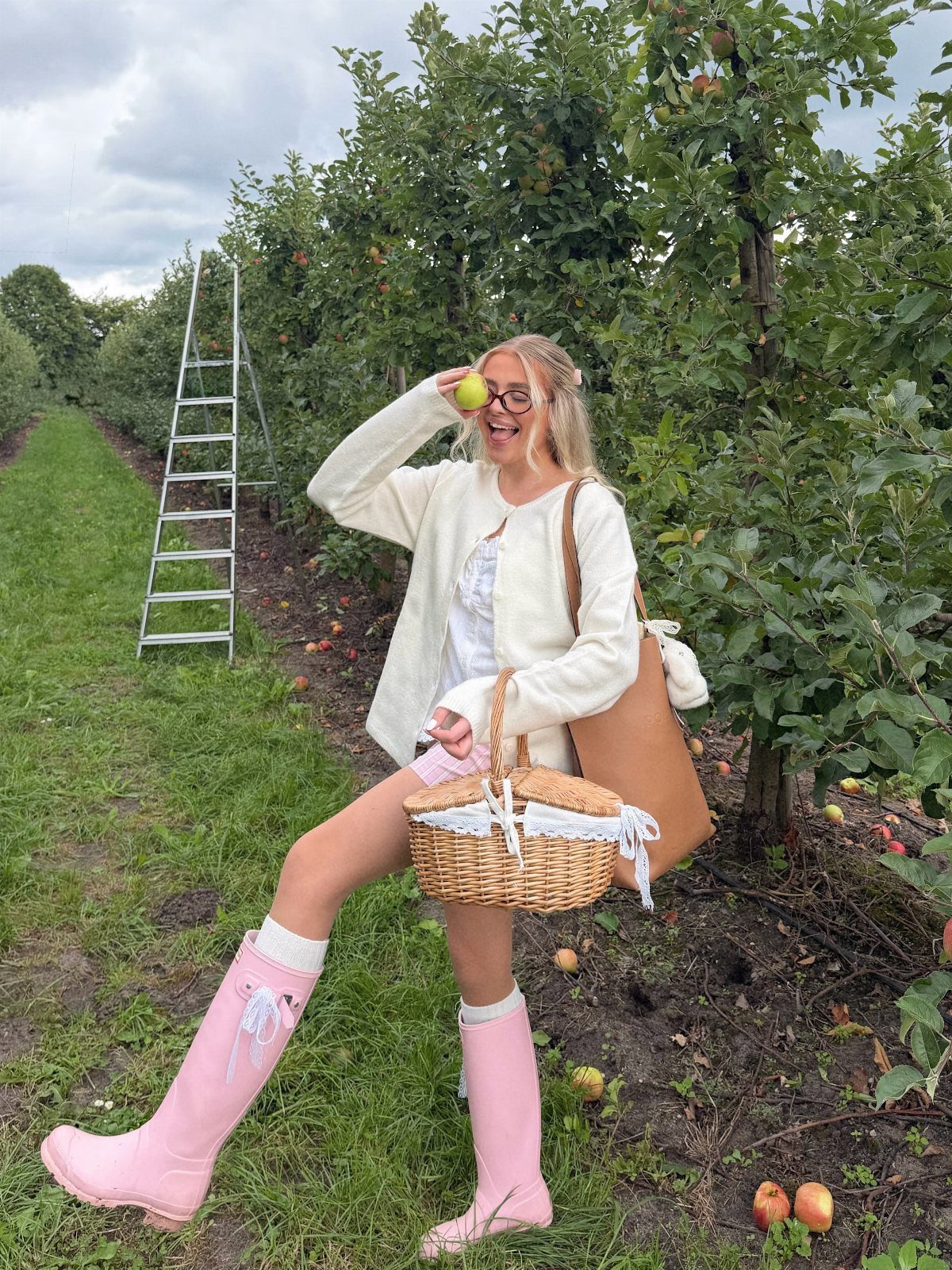
Pink rain boots turn a cardigan look into something that photographs well against green apples and brown bark.
The color match between boots and a shorter pair in the same tone keeps the outfit from reading accidental; a cream knit on top balances the brightness so the boots feel chosen, not leftover from a storm.
I would wear this with shorts on a dry day or switch to cropped jeans if the grass is still wet from the night before.
The cardigan opens over a thin tee so you can peel layers as the sun climbs.
Any bright boot works if pink is not in your closet; repeat that color somewhere else so it belongs.
8. Patterned Oversized Turtleneck Sweater
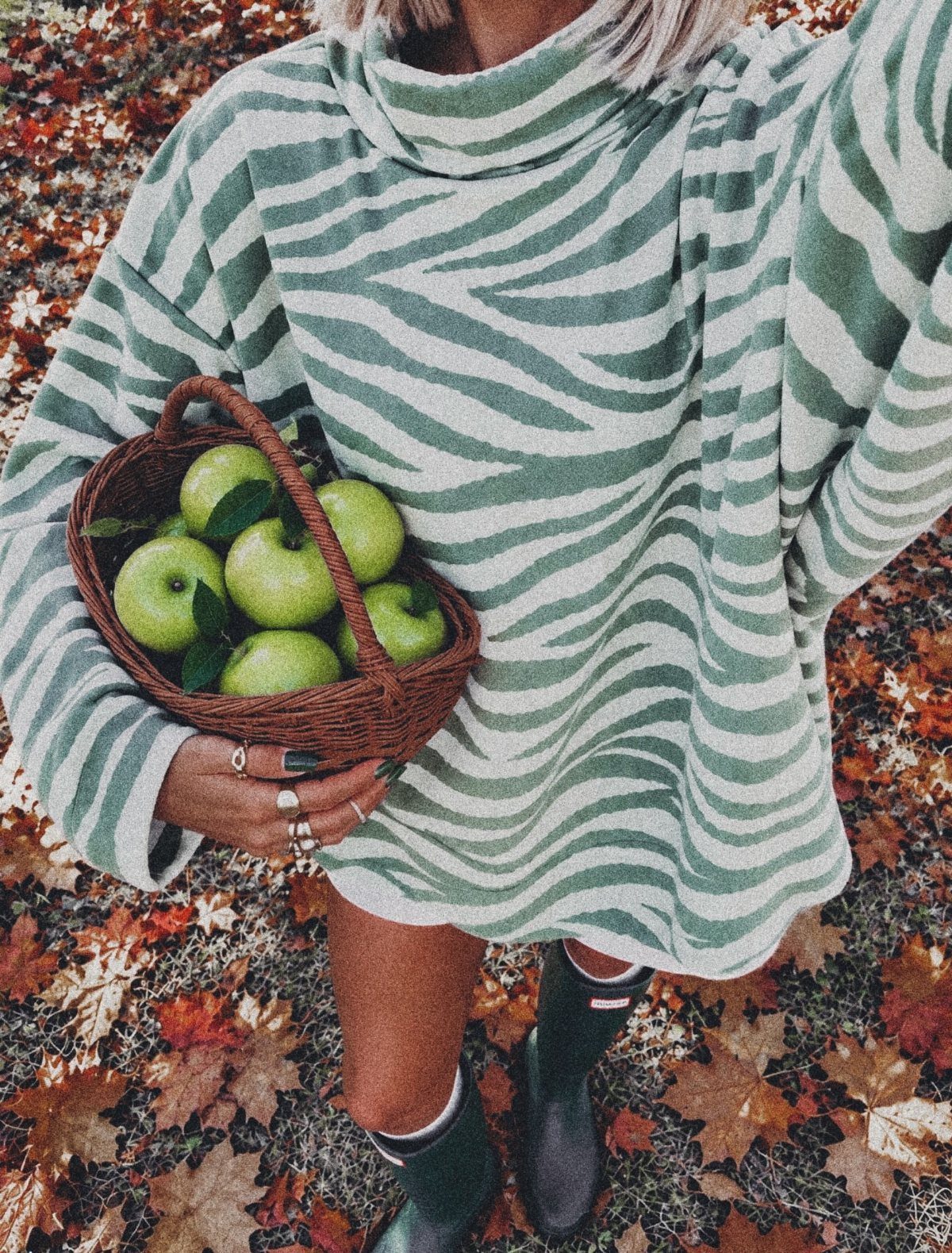
An oversized turtleneck in a bold pattern gives you the whole look with one piece; everything else can fade back.
A wavy green-and-white knit reads graphic without competing with the orchard, and a dropped shoulder lets you reach and twist without a tug at the neck.
Patterned knits this size need slim or straight pants below; wide legs fight the volume and you end up shapeless in motion. A wicker basket plays off the texture, but any neutral bag keeps the focus where it belongs.
This is the outfit for someone who wants one memorable piece rather than a styled set. Check the sleeve length; too long and you are pushing fabric up to snap photos or grab fruit.
9. All-White Top and Striped Trousers
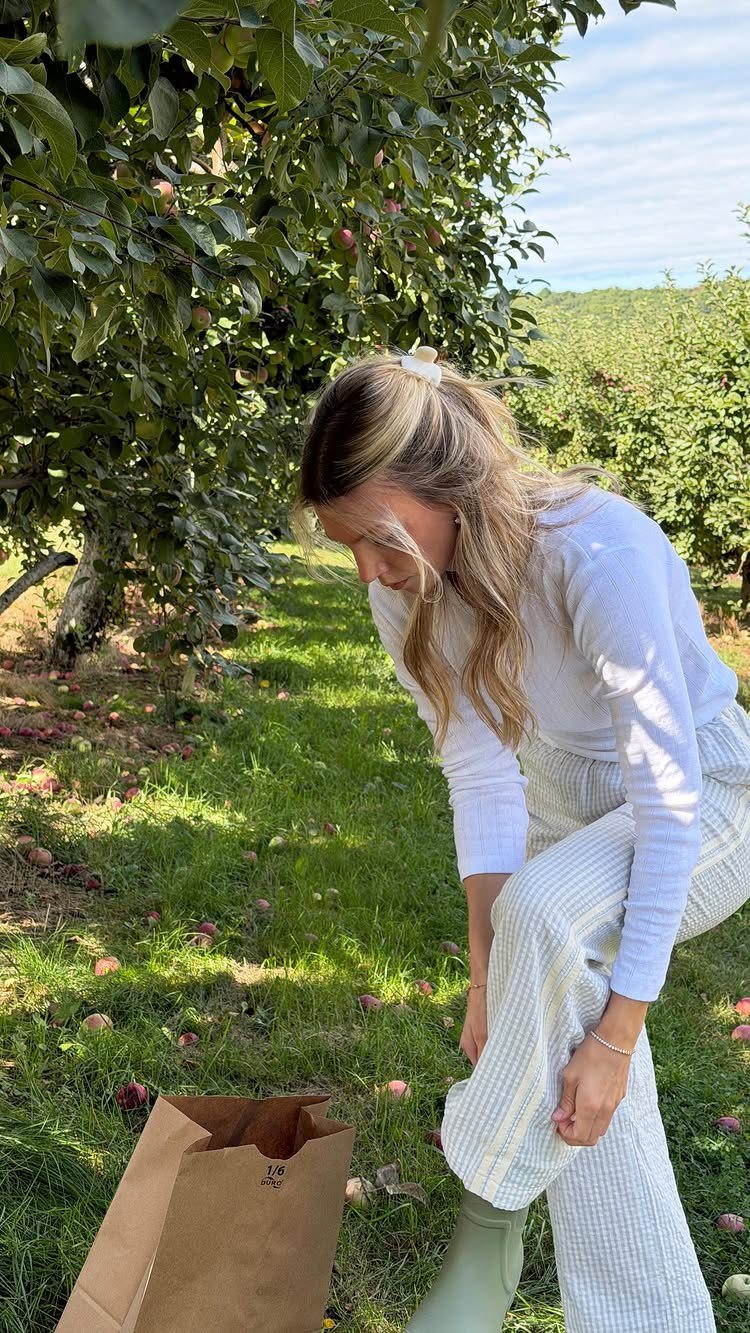
A white ribbed top with striped trousers looks clean and composed against the rougher backdrop of trunks and mulch.
The vertical stripe lengthens, and the monochrome upper half keeps the pattern from feeling busy. Green boots in a soft shade add a note of color without the full costume of ranch dressing.
The ribbed fabric is forgiving on fit, but white on top means the same vigilance as the cable-knit earlier; keep wipes or a stain pen close.
Striped trousers in a mid-weight cotton hold their crease through sitting on hay bales and standing again.
This one suits the reader who wants to look put-together without the full earth-tone palette. A light jacket in cream or tan layers over easily if the morning starts cool.
Comfort and Practicality
Orchard terrain is uneven; roots and packed earth shift underfoot between rows.
What you wear needs to let you bend, reach, and carry without pulling or binding. I look for waistbands that sit stable when I stretch upward and fabrics that do not pinch where a basket strap crosses.
Short sleeves under an open layer work better than one thick top; you warm quickly once you move between trees.
Pockets matter more here than on city errands: a phone, keys, and the first apple you pick before you find your basket all need a spot that keeps your hands free.
If you’re one of the people who rapidly wants to head out to the nearest farm for a crisp Pink Lady, you might want to start planning what to wear to go apple picking ASAP.
Weather Considerations
Dress in layers so you can peel or add as the temperature shifts once the sun clears the tree line.
I build for that swing with a base I would wear alone, a mid-layer I can open or shed, and a jacket that ties at the waist without looking like an afterthought.
Wind cuts faster through open rows than it does in a neighborhood block. A collar that buttons to the neck, even on a shirt, blocks what a crew neck lets through.
Check the dew point as much as the high; dry cool feels different from damp cool, and damp cool is what orchards tend toward after a rain.
Family Photo Opportunities
The group shot under the big tree tends to happen after everyone is flushed and a little untucked, which is part of why it works.
Coordinate with adjacent tones rather than matching exactly; rust and olive read related without the uniform stiffness of all-plaid or all-denim.
One person in a pattern and the rest in solids keeps the eye moving instead of locking on a single busy print.
Smaller kids near the front need colors that hold up in shadow, while whoever stands back can carry the lighter tone that catches light.
Avoiding Damage to Clothing
Juice from a split apple stains fast and oxidizes to brown within minutes on light fabric.
Hay bales at the photo spot shed fibers that cling to anything with texture. Corduroy and quilted channels collect it; smooth denim or a tighter knit brush clean with a hand.
I sit on the jacket I just shed rather than the bale itself if I am wearing something I want to wear again that week.
Frequently Asked Questions
What shoes to wear for apple picking?
Rubber or lug-sole boots handle mud and wet grass between rows, and hiking boots work if you already own a pair.
I left cute booties behind after one damp season; anything with grip and waterproofing keeps you stable on uneven ground. Shorter boots with slim jeans or shorts photograph best, and the color can be your statement piece.
What is the 3-3-3 rule for clothes?
This outfit guide does not cover the 3-3-3 rule for packing or dressing.