The 3 ideas below run from a lace top that works for client lunches to a white button-down that handles back-to-back meetings, with fit, color, season, and accessories as the deciding factors for how far each one carries.
1. Lace Top
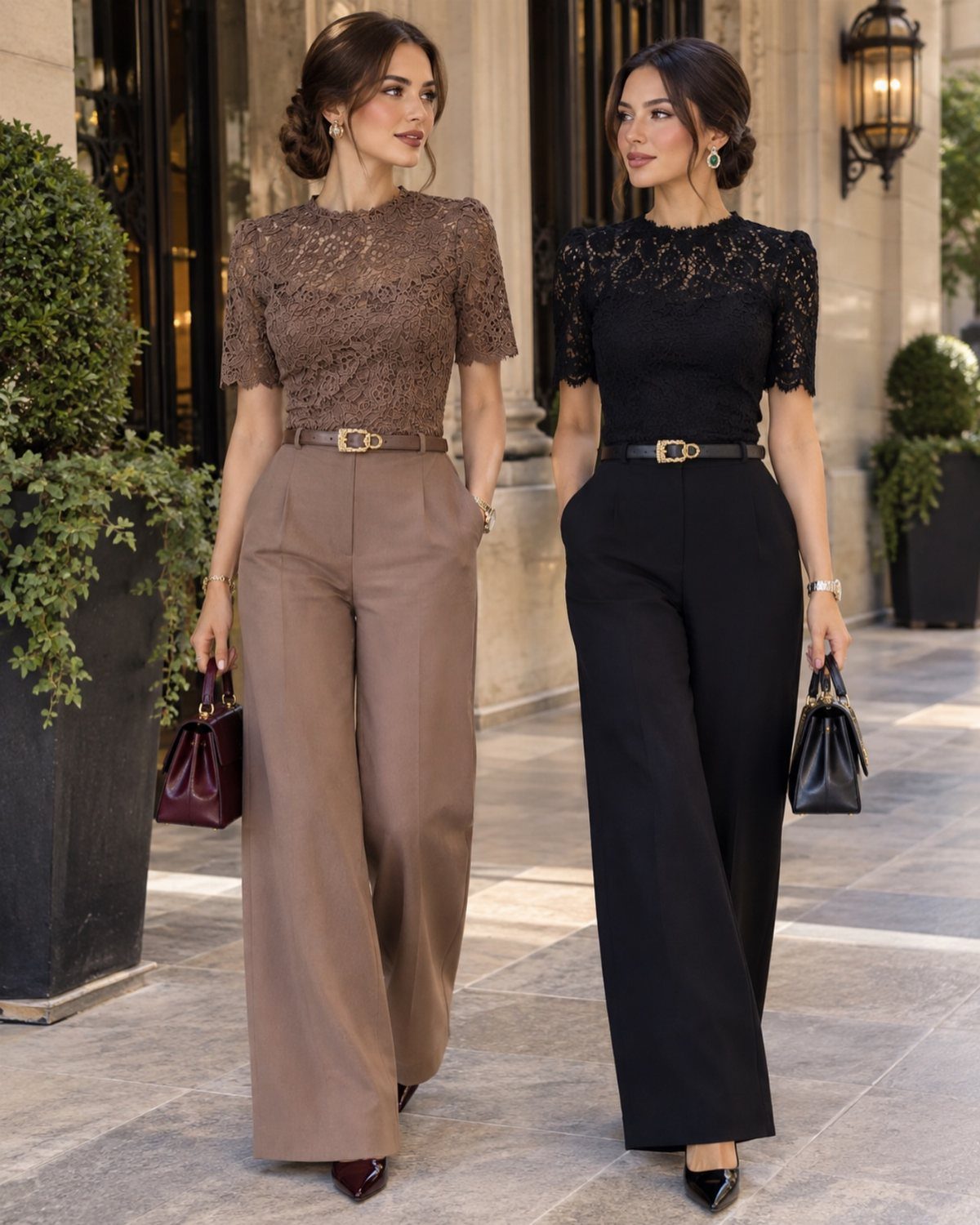
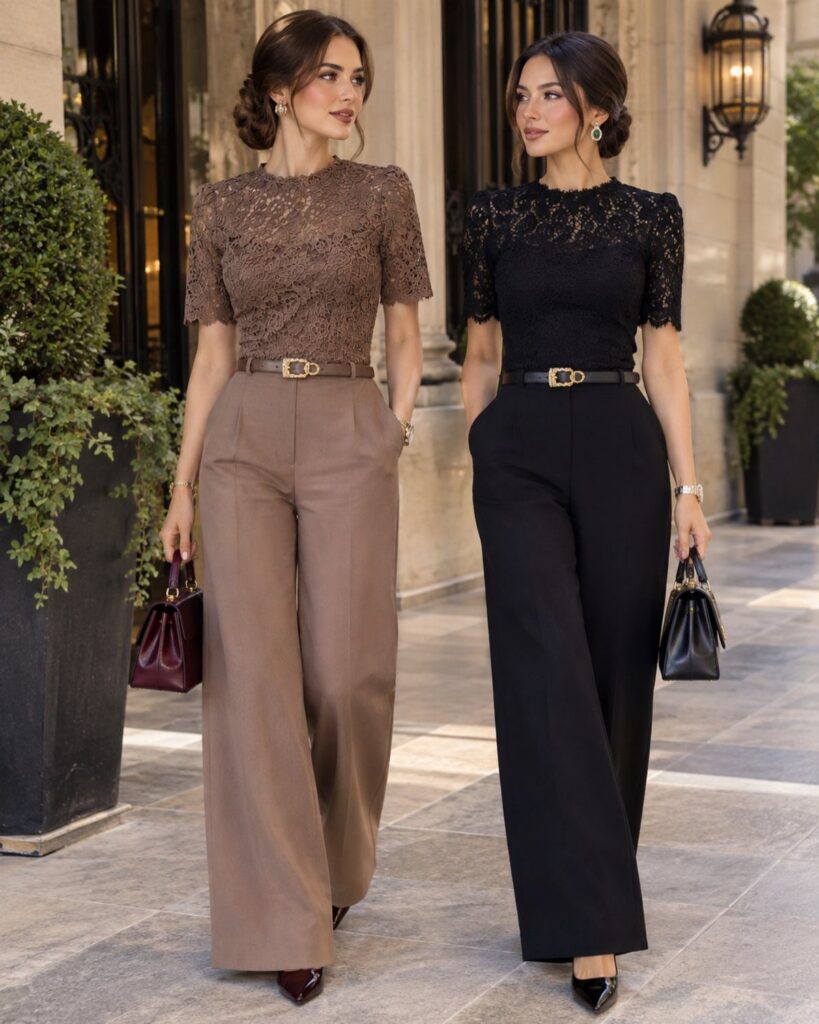
A lace top brings texture into an outfit that khaki pants often flatten into office-plain territory. The combination works because the pants stay neutral ground while the lace carries the interest.
Fit matters more here than with a stiffer fabric.
A lace top that sits too loose will read costume; one that fits close to the body keeps the look intentional. Short sleeves keep it from feeling like evening wear brought to an early meeting.
Black heels or boots extend the line, though brown lace against khaki reads softer and more daytime-appropriate. I would choose that pairing for client lunches, the black for after-hours events where the same pants need to shift upward.
2. White Sleeveless Top
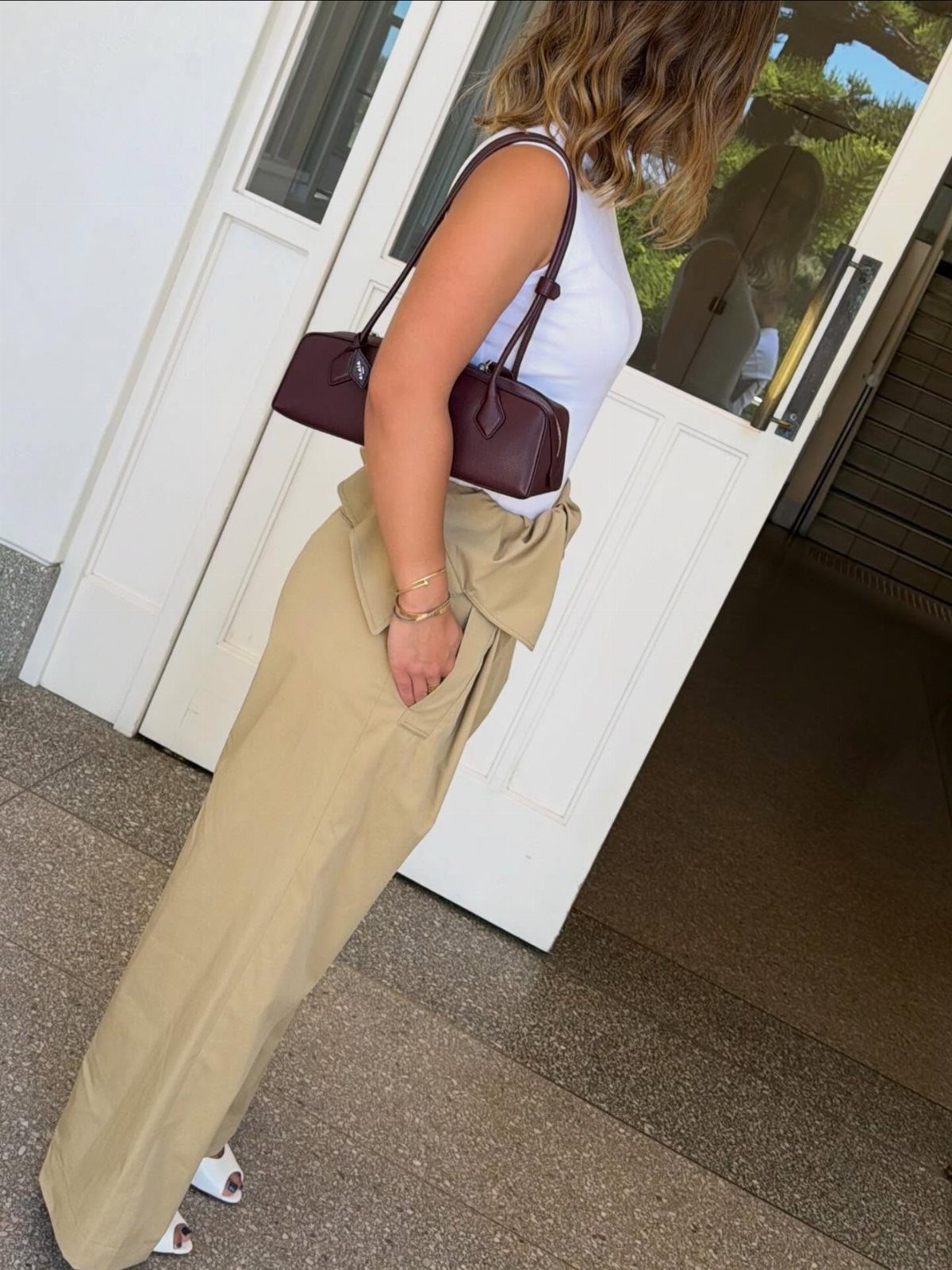
Wide-leg khaki trousers with a white sleeveless top give clean lines without the extra fabric of a blazer layer.
This is the outfit for offices that run warm, or for days when you are carrying one good bag rather than a laptop and lunch both.
The break point is the shoe.
Open-toe heels keep the leg elongated; a closed shoe or flat will ground the look differently, more practical but less fluid. Check your office code before committing to the toe.
A burgundy bag against this palette adds one warm note without competing. Any single dark accent works the same way.
3. White Button-Down Shirt
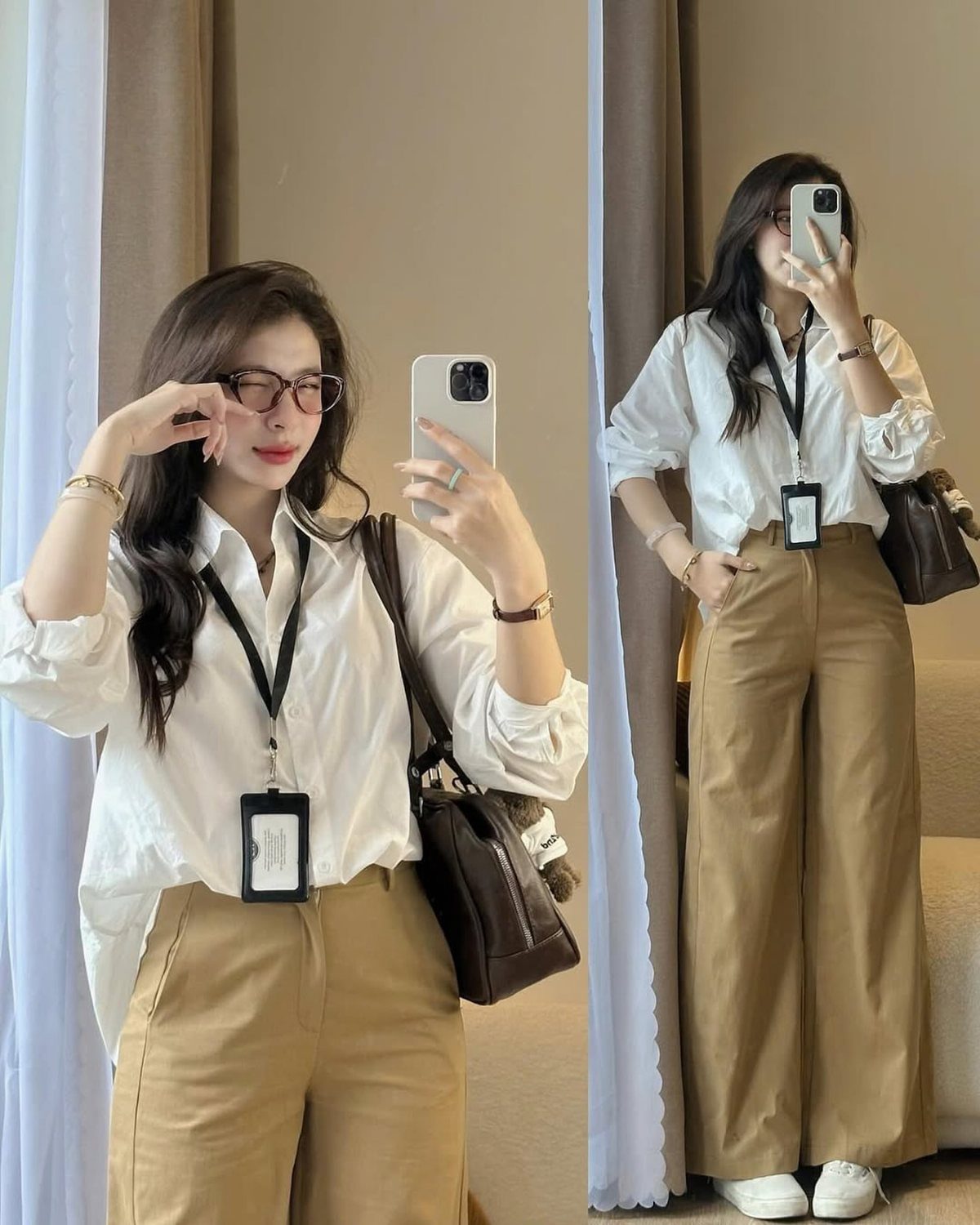
A white button-down with khaki wide-legs is the baseline from which the other outfits deviate, which makes it worth getting right.
The shirt here is deliberately loose, not tucked to the waistband, which changes the proportions from standard business casual to something more current.
Sneakers underneath keep it mobile and younger than a heel would; an ID badge and glasses confirm this is actual work wear, not a styled shoot pretending to be.
The shoulder bag carries what the outfit needs without adding another color.
Check sleeve length before buying: rolled once or worn full changes the formality more than the trousers do. I would keep a watch, skip bracelets, and let the shirt’s volume be the single statement.
If you are looking to wear a khaki pants outfit in a workwear setting, keep the other elements of your ensemble breezy and loose-fitting.
— Glamour
Fit and Tailoring
Khakis need room in the seat and crotch to sit right through a full day, but too much and the silhouette collapses.
Tailoring fixes the middle ground: a waistband that gaps, a hem that pools, or a taper that hits wrong can all be adjusted without buying new.
The cuff rule is worth knowing.
Rolled khakis read job site or weekend, not meeting room. I keep mine unrolled for the office and save the roll for Saturdays.
Slim fit is the safer office choice, though "slim" here means close to the leg, not spray-on. Swimming in fabric is a real risk: the wearer disappears inside the pants.
A tailor can always take fabric away, but adding it back is usually not an option; I buy with enough room to sit and breathe, then have the waist or leg taken in where it bags.
Color Coordination
Khaki is itself a neutral, which means it will take almost any color you bring to it. Choosing whether to sharpen or soften the combination decides the whole look.
Black against khaki gives the highest contrast and the most evening formality.
Brown leather, warmer and lower-contrast, keeps things in daytime territory and reads as the more current choice right now. I would default to brown for client-facing hours.
White is the classic pairing for a reason: it reflects light upward and keeps the face bright.
A graphic or patterned white top adds interest without inventing a new color story. Burgundy, navy, or forest green work as single dark accents against the full khaki-and-white field; one is enough.
What does not work: matching your belt or bag to the exact shade of the pants.
The color gets muddy. Go lighter or darker, never the same.
Seasonal Styling
Summer khaki outfits need lighter shirt fabrics. Linen or a thin cotton popover keeps the same neutral palette without the weight that makes office air conditioning a relief instead of a rescue.
Winter asks for layering.
A thin turtleneck under a button-down, with the collar open, adds warmth without the blazer bulk. The same wide-leg khaki from July carries into January if the shoe closes up and the top layer thickens.
Color shifts with temperature, though I treat this as tendency rather than law.
Lighter khaki reads spring; a darker tan or olive-taupe feels more grounded in fall. The darker shade also pairs more broadly across your closet, light shirts and dark both.
The experimental colors, grays and blacks that sit outside the brown family, work year-round but need more thought. I keep one safe pair and experiment with a second if the budget allows.
Accessorizing
A belt does more than hold pants up; it breaks the front into thirds and draws the eye to where the top meets the bottom.
A slim belt in brown leather is the standard move. Chunky or woven reads more casual but can save an otherwise plain outfit.
Watches and small leather goods should match the belt in warmth, not necessarily in exact shade. Black against warm khaki works but keeps the whole look cooler; I prefer the coherence of brown.
Shoes are the loudest accessory here. An Oxford or loafer in leather keeps the office code; a suede version of the same shape softens it for Fridays.
Patterned socks keep the office from feeling too flat; mine stay hidden below a full-length hem, so the pattern is my own detail rather than a statement to the room.
Keep the pattern small and the colors compatible with the rest.
Bags and eyewear finish the impression more than most people credit.
A structured shoulder bag reads professional; a slouchy tote reads busy. Choose for the day.
Frequently Asked Questions
What colors work with khaki pants?
White, navy, burgundy, forest green, and brown all work with khaki because the pants are themselves a neutral.
Brown leather and brown tones are my default for client-facing hours with khaki; the pairing reads more current than black, which carries more evening formality.
Black works too, but it gives the highest contrast and shifts the whole look toward after-hours territory.
Are khakis appropriate for work?
Yes, khakis fit most office dress codes when the cut and styling match the environment. Slim-fit khakis in proper length, worn unrolled, read business casual; paired with a white button-down and leather shoes they are standard office wear.
The same pants in a looser cut with sneakers slide toward casual Friday territory, which is still work-appropriate in many places.