These outfits move from a ribbed knit dress to a statement faux fur coat you might already own, with the deciding factor being how much of your night you spend outdoors versus in a heated room.
The faux fur and leather mini handles coat-check bars where you leave layers behind; the thermal-topped wrap dress works for parties where the front door keeps opening.
1. Velvet Dresses

A velvet dress in emerald or burgundy carries you straight through holiday party season without looking like you tried too hard.
The plush weave traps heat better than silk or jersey, so you stay warm from car to cocktail table without lugging a coat around all night.
Long sleeves and a midi length handle most venues; add tights and boots if the walk from parking is long. Dark jewel tones photograph well and transition between office drinks and a midnight toast without a change.
2. Knee-High Boots
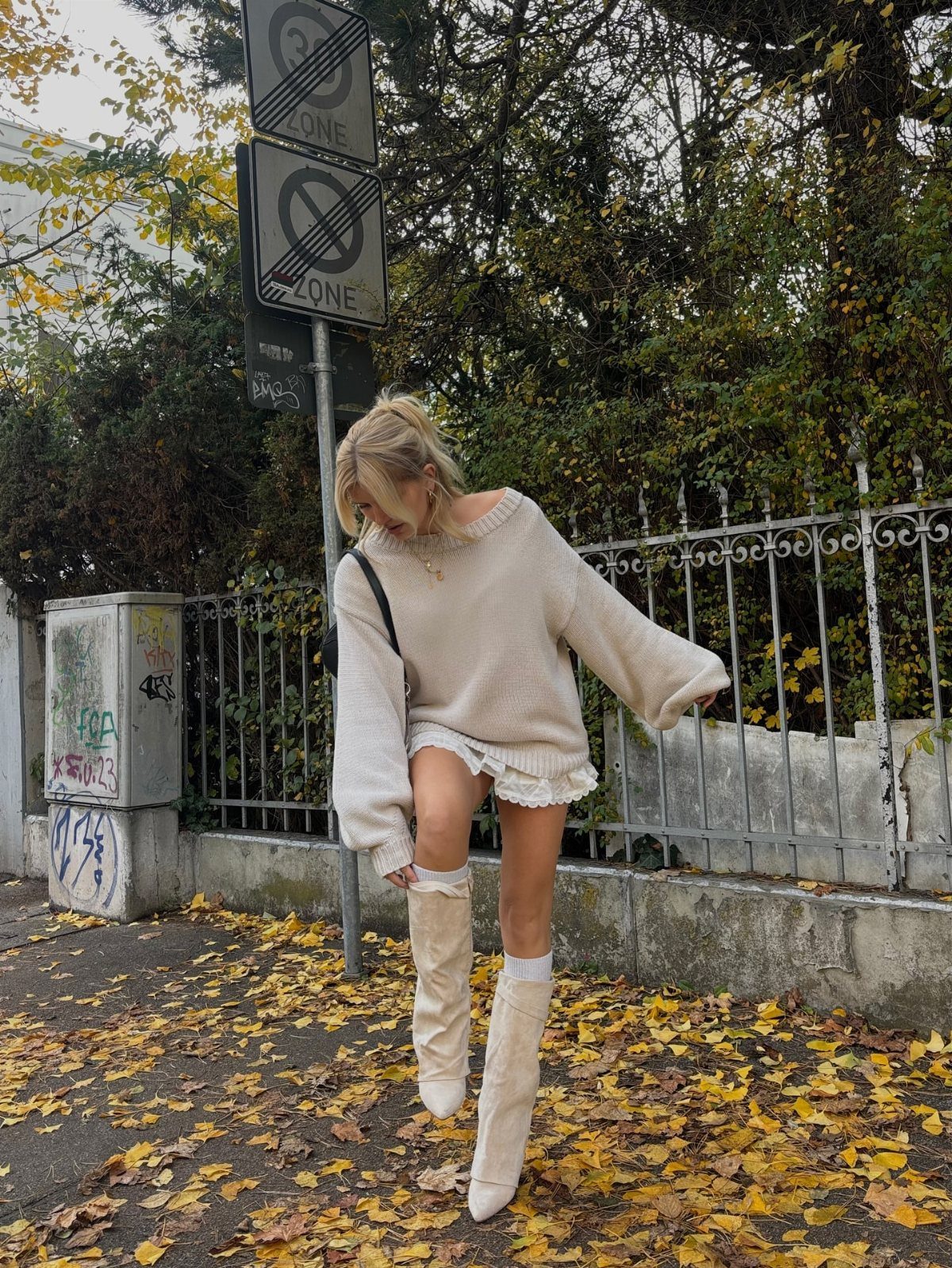
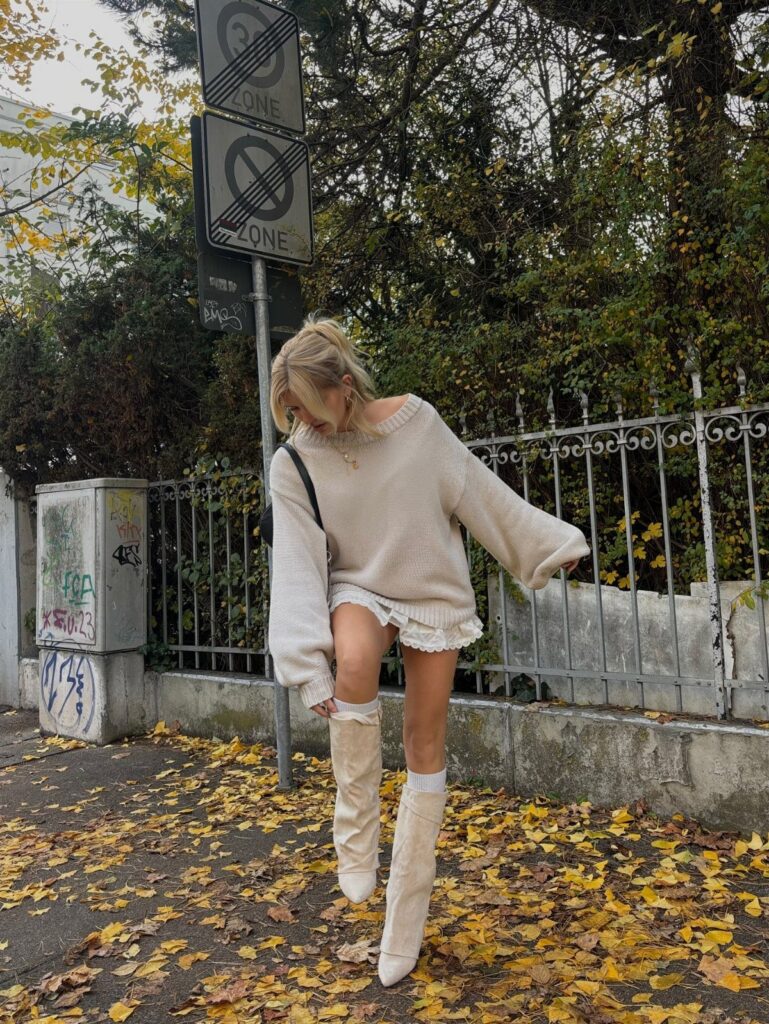
Knee-high boots split the difference between weatherproof and polished better than ankle booties when your night involves actual sidewalks.
Slouchy cream leather or a fitted black heel both work; the right shape depends on what hemline you’re anchoring, mini to midi.
Pair them with a sweater dress for the simplest possible formula, or with a skirt and tights when you want more structure.
Flat styles save your feet on nights with standing room only, while a heel dresses the same boot up for seated dinners.
3. Cashmere Sweater + Satin Trousers
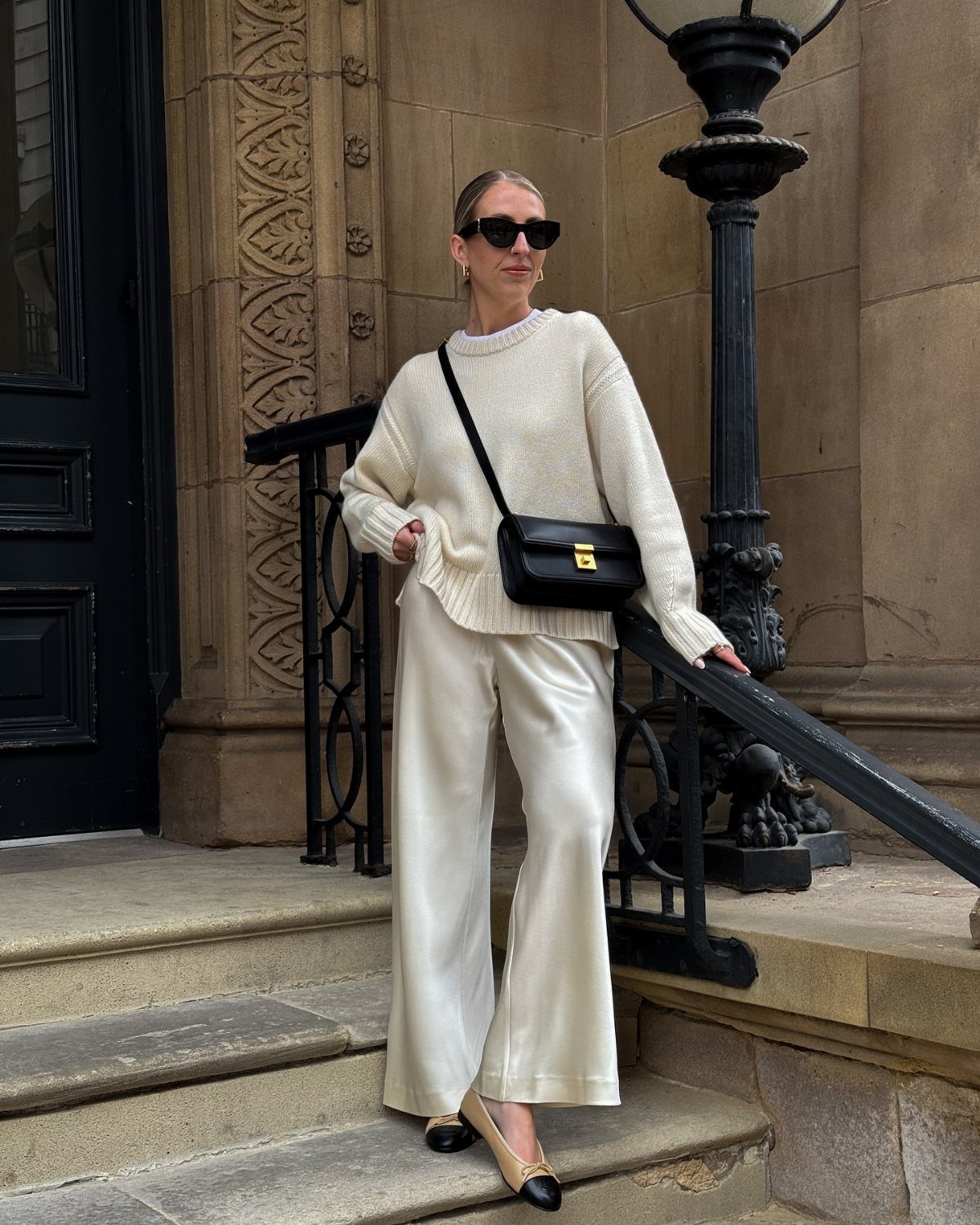
Cashmere against satin trousers solves the winter version of "nice top, casual bottom" without the sweatpants regret. The sweater handles body heat and temperature swings; the satin adds party texture without the bare-legs problem of a dress.
Quality cashmere pays back over years if you hand-wash flat, and a mid-weight knit doesn’t bulk at the waistband the way cable knits can.
I would probably reach for heeled boots if I were headed to dinner, and swap them for white sneakers on the walk back. One pair of ivory or champagne trousers covers December through March.
4. Wrap Dress
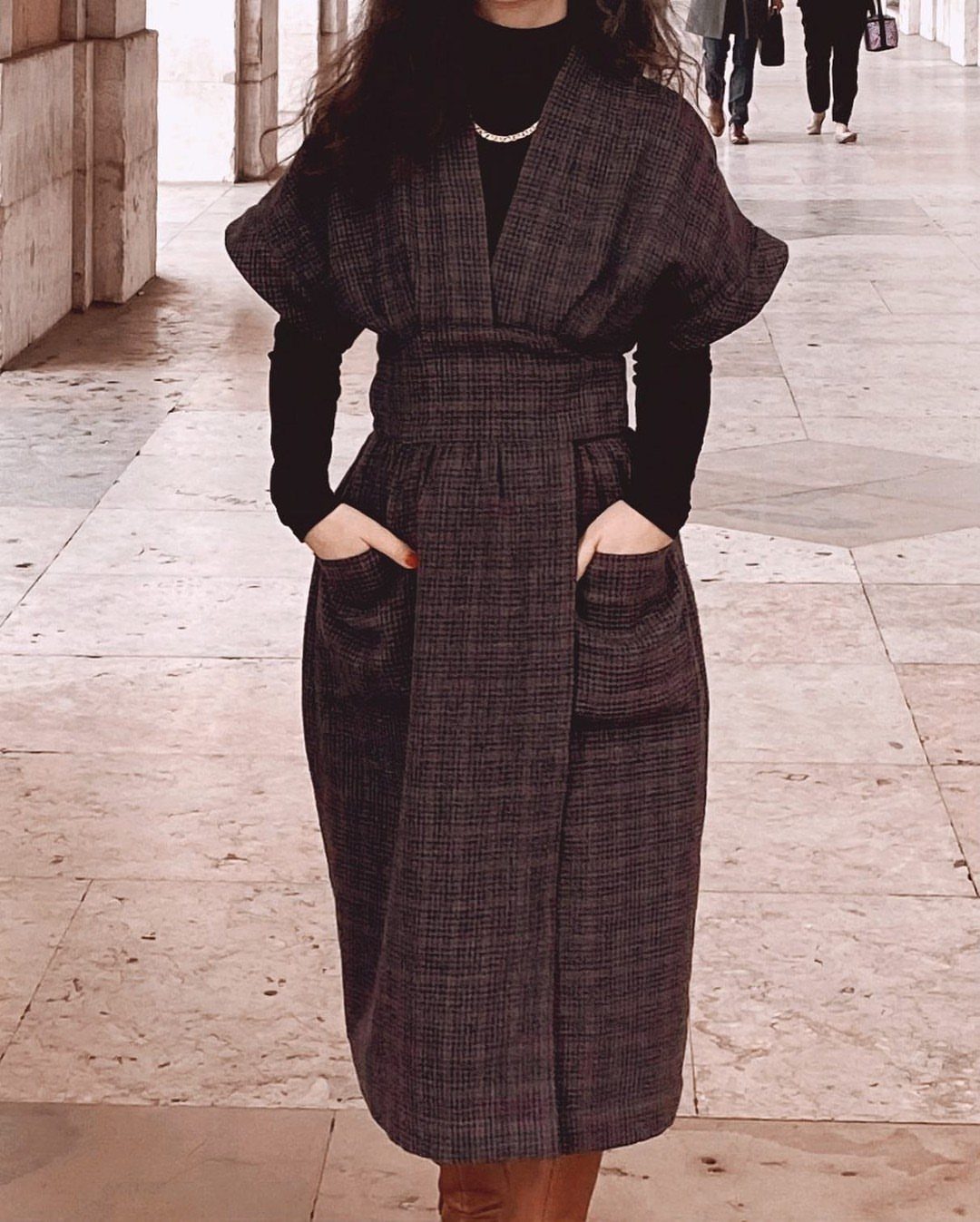
The wrap dress earns its reputation because the tie lets you adjust after a big dinner, and the V-neckline works over a turtleneck in January as well as on its own in April.
For winter, layer a thin black turtleneck underneath and swap the summer sandals for tall boots; the look holds together because the dress shape stays legible.
A plaid or textured weave in burgundy or navy reads office-party appropriate without requiring a separate "festive" purchase. Check that the skirt length stays practical with the underlayer before you commit.
5. Jumpsuit + Statement Accessories
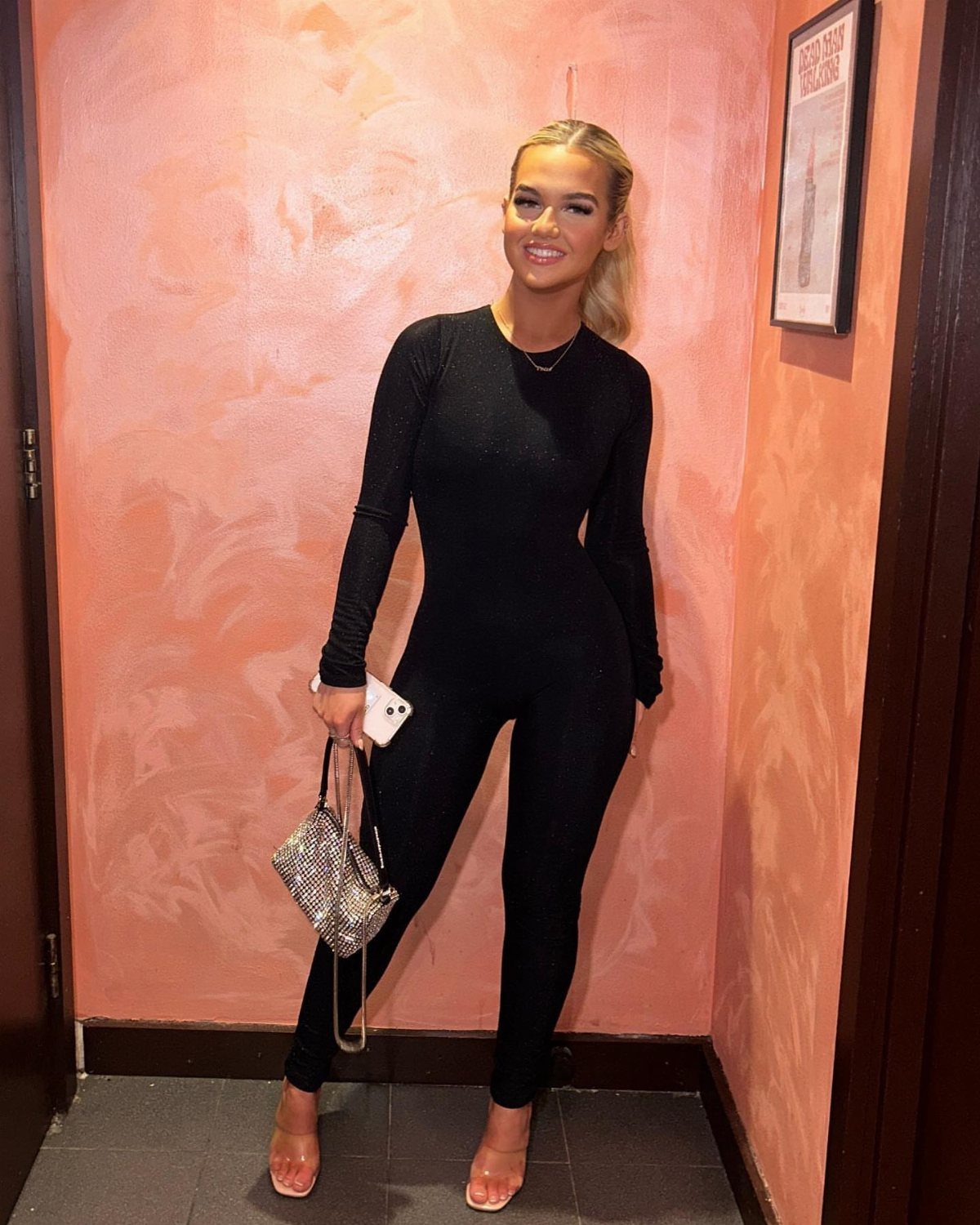
A black jumpsuit with long sleeves gives you pants-party permission while reading as formal as any dress.
The fitted cut through the torso matters more than the leg shape; too loose and you lose the silhouette that makes this work. Add one big accessory, a rhinestone clutch or sculptural earring, since the base is so quiet.
Clear heels extend your leg line without competing. If the venue runs hot, you’re wearing one layer instead of separates, and you never have the "is my skirt riding up" thought.
6. Faux Fur Jacket + Leather Mini
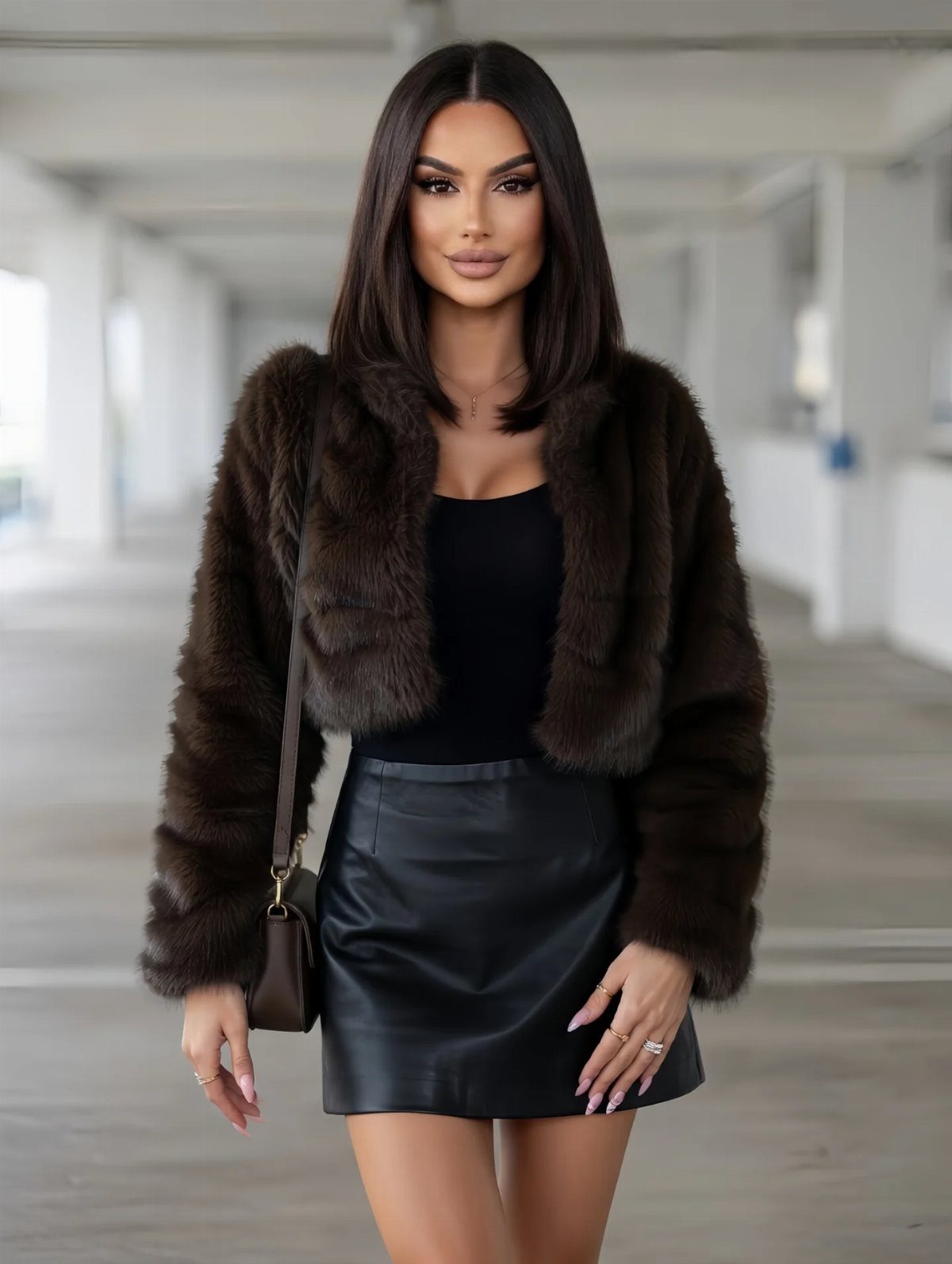
A brown faux fur jacket over black leather reads expensive without the vintage-mink maintenance.
The fur carries the outfit; everything underneath can be simple, dark, and already owned. The mini keeps proportions from getting bulky, and a black base head-to-toe underneath unifies the look so the jacket stays the point.
This version works for late-night bars and concerts where you check your coat and still look finished. For extra cold, a thin silk base layer under the top adds warmth without visible bulk.
7. White Faux Fur Coat + Mini
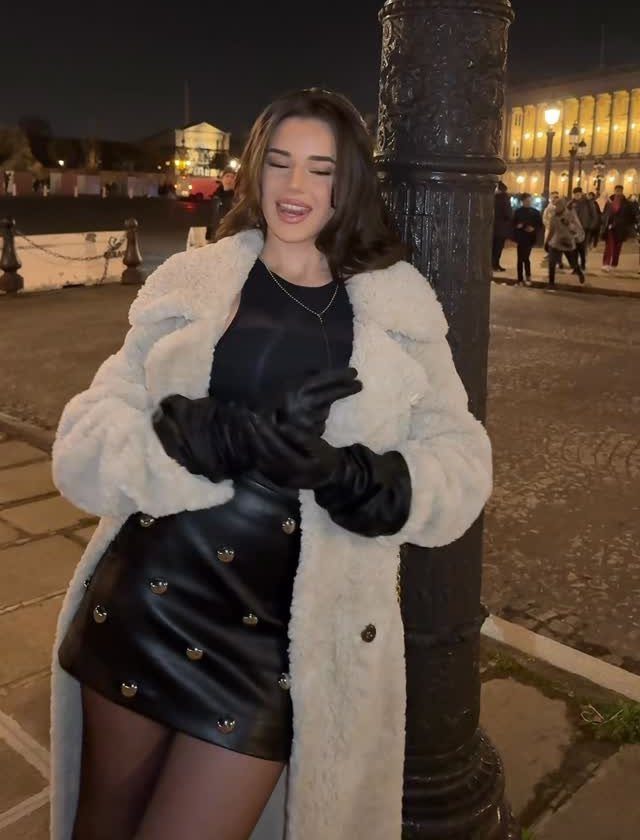
A long cream faux fur coat turns any black mini into an event without the vintage-mink guilt. The color reads deliberate against winter darkness; the length keeps you warm from curb to coat check.
Studs or hardware on the skirt add edge so the look doesn’t skew bridal.
Black leather gloves extend the theme and handle actual outdoor minutes. The coat does the visual work, so underneath stays simple: black top, black tights, boots you already own.
This is the outfit for nights when you want to arrive looking like you hired a car even if you took the train.
8. Ribbed Knit Midi Dress
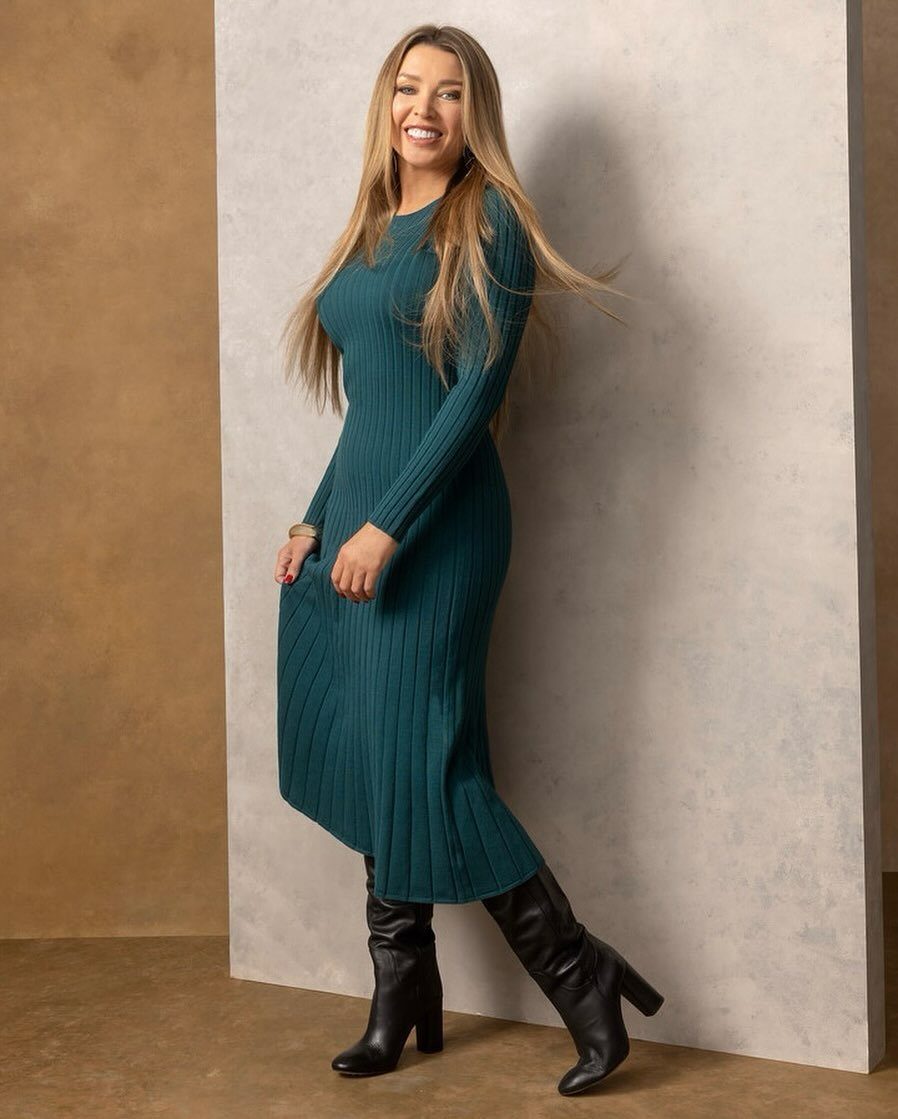
A ribbed knit midi dress in teal or emerald works like a sweater that stretched to party length, which solves the winter going-out problem without much effort.
The ribbing shapes where flat jersey would cling, and long sleeves plus boots handle any venue with a draft.
Check the gauge before buying: too fine and it reads office, too heavy and it won’t drape past your hips. The midi length needs a boot that hits at or above mid-calf; anything lower chops your leg line.
One dress, one boot, one clutch: done.
9. Leather Trench + Mini Skirt
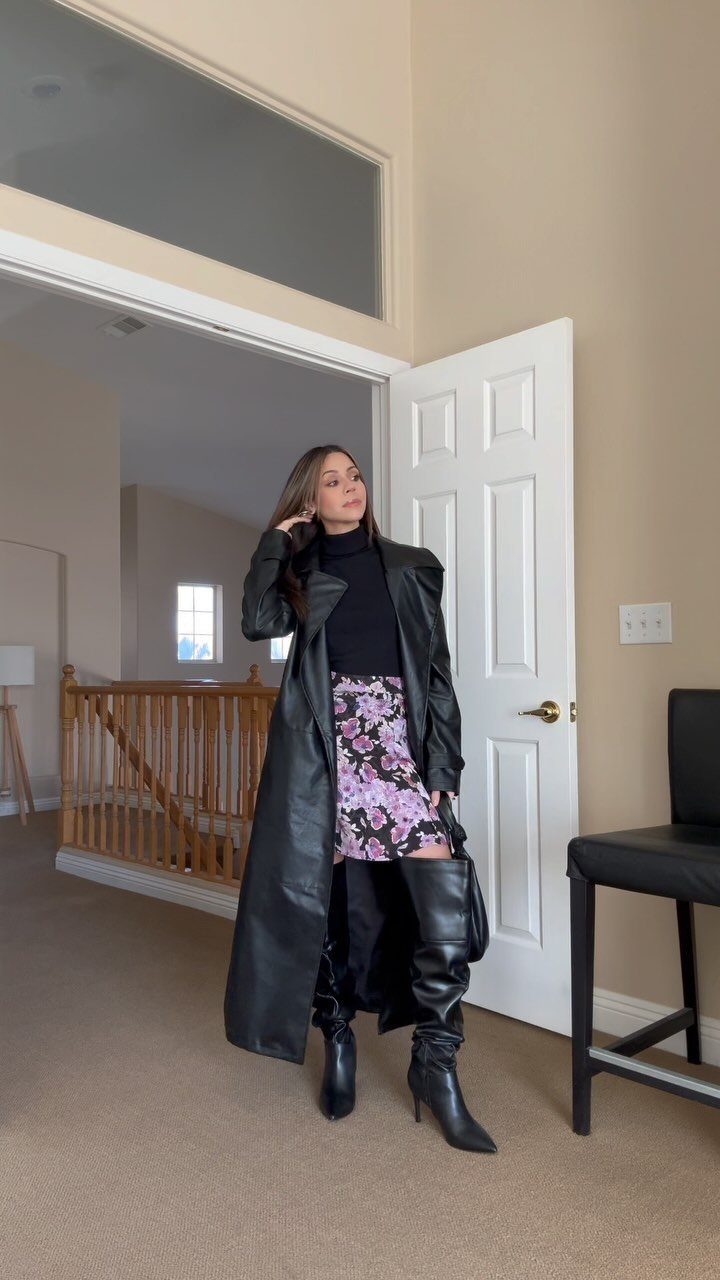
A black leather trench worn open over a pattern keeps the raincoat silhouette but reads after-dark instead of commute.
Wear it unbelted so the outfit underneath stays visible: a dark turtleneck, a short skirt with some print, boots that peek through.
Faux leather saves budget and maintenance; the length should hit mid-thigh or lower to balance a mini underneath. Thigh-high boots fill the gap between skirt hem and coat opening so skin exposure is optional.
Belt it only if you’re wearing a solid color beneath, or the coat becomes the entire statement.
10. Belted Grey Trench Coat Outfit
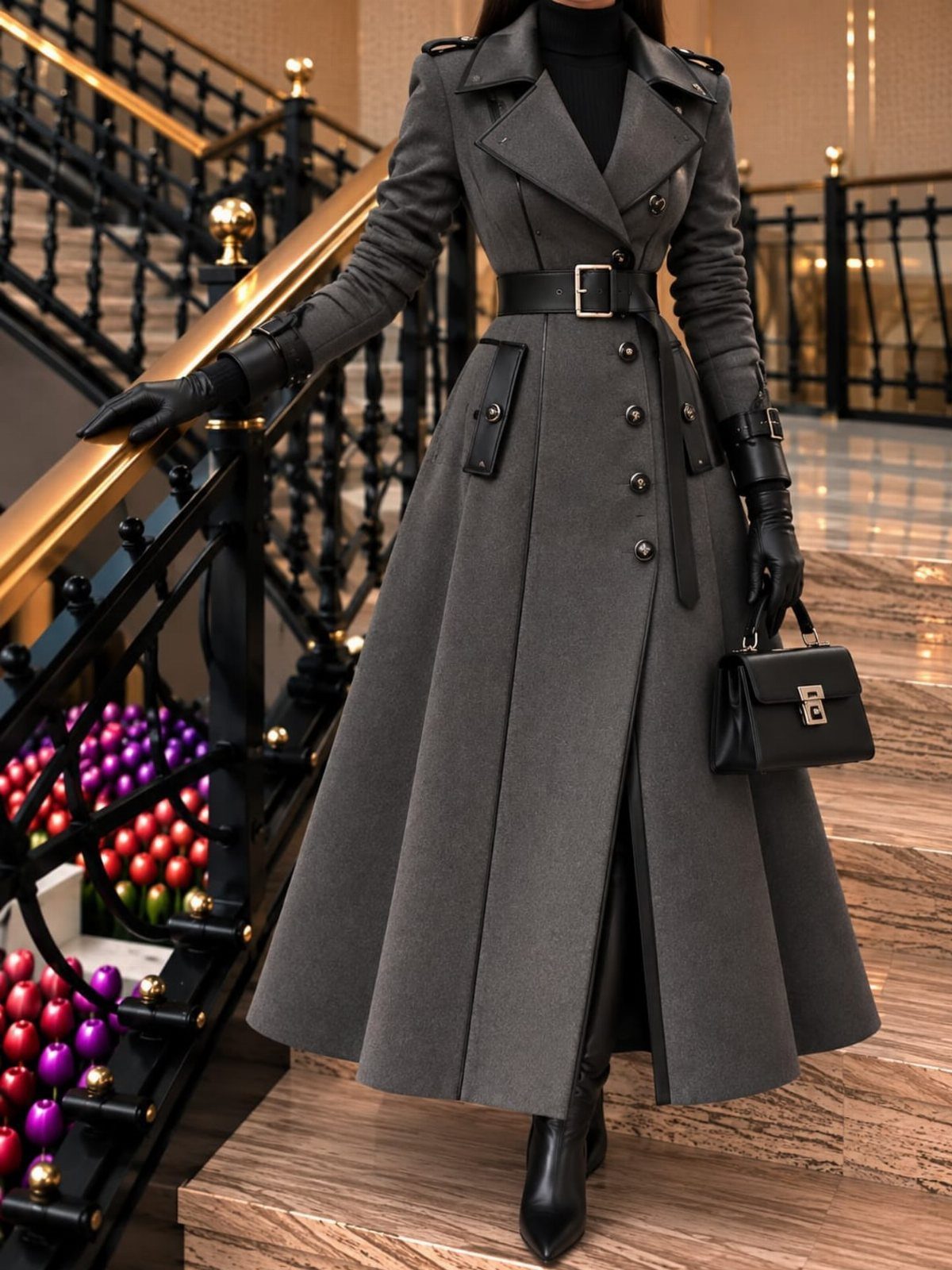
A grey trench belted at the waist is the tailored answer to "what coat for dinner when puffers feel wrong." The belt defines shape over bulky layers, and the flared cut moves like a dress when you walk.
Black underneath unifies: turtleneck, gloves, boots, bag, all one tone so the coat stays the single bold piece. The grey reads softer than black but still handles city dirt better than cream.
This is the coat for places with valet or a proper coat check; the belt detail looks finished even while you’re still wearing it. For standing-room nights, size the boots for actual walking.
11. Snake Print Pants

Snakeskin trousers in a matte print give you pattern without the "evening top and sequin" equation.
The scale reads personal style rather than costume when the rest stays quiet: a white or black top, a sweater draped if the room might cool.
High-waisted versions lengthen; pair with a heel or a clean white sneaker depending on whether the night ends at a bar or a friend’s apartment. The print does the interest, so jewelry stays minimal, one earring or none.
These work best when you treat them as fancy jeans: same confidence, same rules, more conversation at the table.
Choosing the Right Fabrics
Velvet, wool, and cashmere trap heat where silk or lightweight jersey lets it escape.
A velvet dress carries you through a drafty venue without the shiver-through-photos problem, and brocade or heavier satin keeps warmth against your legs in ways that chiffon never will.
Weight decides layer order, and getting that right keeps you warm without adding bulk where you do not want it.
I skip anything labeled "summer weight" from November through March, even for indoor events.
Rooms overheat, then someone opens a door and the temperature drops twenty degrees. Sequins work if they’re backed properly; flimsy ones feel like ice against your spine.
Layering Techniques
The base layer matters most because it’s the one you can’t remove.
A thin thermal top in black or nude disappears under a wrap dress or sweater dress without the neckline showing; thermal tights under a midi do the same job for your legs where skirts and dresses leave them exposed.
Your coat choice should be longer than you think. A long coat protects more of the outfit from wind and slush, and from across a room it reads as intentional rather than afterthought.
Boots are part of the layering system, not an accessory.
Knee-high coverage beats ankle exposure for any walk longer than a parking lot, and the boot shaft fills the gap when your coat is open and moving. Save strappy heels for events you can step directly into from a car.
Check the venue before you commit to the full stack. Outdoor parties with heaters and indoor access let you shed layers; an unheated warehouse means everything stays on.
Accessorizing for Winter
Gloves, scarves, and hats earn their place when they pick up a color or texture already in the outfit rather than fighting it.
Black leather gloves extend the hardware on a leather mini or snake pant; a shearling coat reads complete without any scarf at all.
The bag does heavier lifting in winter because your coat hides most everything else.
A zebra clutch or rhinestone version gives one hit of interest when your torso is covered; a structured tote works for daytime events that stretch into evening. One statement piece beats competing small ones.
Jewelry sits at the mercy of necklines and hair.
Drop earrings show when your coat is on and your hair is up; they disappear against a turtleneck or shearling collar. I keep one bold earring pair for indoor-only nights and wear nothing extra if the coat stays on.
Socks matter more than the outfit photos suggest. Cashmere socks inside boots add warmth without the bulk of double-layer tights, and they handle the walk between venues when the heel would otherwise blister.
Mixing Casual and Dressy
A black dress base gives you room to move either direction.
The balance tilts on fabric and proportion, not formality rules. A fitted coat over either unifies the look.
I think about which piece will read loudest in the actual room.
A faux fur jacket over jeans and a tee works because the fur carries the statement; a sequin skirt with a sweatshirt fails because neither piece cedes priority. One element leads, the other supports.
Your coat often sets the first impression anyway. The venue’s coat-check situation matters: if you’re wearing it all night, it counts as half the outfit.
Frequently Asked Questions
What to wear in a party in winter?
A velvet dress in emerald or burgundy handles most venues straight through holiday season, and the plush weave traps heat better than thinner fabrics so you stay warm from car to cocktail table.
For something simpler, a sweater dress with tights and knee-high boots works for casual parties, while a tailored jumpsuit with one statement accessory reads as formal as any dress.
Match the warmth to the actual time you’ll spend outside, not just the room temperature inside.
What are popular winter party dress styles?
Velvet dresses in dark jewel tones are the most reliable choice; they photograph well and move between office drinks and midnight toasts without a change.
Long-sleeve ribbed knit midi dresses solve the winter problem by reading as stretched-to-party-length sweaters, and wrap dresses let you layer a thin turtleneck underneath in January.
The popular styles all share coverage and heavier fabric rather than bare legs and flimsy material.
How to keep warm in winters?
Start with a thin thermal base layer in black or nude that disappears under your outfit; it matters most because it is the one layer you cannot remove.
Knee-high boots beat ankle exposure for any walk longer than a parking lot, and a coat longer than you think protects more of the outfit from wind and sudden temperature drops when someone opens a door.
What’s in style for winter?
Faux fur jackets in brown or cream turn any simple black base into something that reads expensive, and the coat does the visual work so everything underneath can be plain and already owned.
Ribbed knit dresses in teal or emerald, belted grey trenches over unified black layers, and snake-print pants treated as fancy jeans all carry the current mood.
The through-line is one statement piece per outfit rather than competing elements, with everything else quiet and supportive.