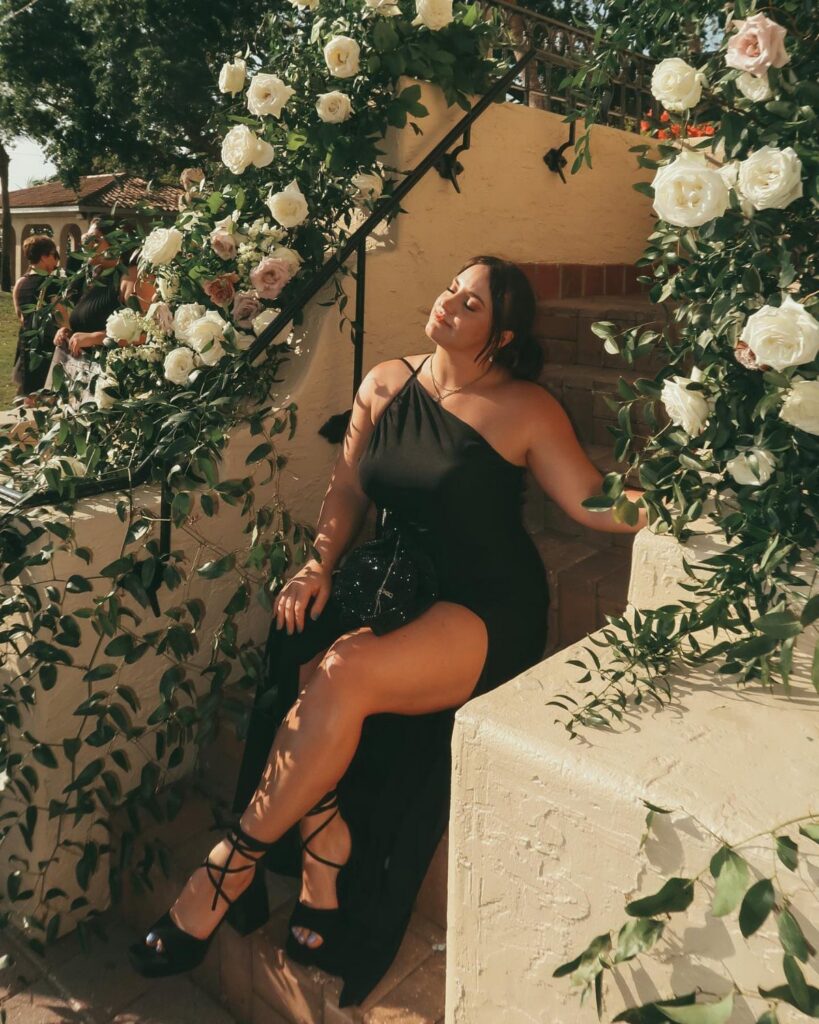
Wedding guest attire ranges from a breezy floral maxi at a summer garden ceremony to full Highland dress at an evening ceilidh, and the invitation’s wording plus the venue itself are what narrow your options, not your closet’s current contents.
The crepe, faille, and substantial cotton I wear to dressy-casual celebrations won’t carry me through black-tie, and a white dinner jacket has no place at a noon garden party where a tiered floral halter midi is the right move.
1. Dressy Casual
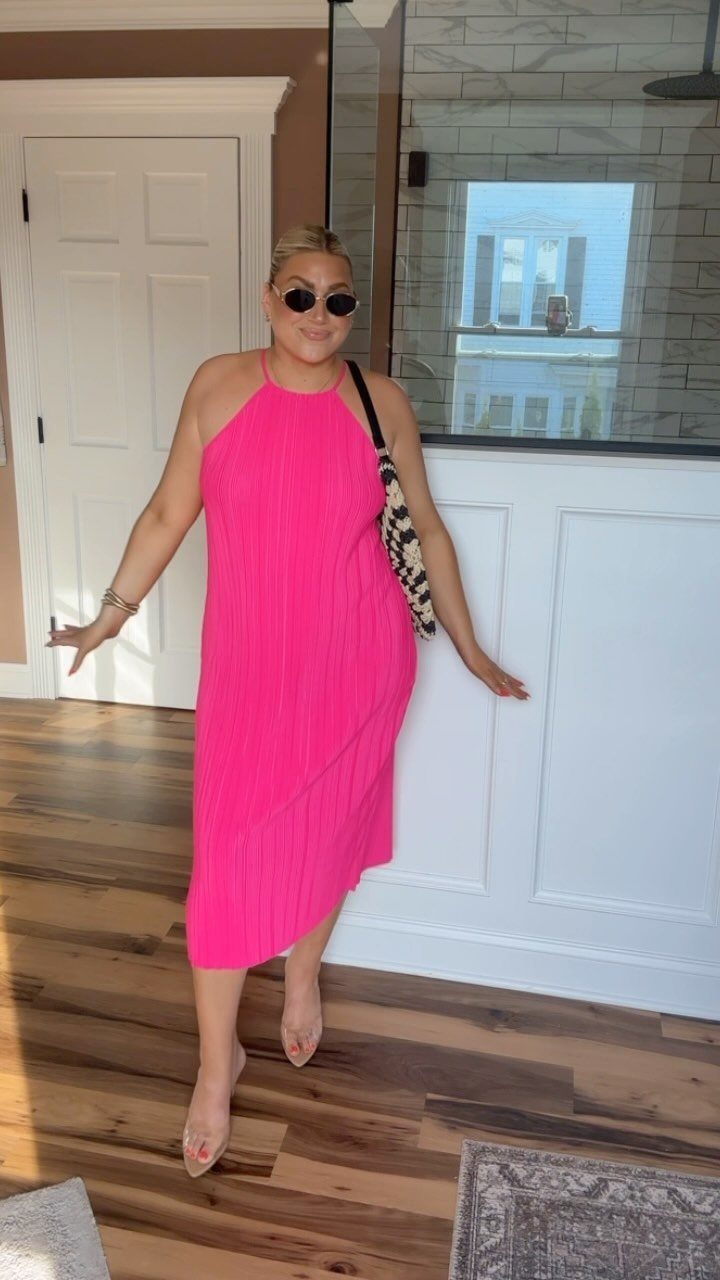
Dressy casual sits one notch above everyday wear without tipping into cocktail territory. A pleated halter midi in a strong color, clear heels, and a structured bag hit the mark exactly: the dress has shape, the accessories have intention.
For women, this code means a knee-length dress or skirt with real shoes, not sandals. For men, a pressed dress shirt and slacks, no tie required but one wouldn’t look out of place.
The risk here is underdressing; when I see "dressy casual" on an invitation, I reach for fabric with some weight to it (crepe, faille, substantial cotton) rather than anything I’d wear to brunch.
Check the venue before you commit. A barn or backyard wedding reads this code differently than a city restaurant dinner.
2. Black-Tie
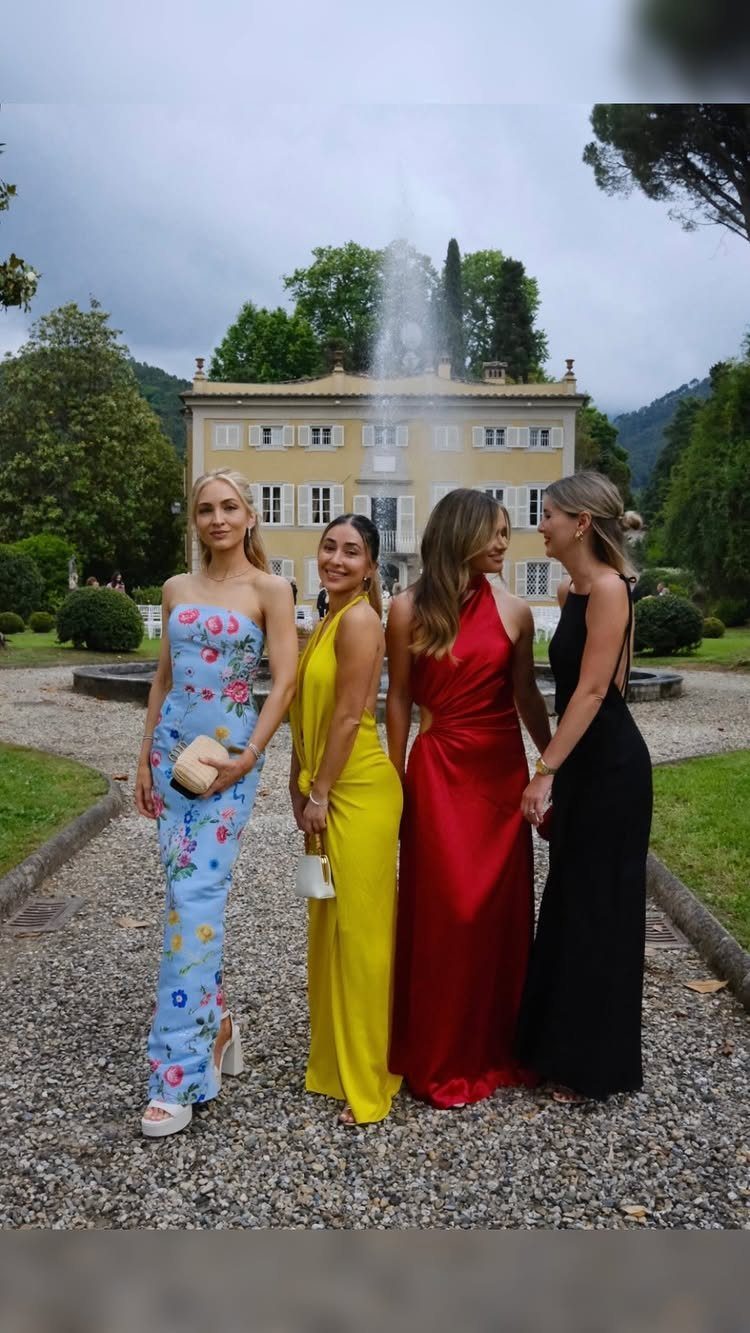
Black-tie weddings run at night, and the dress code means what it says: floor-length gowns in silk, satin, or lace for women; a proper tuxedo with black bow tie for men. Colored shirts and novelty accessories are off the table.
What I like about this code is how much decision-making it removes.
Rent the tuxedo if you don’t own one; buy the gown if you attend even two of these a year, because alterations and fit matter more than price point here.
Full length still leaves room for range: floral blue, yellow, red satin, black, each its own mood.
Skip the gloves, which white-tie demands. A pantsuit or truly polished cocktail dress can work, though I see the floor-length gamble pay off more often.
3. Black-Tie Optional
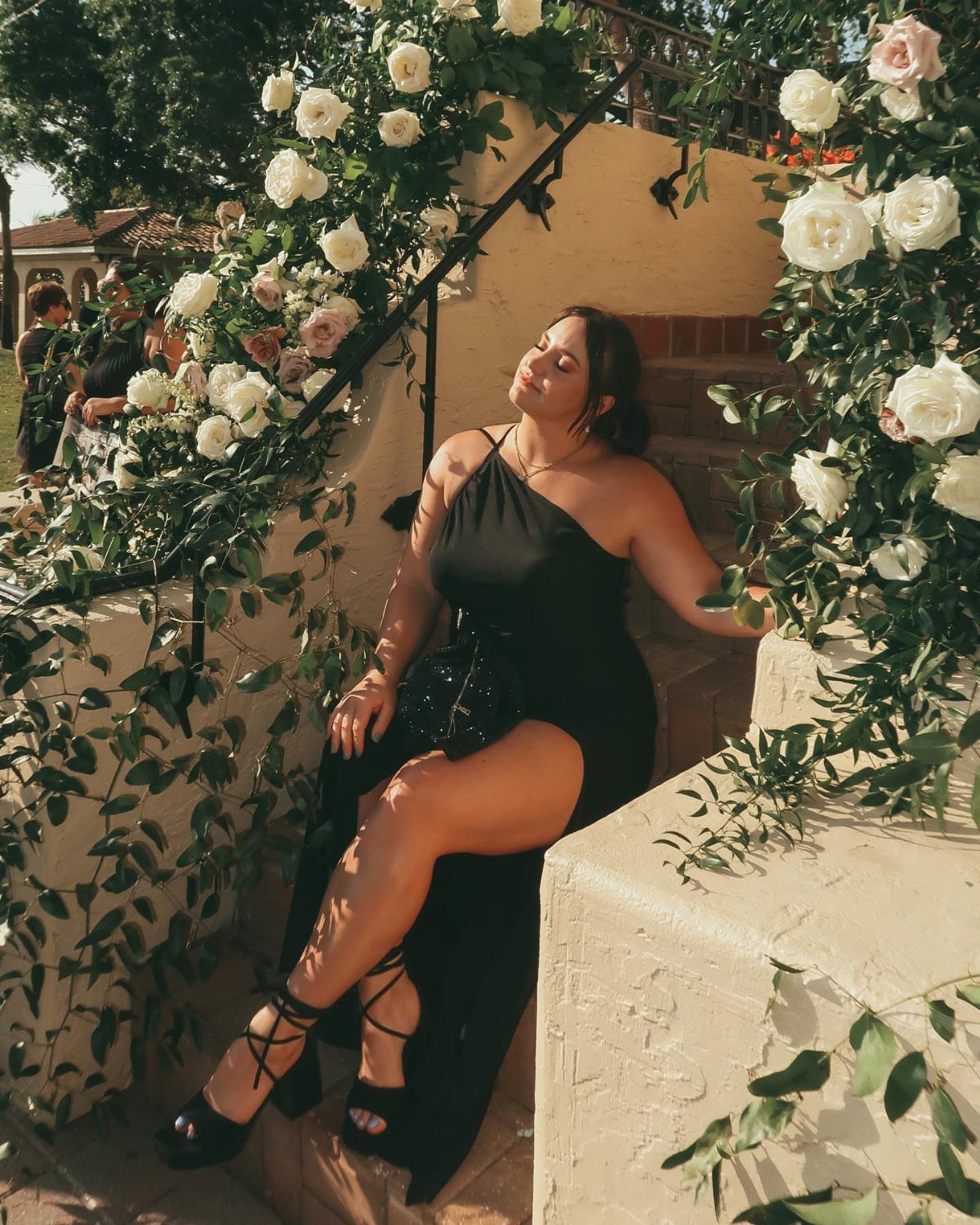
Black-tie optional is an invitation to wear your best without punishing guests who don’t keep formalwear on hand.
Men can show up in a dark suit and tie rather than renting a tuxedo; women can choose between a gown, a dressy cocktail dress, or a tailored pantsuit.
The "optional" part shifts with timing. Afternoon weddings give you more room to go shorter or lighter.
My practical read: if you own a gown you love, wear it.
If you don’t, a sophisticated cocktail dress saves you the purchase or rental without looking like you shrugged off the invitation. The couple wants the atmosphere, not a costume check.
4. Traditional Indian Wedding Attire
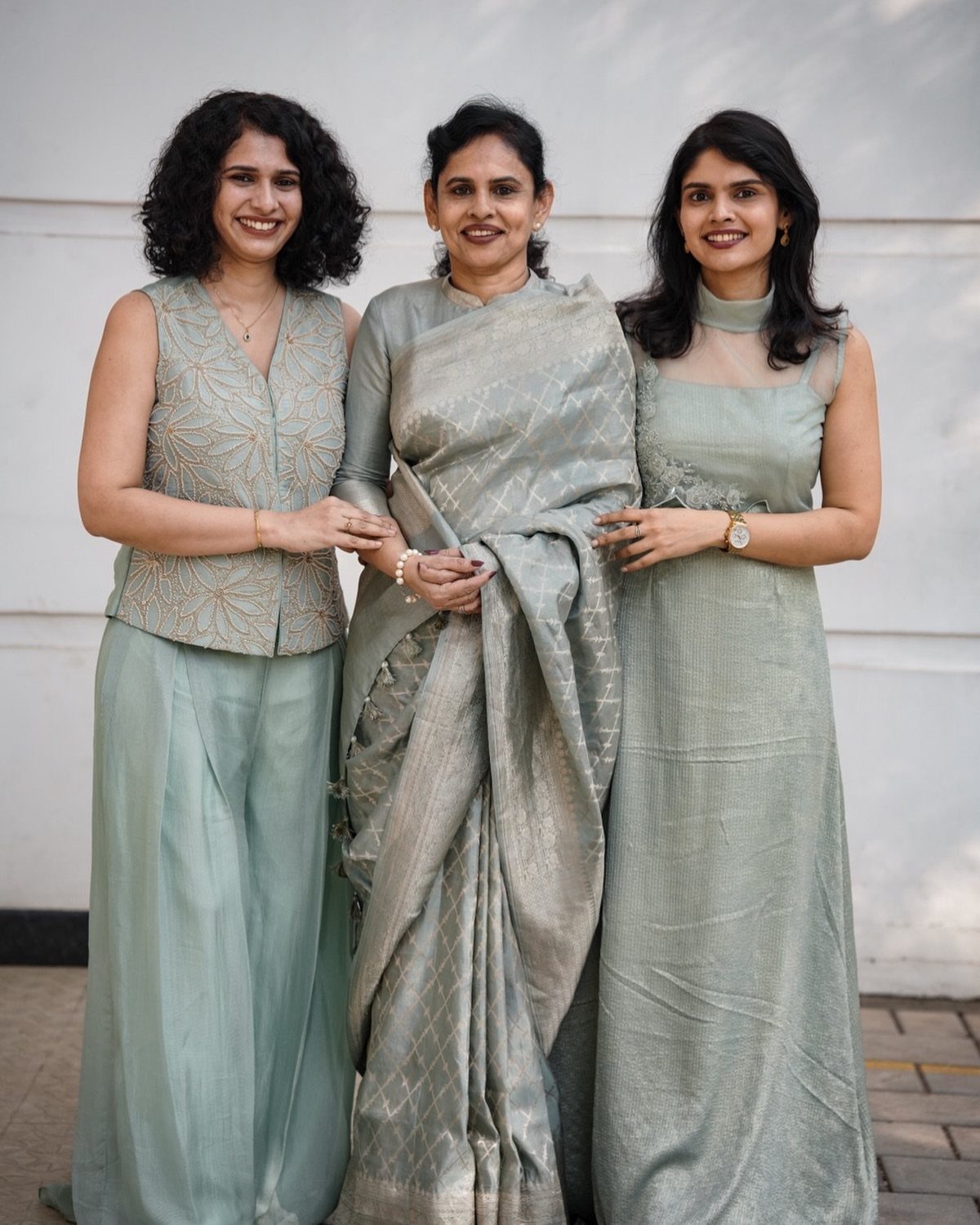
Traditional Indian wedding attire centers the ceremony rather than adapting Western dress codes.
Coordinated sage green works across 3 different silhouettes: a sari with silver detail, an embroidered vest over wide trousers, and a gown cut from the same visual language.
The color and fabric choice matters as much as the cut. Sharing a palette does not mean matching exactly, and wearing the couple’s family colors without asking can misstep.
Check whether the ceremony expects specific colors or avoids them (red and white often carry particular meaning). The silver embroidery and accessories bridge the 3 pieces into a coherent group.
If you’re invited as a non-Indian guest, borrowing or commissioning a piece shows respect; wearing Western formal is usually acceptable too, but this is an occasion where showing up in the tradition earns more than it risks.
5. Summer Floral Maxi Dress
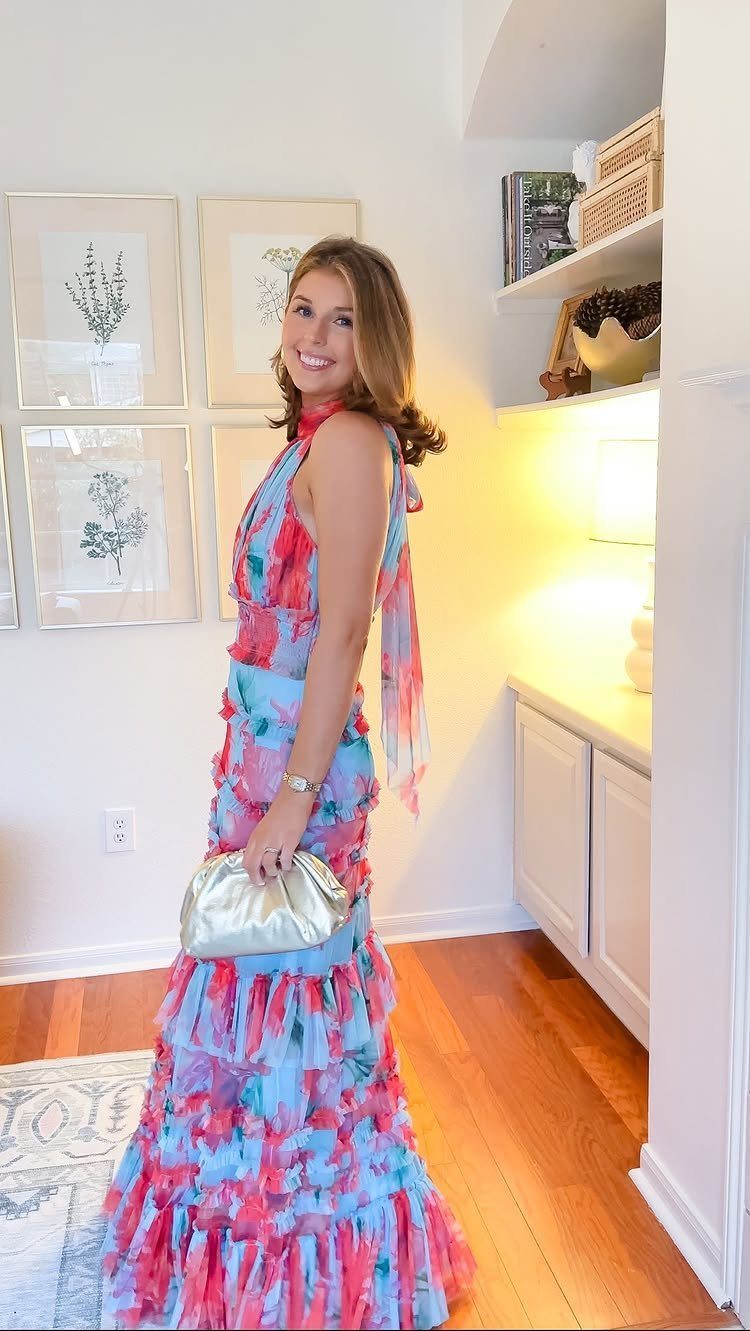
A summer wedding with a relaxed dress code is where a floral maxi earns its keep.
The tiered ruffle and halter cut keep it from reading as a resort cover-up, which is the trap with printed maxis at weddings: too casual a fabric or too beachy a print, and you’re underdressed for the occasion.
This version has enough structure in the bodice and enough length to reach the ankle. The clutch is small and shiny, which signals "event" rather than "errands."
Check the ceremony start time before you buy. An evening wedding, even in summer, may need a wrap or jacket; a noon garden party is where this dress works on its own.
The print scale should suit your frame, large patterns on smaller frames can wear you rather than the reverse.
6. Cocktail Attire with Suits and Gowns
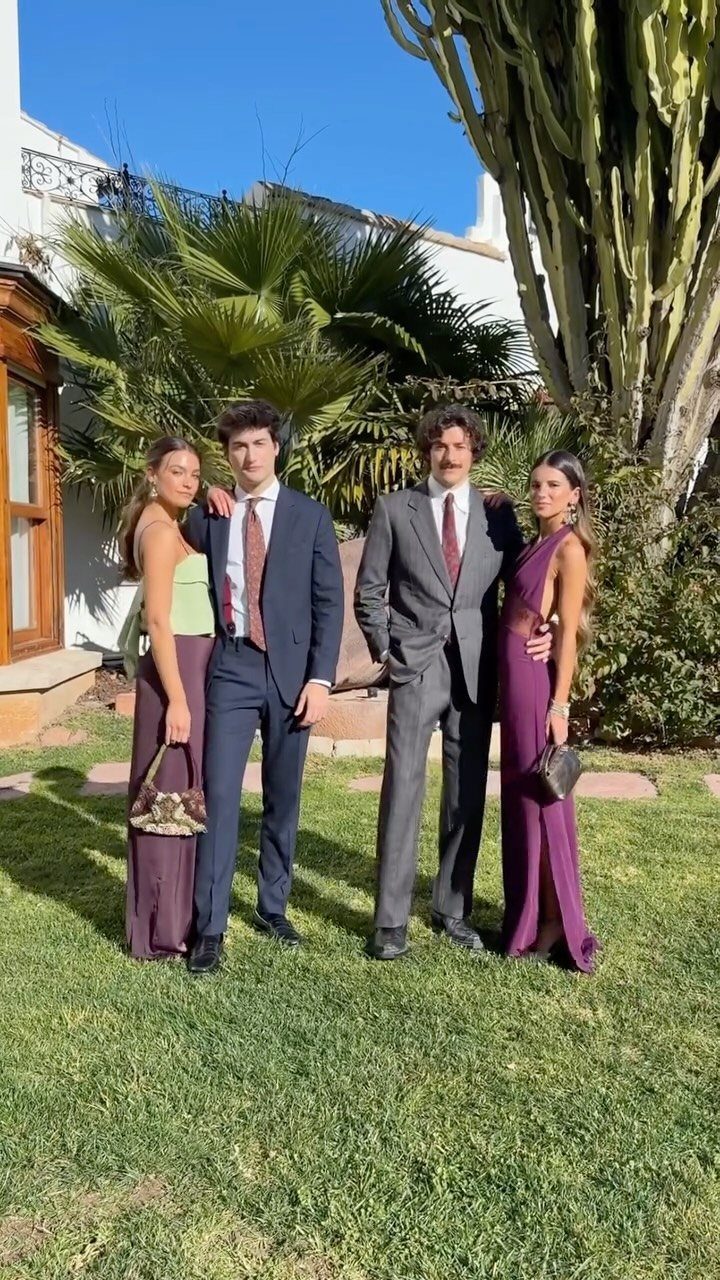
Cocktail attire gives you more range than black-tie without the safety net of a strict uniform.
Two men in dark suits with ties, two women in floor-length plum and pastel: this group shows the full floor-length end of the cocktail spectrum, which can include anything from a shorter dress to a gown.
Men should wear a dark suit, crisp shirt, and tie at minimum; a tuxedo is not wrong but not required. Women can run from a short formal dress to a full gown, or a jumpsuit with some structure to it.
The women here went long, which reads formal but not overdressed when the men are in proper suits rather than separates.
My preference runs toward a short dress or jumpsuit for mobility, but I have worn a velvet floor-length to a December cocktail wedding and been glad of the warmth.
The accessory rules stay loose enough for fun; the base should still read as pulled-together and evening-appropriate.
7. Silk Wide-Leg Jumpsuit Alternative
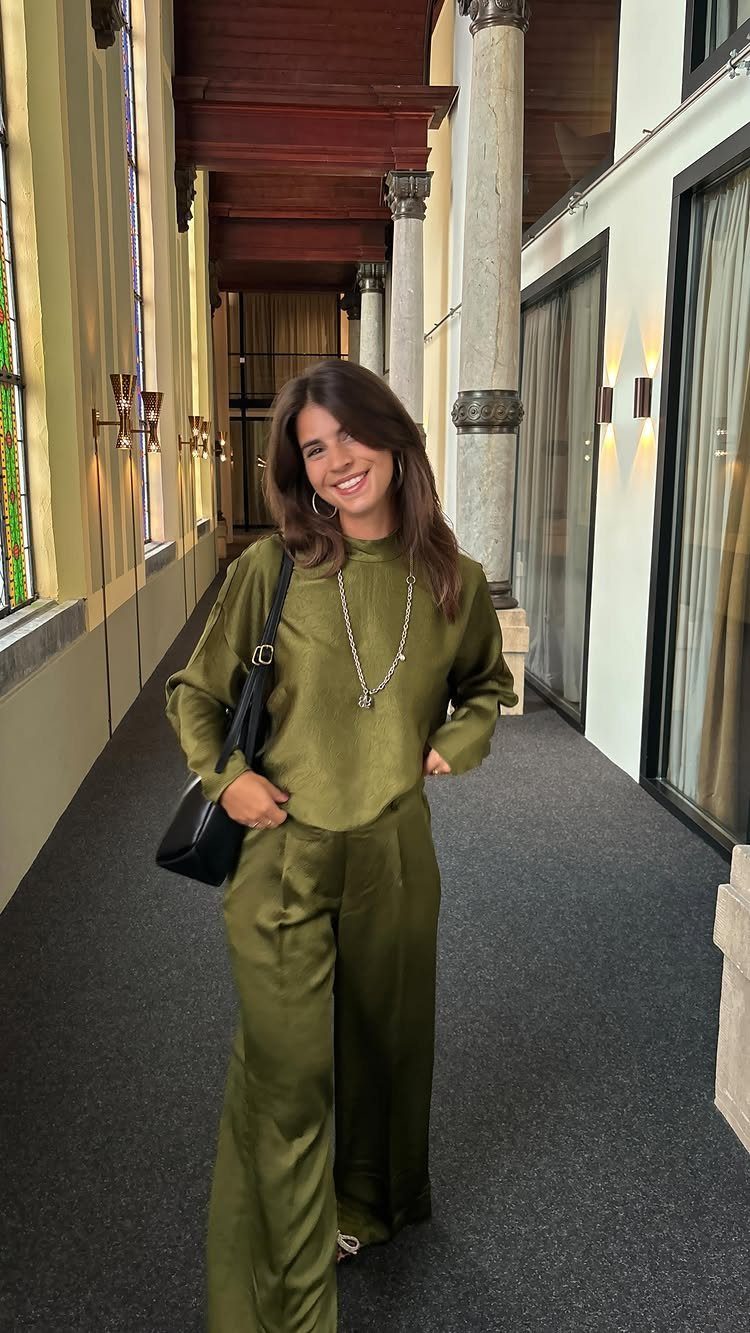
An olive silk wide-leg jumpsuit reads formal without risking the dress code misstep of a white gown.
The long sleeves and matching trousers give coverage that a standard cocktail dress does not, and the fabric weight makes it sit like eveningwear.
The waist definition matters; without it, the silhouette can flatten. Add a slim belt if the cut doesn’t cinch.
Shoe choice is where most people falter: the hem must clear the ground in your heel height, so test walk before the event. A small structured bag finishes it; anything larger throws the line.
This works best for indoor weddings with some climate control; silk creases badly in heat and does not forgive a shuttle bus.
8. White Dinner Jacket Tuxedo
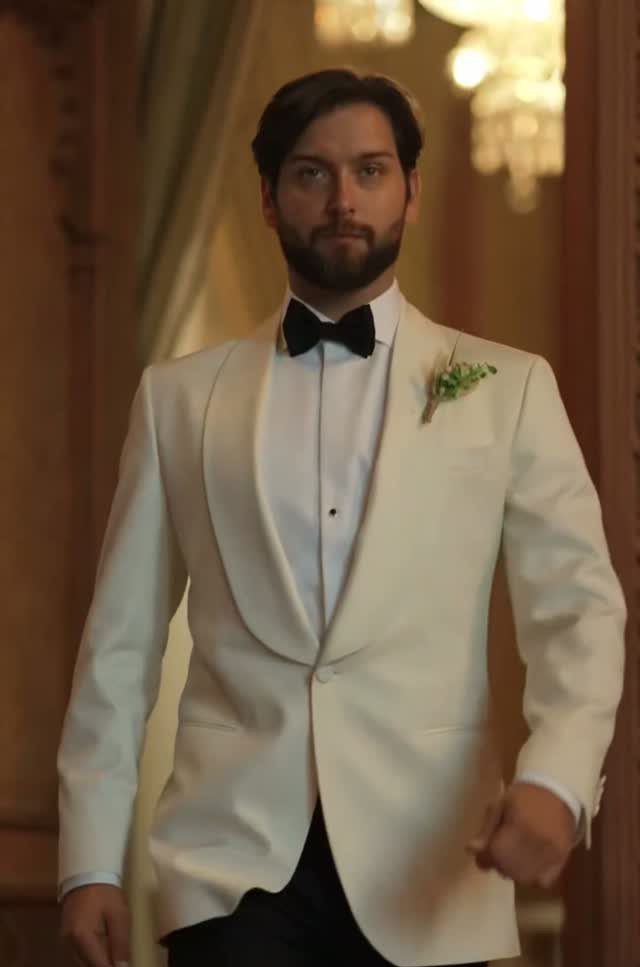
Ivory dinner jackets replace standard black-tie in warm weather or at destination evening weddings; they keep the same rank but swap the fabric.
The shawl lapel and black bow tie keep the look anchored; the boutonniere is optional but gives you something the standard black jacket does not.
Wear this with black tuxedo trousers, never white or mismatched. The jacket itself is the statement, and adding colored accessories would overreach.
White-tie demands tails, gloves, and waistcoat; this is not that. It is simply a tuxedo jacket in a different color, acceptable anywhere black-tie is invited.
Rent one for a single event; buy only if you attend summer formal weddings yearly. Most formal rental houses stock this now, though less widely than black.
9. Traditional Scottish Highland Dress
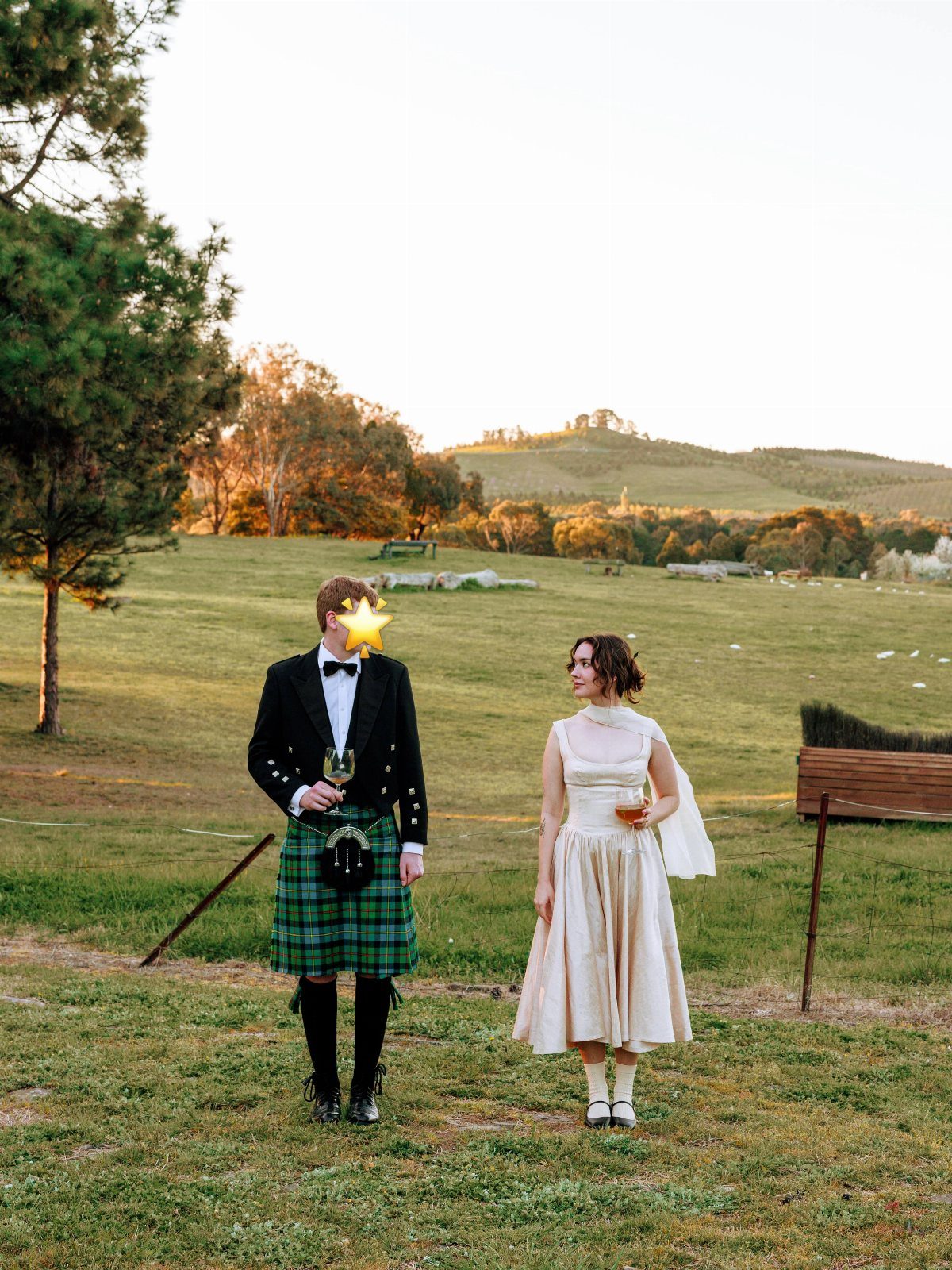
A formal kilt in dress tartan paired with a black jacket is Highland evening wear, not a costume, and it shows up at Scottish and Scottish-American weddings with full entitlement.
The visible green tartan against the woman’s cream midi gives you the color read: deep tones for him, light and structured for her.
Guests without clan affiliation should choose a universal tartan (Black Watch, Spirit of Scotland) rather than renting a family pattern they cannot claim.
For a formal evening, choose the Prince Charlie coatee over a day jacket, the shorter cut with satin lapeds that pairs with a bow tie and waistcoat. Socks, flashes, and sgian-dubh complete the kit; a standard rental package includes them.
Women with a partner in Highland dress balance him best in solid color or simple print at knee or midi length, nothing shorter.
10. Smart Casual Separates for Men
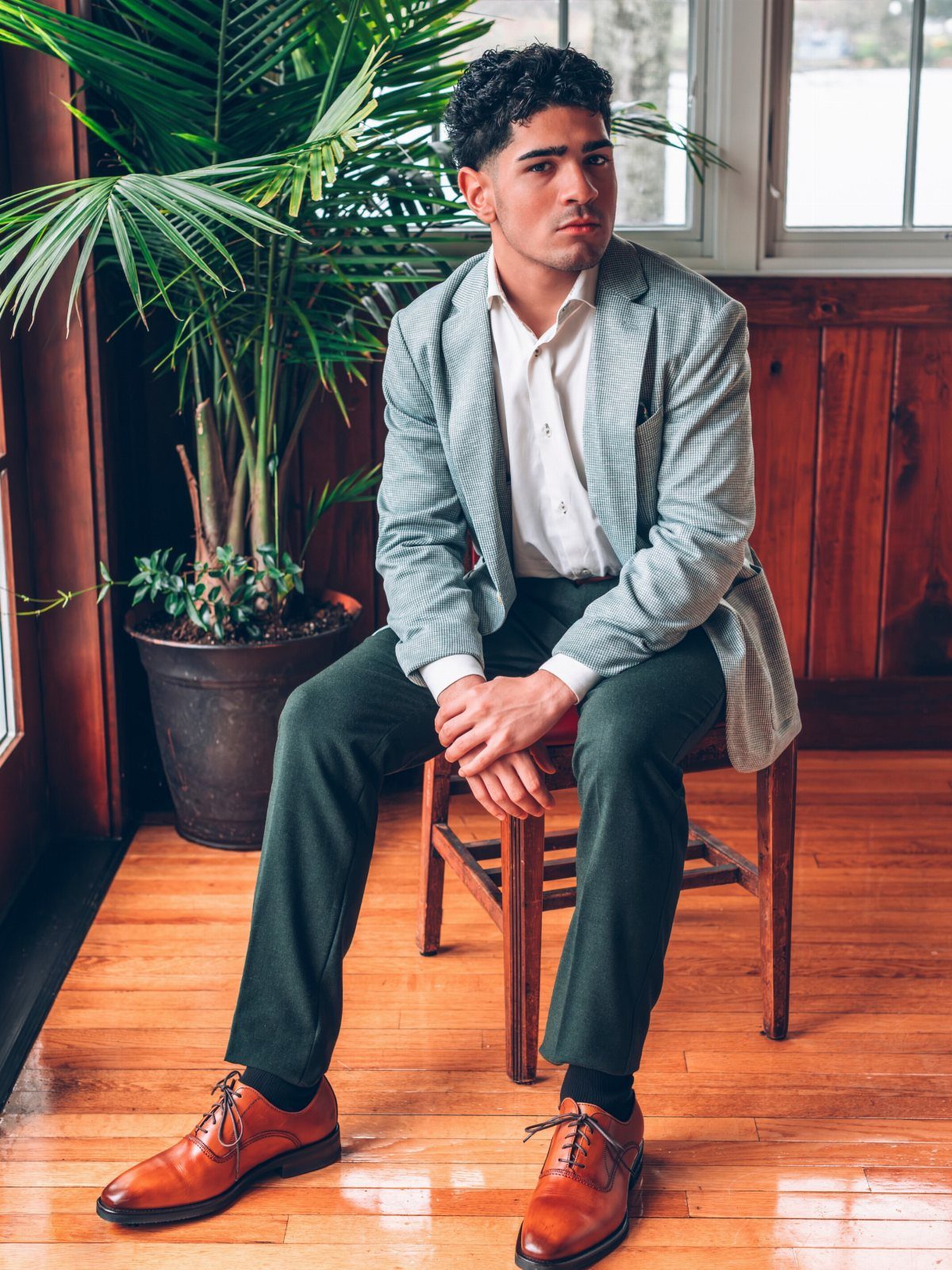
A light patterned blazer with dark green trousers and brown leather shoes is smart casual for a daytime or garden wedding where full suiting would read stiff.
The blazer has texture and a visible weave; the shirt stays plain white to let the jacket carry the interest.
Separates succeed when the fabrics match in formality. A cotton or linen blazer with wool trousers fails; the pieces here both read tailored and event-appropriate.
Fit matters more than in a suit because nothing coordinates by default: the blazer should close cleanly, the trousers need a proper hem with the chosen shoe.
Omit the tie entirely for this code; a pocket square would not overstep. This is the kind of outfit that transfers to rehearsal dinners and engagement parties with the same pieces recombined.
Understanding Wedding Dress Codes
A dress code is the couple’s way of telling you what atmosphere they’re building, not a set of rules to trip you up. The invitation gives the official word; the website may fill in gaps.
Formal script and heavy card stock lean toward black-tie territory. Casual wording, a daytime start, or an outdoor venue pull the other way.
"Optional" and "casual" on a wedding invite still come with rules; jeans, club dresses, and anything you’d run errands in stay home. They mean a specific tier below the top, with its own requirements.
Smart casual still expects real tailoring. Read the code as a floor, not a ceiling, and you will rarely be wrong.
When the couple names a code, treat it as information worth using. They chose it to make guests comfortable, not to test them.
No Dress Code Guidance
No code on the invitation means you become the detective. Start with the paper itself: engraved script on heavy stock suggests formality; bright colors or playful wording suggest the opposite.
The venue fills in the rest. A restaurant dinner, a hotel ballroom, a barn, a beach, each implies its own level.
If you are still unsure, slightly overdressed beats slightly underdressed.
A jacket or wrap you can remove is easier to recover from than a sundress at a formal evening affair. The same dark suit or substantial midi that works for cocktail covers most guesses safely.
Some couples write "come as you are" and mean it.
Most who omit a code simply assumed guests would know the venue. Use the clues.
Cultural Sensitivities
Many traditions have their own codes, their own colors of meaning, and their own expectations for guests.
If you are invited to a ceremony outside your own culture, ask directly about color and coverage expectations.
Red and white carry specific meanings in some South Asian weddings; black functions differently in Chinese celebrations than in Western ones. Silver embroidery and shared palettes, as above, bridge groups without claiming what is not yours.
The risk is not fashion error but real offense. The time to ask is before you shop, not the morning of.
Avoid Flashy Outfits
White is for the bride unless she has told you otherwise. This rule holds across nearly every Western-style wedding and should need no repetition, but guests still arrive in ivory or cream and claim they "didn’t think it counted."
The bridal party’s palette is the other territory to avoid. If you know the bridesmaids are in sage, do not arrive in sage.
If you do not know, neutrals and your own colors are the safer bet. One outfit on a wedding guest does the job if no one remembers it more than the couple.
Bold works when it is your own party.
At a wedding, "statement" pieces that compete with the ceremony read as poor judgment, not strong style. Elegance is the quieter achievement, and the one that ages better in photos the couple will keep.
Frequently Asked Questions
What can I wear to a wedding as a guest female?
Women can wear dresses, skirts, or elegant pantsuits depending on the dress code. Dressy casual means real shoes and something that hits around the knee: a dress, a skirt with a blouse, or tailored pants with a polished top.
Black-tie optional lets you choose between a gown, a sophisticated cocktail dress, or a tailored jumpsuit.
What are the types of dress codes?
Common wedding dress codes include black-tie, black-tie optional, cocktail, dressy casual, and smart casual. Each code sets a floor, not a ceiling; jeans, club dresses, and errand-wear stay home even when the word "casual" appears.
What is too flashy for a wedding guest?
Save white for the bride unless she has personally cleared it; steer clear of the wedding party’s colors too, since matching them lands you in the family photos by mistake.
What is formal wedding attire?
Formal attire invites tuxedos for men and floor-length gowns for women, though a dark suit or refined cocktail dress still clears the bar. Rich fabrics like velvet or lace work well, and when in doubt, slightly overdressed beats slightly underdressed.