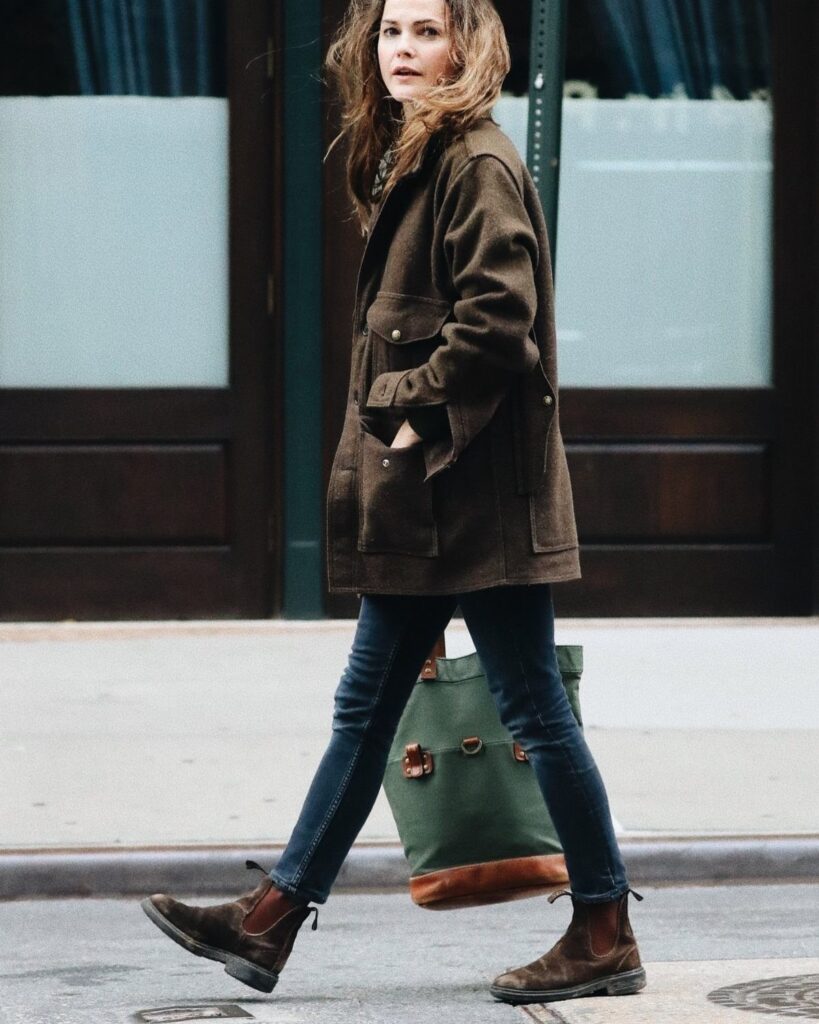
Chelsea boots move easily from skinny jeans to wide-leg denim, from dresses to tailored trousers, and from long coats to oversized sweaters, so the deciding factor is usually what your day already demands.
A single pair in black leather can sit under a blazer for work or beside a skirt for dinner if the rest of the outfit meets the boot at the same level of intention.
The elastic goring that makes the shoe work is also what gets swallowed whole by the wrong pant leg, so the break or hem length matters more than the boot itself.
1. Chelsea Boots with Skinny Jeans
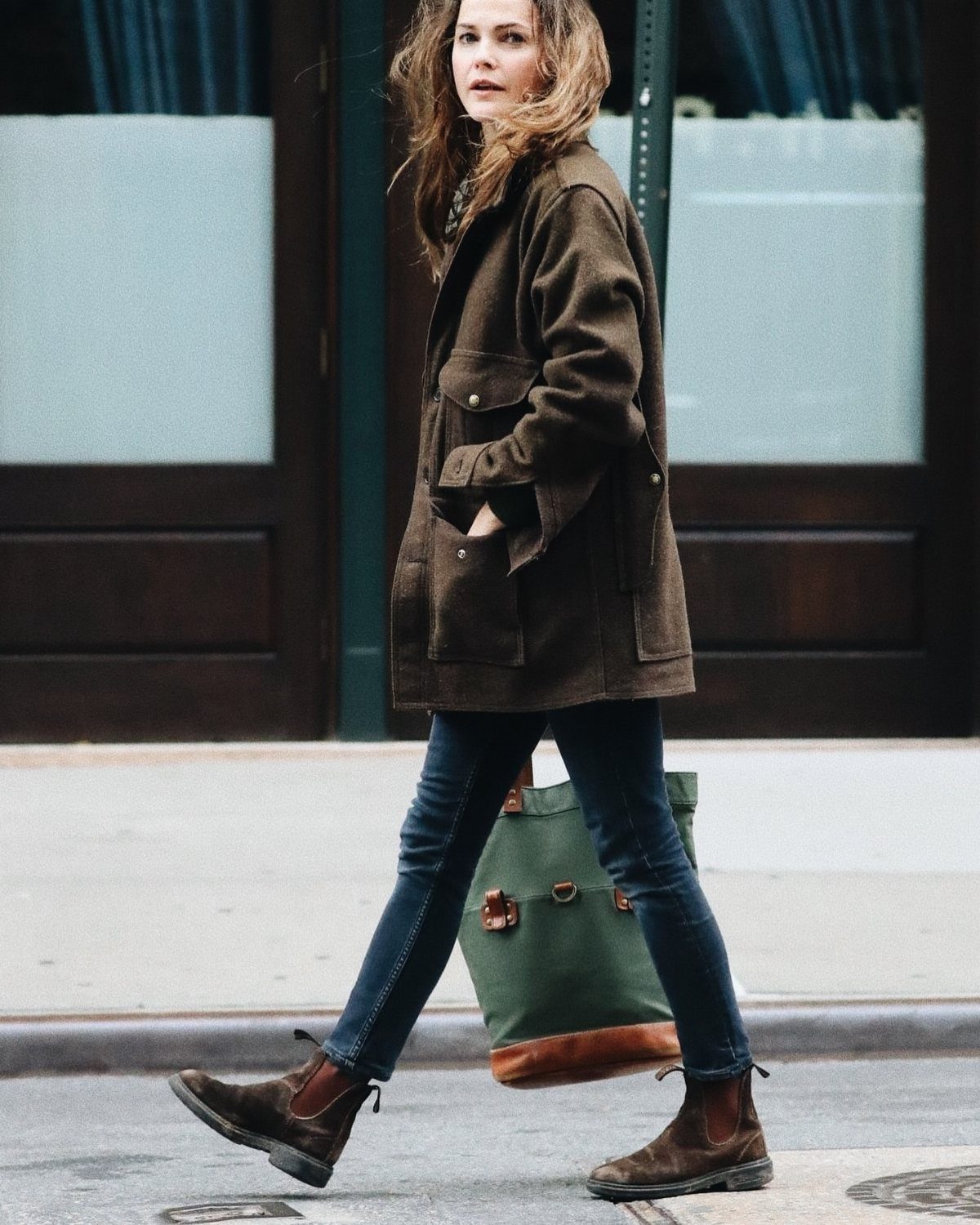
A slim leg tucked into a Chelsea boot is the cleanest line this shoe offers. Black leather against dark denim reads intentional rather than basic, though tan suede with black skinnies works just as well if you prefer contrast.
The boot’s elastic panel does the fit work so you don’t need a tight cuff; a single roll at the ankle is plenty.
I reach for this pairing most when I want the boot itself to read as the detail, since nothing competes for attention below the knee.
2. Chelsea Boots with Dresses

A midi dress with a lug-sole Chelsea boot splits the difference between pretty and practical better than most shoe swaps manage. The boot’s weight anchors something floaty; the dress keeps the whole thing from reading as utilitarian.
Tights matter here. Sheer black creates continuity, opaque adds contrast, and bare legs in early fall work if the boot is leather rather than suede.
I prefer the hem to hit at or below the boot top; anything shorter starts to look like you forgot your other shoes.
3. Chelsea Boots with Leggings

Leggings plus Chelsea boots solves the sock-gap problem boots usually create with thin layers. The boot shaft covers where leggings bunch at the ankle, and the elastic goring means no wrestling with zippers over fitted calves.
An oversized top half, puffer vest or long cardigan, keeps the proportions from feeling like you wore tights by mistake.
I like a visible sock in a color that talks to something else in the outfit; it reads as deliberate rather than lazy.
4. Chelsea Boots with Tailored Trousers

A pleated trouser breaking just above a Chelsea boot is the fastest way to make this shoe feel like it belongs in a meeting.
The cropped length shows enough boot to register as a choice; a full break would hide the detail you chose.
Grey or black trousers with black leather boots keep the line longest. A belt matching the boot helps if you’re wearing a blazer, since it ties the 2 dark points together across the middle.
I find this pairing travels well; one pair of boots, one pair of pressed pants, and most occasions are covered.
5. Chelsea Boots with Long Coats

A coat that hits mid-calf or lower turns the Chelsea boot into a finishing gesture rather than a focal point. The eye travels the full length of the coat, then finds the boot as a clean endpoint.
Brown leather against a black or grey coat adds warmth without demanding attention.
I like the coat to be unbuttoned when I’m walking so the outfit underneath gets its moment, then closed against the cold. The boot’s low profile keeps the silhouette vertical; a chunkier shoe would interrupt the line.
6. Chelsea Boots with Wide-leg Jeans
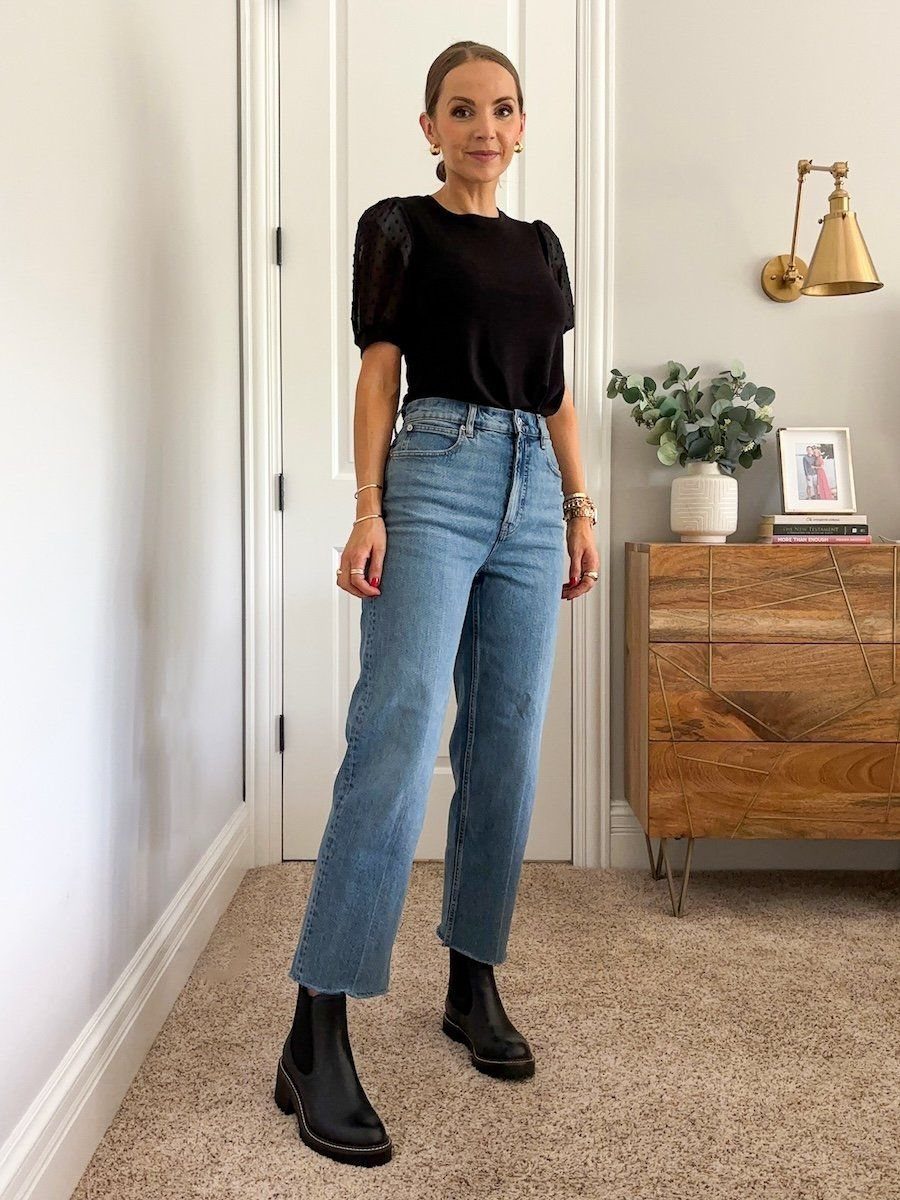
Wide-leg denim needs a shoe with enough presence to hold its own against all that fabric. A Chelsea boot’s elastic sides and slim shaft do that without adding visual bulk where the jean already pools.
The jean should cover most of the boot, showing just the toe and a sliver of shaft.
High-waisted pairs work best here since the leg line starts higher and the boot finishes it. I check in a mirror from the side; if the jean drags on the ground, the hem needs taking up, not a different shoe.
7. Monochrome Outfits with Chelsea Boots

Head-to-toe grey with black boots keeps the eye moving in one continuous sweep. The tweed adds texture so the single tone doesn’t flatten out; without it, you’d need a knit or a shine somewhere else to break the surface.
I like black boots here rather than brown because they ground the outfit without introducing a second color story.
This reads as intentional on days when you don’t want to think about matching. One color family, two textures minimum, and you’re done.
8. Chelsea Boots with Blazers
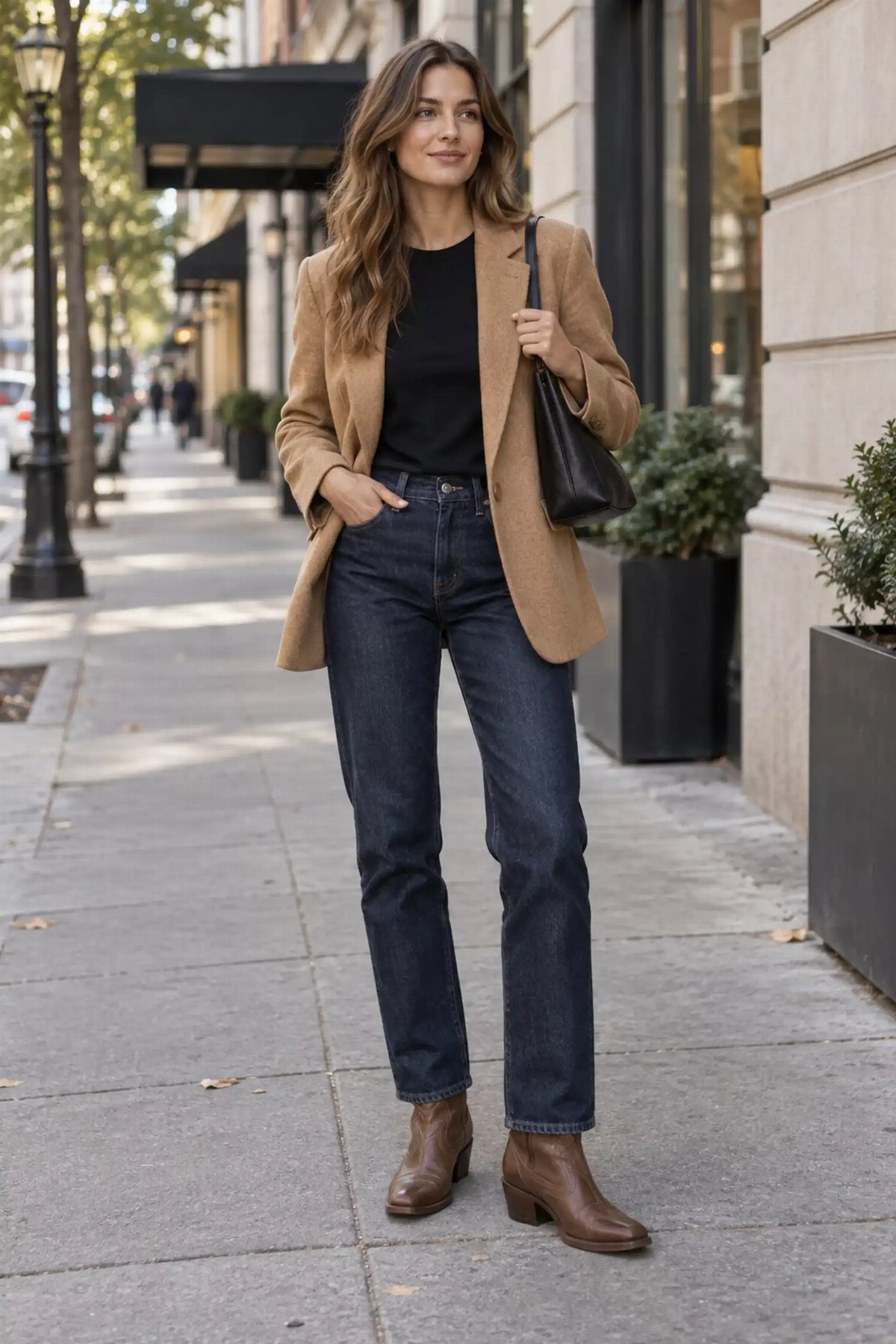
A blazer with Chelsea boots borrows from menswear’s playbook without needing the full suit.
The camel against dark denim and brown leather creates warmth that an all-black version would lose; it’s the combination I reach for when I want to look pulled together but not like I tried.
The boot should be leather with some polish to it, since the blazer brings structure and the shoe needs to meet it there. Suede reads too casual against a tailored jacket.
This pairing works for dinner after work without a change of clothes. The jacket does the heavy lifting; the boot keeps it from feeling like you forgot the matching trousers.
9. Chelsea Boots with Oversized Sweaters

An oversized sweater with Chelsea boots lives in the space between loungewear and leaving the house.
The sweater’s volume needs a slim leg or tights below to keep the shape from going completely shapeless; the boot’s close fit at the ankle does that job.
Chunky soles work here in a way they don’t with tailored pieces. The boot can carry some weight because the sweater already announced casual intent.
I prefer this with tights rather than jeans when the sweater is long enough to cover; it reads as a deliberate silhouette rather than a sweater I should have tucked.
A visible boot shaft breaks up the leg line just enough.
10. Chelsea Boots with Skirts
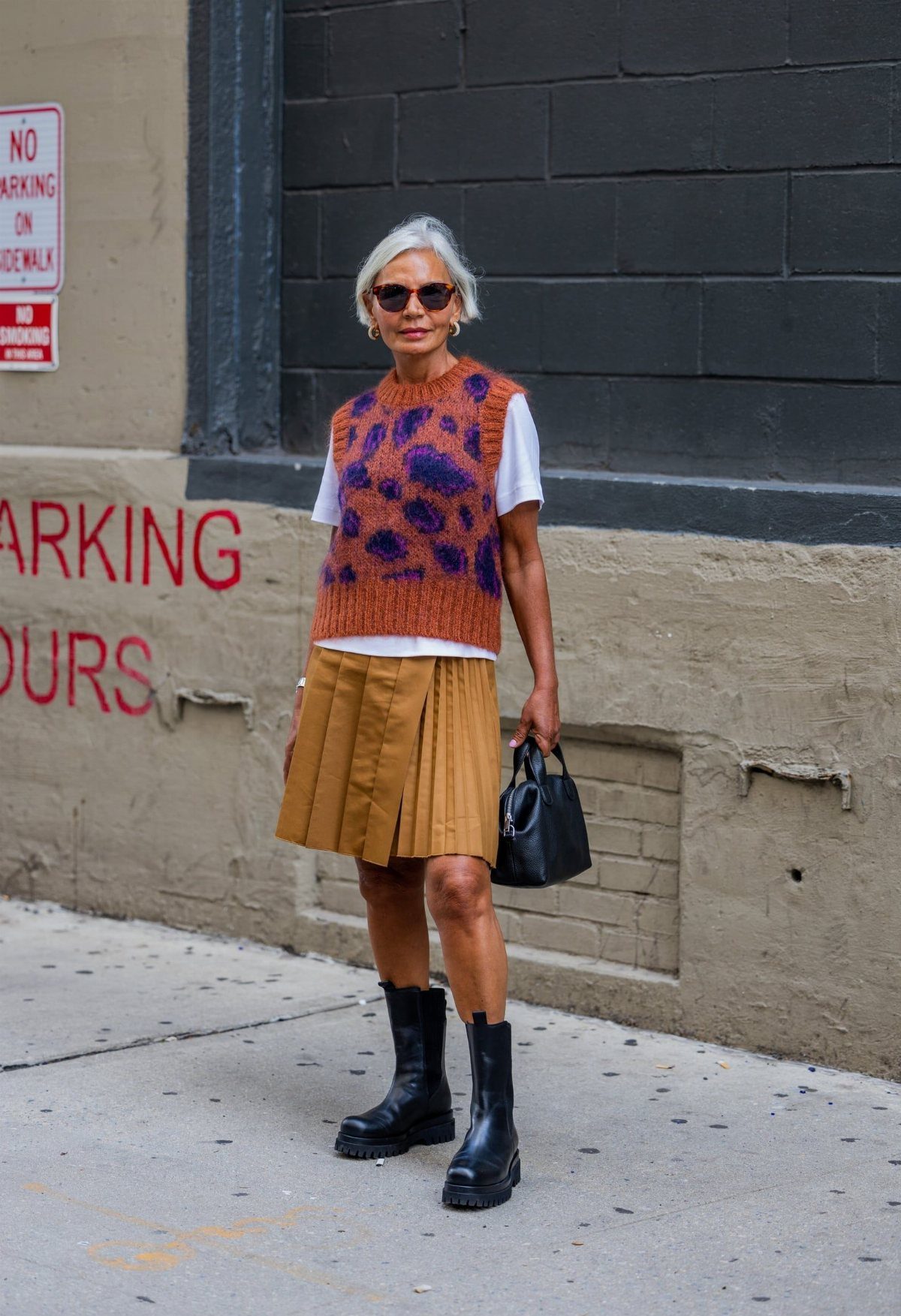
A pleated midi skirt with chunky black Chelsea boots splits the difference between school uniform and street style. The boot’s heaviness keeps the skirt from reading too precious; the skirt’s movement keeps the boot from looking like workwear.
Tan and black together is the safer starting point than trying to match the boot to the skirt exactly. A patterned knit on top, like a Fair Isle vest, adds interest without demanding a third color.
Mini skirts work too, but the proportion changes: more leg between hem and boot top reads younger, and tights become necessary in a way they aren’t with the longer length. I stick to midi for daytime.
Common Mistakes with Chelsea Boots
The most common mistake I see is pairing Chelsea boots with denim so slim it bunches at the ankle, breaking the clean line the boot is meant to give.
The elastic panel is what makes this shoe work; covering it up misses the point entirely.
Mismatched formality trips people up too. A polished leather Chelsea with sweatpants reads like you grabbed the wrong shoe.
I also notice the sock-gap problem: a sliver of pale ankle between boot top and hem, especially with cropped pants or shorter dresses.
A trouser sock in a tone that matches the boot solves it. Bare skin there rarely looks intentional.
Best Colors for Chelsea Boots
Black, brown, and tan cover almost every outfit need. Tan suede softens the boot’s utilitarian roots and pairs well with light denim, white trousers, or autumn palettes where black would feel heavy.
Black boots look right with black tights, brown plaid scarves, and leather pieces; tan works with denim and neutral coats. No single color does everything, which is why most women who wear Chelsea boots regularly own at least two.
Occasions for Wearing Chelsea Boots
Chelsea boots move between contexts more easily than most footwear.
The same black leather pair that reads boardroom-ready with tailored trousers and a blazer works for casual outings with skinny jeans and a sweater. The boot’s clean construction signals intention even in simple combinations.
Semi-formal settings depend on the material. Polished leather with a slight sheen holds up against a midi dress or skirt in a way suede does not.
The lug sole that works with weekend denim looks out of place at a dinner where the boot needs to meet a structured jacket halfway.
I plan travel around this shoe for exactly that reason: one pair covers meetings, dinners, and walking around.
Footwear Care Tips
Leather Chelsea boots need regular cleaning with a damp cloth to remove salt and dirt before they dry into the surface. A leather conditioner applied regularly prevents cracking at the flex points around the ankle.
The elastic goring does not need special treatment, though I check that the panel stays snug after heavy wear; once it loosens, the boot loses its shape.
Suede requires a different approach: a dry brush for surface dirt, never water, and a protective spray before the first wearing.
I store mine with boot shapers to keep the shaft from creasing or collapsing inward, since the Chelsea’s close fit depends on that shape holding.
Frequently Asked Questions
Are Chelsea boots out of style in 2026?
No. The clean construction and elastic panel make Chelsea boots a shoe that moves between contexts year after year, from boardroom-ready pairings with tailored trousers to casual weekend outfits with skinny jeans.
Their ability to signal intention even in simple combinations keeps them relevant regardless of season.
What are common Chelsea boots mistakes?
Letting the ankle get bulky with thick socks or stacked hems is the most common error, since the Chelsea’s whole appeal is that streamlined silhouette.
Formality clashes cause trouble too: polished leather beside sweatpants, or that pale strip of sock showing between boot top and cropped hem. Matching your trouser sock to the boot color fixes the gap issue.
What is the best outfit to wear with Chelsea boots?
The best outfit depends on the occasion, but the cleanest line comes from a slim leg tucked into the boot, whether that is skinny jeans or a midi dress with tights.
The boot’s construction does the heavy lifting, so the rest of the outfit can stay simple.