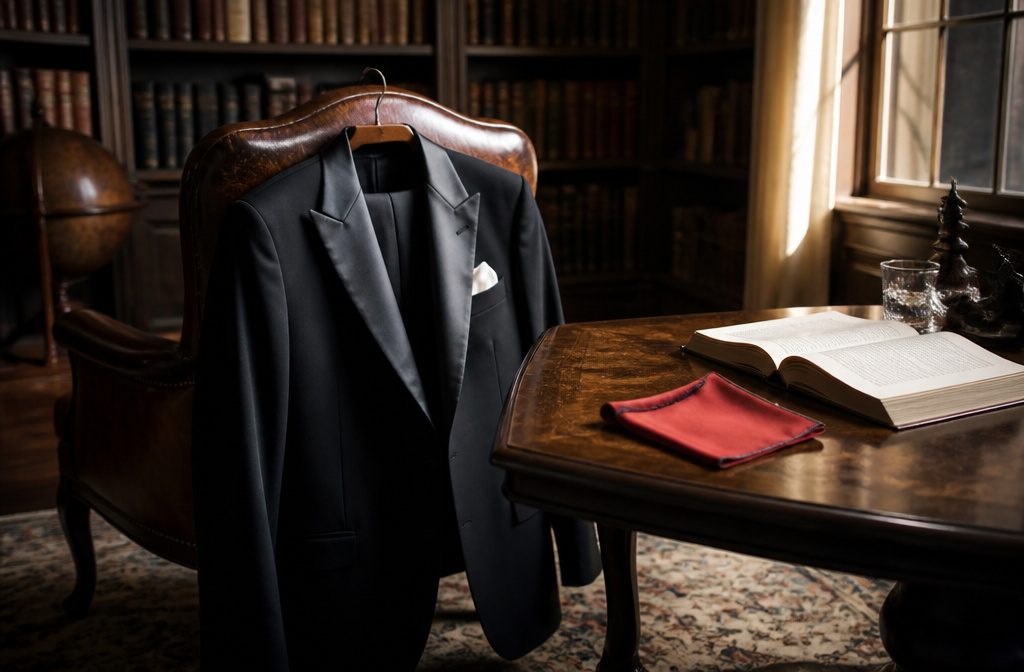
Black tie attire is the strictest formal dress code still in common use, and the single detail that separates it from a dark business suit is the satin or grosgrain facing on the jacket’s lapels.
That strip of contrasting fabric, matched by a stripe down each trouser leg, signals evening wear rather than office clothing.
Midnight blue carries a subtle depth that reads richer under artificial light than pure black, which is why some tailors prefer it for traditional events.
The Dinner Jacket
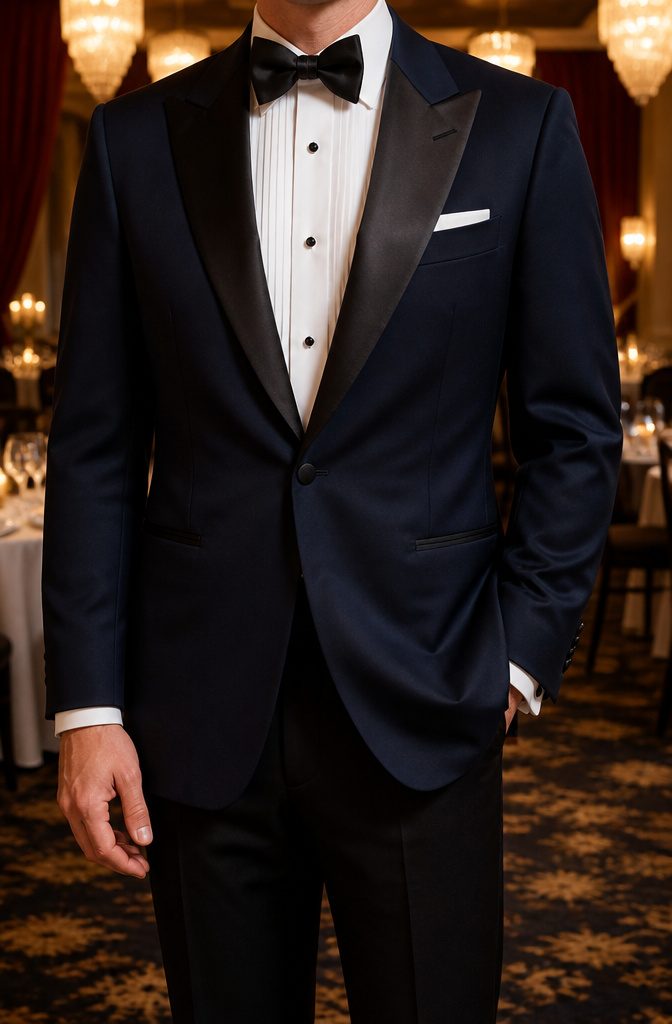
The dinner jacket is what separates black tie from every other dress code on the invitation.
Satin-faced lapels catch the light and create that formal silhouette you are dressing for, whether you choose black or midnight blue; both are equally standard for traditional evening events.
Midnight blue in particular carries a subtle depth that reads richer under artificial light, which is why some tailors prefer it.
Peaked lapels are the most traditional choice, creating a strong V-shape that broadens the shoulders. Shawl collars offer a smoother, more understated line, while notch lapels read slightly less formal but still pass.
For summer occasions that call for black tie, a white dinner jacket with black lapels is acceptable; this is the "warm weather black tie" look, paired with black trousers rather than matching white.
Velvet in midnight blue is another modern alternative that keeps within the dress code while stepping away from the classic wool dinner jacket.
Formal Trousers
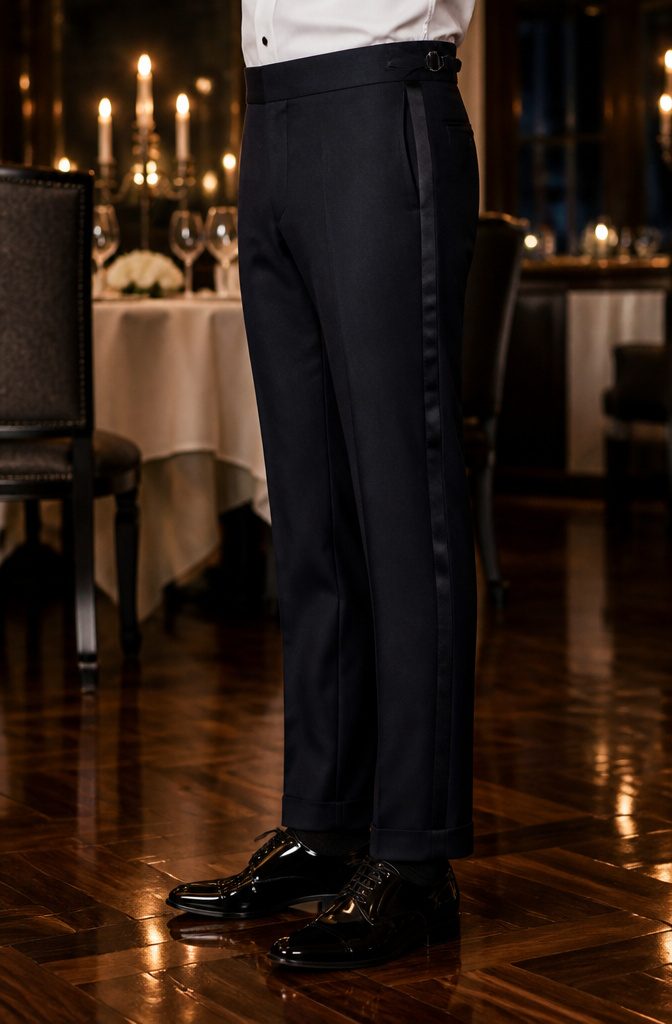
The trousers in black tie attire are where most men go wrong without realizing it.
A satin stripe running down the outer seam is the single detail that separates formal trousers from ordinary dress pants, and the stripe should echo the satin or grosgrain finish on your jacket’s lapels.
The fabric and color must match the dinner jacket exactly; midnight blue with black reads as a mismatch, not a choice.
Belt loops have no place here. The waist should sit clean and fitted, held by side adjusters or suspenders instead.
A slim cut works, but tight does not: the line should fall straight from hip to hem with a single break, or slightly shorter for a sharper 2026 silhouette.
I have seen the no-break length look elegant on a taller frame and slightly truncated on a shorter one, so the traditional single break remains the safer investment for most builds.
White Dress Shirt
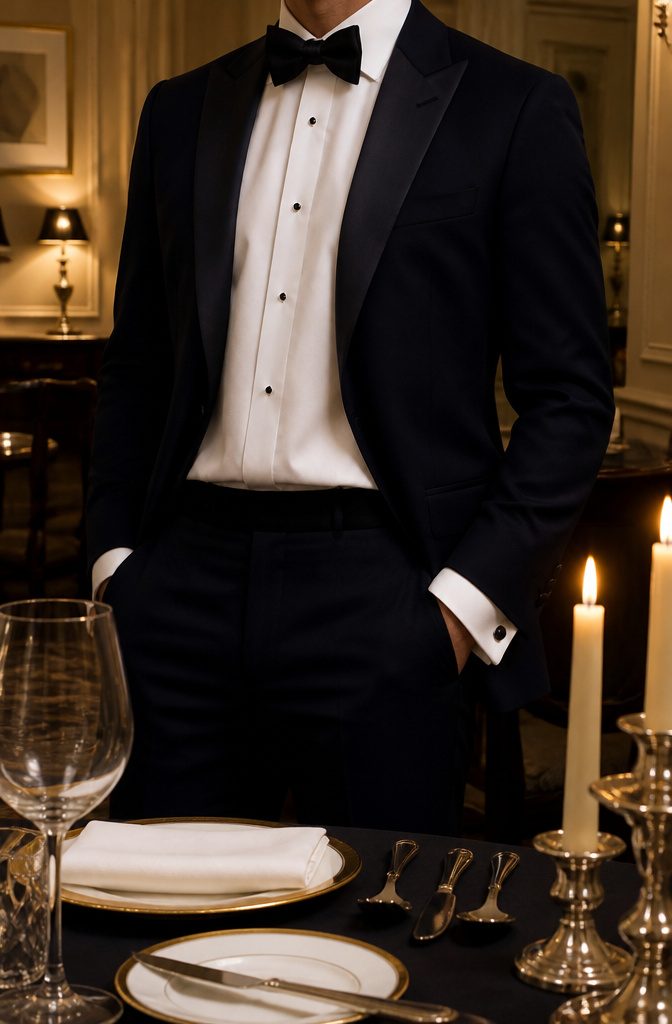
The shirt underneath matters more than most guests notice until someone gets it wrong. A black tie shirt is always crisp white with French cuffs, and the front is where the real choice sits.
Pleated fronts run down the center in rows spaced about a half-inch to three-quarters of an inch apart. That texture catches candlelight at a dinner table without competing with the jacket.
Plain front shirts trade the pleats for a cleaner face, usually closing with black button studs instead of exposed buttons. Either front works fine, but the plain version reads slightly more modern while pleats signal classic tradition.
French cuffs are not optional here. They fold back and fasten with cufflinks, which means you’ll need a pair on hand.
A wing collar sits highest and frames a bow tie neatly, though a turn-down spread collar has become widely acceptable and feels less rigid through a long evening.
The shirt should never carry a breast pocket; it throws off the clean line the jacket is built to show.
Black Bow Tie
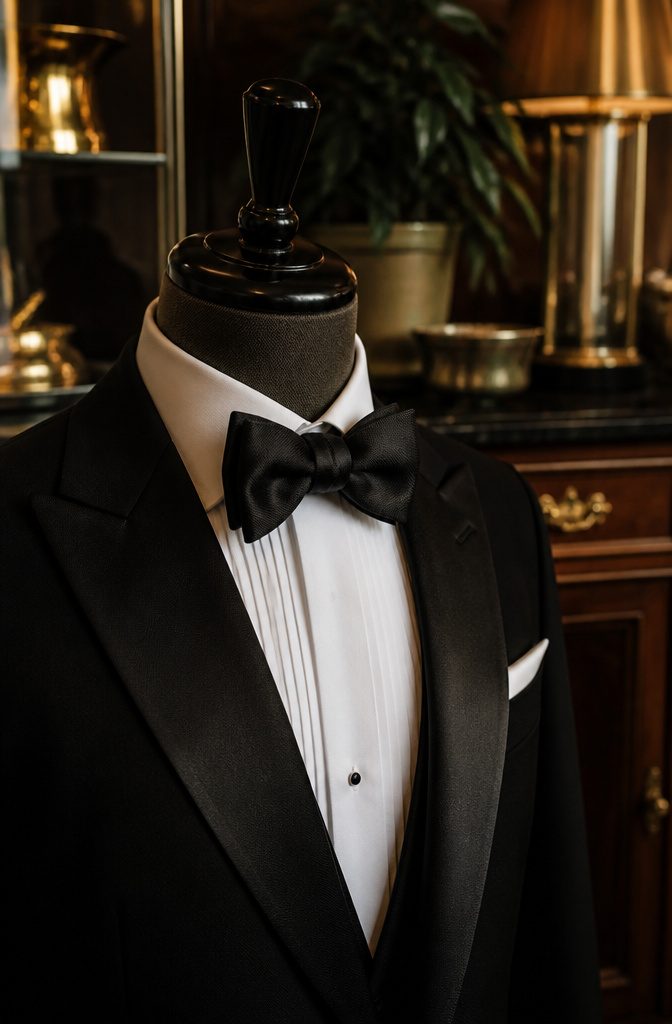
A black silk bow tie, self-tied and never pre-tied, is the only acceptable neckwear for black tie attire. The slight unevenness of a hand-tied bow reads as character rather than flaw; a clip-on looks exactly like what it is.
The fabric should match the lapel facing of your dinner jacket. Sateen lapels pair with sateen silk bow ties, while grosgrain lapels need a finely ribbed or piqué weave.
The bow itself is tied with a common shoelace knot, also called the bow knot, and the finished width should sit within the points of your turndown collar rather than spreading past them.
Midnight blue or dark burgundy bow ties can complement certain dinner jackets, though black remains the standard.
Bold colors and patterns read as unsuitable. I have watched pre-tied versions stand out in wedding photos for all the wrong reasons: too symmetrical, too still, too obviously not the wearer’s own handiwork.
For an event where the code is explicit, the extra two minutes of tying your own is the least of the effort required.
Black Dress Shoes
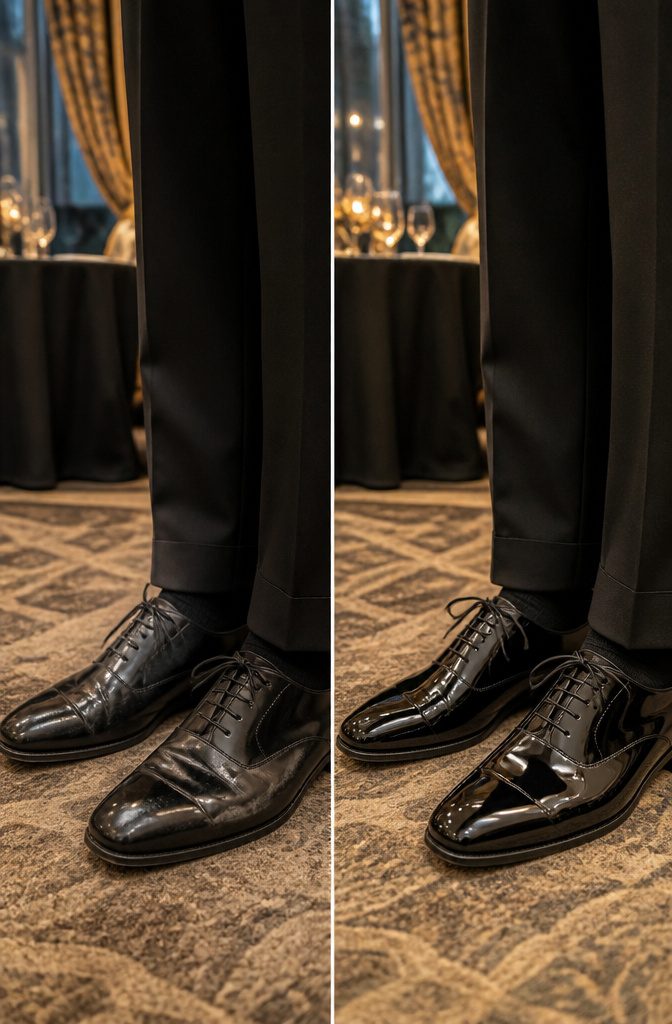
Black patent leather Oxfords are the gold standard for black tie footwear. Their mirror-like shine catches evening light in a way polished leather simply cannot replicate, and that visual signal of formality is exactly what the dress code demands.
Patent leather wins if the event is strictly black tie; polished black calfskin works if you prefer a subtler finish or already own a well-maintained pair. Whole-cut patent shoes offer a sleeker, more streamlined silhouette for those who want it.
Velvet slippers have gained traction as an alternative, though they belong at creative black tie events where individuality is invited rather than at the most traditional affairs.
Suede should be avoided entirely; it appears dusty under artificial light and suffers in rain. Whatever you choose, thin neat laces and black over-the-calf socks with no visible pattern keep the line clean from trouser hem to toe.
Accessories
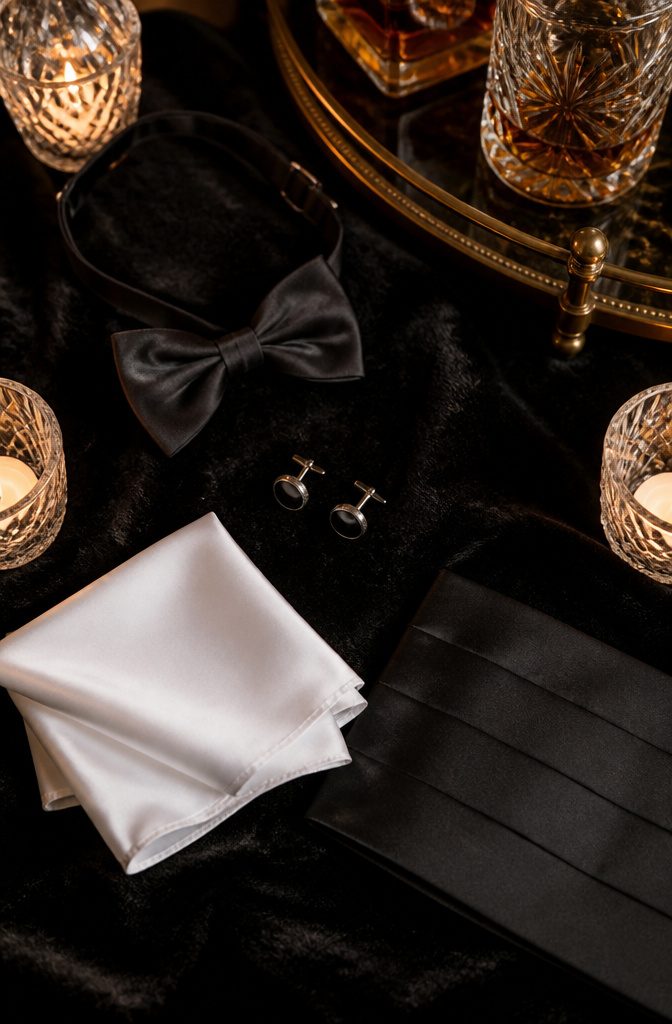
French cuff shirts leave the wrist unfinished without cufflinks in silver, gold, onyx, or mother-of-pearl. Knot designs, oval shapes, or plain rounds all work; novelty shapes read like a costume.
A white linen or silk pocket square, folded with a straight edge, adds the right amount of polish. It sits there quietly rather than competing for attention.
The waistband needs covering on a single-breasted jacket, and two options handle it.
A black cummerbund is the traditional choice, though a low-cut waistcoat does the same job. Both are optional rather than required, and wearing both at once is a mistake.
The cummerbund in particular smooths the line where shirt meets trouser, and it signals you know why the code exists. Still, if you skip it, the outfit holds up.
The waistcoat and cummerbund simply answer different reader questions: one leans classic British tailoring, the other carries the formal evening history. Pick the one that feels less like dressing up in someone else’s clothes.
Women’s Black Tie Options
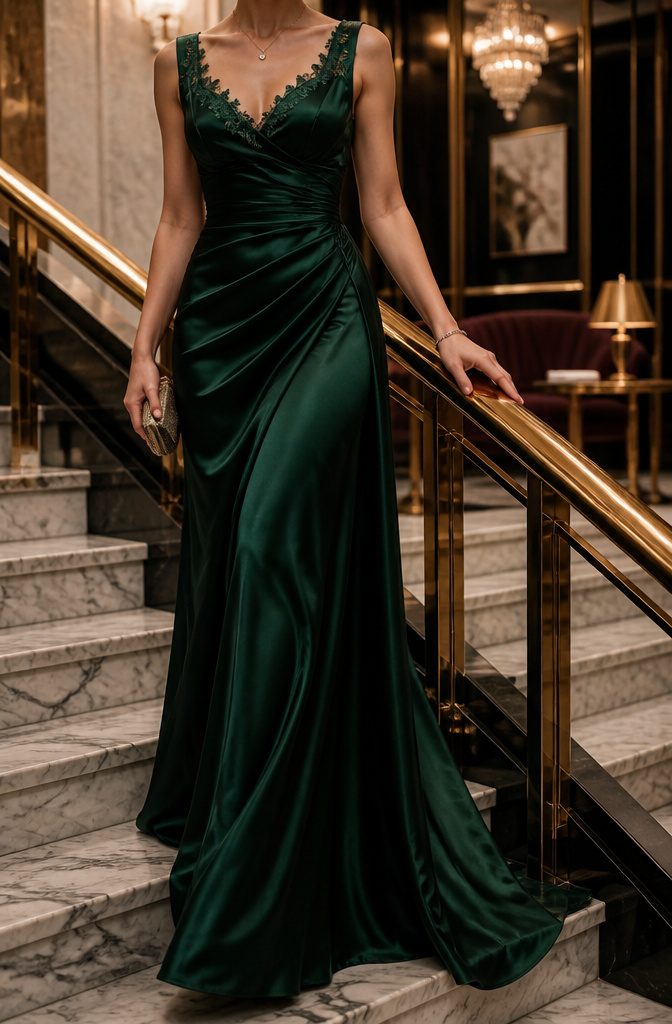
A floor-length gown in silk, satin, or chiffon still sets the standard for women’s black tie attire, though the field has widened considerably.
Deep jewel tones like emerald, sapphire, and burgundy hold their own against classic black or navy, and the fabric matters as much as the cut: velvet and lace read evening-appropriate where cotton or jersey would falter.
Shorter cocktail dresses can work, particularly at black tie optional events, but the hemline needs compensation. Rich fabric, beading, or a structured silhouette signals the formality that length otherwise would.
For anyone who simply does not wear dresses, a tailored jumpsuit or pantsuit in a luxe material has become a genuinely acceptable alternative, not a consolation prize.
Accessories should complement without overwhelming. The gown or jumpsuit carries the statement; jewelry, clutch, and shoes refine it rather than compete.
"For women, we can generally assume that ‘black tie’ equals ‘long.’ But that doesn’t mean just any long dress fits the bill. Make sure your dress is rendered in an evening-appropriate fabric: think velvet, chiffon, silk, or lace."
— Vogue
What this means in practice: the fabric does the heavy lifting. A well-chosen material in a shorter or less traditional silhouette often outperforms a floor-length dress that looks like it belongs at a garden party.
What Not to Wear
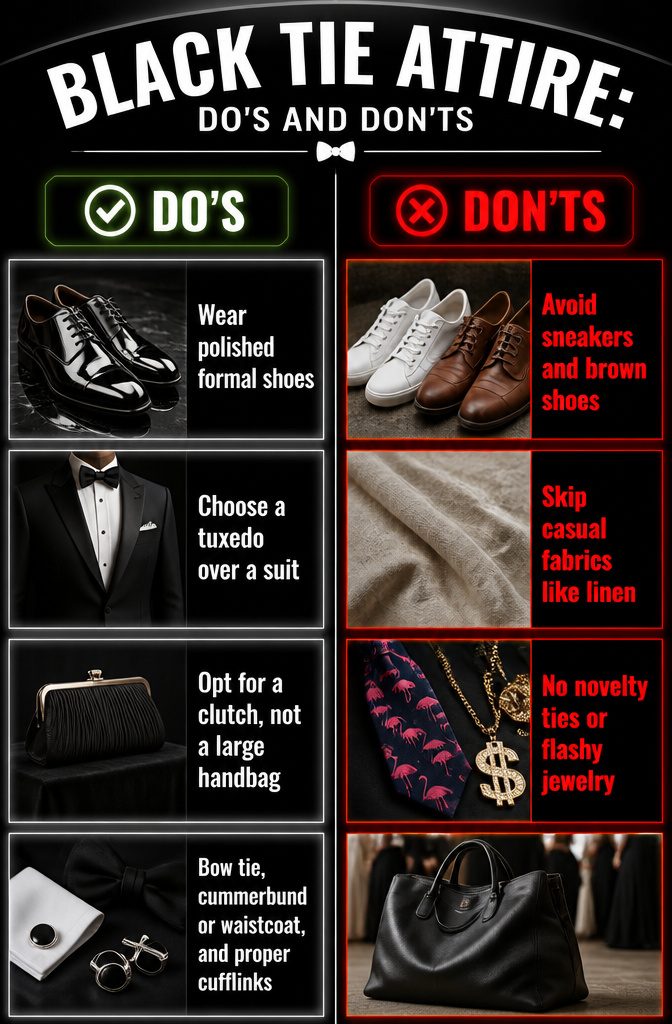
The fastest way to spot someone who misunderstood the dress code is the regular suit standing in for a tuxedo.
A black business suit, no matter how dark or expensive, lacks the satin or grosgrain lapels, the matching stripe down the trouser leg, and the overall structure that defines true evening wear.
I have seen this mistake at formal galas where the invitation was clear, and the effect is immediate: the wearer looks underdressed, not understated.
Footwear trips people up just as often.
Sneakers, loafers, scuffed leather, or anything in brown undermines the entire outfit. Polished formal shoes are the only option here, and they need to be in good condition.
For women, the same principle applies. Business suits, even in dark colors, read as too informal for black tie.
Casual fabrics like linen or cotton blends, sundresses, and flats all break the elegance the event requires. Large, oversized handbags should stay home in favor of a clutch.
Accessories can also overstep. Novelty ties, patterned shirts, and overly flashy jewelry pull attention in the wrong direction.
The bow tie, cummerbund or waistcoat, and proper cufflinks complete the look; they are not optional extras, and a long necktie is one of the most common errors for men.
Tuxedo trousers are designed for braces or side adjusters, so a belt buckle breaks the clean line of the shirt front entirely.
Black Tie Etiquette
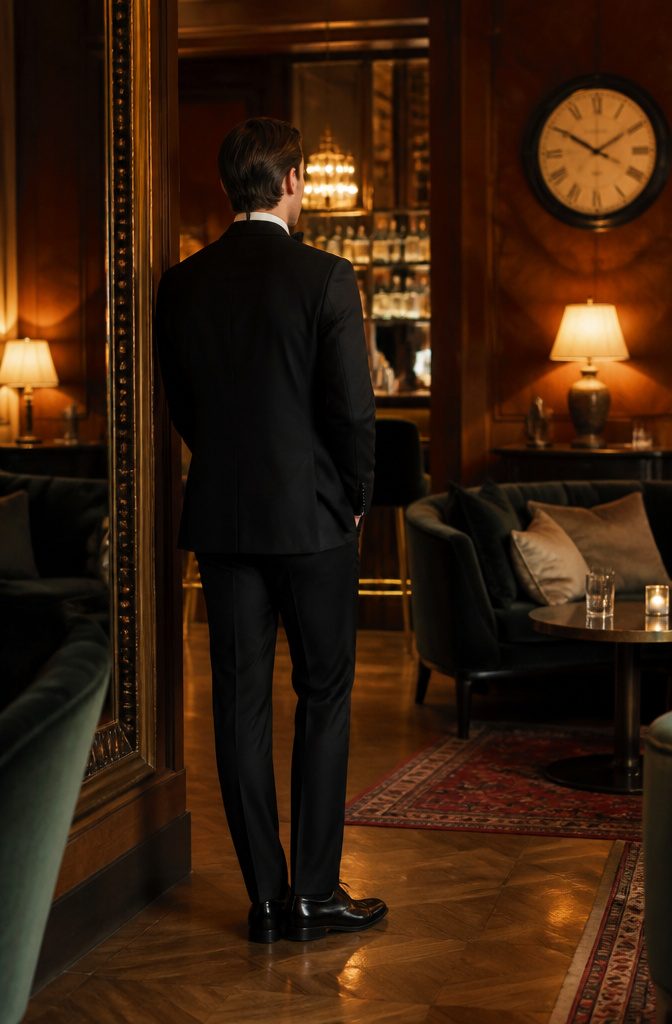
A black tie invitation is a request, not a suggestion. The host has invested in creating a special evening, and the dress code exists so every guest contributes to the same atmosphere of sophistication.
Showing up in anything less undermines the work they put in and the experience of everyone else present.
Grooming matters as much as the clothes. A perfectly fitted tuxedo loses its effect next to unkempt hair or unpolished shoes.
Clean-shaven or neatly trimmed facial hair, a fresh haircut, and manicured nails finish the look. The clothing is only part of the presentation.
Punctuality is part of the code too. Arriving on time shows respect for the host and the occasion itself.
Once there, keep your dinner jacket on until the host removes theirs first. These small observances are what separate a formal event from an ordinary party, and they cost nothing to follow.
Creative Black Tie and Seasonal Adjustments
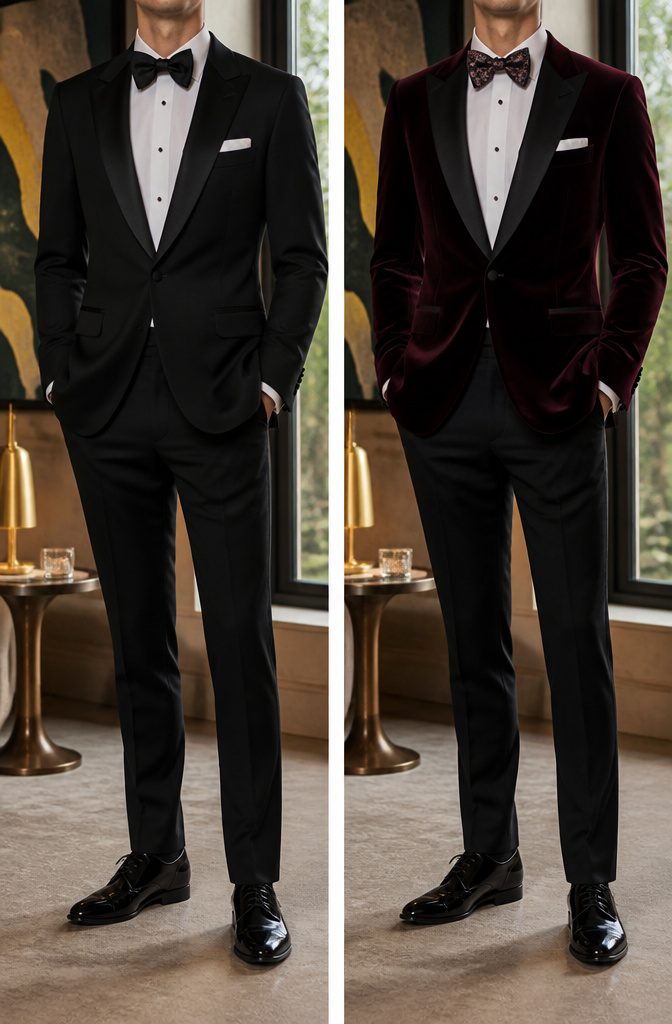
Creative black tie is where the dress code loosens without unraveling. A velvet dinner jacket in midnight blue, burgundy, or forest green paired with standard black tuxedo trousers keeps the foundation intact while the texture does the talking.
Patterned bow ties and contrasting satin details fall in the same category: one or two personal touches, never a full rewrite of the rules.
Warm weather demands its own adjustment. The white dinner jacket with black trousers is the classic move for tropical resorts, cruise ships, and outdoor galas, though the timing matters.
White jackets read daytime or warm-weather black tie; they do not carry into standard evening events the way black or midnight blue does. For the jacket itself, lightweight wool or a tropical-weight blend keeps the structure from collapsing in heat.
A cummerbund replaces the waistcoat for breathability, and a linen blend can work for destination events if the satin lapel details stay in place.
Frequently Asked Questions
What is black tie attire?
Black tie attire is a formal evening dress code centered on a dinner jacket with satin or grosgrain lapels, matching formal trousers with a side stripe, a crisp white French-cuff shirt, a self-tied black silk bow tie, and polished black shoes.
It originated in 19th century England as a slightly less formal alternative to white tie, and it remains the standard for elegant events starting after 6 p.m.
Can I wear a regular suit to a black tie event?
No. A regular business suit lacks the satin-faced lapels, the matching stripe down the trouser leg, and the overall structure that defines true evening wear.
The effect is immediate: you will look underdressed rather than understated. If the invitation reads "black tie optional," a dark suit may pass, but a tuxedo is always the correct choice.
What should women wear to a black tie event?
Women should wear a floor-length gown in silk, satin, chiffon, velvet, or lace.
Deep jewel tones and classic black or navy all work well. Shorter cocktail dresses can work at black tie optional events if the fabric or silhouette compensates; tailored jumpsuits or pantsuits in luxe materials have also become genuinely acceptable alternatives.
Are cummerbunds necessary for black tie?
A cummerbund is not strictly required, but it smooths the line where shirt meets trouser and signals you understand why the code exists.
A low-cut waistcoat handles the same job of covering the waistband on a single-breasted jacket. Wearing both at once is a mistake, and skipping both still leaves the outfit intact.
What is the dress code for a black tie event?
The dress code calls for refined, polished, and understated elegance rooted in classic formalwear.
For men, this means a black or midnight blue dinner jacket, matching trousers, white formal shirt, black bow tie, and polished black shoes. For women, a full-length evening gown or elegant cocktail dress in luxe fabrics sets the standard.
What is not appropriate for a black tie event?
For men, regular suits, long neckties, brown shoes, sneakers, loafers, scuffed leather, belts, and novelty accessories all break the code.
For women, business suits, casual fabrics like linen or cotton blends, sundresses, flats, and oversized handbags read as too informal. Anything that competes for attention rather than contributing to the evening’s sophistication is out of place.