An Amazon capsule wardrobe is a deliberately small collection of interchangeable basics bought through the platform, built around pieces that survive real wear rather than photograph well.
Fabric weight, rise measurements, and actual construction details are buried beneath thousands of listings that all look the same on screen.
The white tee that anchors it costs $15 to $25, but only if the cotton hits 4.5 to 5.5 ounces per square yard; anything lighter turns sheer after three washes.
Classic White Tee
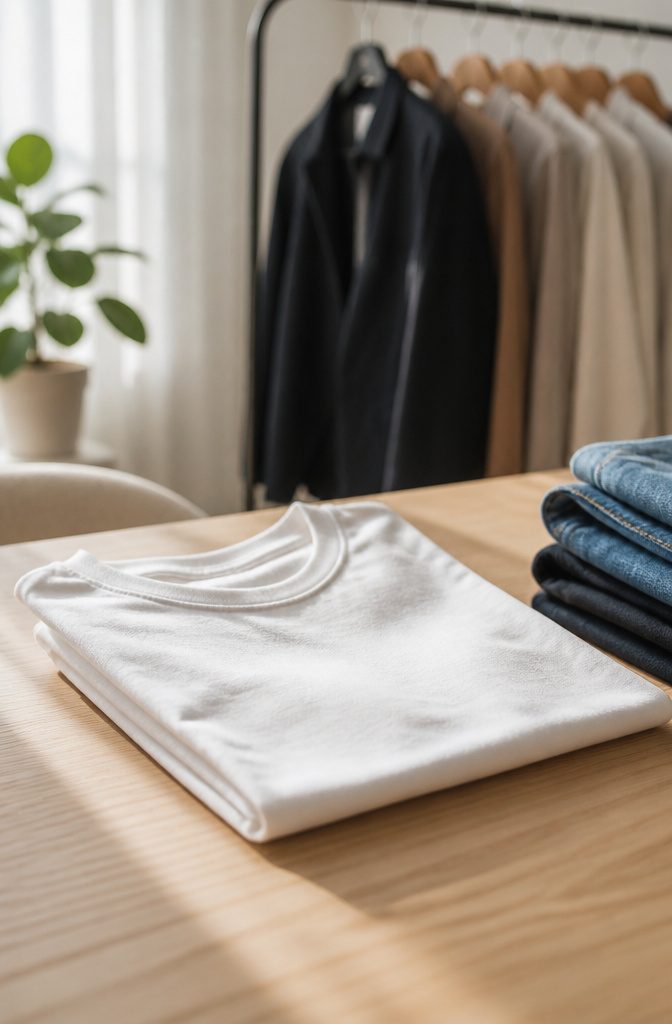
A white t-shirt that goes sheer after three washes is a white t-shirt you stop reaching for.
The cotton matters more than the label, and 4.5 to 5.5 ounces per square yard is the weight that keeps its shape through a season of washing without turning into something you layer out of embarrassment.
Amazon Essentials and Daily Ritual both land in that range with a drape that reads intentional rather than undershirt. The Amazon Essentials crewneck runs slightly heavier, which helps if you are tucking it or wearing it alone with trousers.
Daily Ritual’s jersey sits lighter and works better under a blazer without bulk. Neither hits that stiff, boxy shape that cheaper cotton takes on after the first dry cycle.
The price clusters where it should: $15 to $25 gets you two to three solid years of regular wear if you skip the dryer on high heat.
Under $15, the fabric weight drops fast and the neckline starts to ripple. Over $25, you are paying for details that do not change how often you actually wear it.
Button-Down Shirt
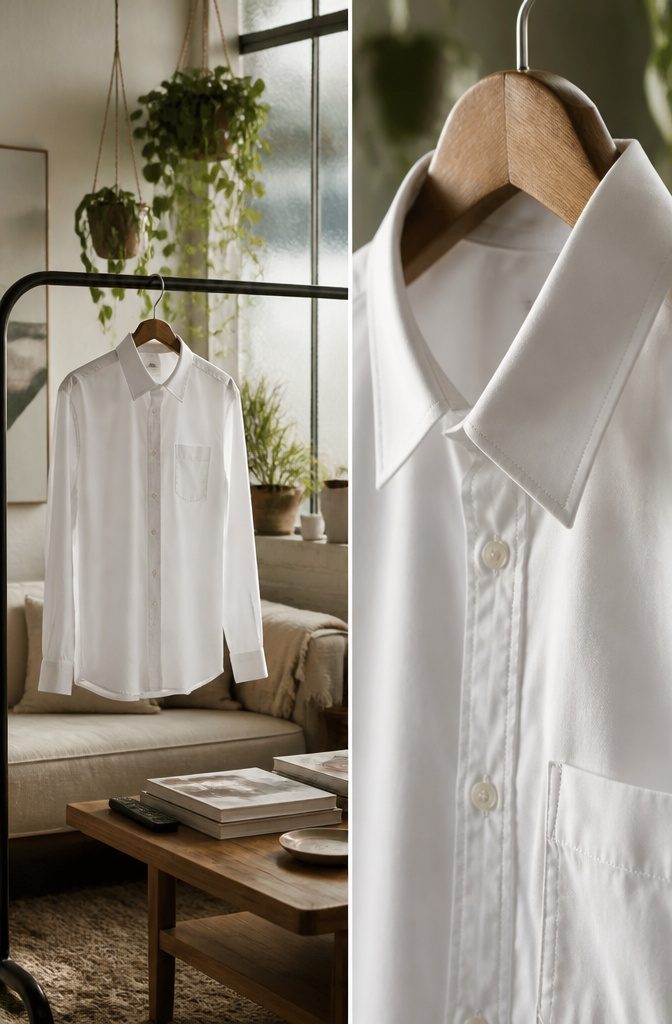
A button-down shirt earns its place in an amazon capsule wardrobe only when it knows which job it is doing. Crisp poplin holds a pressed line through a full workday and looks deliberate under a blazer.
The rayon blend drapes differently; it softens into something you can wear untucked with jeans on Saturday morning without looking like you forgot to change.
Amazon’s The Drop tends toward the relaxed, slightly oversized cut that works better in that weekend fabric.
Goodthreads builds closer to the body, which keeps the poplin version from ballooning under a jacket. The two brands are solving different problems with the same category of garment.
I keep both shapes in rotation because one shirt cannot serve both masters.
The poplin needs ironing and a plan; the rayon forgives wrinkles and tucks itself in or out depending on the hour. Two shirts, two purposes, zero overlap in practice.
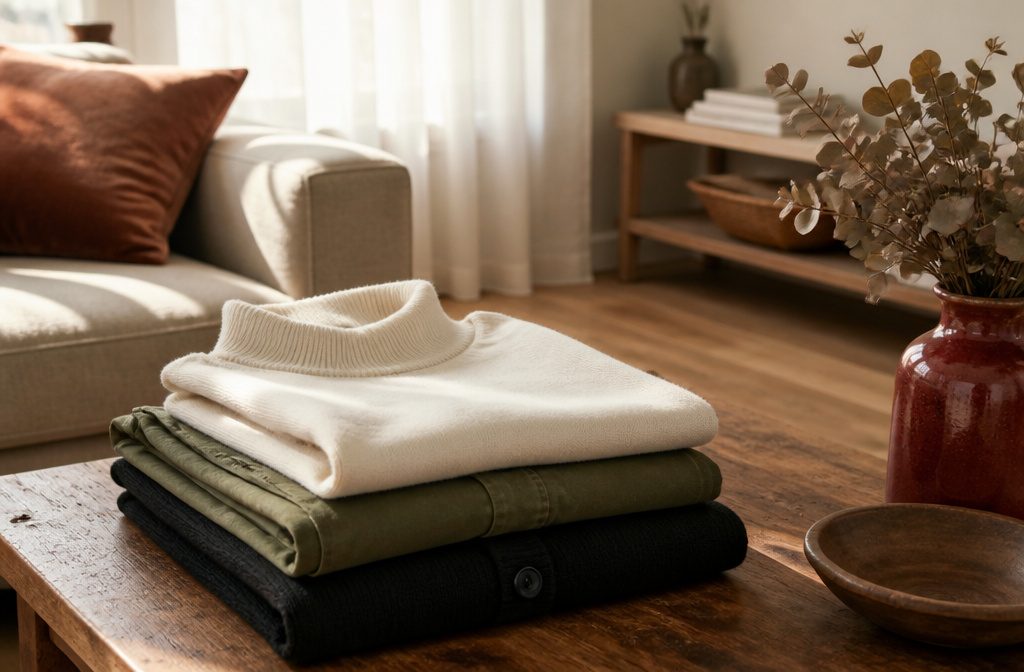
Basic Turtleneck or Mock Neck
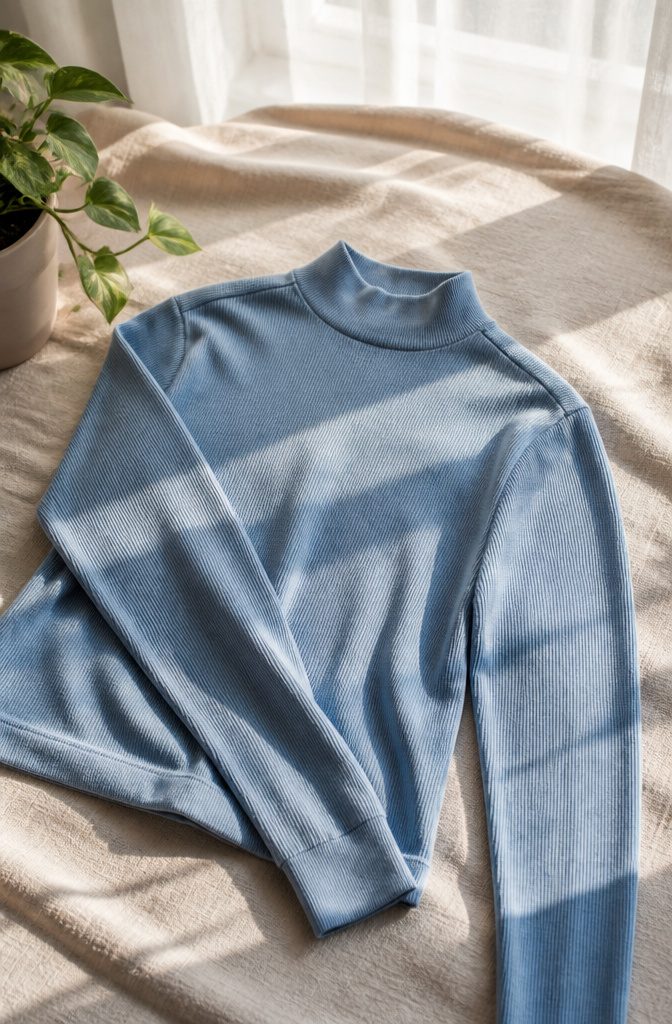
A turtleneck with too much height eats your chin and turns your silhouette into a tube.
The mock neck fixes this by stopping just short of the jaw, giving the same clean line without the swallowing effect. After that wrong purchase, the mock neck became my default for this slot.
The Amazon Essentials fine-gauge mock neck runs about $22 and earns its place through density. Fine gauge means it layers flat under a button-down or denim jacket without the collar fight you get from thicker knits.
Wear it alone when the day stays cool but not cold; the neckline is enough interest by itself. Under a layer, it functions as a smoothing base that keeps the outer piece from touching skin directly.
The fabric is thin enough to tuck without bulk, which matters more than it should at this price point.
After a few washes it softens without losing the structure that keeps the neck upright. For a capsule built on Amazon, this is the piece that replaces three others.
Lightweight Sweater

A lightweight sweater is the piece that actually earns its place in a capsule wardrobe, since it carries you from a September morning straight through a March afternoon without looking out of place.
Amazon’s cable-knit and cashmere-blend options from Lark & Ro look promising on the rack, or rather on the screen, but the reality of how they pill sets in fast.
A lightweight sweater worth keeping needs cuffs that survive a full winter without felting, so check the fiber blend and reviews for pilling before buying.
The first two developed that fuzzy, compacted texture at the wrists and hem within a month of regular wear, the kind of pilling that makes a sweater look tired even when the rest of it is fine.
The third, a finer-gauge crewneck in a wool-cotton mix, held its shape through weekly washes and the friction of a desk job.
The cuffs are where you test a sweater: if they stay smooth through twenty wears, the construction is solid enough for the long haul.
For a capsule built on pieces that work across seasons, that durability matters more than the softness you feel in the first try-on.
High-Waisted Jeans
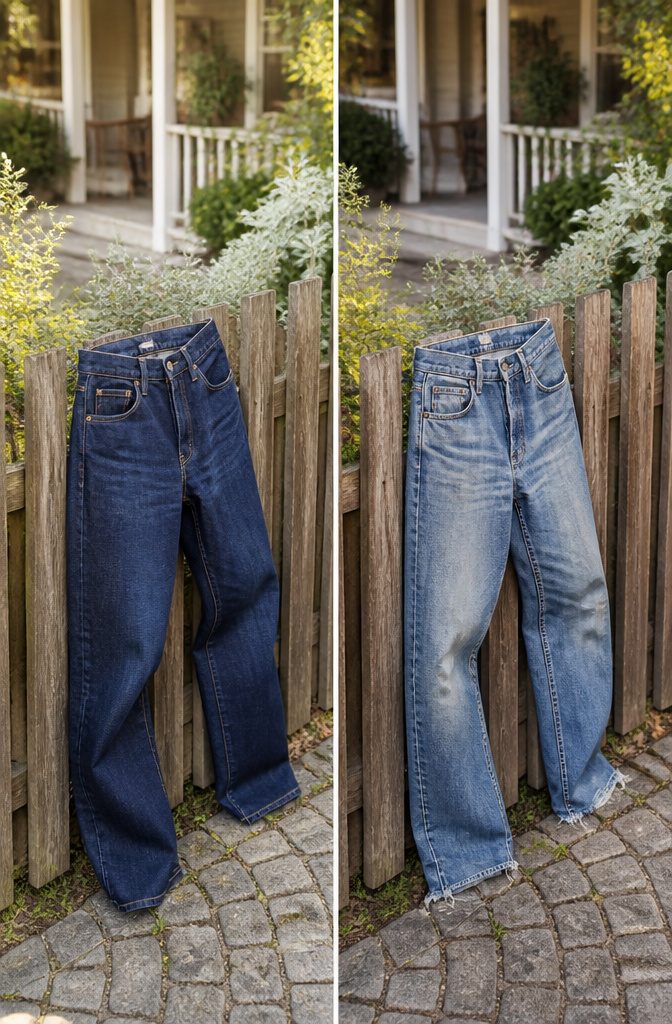
High-waisted jeans sit alongside the white tee as the most mentioned anchor piece across every capsule wardrobe list I reviewed.
An Amazon search for the term returns roughly 4,000 results, which sounds helpful until you realize most of them will not fit the way the photo promises.
The filter that matters most is rise measured from the crotch seam to the waistband, not the size tag.
Ten inches lands at the natural waist on some bodies and two inches below it on others, depending on torso length. Stretch percentage comes next: anything under 2% elastane stays rigid through the hips, while anything over 5% bags out by noon.
The back gap when you sit is the detail no listing shows, but reviewers will mention it if you sort by most recent and search "gap" on the page.
I own two pairs purchased for this purpose. The Levi’s had the better fabric weight and held their dye through a year of washes.
The Gloria Vanderbilt pair cost less upfront and developed threadbare stress lines at the inner thigh within eight months. For a capsule built to last, the first pair was the cheaper one.
Ankle Trousers
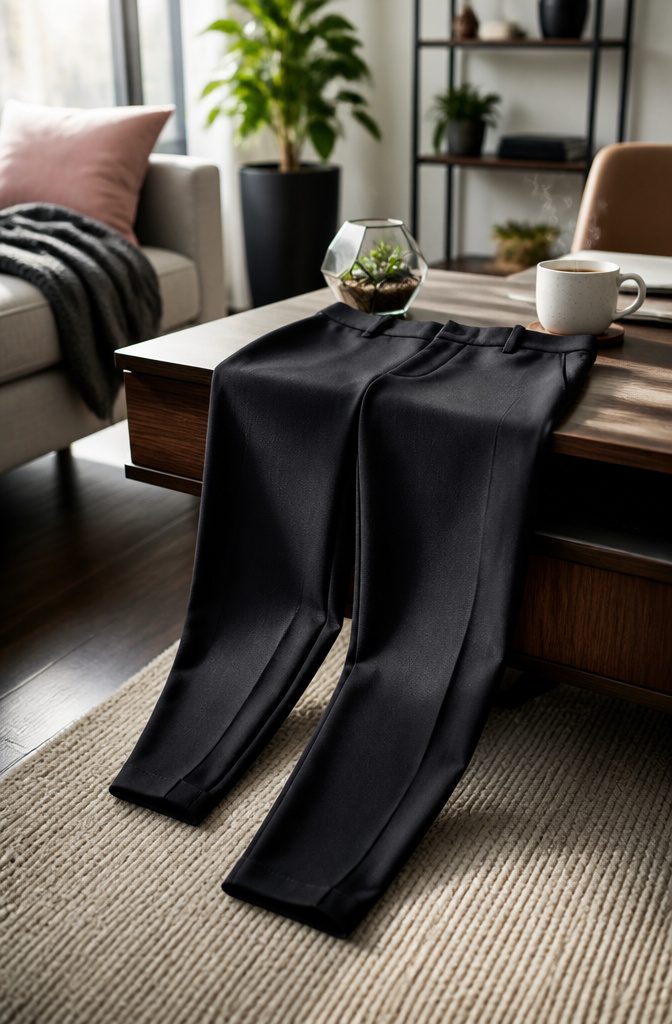
Ponte knit trousers from Anne Klein and similar Amazon brands fill the gap between leggings and tailored wool.
The fabric has enough body to hold a pressed crease but stretches enough to sit through a full day without pinching at the waist.
A $28 pair held its crease through a 10-hour day, which was the test that made me order a second color.
Owners on Reddit mention buying cheaper versions first to test fit and fabric before committing to pricier labels, and ponte is where that strategy pays off: the material looks the same at $28 and $120, so the difference is mostly in seam finishing and lining.
Machine wash cold, hang dry, and the crease comes back with a quick steam.
Casual Dress
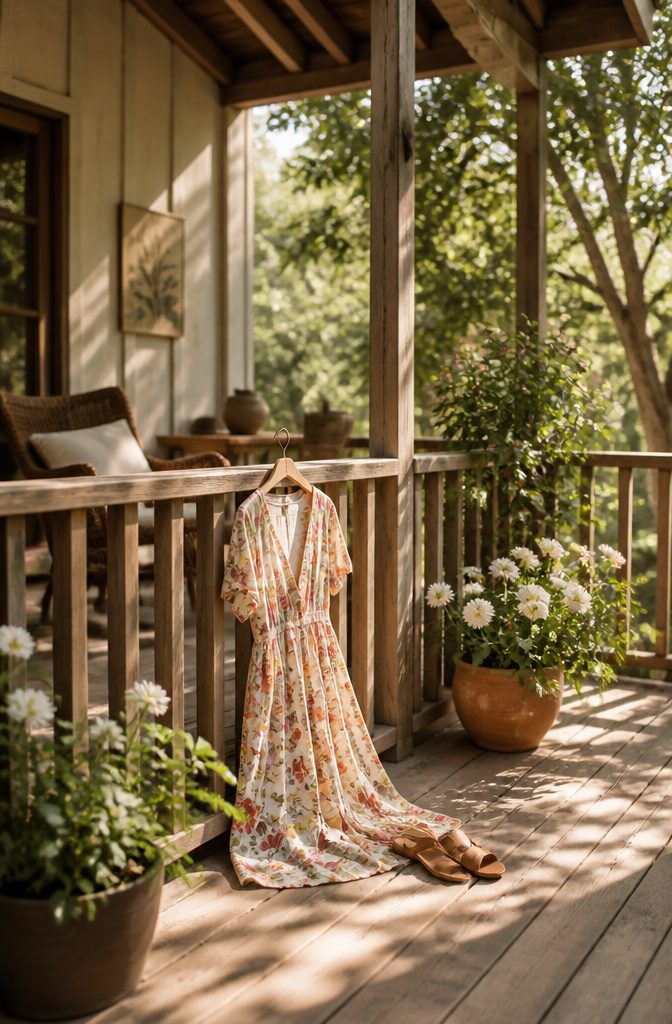
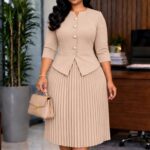
Some days, matching a top to a bottom feels like a puzzle with missing pieces. A casual dress solves that entirely.
Amazon’s house brands offer two solid starting points: the shirt dress and the wrap dress. The shirt dress, with its straight column of buttons, tends to read more structured.
It works well if you carry weight through your midsection, since the placket draws the eye vertically and the collar adds definition up top. The wrap dress, by contrast, creates its own waistline wherever you tie it.
That adjustability makes it the better choice if your shoulders and hips are roughly the same width and you want to create shape rather than follow what’s already there.
Neckline choice matters more than most people notice.
A V-neck on either style elongates the neck and balances a rounder face or fuller bust. A crew or mandarin collar on a shirt dress does the opposite, adding visual weight up top that can overwhelm a petite frame.
The $35 Daily Ritual jersey dress is the piece that proved one-piece dressing can actually work across contexts.
I wore it to a morning dentist appointment with white sneakers, to a casual dinner with heeled sandals and a belt, and to a funeral with black pumps and a cardigan.
Only the shoes changed. The fabric was thick enough not to cling, thin enough to layer, and it washed without pilling through maybe a dozen cycles.
For a capsule built on Amazon basics, that kind of mileage from one item is what makes the math work.
Denim Jacket
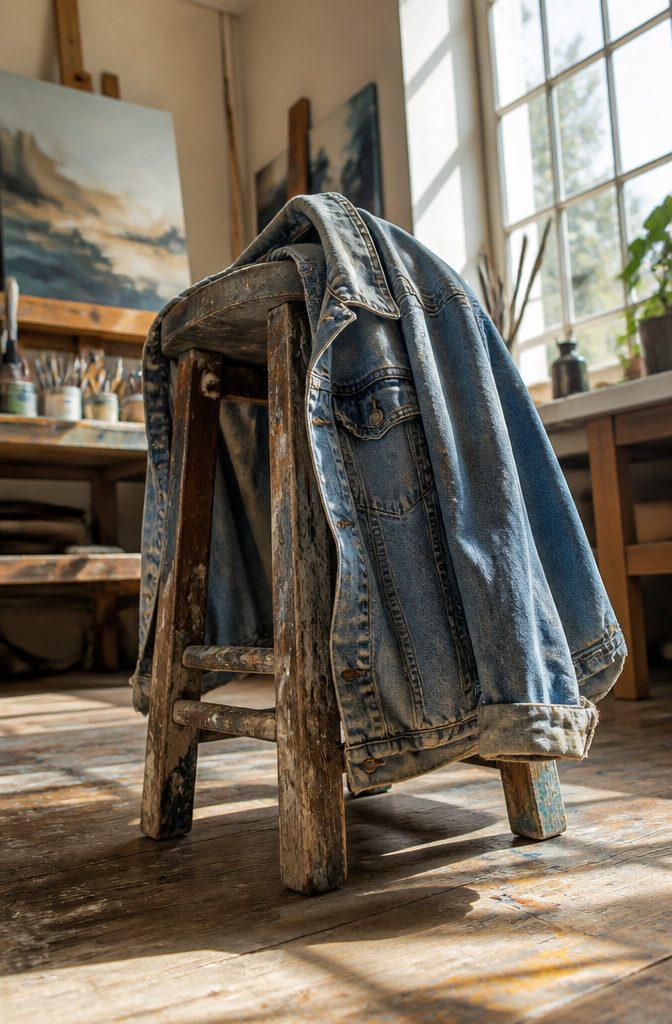
A denim jacket turns every piece underneath into a three-season item. The two worth comparing on Amazon sit twenty dollars apart, and the gap shows in the wearing.
Levi’s trucker jacket at $60 carries the weight you’d expect from the name: rigid cotton that breaks in over months, not washes.
The pockets sit high on the chest, which keeps the line clean when you leave it open over a dress or a tee. The wash reads as lived-in from the first wear, not costumed.
The $40 Amazon Essentials version lands softer and lighter, almost immediately.
Pockets drop lower, which shortens the torso visually, and the wash stays uniform in a way that looks borrowed rather than owned. Fine for a single season, but it won’t shape to your shoulders the way the Levi’s will.
For a capsule built to repeat, the trucker earns its place. The cheaper option fills a gap if you’re testing whether you’ll reach for denim layering at all.
Trench Coat
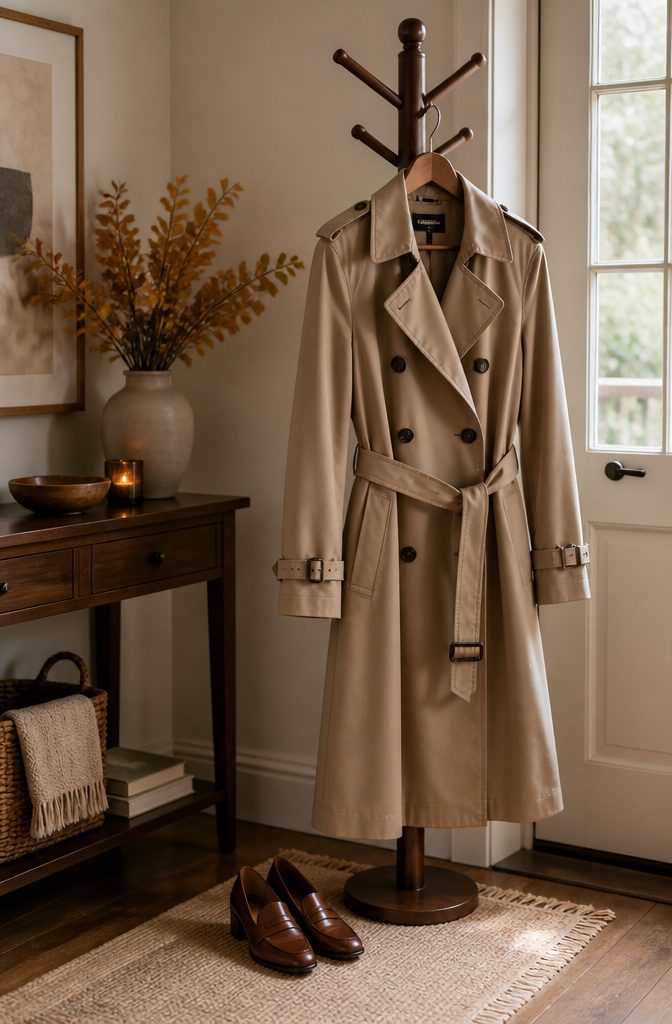
A trench coat is the single outerwear piece that makes everything underneath it look intentional.
A higher price does not guarantee better lines; the belt placement matters more, and a $200 department store trench can hit at the wrong waist point and compress your torso.
The London Fog on Amazon at $80 sits lower, closer to the high hip, which lengthened my frame in a way the expensive one never did.
Epaulets bulky enough to show through a thin sweater and linings that stick to your clothes are dealbreakers worth filtering for in photos and reviews before ordering.
The London Fog’s lining is smooth enough to layer over a blazer without bunching, and the water-resistant shell has held up through two springs of regular wear.
For a capsule wardrobe, this is the coat you grab when the outfit underneath is simple and you still need to look pulled together.
Comfortable Shoes
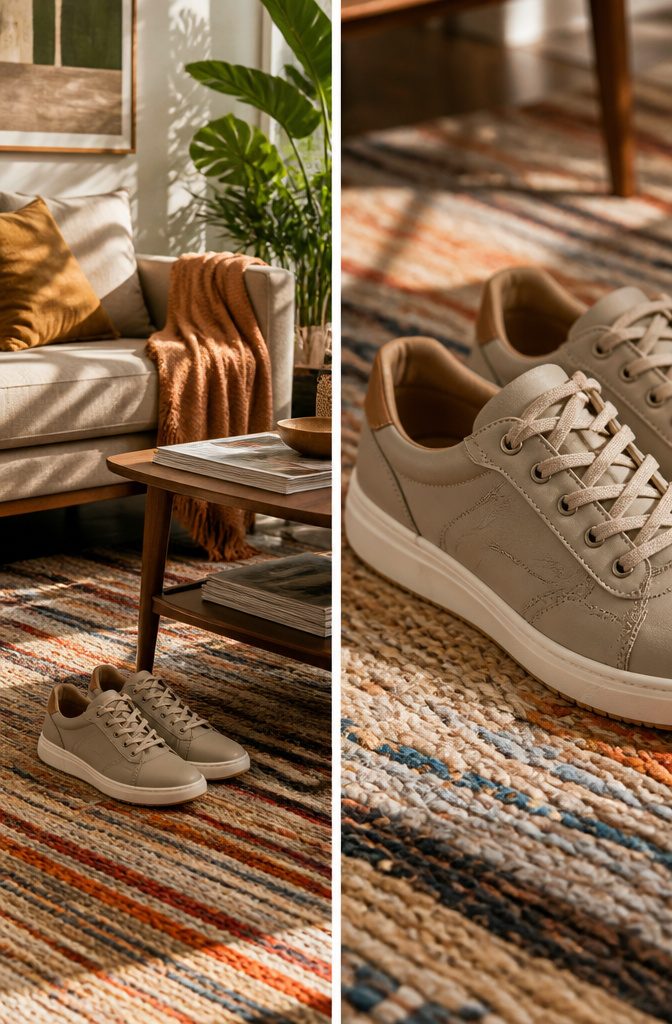
Shoes are where most capsule wardrobes quietly fall apart. Three pairs handle roughly ninety percent of real life: clean sneakers, a solid flat, and an ankle boot that tolerates weather.
The Adidas Grand Court at $45 is the sneaker that actually stays clean-looking, though the arch support is basically decorative; after a full day of walking, my feet notice.
The Sam Edelman ballet flats at $70 broke in within three wears and have held their shape through two years of regular rotation.
The Blondo waterproof boots at $120 were the surprise: zero break-in, genuinely waterproof, and the only pair of the three that did not lie about comfort.
Flats and sneakers both claimed better support than they delivered; the boots were the honest ones.
Check customer photos in the reviews before ordering. Fit varies enough that someone else’s mirror shot tells you more than the product page.
Accessories
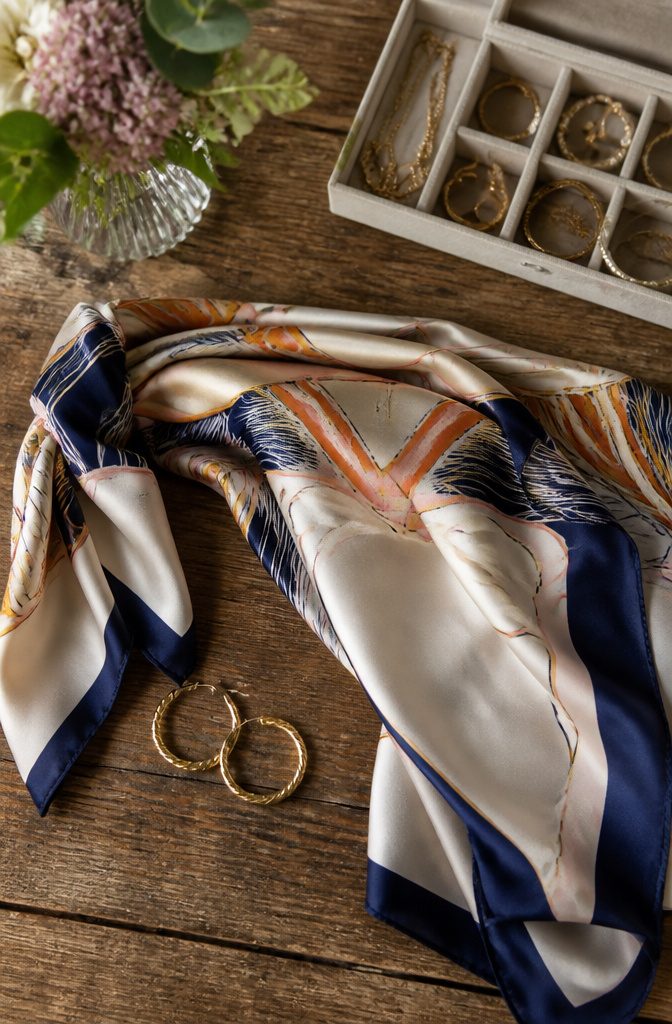
Scarves and jewelry are the cheapest way to multiply what a capsule wardrobe can do. A $12 silk scarf from Amazon reads far more expensive than it is; the weave catches light in a way that flat product photography never shows.
That same gap between image and object is what taught me to filter by customer review photos instead of polished listings.
The gold-plated hoops that turned green on me in two weeks had looked flawless on the model. Now I scroll straight to the uploads from buyers who have worn the piece past the first afternoon.
Statement jewelry and lightweight scarves shift an outfit’s register without adding bulk to your closet. The scarf works at the neck, through belt loops, or tied to a tote strap.
Hoops that keep their finish do the same duty for years. Filtering by review photos is what separates the finds that last from the ones that become landfill.
Tote Bag
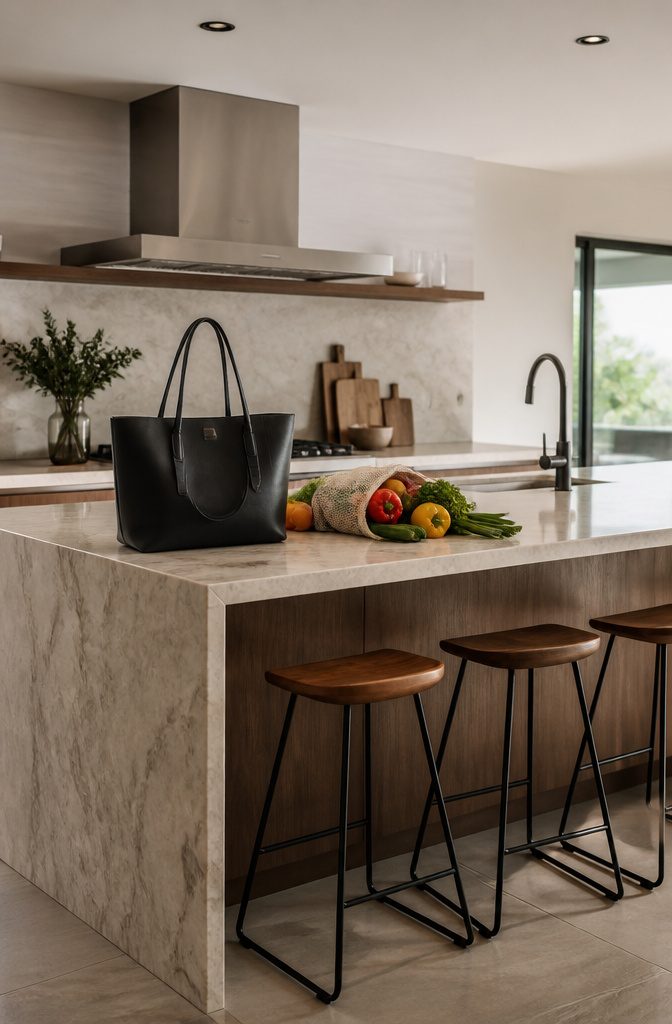
A tote bag in an Amazon capsule wardrobe carries the laptop, the groceries, and whatever overflow comes from poor planning.
Amazon’s leather-look totes sell alongside canvas versions at roughly the same price point, usually between $25 and $40, and the difference shows up within a year.
The leather-look material cracks at stress points where handles meet the body; canvas frays or holds stains, but it rarely splits outright.
The structured version that stands upright on its own saves more time than expected. A soft tote dumped on a coffee shop floor becomes a scoop-and-pile operation every time something is needed.
One with a firm base stays open, files stay vertical, and the bag does not collapse against a chair leg and dump contents.
A $30 quilted nylon tote with multiple pockets gives you the organization of a designer bag without the MZ Wallace price.
The fabric looked substantial, the zippers moved smoothly, and it held its shape through month three. At month four, a shoulder strap tore where the webbing met the ring.
The repair would have cost more than the bag. For a capsule wardrobe built on replacement rather than rotation, a tote that fails at six months is not a bargain at $30.
Canvas with reinforced handles or a structured leather-look version with actual stitching at load points holds up better for daily use.
Loungewear
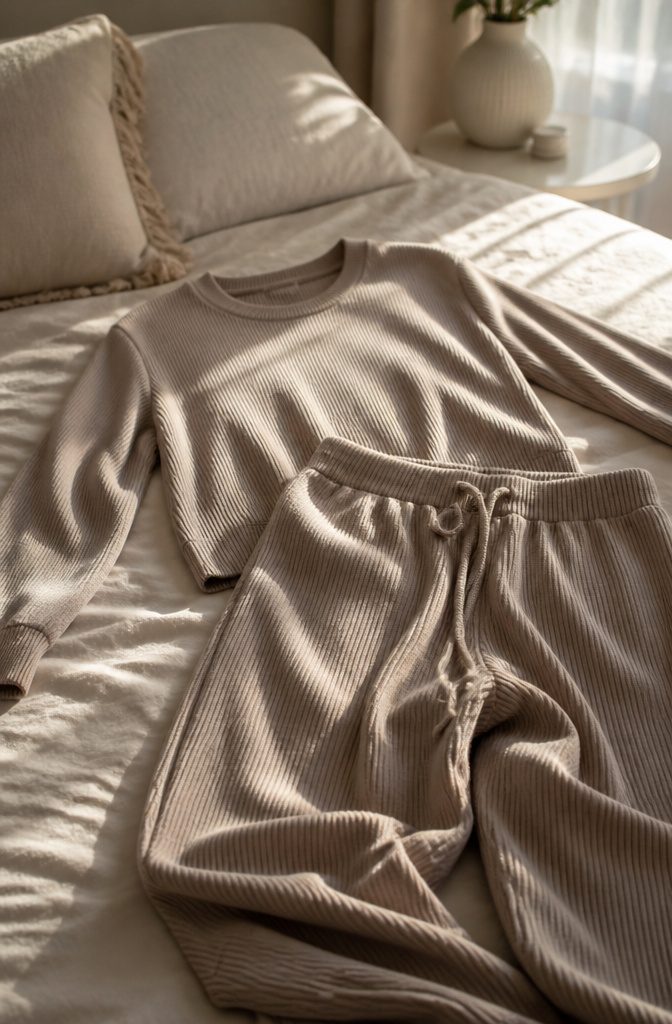
Loungewear was the category I resisted longest. Until March 2020, it felt like giving up, a signal that the day had no structure worth dressing for.
The Drop changed that. Their matching sets arrived in packaging that felt suspiciously polished for the price point, and the fabric weight sat right in the middle, thick enough for video calls but soft enough for the couch.
The line between presentable and comfortable blurred in a way I hadn’t expected. A ribbed knit set in charcoal reads as intentional at a coffee shop, not like gym clothes someone forgot to change.
The joggers were the real conversion.
The real test for loungewear is whether the tapered leg and mid-rise waist look intentional outside the house, so try one color first before doubling up. They did.
Now I wear them for morning coffee runs without changing, paired with the same loafers I’d wear with trousers. The elastic cuff keeps the silhouette neat; nothing pools around the ankle or drags on wet pavement.
Quality varies by colorway, which is worth watching. The heathered fabrics hold their shape longer than the solids in my rotation, and pilling shows first on the interior where friction concentrates.
For a capsule built on pieces that work across contexts, two matching sets and one pair of structured joggers covers more ground than the category used to deserve.
Cardigans
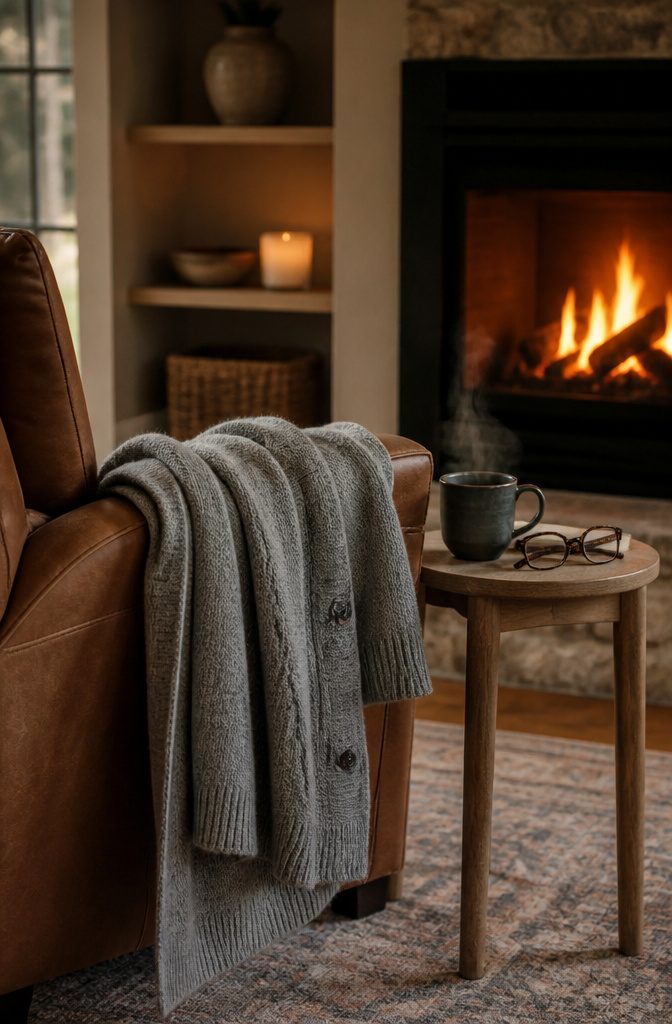
An open-front cardigan fills the same slot as a denim jacket once you are inside: enough structure to finish an outfit, soft enough to wear for hours.
The boyfriend cut drapes past the hip and reads as relaxed tailoring over a tee and trousers.
The cropped version sits higher, and on my frame that line cut me in half; the eye stops at the waistband instead of traveling the full length of the leg. The boyfriend length lengthens where the crop shortens.
A gray cable-knit cardigan worn all winter needs a cream backup so you do not run either into the ground.
The switch cost $34 and gave the original a rest without forcing me to rethink the outfit underneath. Two colors of the same piece is not exciting, but a capsule runs on pieces you will actually reach for.
Seasonal Items
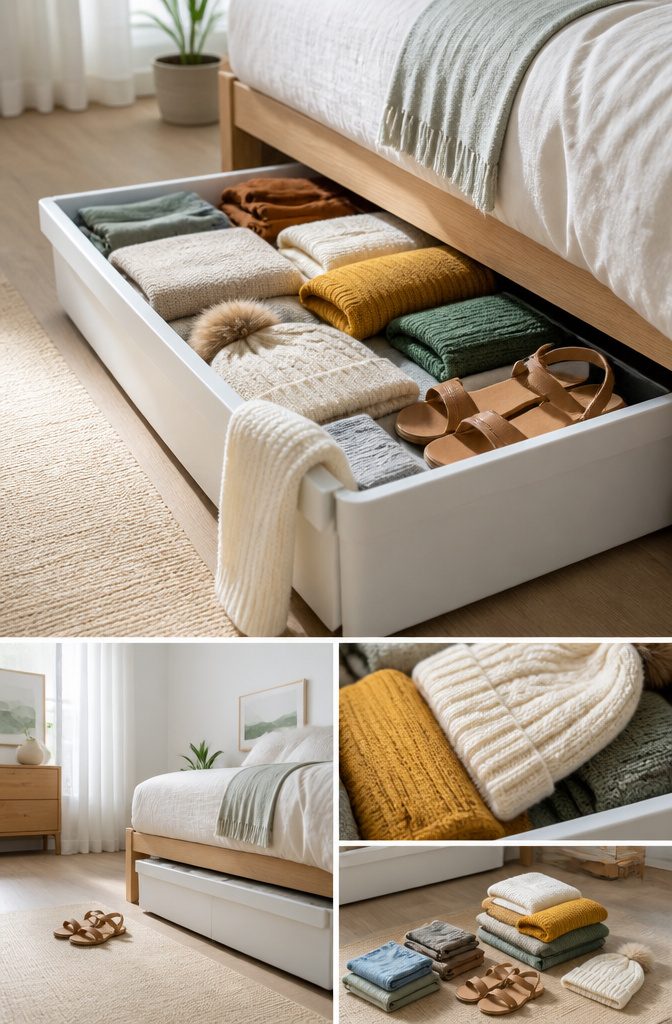
Seasonal rotation keeps an Amazon capsule wardrobe from swelling back into closet chaos. Beanies, sandals, and the pieces that switch in for summer or winter need a plan, or they end up scattered across every shelf by March.
A $15 cashmere-blend beanie can pill after two wears; a $22 wool version holds up better for only seven dollars more. That $7 gap taught me more than most style rules.
For storage, a single under-bed bin holds the off-season stack: sandals nest in summer, beanies and one puffer in winter. Nothing enters the closet unless something else exits.
One bin, one swap, no exceptions keeps the count honest and the hangers breathing. A versatile sandal in a neutral tone handles errands, beach days, and lunch without demanding a second pair.
The same discipline applies: buy the one that works, store the last season’s out of sight, and resist the "just in case" add-on that breaks the system.
Building the Capsule
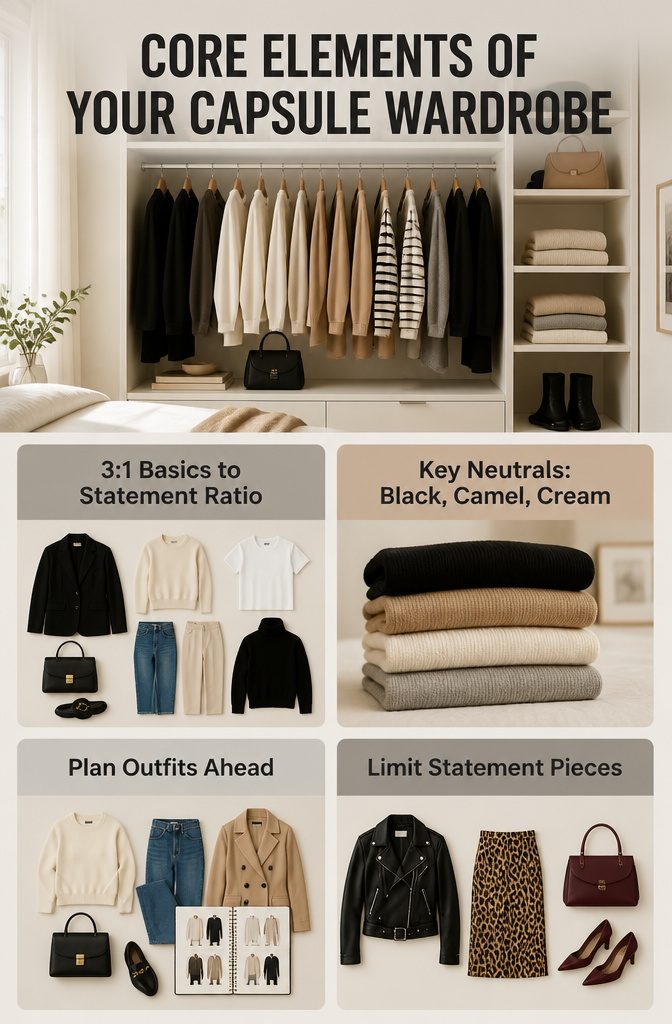
Starting with full outfits instead of individual pieces was my first real mistake.
I would buy a "perfect" look from a product page, then find the skirt only worked with that exact top. Three wears in, and I had a costume, not a wardrobe.
The fix is the 3:1 ratio of basics to statement pieces that I now use as a hard rule.
For every bold item, three quiet ones need to carry it. Think three tops, three bottoms, and three layering pieces, all chosen for how they interact rather than how they photograph.
Neutrals do the heavy lifting here. Black, camel, cream, and soft gray multiply your options without multiplying your count.
One pair of black Paige jeans or a well-cut Amazon turtleneck moves across more outfits than any patterned alternative. I keep seasonal color to small doses, a scarf or a knit, so the core stays interchangeable.
Planning outfits ahead matters more than the pieces themselves.
Lay out ten combinations before you check out. If a top only appears once, it does not earn its hanger space.
Budget-Friendly Options
Most sources peg a full Amazon capsule wardrobe at under $200, which works if you are ruthless about where that money goes.
Jeans and shoes are the places to spend more; they carry the outfit and take the most wear. Trend colors and experimental silhouettes are where to save, since they will rotate out fastest.
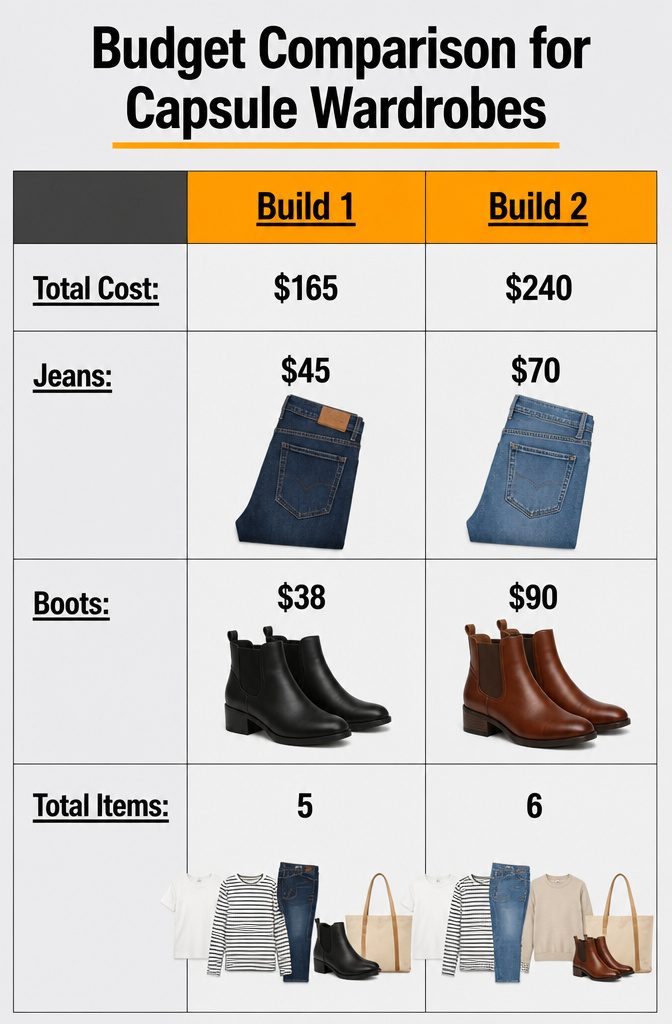
I have two builds tracked from actual receipts. The first came in at $165, built around a $45 pair of dark-wash jeans and $38 ankle boots, with the rest spread across a white tee, a striped long-sleeve, and a basic tote.
The second hit $240 after I upgraded the shoes to real leather and added a lightweight sweater. The $165 build held up fine for office-to-weekend dressing; the $240 one just meant fewer visible scuffs by month six.
Mixing and Matching
Fifteen pieces turn into fifty-plus outfits once layering and accessorizing join the math.
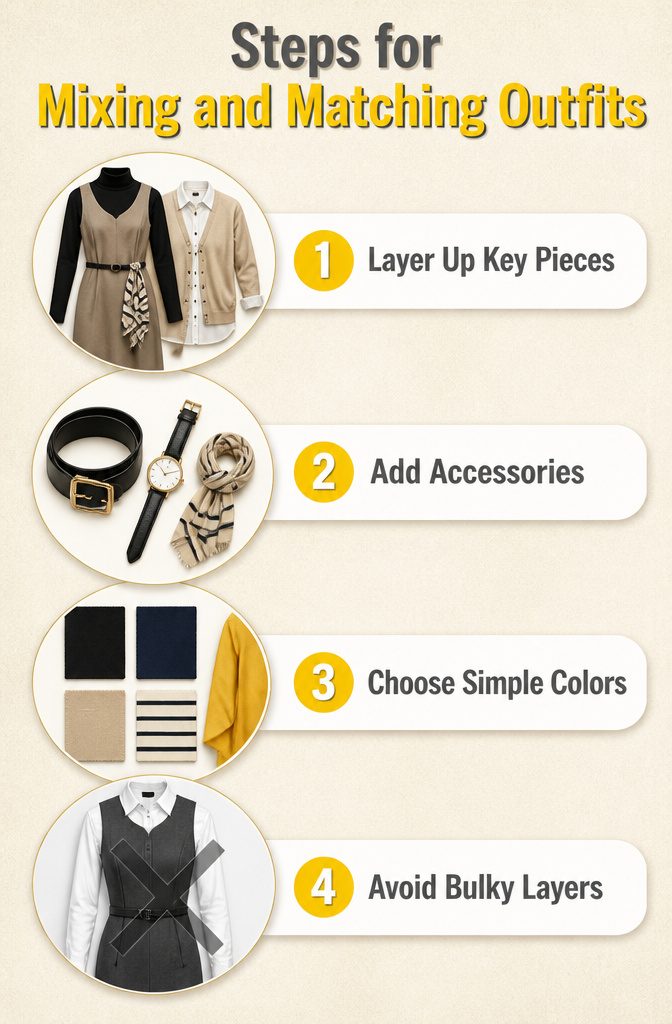
That jump is where a capsule wardrobe pays off, and three formulas have carried most of my mileage. A turtleneck under a sleeveless dress buys an extra season for a piece that would otherwise sit from October through March.
A cardigan over a button-down, with the collar out and sleeves rolled once, reads intentional instead of thrown-on. A long scarf threaded through belt loops adds shape to a boxy dress or tunic when a leather belt feels too expected.
The combination that never worked: a button-down under a fitted sheath dress.
The placket, the collar, and the added bulk at the waist always read lumpy, no matter how thin the shirt. A turtleneck or a bare neck wins that pairing every time.
Color discipline makes the formulas possible.
Black, navy, and beige mix without thought; the striped neutral or the seasonal accent piece plugs in where the outfit needs interest. Simple accessories, a watch or a slim belt, finish the look without requiring a drawer of options.
Frequently Asked Questions
What essential items should I include in a 10-piece capsule wardrobe from Amazon?
Start with a classic white tee, a button-down shirt, a mock-neck base layer, a lightweight sweater, high-waisted jeans, ankle trousers, a casual dress, a denim jacket, a trench coat, and comfortable shoes.
Add a tote bag and a few accessories like scarves or hoops to multiply your combinations without adding bulk.
How can I create a versatile work capsule wardrobe using only items from Amazon?
Build around a crisp poplin button-down from Goodthreads, ponte knit ankle trousers that hold a pressed crease through a 10-hour day, and a trench coat that pulls everything together.
A mock neck layers flat under the shirt, and a pair of clean sneakers or ballet flats handles the commute. Keep the palette to black, navy, camel, and cream so mixing is automatic.
What strategies can I follow to build a capsule wardrobe on a budget under $200?
Spend the most on jeans and shoes since they carry the outfit and take the hardest wear. Save on trend colors and experimental silhouettes; they rotate out fastest.
Is Amazon Prime Wardrobe still available?
No. Amazon discontinued Prime Wardrobe in 2024.
Is there a free Amazon capsule wardrobe?
There is no free program. A $30 tote that fails at six months is not a bargain, while a $22 wool beanie that outlasts a $15 cashmere-blend version saves money over time.
Are Amazon wardrobe capsules worth it?
Yes, if you test construction details the listings hide. Check that sweater cuffs stay smooth past twenty wears, that jeans specify rise from crotch seam rather than size tag, and that ponte trousers hold a crease through a full day.
The pieces that pass those tests replace multiple single-purpose items and cost less per wear than fast fashion that fails fast.
How much does an Amazon capsule wardrobe cost?
One tracked receipt hit $165 with strategic spending on a $45 jean and $38 boots; an upgraded version at $240 used real leather shoes and added a lightweight sweater. The $165 build handled office-to-weekend dressing without issue.