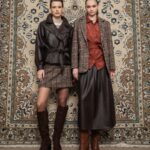
This winter date night edit moves from jeans and a teddy coat to velvet off-the-shoulder and white trousers, with the deciding factor being how much of your evening you actually spend outside.
A strapless tailored top with trousers only works if your path from door to table is short; shorts with tights and boots, by contrast, assumes you are not walking more than a few feet of February sidewalk.
The one I keep returning to is camel over black, the Rafael Coat from Sézane or my own J.Crew find, because the turtleneck fills the neck gap and the color goes with every boot I already own.
1. Cozy Sweaters
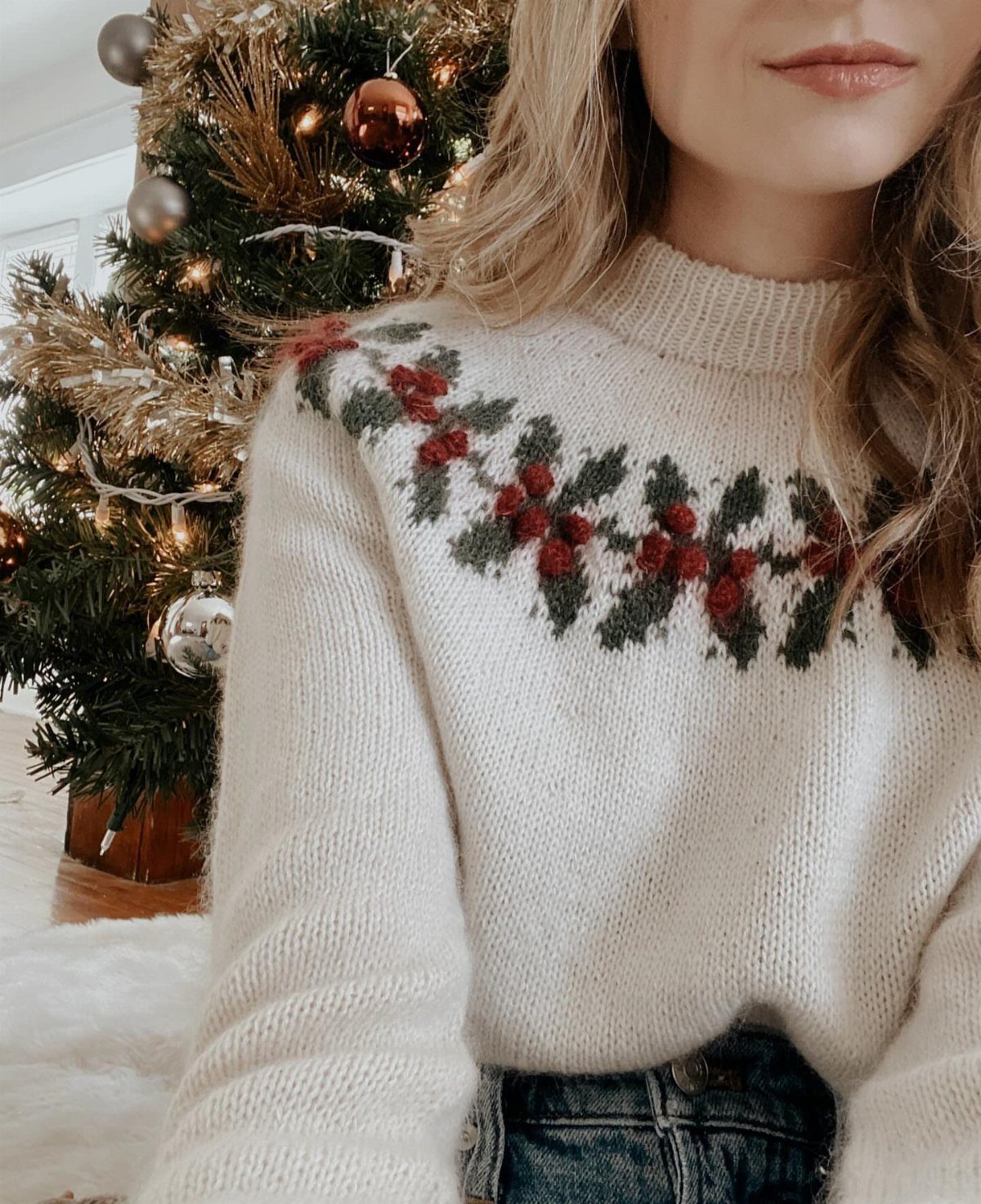
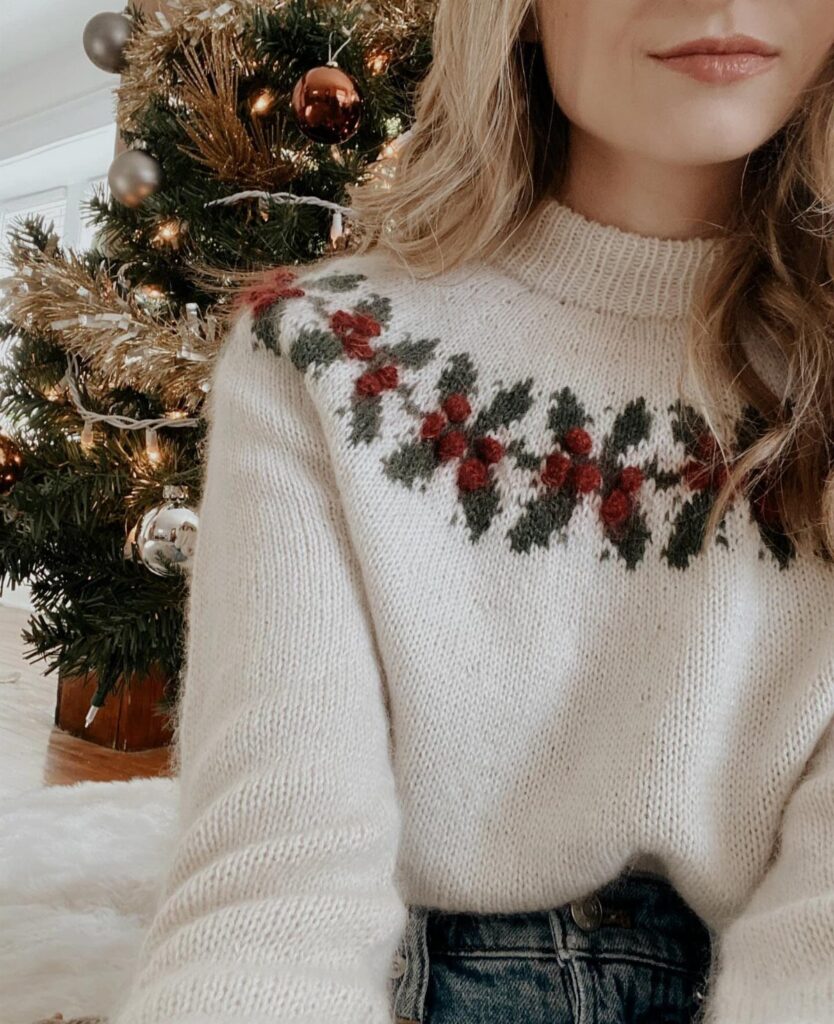
The embroidery does the dressing-up; dark denim underneath keeps it grounded.
Oversized or fitted both play here, though the tuck only works if the knit has enough length.
Check the hem before you buy. I’ve had better luck with fitted crewnecks staying put through dinner; the slouchy ones tend to untuck when I reach for the check.
2. Waterbased Faux Leather Midi Skirt
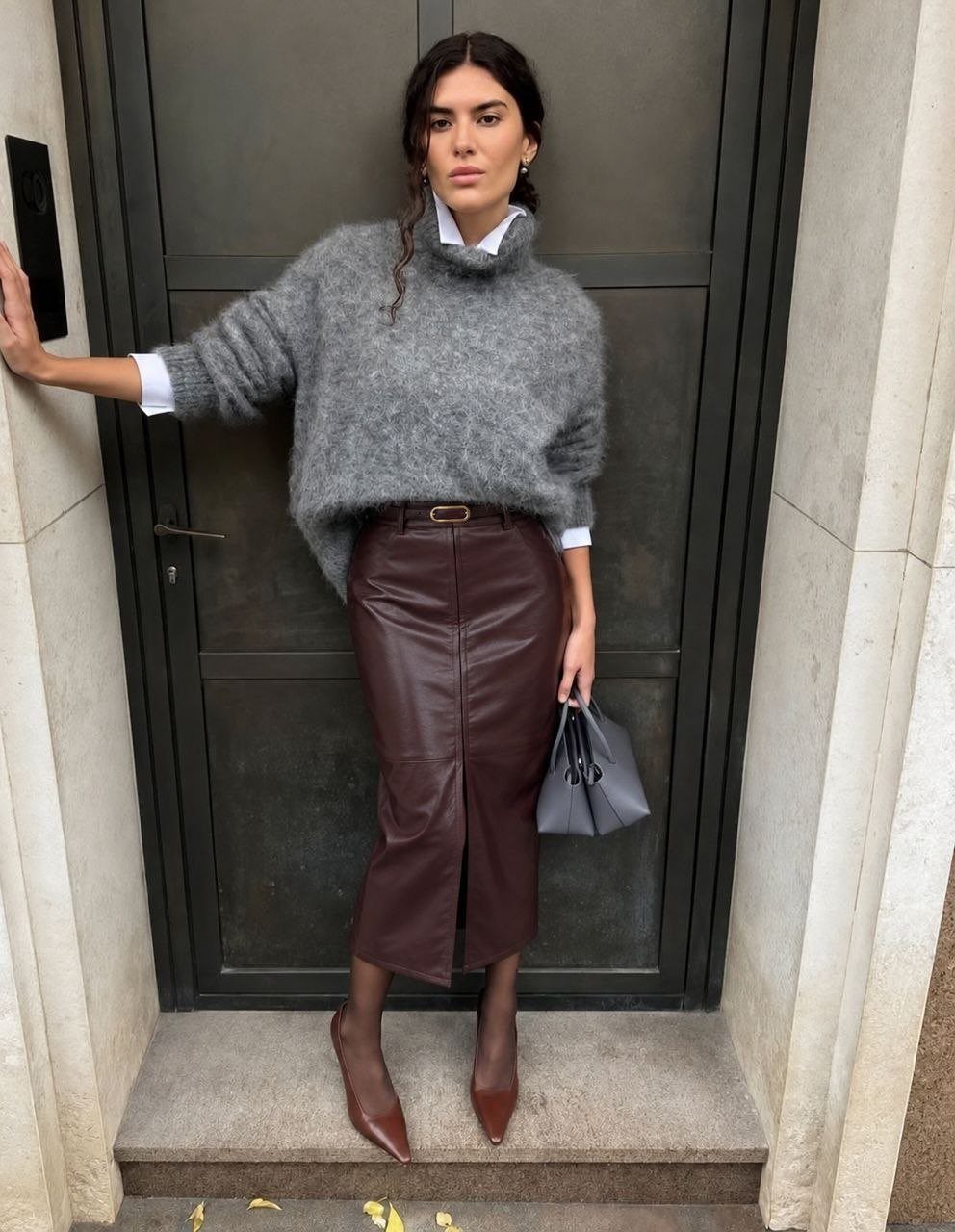
Burgundy leather-look skirt, grey fuzzy knit over a collared shirt: the layers do the warmth, the color does the interest.
Waterbased polyurethane runs softer than solvent-based versions, so this particular skirt probably moves better than vintage pleather did. Worth asking about if you’re shopping.
3. Sweater Dress + Tall Boots
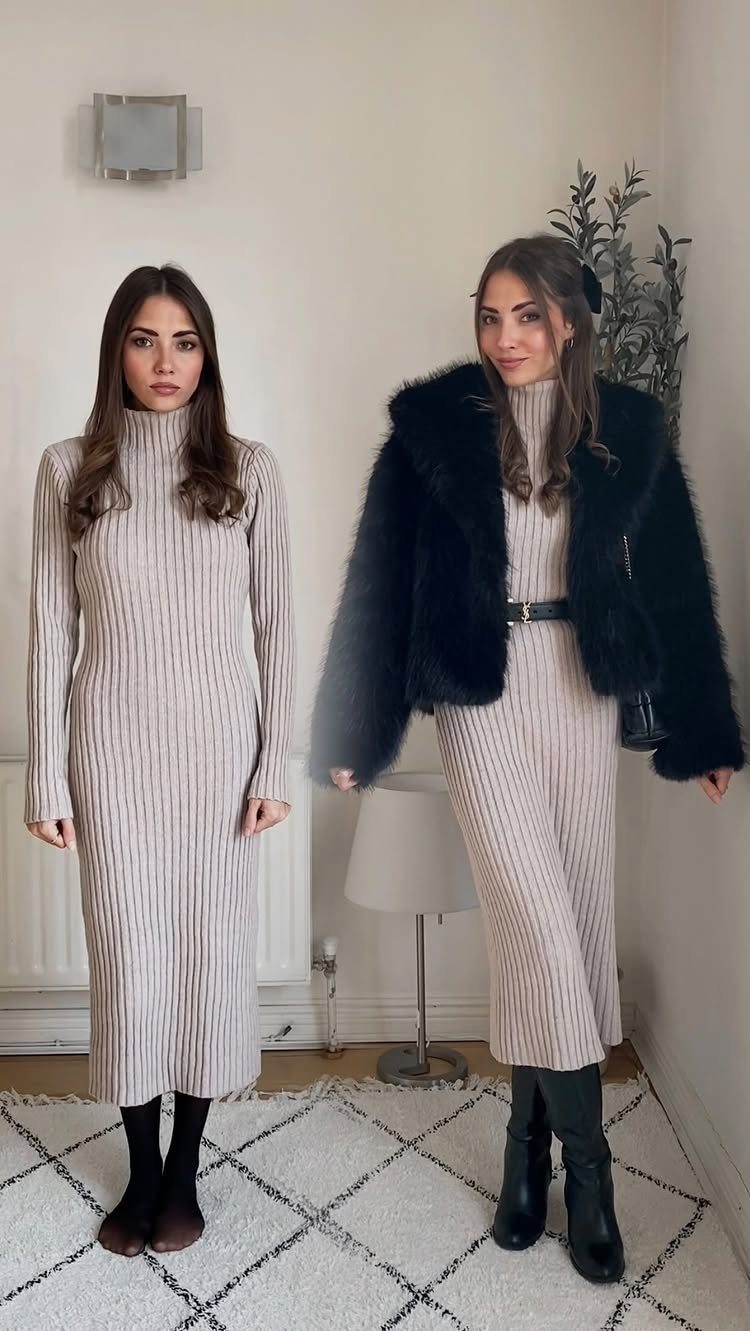
One piece, two accessories, and the outfit is done.
Tall boots handle the leg coverage so you can skip tights on milder nights.
The creator of this particular look added a faux fur coat, belt, mini puffer bag and hair bow for what she calls a "festive touch." I’d lose the bow for January, keep the fur.
4. Strapless Tailored Top + Trousers
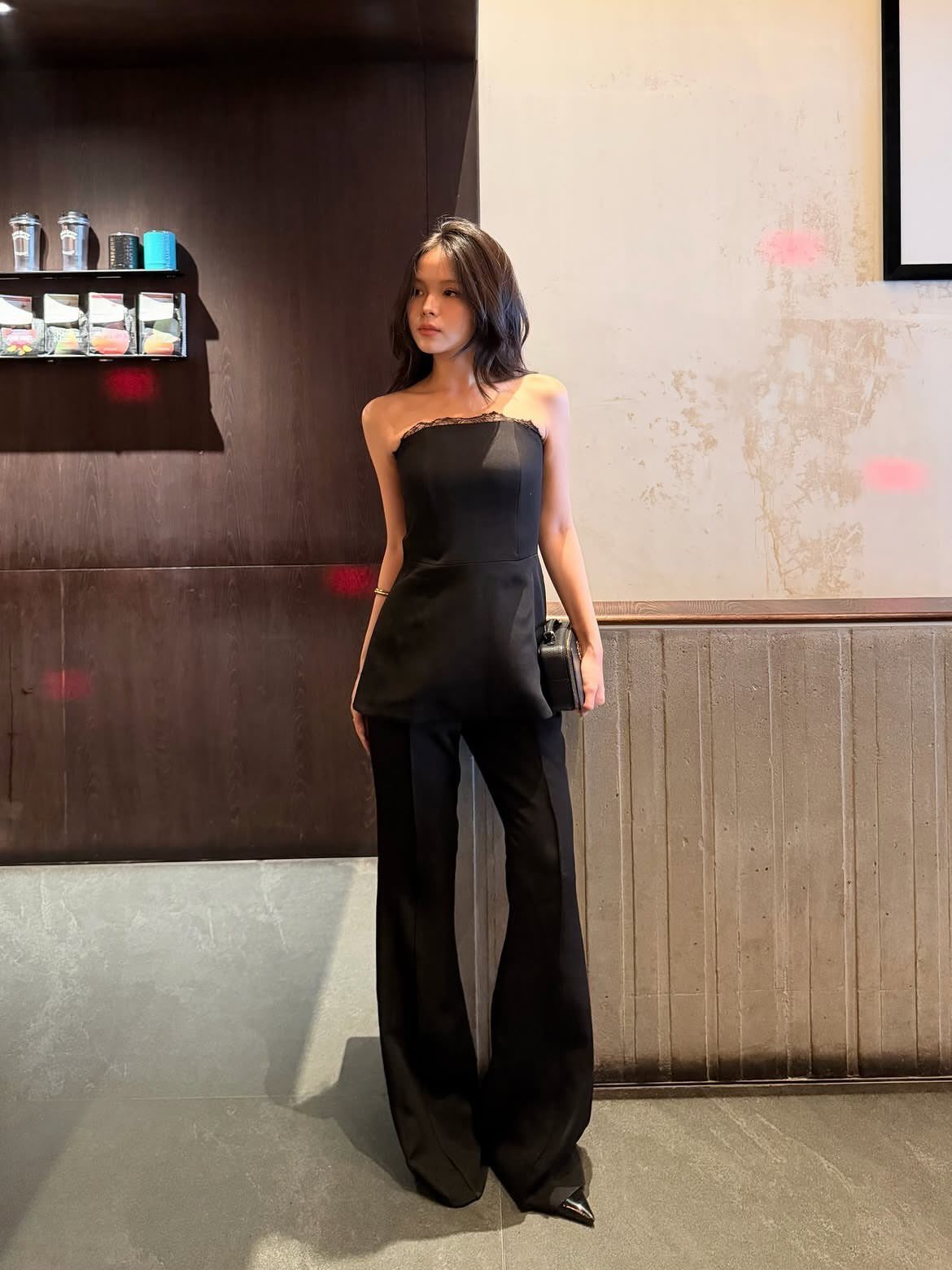
This one assumes indoor dining and a good coat check, or a very temperate climate. The strapless cut reads evening; wide-leg trousers replace your everyday jean without announcing they tried that hard.
My own shoulder coverage rule: if the restaurant walks you past an open door to your table, pack a wrap.
The trousers stay. The top only works with a structured bottom; something slouchy below turns the whole thing into loungewear.
5. Teddy Coats
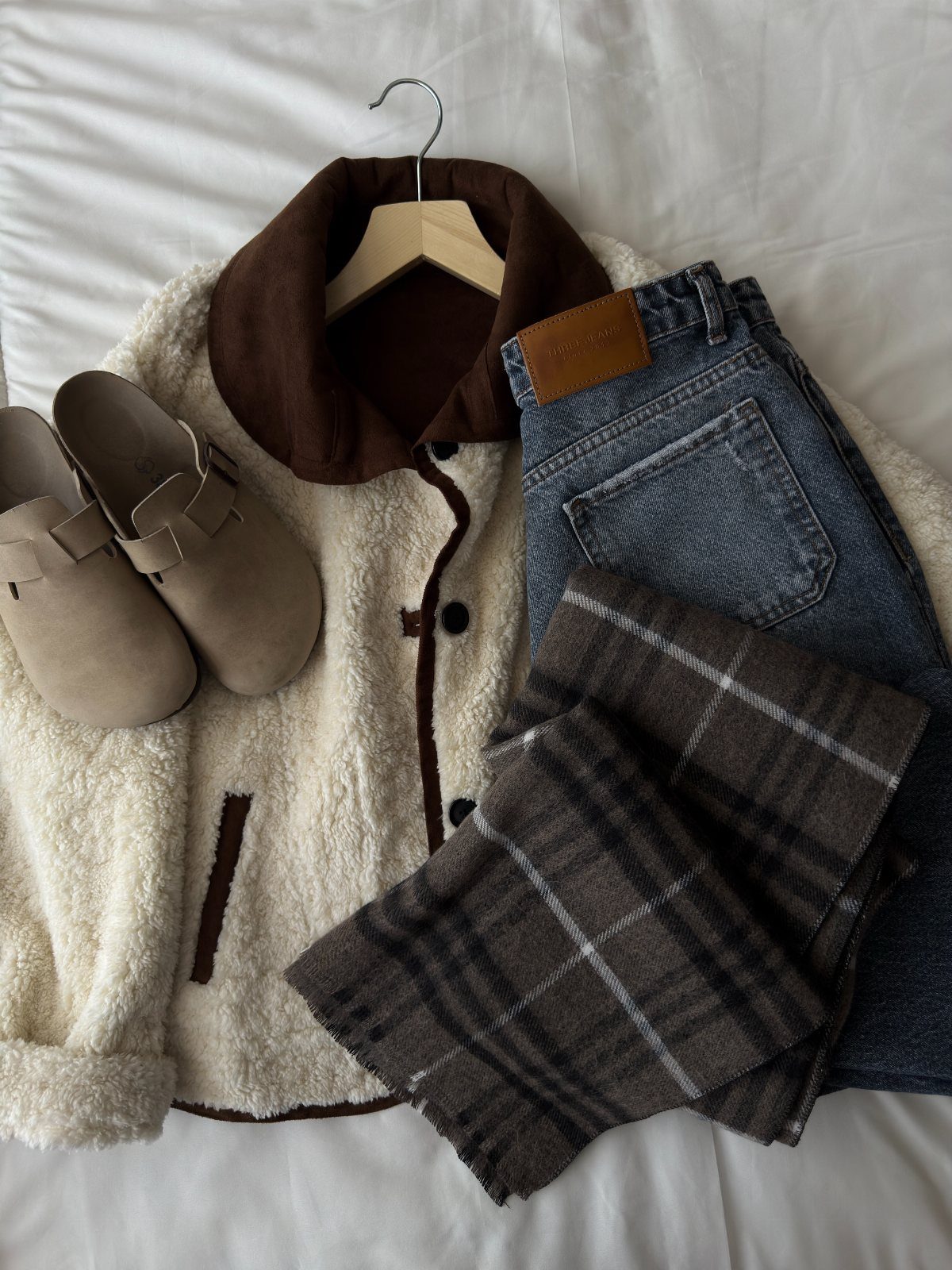
The teddy coat carries an outfit when you have nothing else planned.
Regular blue jeans keep the look simple and let the coat’s texture stand on its own. Tan clogs and a plaid scarf round out a look that reads thought-out when really you grabbed a few warm things.
Indoors, the coat comes off and you’re in jeans and a layer. The coat did the work.
6. Camel Coat and Turtleneck
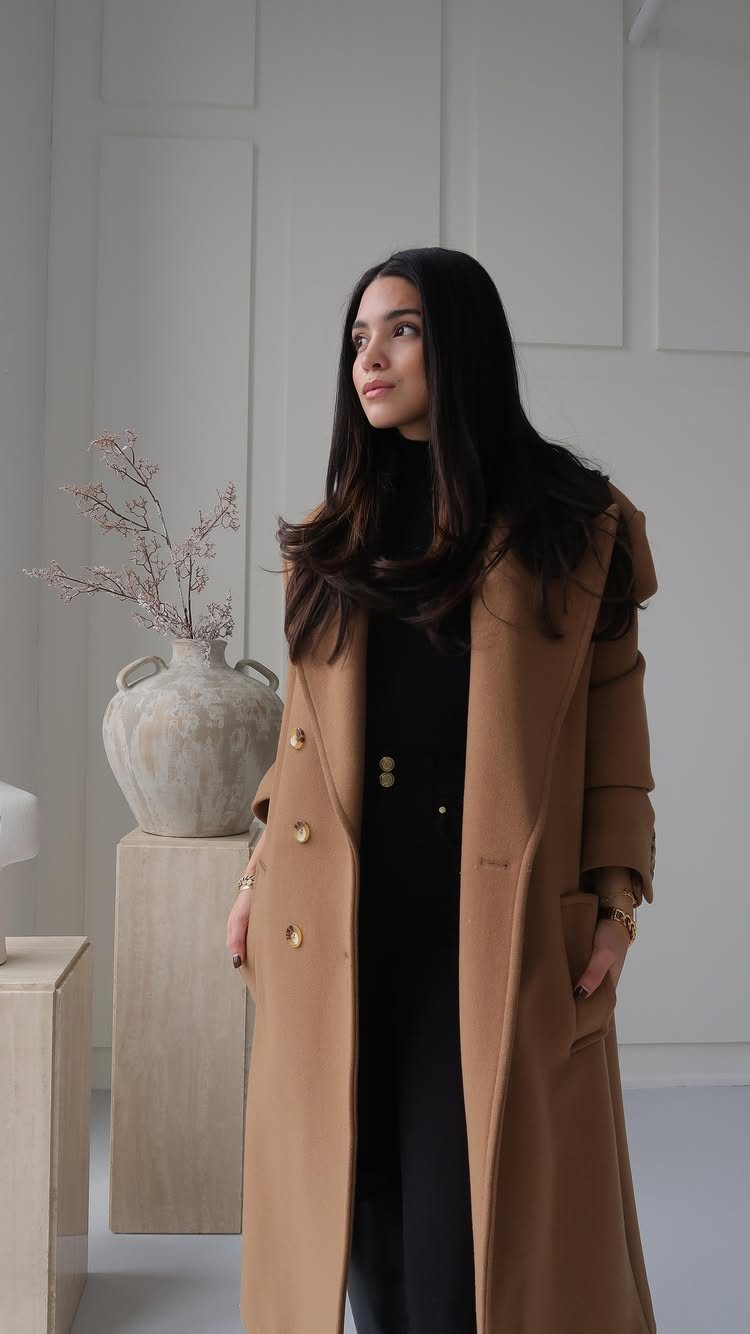
A camel coat over black is the combination I return to most Januarys. The turtleneck fills the neck gap that would otherwise need a scarf; the coat length, visible here past the hip, balances the slim bottom half.
Mine is from J.Crew, purchased after watching a similar cut work on three different body types.
Sézane’s Rafael Coat gets mentioned for longevity if you’re buying now. Either way, the color goes with every boot you own.
7. Belted Wool Coat and Boots
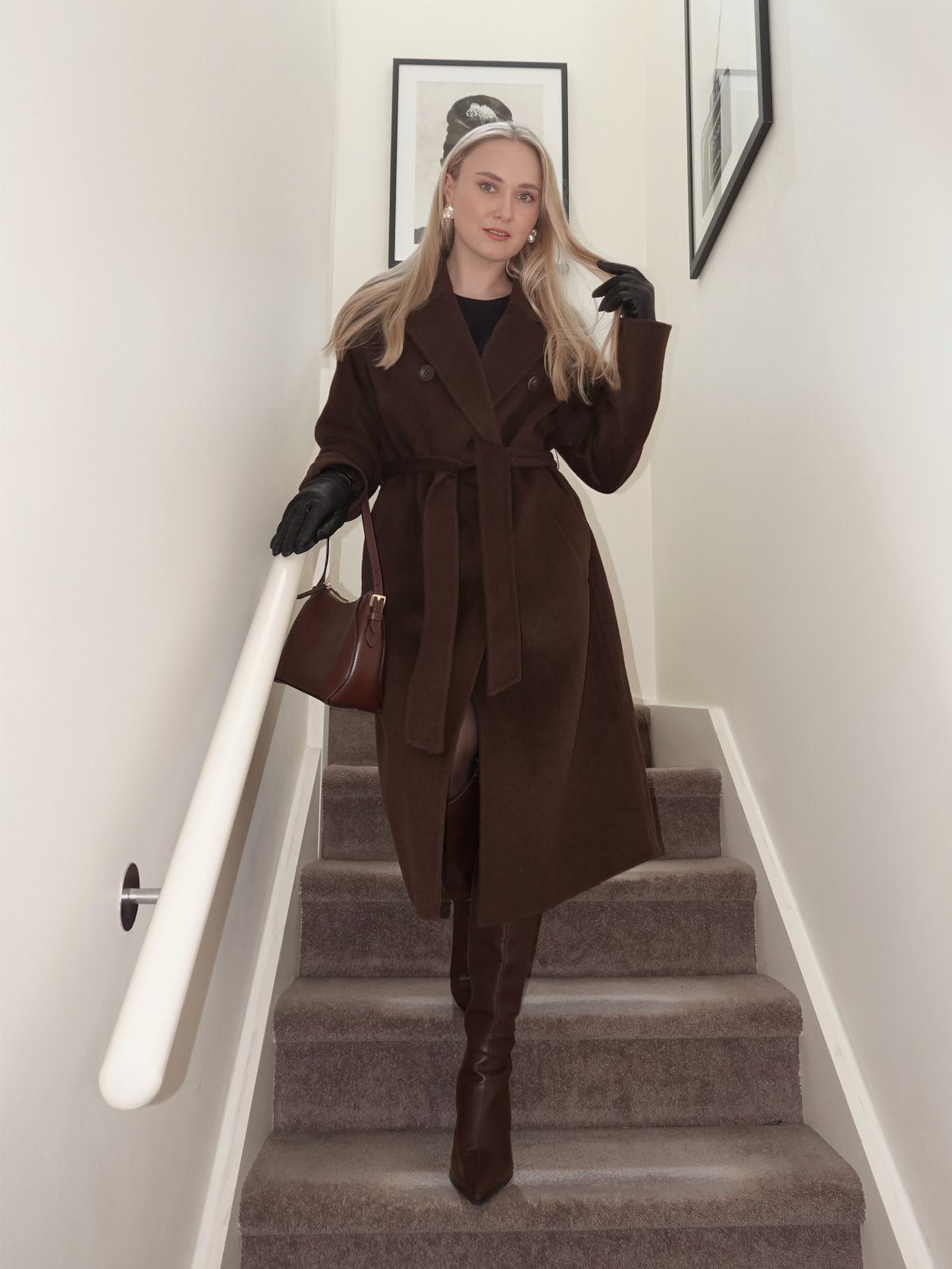
The belted coat gives a shape that boxy cuts lose. Brown leather boots matching the coat turns two pieces into one intentional look.
Bernardo and the Walker Coat at Macy’s both run long enough for this proportion; the belt sits at the natural waist, not lower.
Knee-high boots underneath mean the skirt or dress should hit at or above the knee so the shaft of the boot shows.
For my own body, I check that the belt anchoring point is fixed, not a self-tie that slips after 2 courses. Worth trying seated before you commit.
8. Statement Blue Coat with Denim
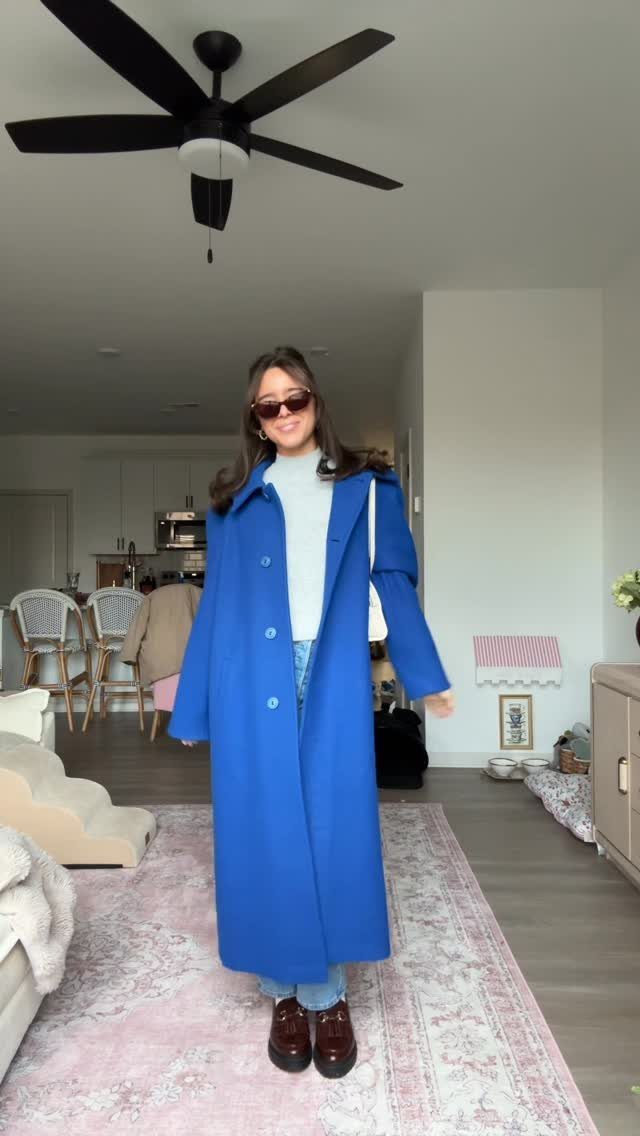
A coat this loud does the planning for you. Jeans and a quiet sweater underneath become the supporting act.
The color visible is cobalt, not navy, which means it reads even under streetlights. Loafers keep it flatter than heels would; you lose some leg length but gain ease between car and table.
I would not add a second bright piece, not even a bag. The coat owns the room.
Sézane’s Rafael Coat is the one I point friends toward for longevity in a neutral, but for this particular idea, the color is the point. Buy the coat first; everything else fills in around it.
9. Faux Fur Coat with Jeans
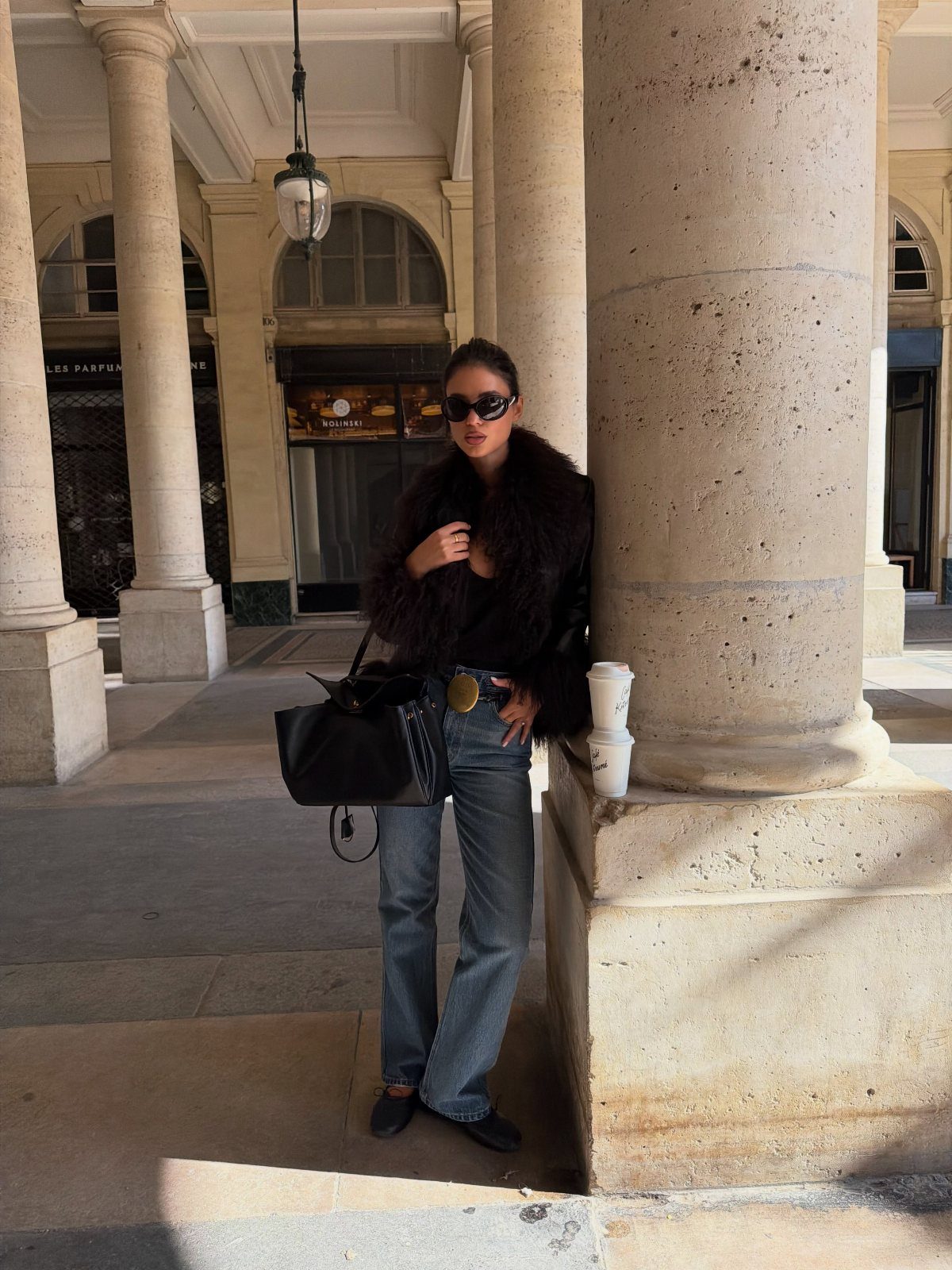
Faux fur adds instant texture to the most ordinary jeans. The black coat here is mid-length, hitting past the hip, which matters more than the exact finish.
Cheap faux fur can read matted or plastic; the one to look for has varied fiber lengths that catch light differently. The jeans should be clean-lined below all that volume, no distressing or heavy wash.
This is the coat that turns a basic dinner into an occasion. The effort is in the purchase, not the styling.
10. Blazer with Shorts and Tights
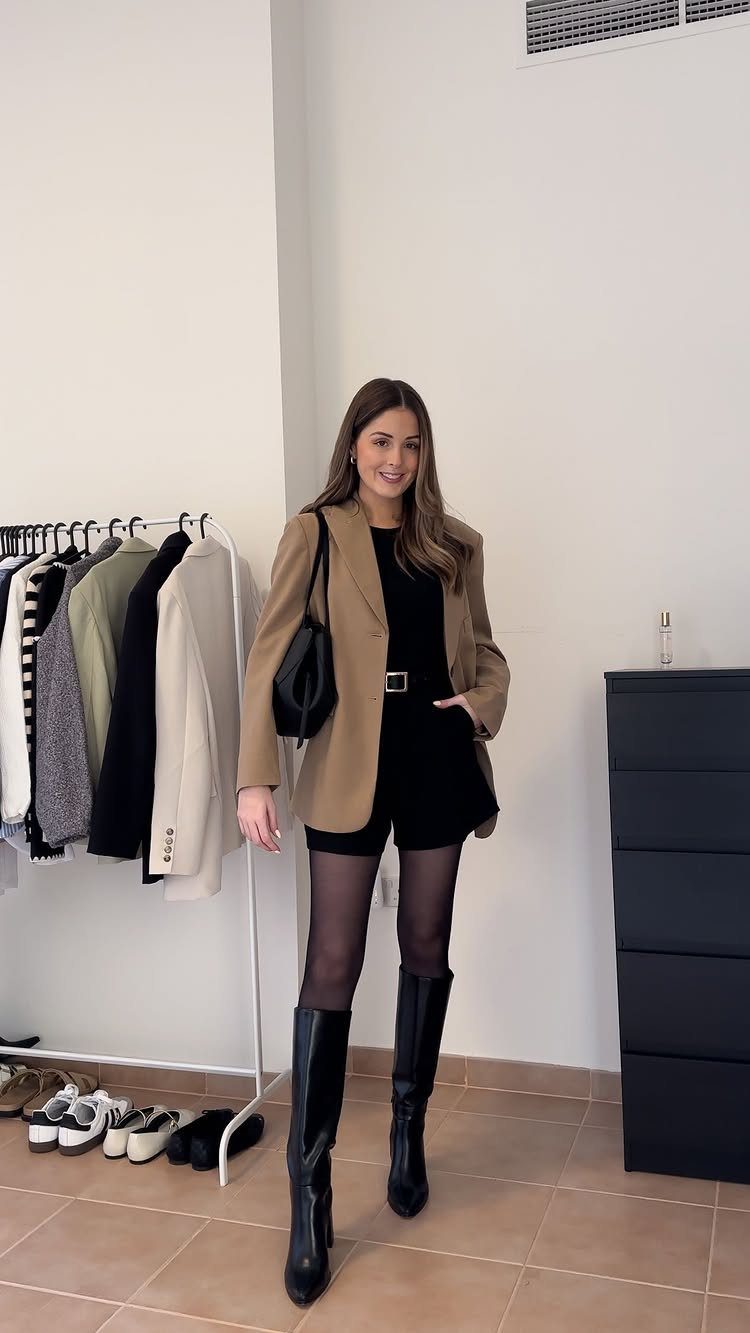
Shorts in winter only work with tights this sheer, not opaque. The line between hosiery and bare leg is what keeps it from feeling like you forgot your pants.
A tailored blazer above the shorts keeps the silhouette office-adjacent; the shorts themselves sit high on the waist with a belt.
The boots need to hit at or above the knee so the gap between boot top and short hem is minimal. I count 2 fingers of visible thigh at most, or the proportion goes off.
Not for a February sidewalk stroll.
11. Off-the-Shoulder Velvet Top and Trousers
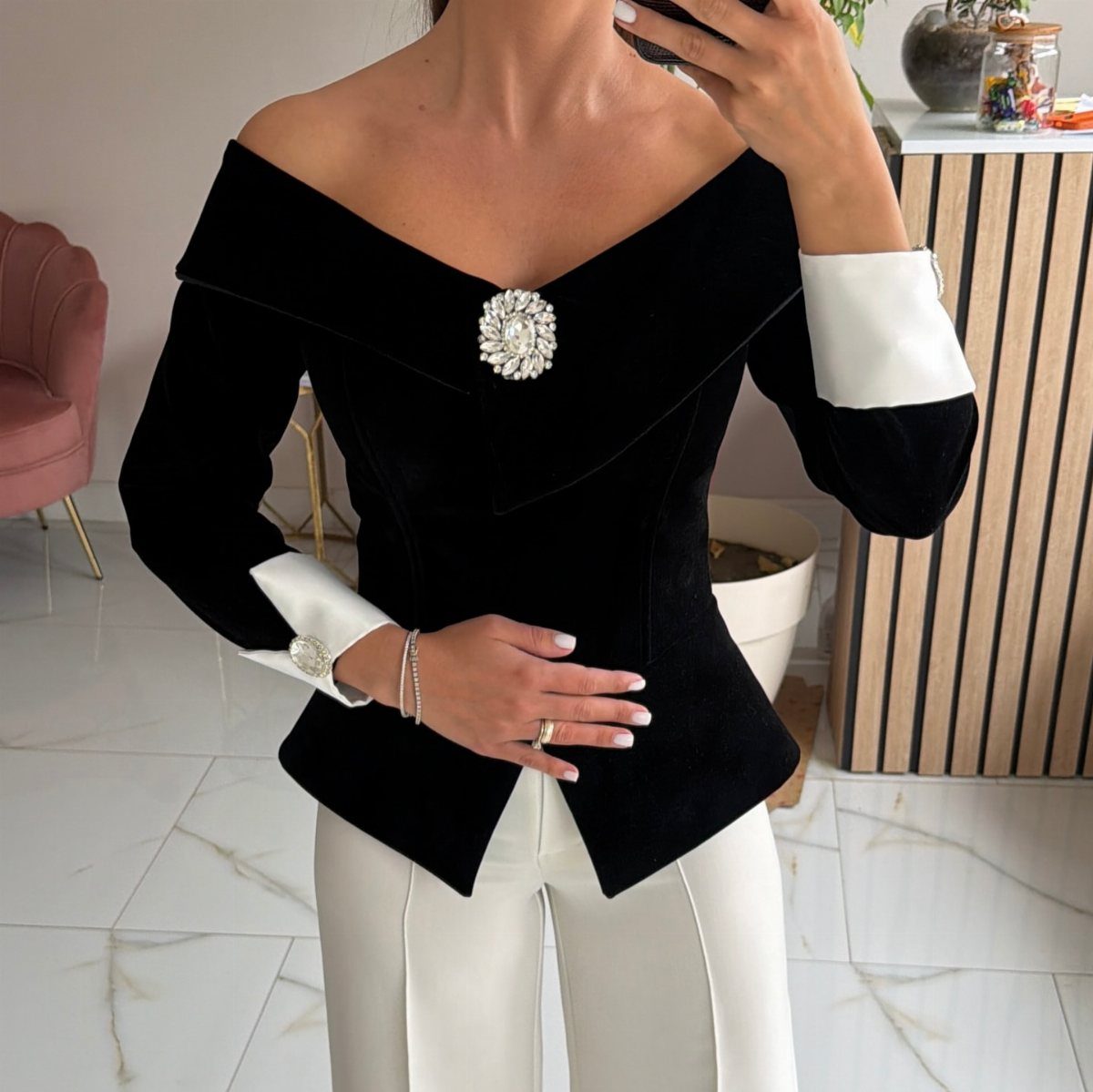
Velvet off the shoulder reads formal in a way sheer never quite does. The white trousers here keep it from sinking into evening-only territory.
Wide-leg trousers balance the bare shoulder and give somewhere for the eye to travel. I would avoid jewelry at the neck; the neckline is doing that work.
The top stays for dinner.
12. Wide Leg Denim
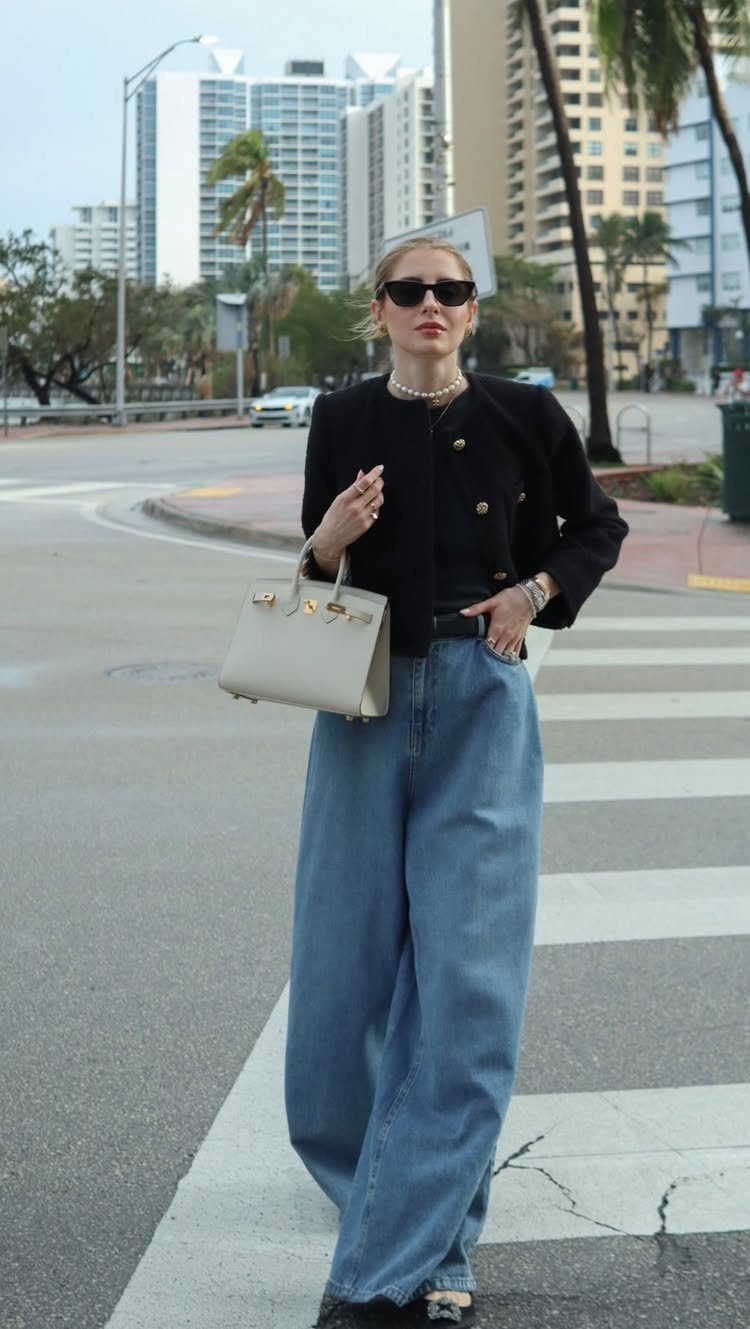
Wide leg denim is the single best argument against skinny-jean fatigue. The high waist and full leg pair with anything fitted on top; the cropped jacket here shows the waistband, which is the entire point.
Boots should have a slim shaft or they compete with the hem.
I have found that one wash lighter than true indigo works best for evening; it reads cleaner under indoor light than a workaday dark rinse. The bag should be structured, not slouchy, or the whole thing tips too casual.
A polished alternative that still lets you breathe at dinner.
Choosing the Right Fabrics
Wool, cashmere, and knit blends are the materials that actually keep you warm when the restaurant patio door sticks open or the Uber takes longer than expected.
Avoid anything sheer or lightweight cotton against your skin; it will not hold warmth past the coat check.
Stiff fabrics that restrict movement are another skip, since winter dates involve more contortion than summer ones: coats on, coats off, bar stools, booth seats.
For dresses, which the notes confirm still work, a cashmere or wool coat is the practical necessity. The fur or faux fur at the collar is optional warmth and visual weight; the insulation underneath is not optional at all.
Accessorizing for Winter
Scarves, gloves, and hats are functional first.
A chunky knit scarf adds texture; a wool scarf lies flatter for tailored coats. Leather gloves in a neutral tone match most winter palettes; fingerless fur gloves trade some coverage for practicality with phones and keys.
Earmuffs are worth considering if hats flatten your hair or you are between indoor and outdoor spaces often. They read slightly playful, which may or may not suit the tone you are after.
Socks are part of the layering system, not an afterthought. The wrong thickness blisters or slides; the right one extends the wearable range of shoes you already own.
Bags and jewelry are secondary in cold weather. A slouchy faux suede bag adds texture but will not get you through a walk from the parking garage.
Dressing for Different Date Types
Loafers or ankle boots finish it without effort.
An elegant dinner allows more formality: the little black dress works here, with a wool or cashmere coat that actually insulates. The coat is doing double duty as warmth and first impression; the doorstep linger is built into the calculation.
For anything in between, match the coat to the longest unheated stretch of the evening.
A bar with a coat check and interior seating permits thinner layers beneath; a walking date or outdoor waiting area requires the full system. Choose for the coldest moment you will actually experience, not the ideal version of the night.
The key to a memorable winter date night outfit is to incorporate outerwear that feels intentional rather than obligatory, worn over pieces you’re excited to reveal once you’re inside.
— Elle
Layering for Warmth
Start with a thin merino or cashmere layer against skin.
The mid-layer traps warmed air. This is where fitted knits and light sweaters sit; they need to be close enough to hold heat without the bulk that would show under the top layer.
The outermost piece is the visual statement and the windbreak. A bold coat or jacket finishes the look and seals the system.
Accessories sit at the edges where heat escapes fastest: neck, hands, head.
The sequence is base, trap, seal, then plug the gaps. Each layer has a specific job; doubling up on one while skipping another leaves you adjusting all evening.
Frequently Asked Questions
How to dress up for a date in winter?
A dress and tall boots carry most winter date nights with minimal effort; add a faux fur or bold coat for the walk in.
Casual winter dates work with dark jeans, a fitted sweater, and a jacket that reads dressed-up: teddy or faux leather both keep warmth in without reading like you left the house in what you slept in.
The coat does the heavy lifting: choose wool or cashmere for actual insulation, not just the idea of it.
How can I stay warm and stylish?
Layer in 3 jobs: a thin breathable base against skin, a fitted mid-layer to trap air, and a bold outer coat as the visual statement and windbreak.
A scarf, gloves, and hat close the gaps where body heat actually leaves: neck, wrists, head. Every layer does one job; two sweaters and no base layer means you’re peeling or shivering by the time the check arrives.