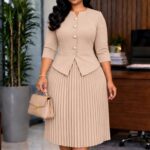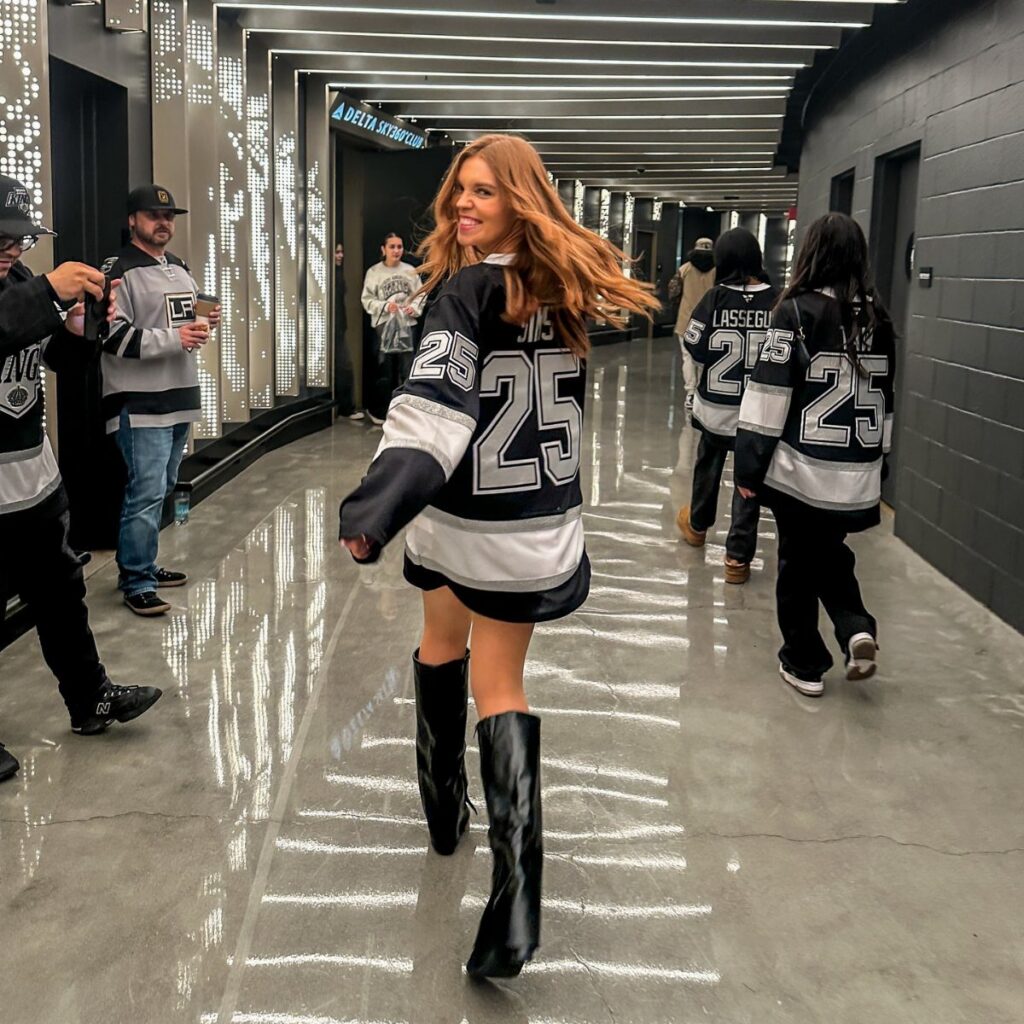
A fleece-lined legging under a jersey dress and a full houndstooth skirt suit both made my list, and your seat assignment is what decides which one I would actually wear.
The thigh-high boots and belted Kraken jersey are on my list for lower-bowl seats, while the cropped puffer over jeans with real arch support is what I would pick for upper rows or standing-room crowds.
The cream jacket and Vancouver cap is your shortcut when you are coming straight from brunch and the ice does not care whether you planned this or not.
1. Team Jersey with Jeans
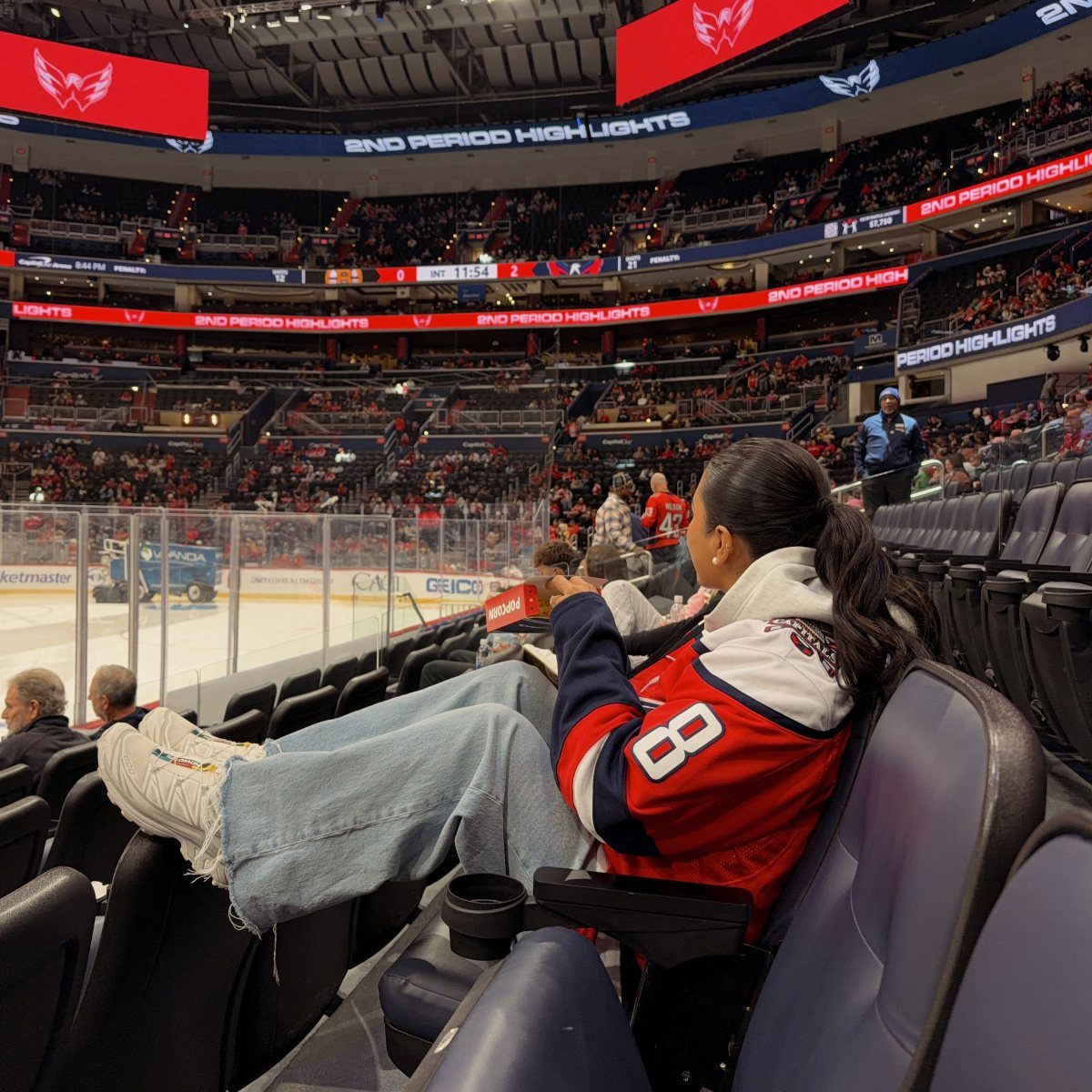
A jersey layered over a hoodie is the combination I find myself suggesting most, since it solves both warmth and proportion at once.
It solves the arena’s big problem: you need layers you can peel off when the crowd heats up, then pull back on during intermission.
Go oversized on the jersey so it fits comfortably over whatever base layer you choose.
Black skinny jeans keep the silhouette cleaner than a baggy cut, though either works; white sneakers ground the look without fighting the jersey for attention. A team beanie finishes the look and actually matters for warmth near the ice.
If you want more structure, add a cropped puffer on top, but size up so it closes over the jersey bulk.
2. Skirt and Jersey
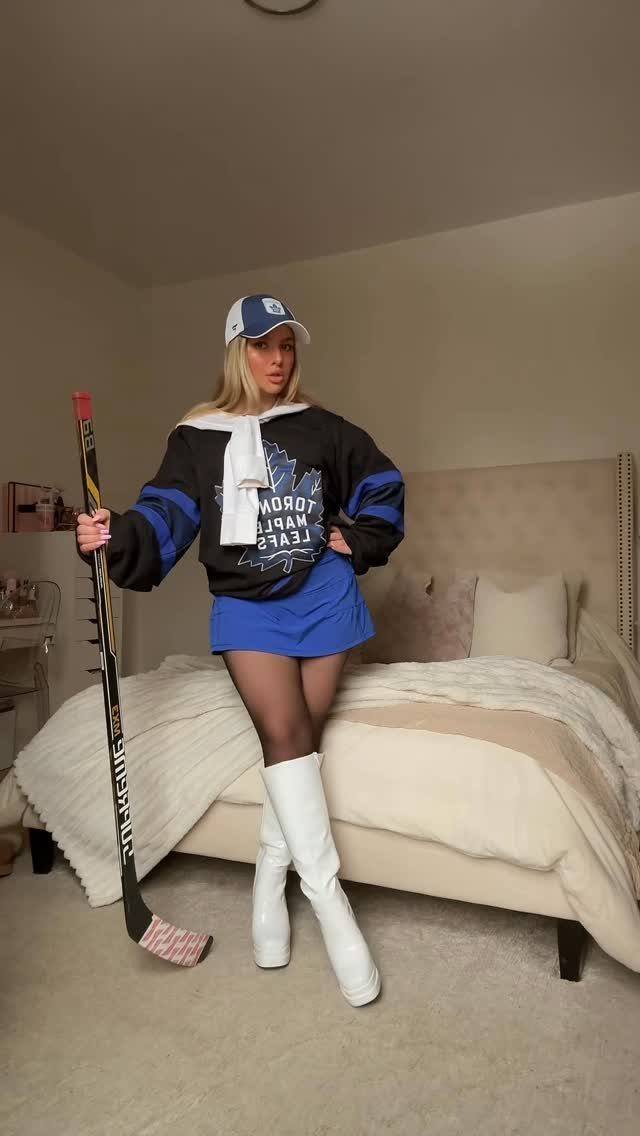
A skirt at a hockey game only works if you commit to the tights. Thick high-denier pairs, not the sheer kind, are what keep this from becoming a mistake you feel by the second period.
Tuck the jersey in or half-tuck it, then add a skirt and knee-high boots for coverage and a heel you can walk in across concrete floors.
The blue skirt and white boots against that Leafs jersey give it a deliberate color-blocked feel. A bright puffer in team colors works as your outer layer and carries the spirit when the jersey gets covered.
Heeled boots are fine if you’ll mostly be sitting; if you’re climbing stairs or standing in concession lines, swap for flat knee-highs.
Opaque tights are backup for especially cold rinks, and I would not skip them in a building you don’t know yet.
3. Jersey as a Dress
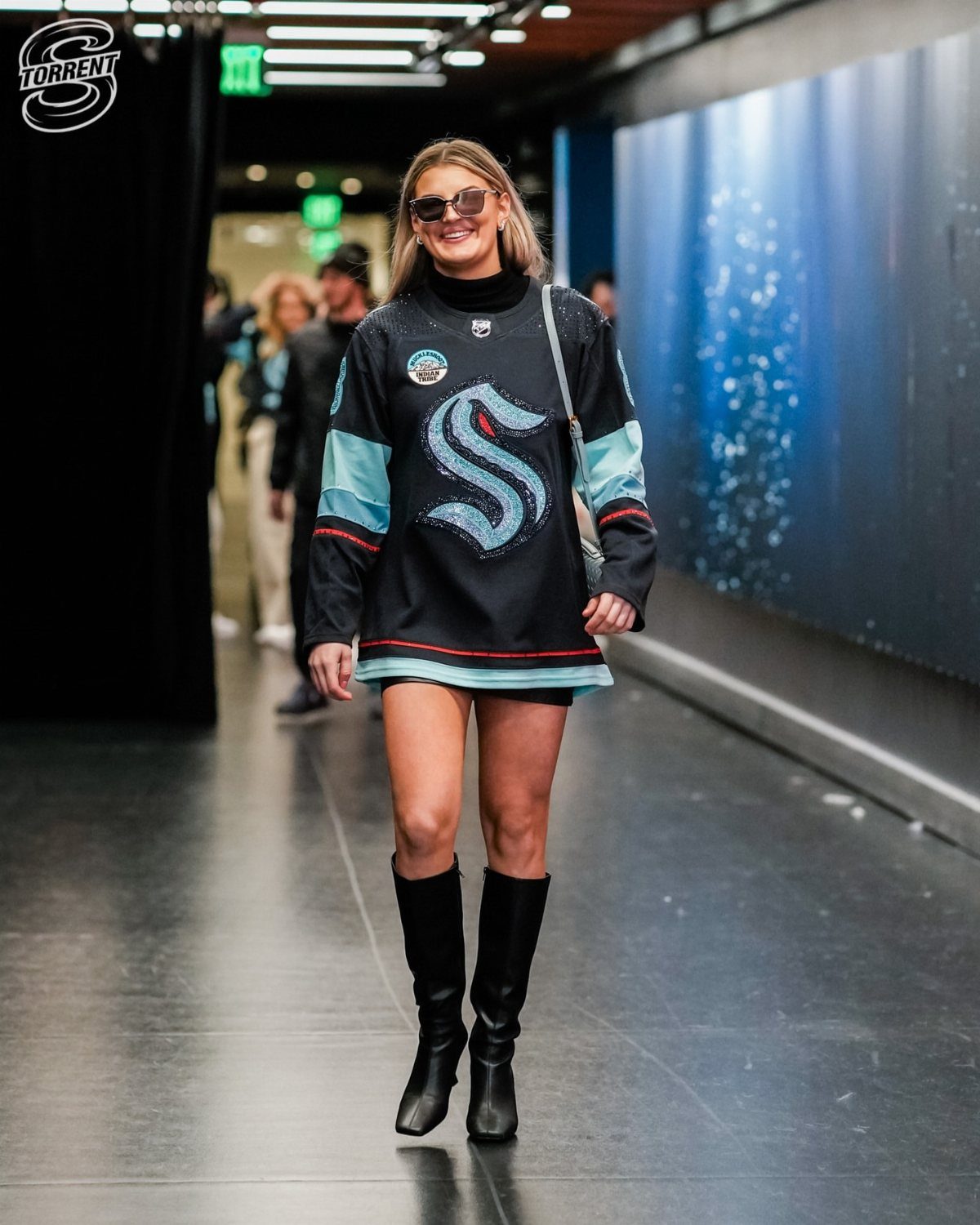
Wearing a jersey as a dress is the kind of idea that looks effortless in photos and requires more planning than it appears.
The Seattle Kraken jersey here hits mid-thigh with room to spare, which is the length you need; anything shorter and you’re in tunic territory, anything longer and the proportion goes sloppy.
Thigh-high flat boots do the warming, not the styling, so choose ones that stay up without constant adjustment.
Fleece-lined leggings underneath give you invisible insulation; sheer tights read better but surrender fast in a cold arena. A thin belt at the waist keeps the shape from overwhelming a smaller frame.
This one trades some practicality for the look. I would not wear it to a game where I’m mostly standing in the upper rows, but for lower-bowl seats with minimal climbing, it works.
4. Jersey with Leather Shorts and Tights
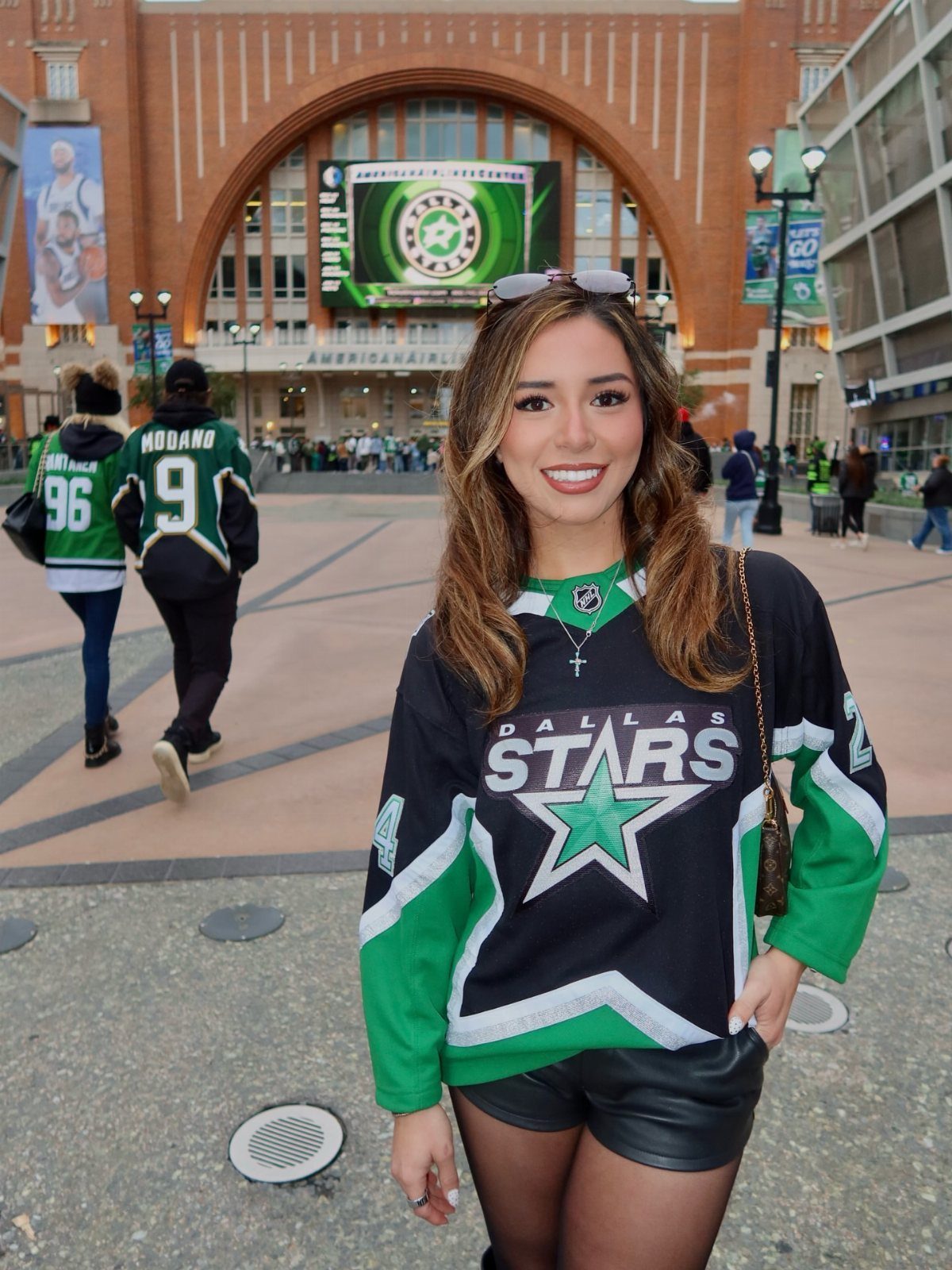
The Dallas Stars jersey against black leather shorts and tights is the most nightlife-ready of the jersey-based ideas. The leather gives it an edge that reads intentional rather than leftover-from-the-gym.
Sheer black tights are what most photos show; for actual arena temperatures, you would want to move up to something thicker or add fleece-lined leggings underneath.
An open jersey over a hoodie, with faux leather leggings and combat boots, keeps the same mood while layering more strategically for warmth.
I like this best for games that start later, when the temperature drops outside match the temperature inside.
The shorts length and boot choice are where you decide how much leg you want to commit to; longer boots, even ankle height, add coverage without changing the look.
5. Team Bomber Jacket with Jeans
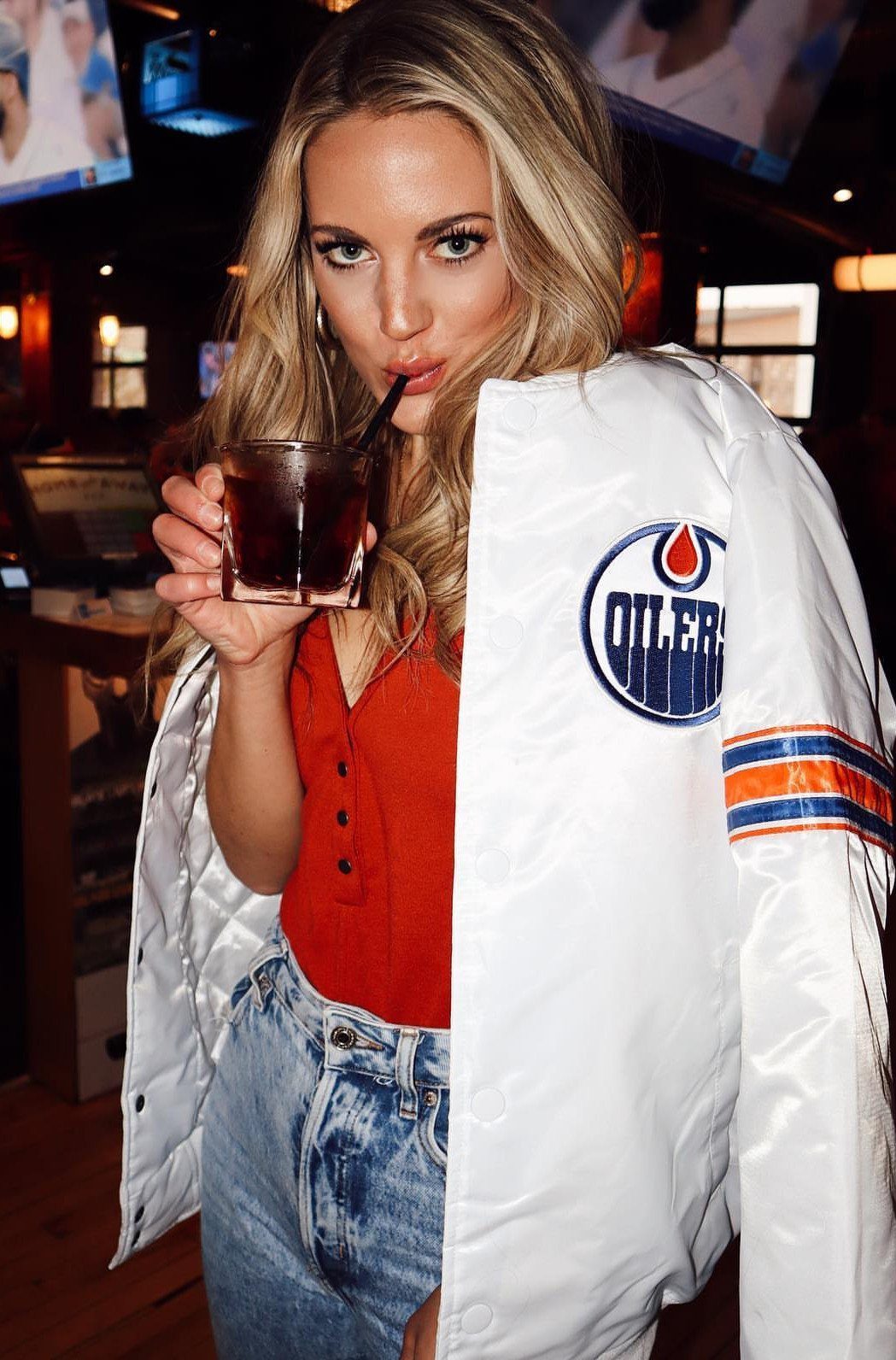
A team bomber reads as more polished than a jersey without trying much harder. The white Oilers version, worn with light-wash jeans and an orange top underneath, keeps the color story tight and shows the logo clean.
Quilted bombers add texture that works under arena lights; a diamond pattern catches light better than flat nylon.
Layer a thin turtleneck beneath for neck coverage without bulk, and choose cargo jeans or straight denim depending on whether you want the utilitarian edge or something more classic.
Platform boots or chunky sneakers finish it; the slight lift in the boots matters less for sitting than for walking through a crowded concourse.
A bomber jacket in team colors gives instant spirit without looking like you tried too hard. I would grab the team-logo version every time; it ties the outfit together and covers the one part of you an indoor jacket won’t.
6. Custom Denim Jacket and Beanie
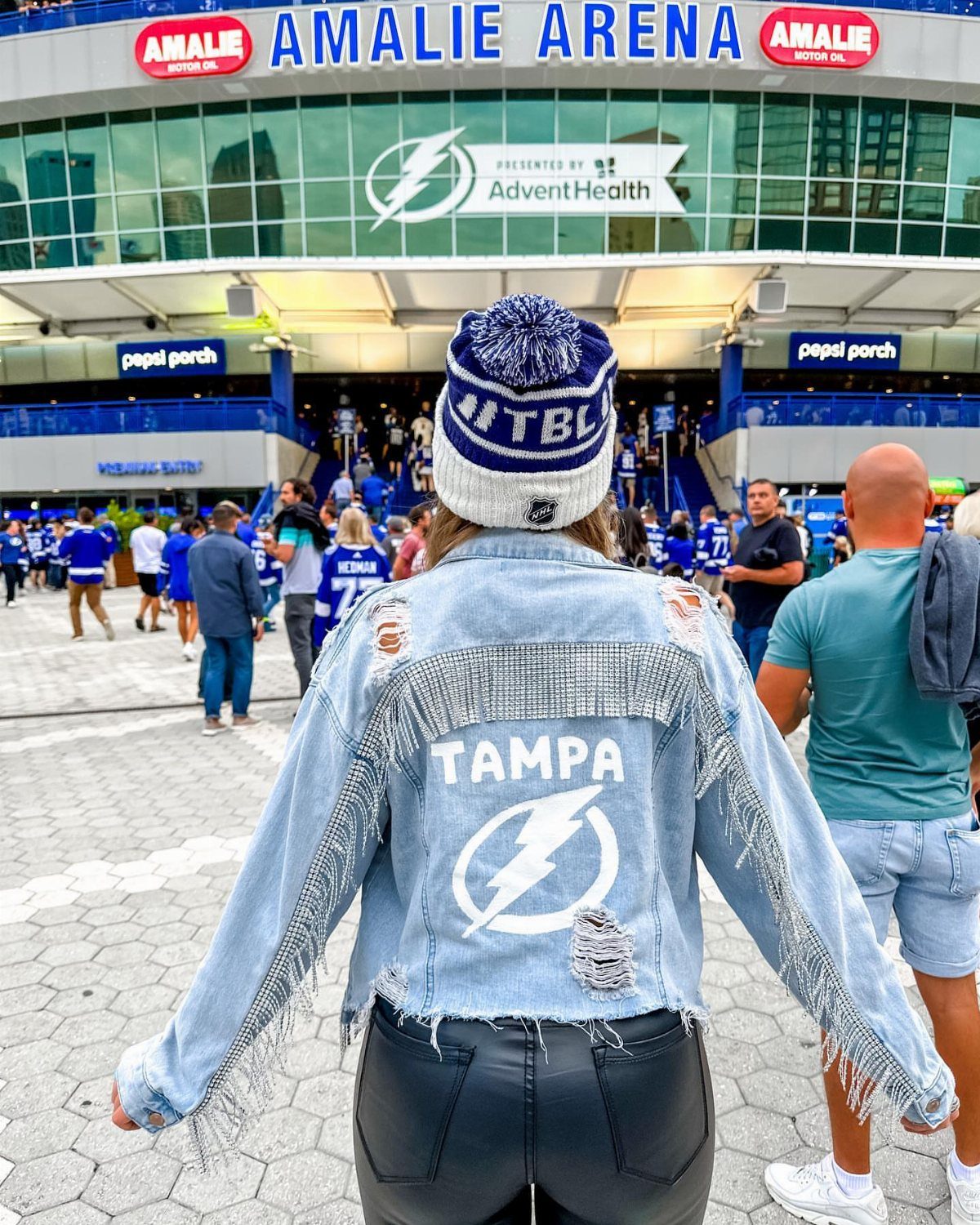
The fringe denim jacket with Lightning branding is custom work you cannot buy off a rack, but the idea translates.
Any light-wash denim jacket with team patches or pins gets you partway there; fringe adds movement that shows up in crowd photos.
Black pants underneath keep the base simple and slim, which matters when the top layer has this much going on. A knit beanie pulls the colors together if you choose it in team shades, plain or not.
I would check the fringe length before wearing this to a game with tight row spacing. Anything past mid-thigh catches on seats and drinks trays.
7. Jersey with Faux Fur Coat
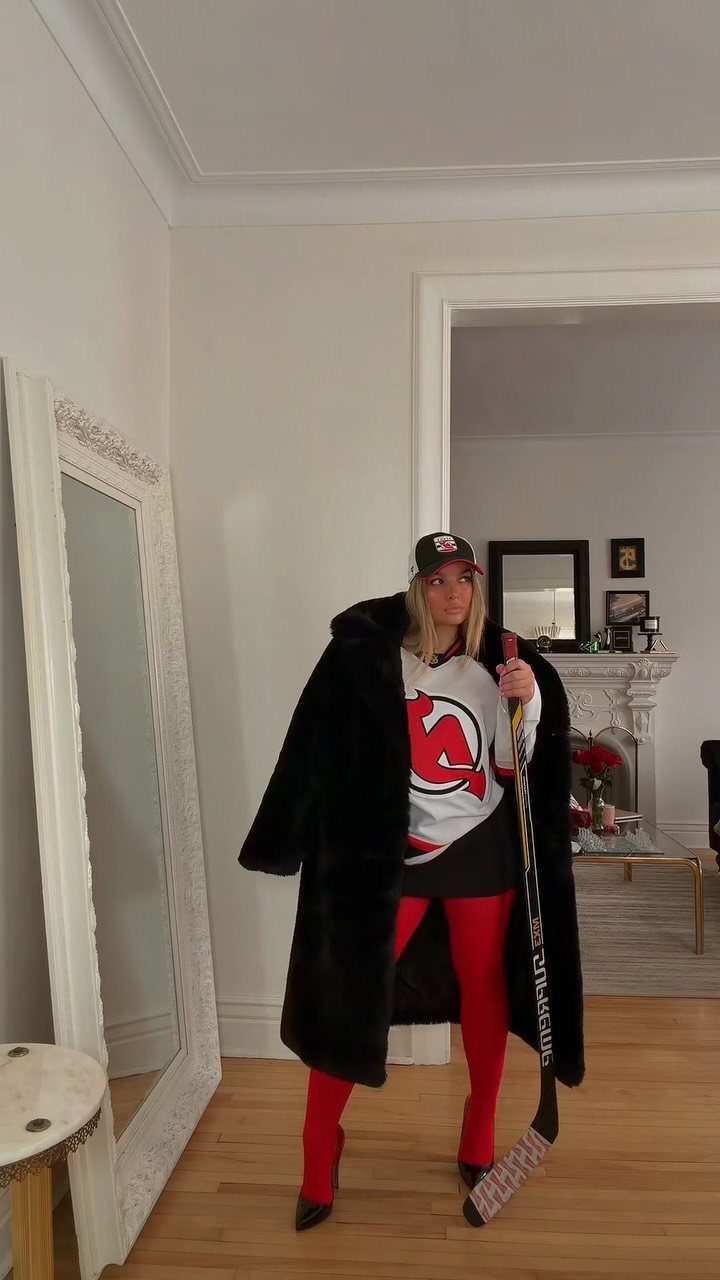
A faux fur coat over a jersey is the outfit that gets noticed in crowd photos, though the real win is how well the fur traps heat near the ice.
Black fur keeps the outer layer neutral so the jersey and tights can carry the color. The red tights in the Devils color scheme do the team work; without them the coat would read evening-out rather than game-night.
Heels are fine for short walks to seats but I would swap for flat ankle boots if stairs or standing are involved.
Fleece-lined leggings underneath add invisible warmth without changing the silhouette. The fur length matters: cropped hits at hip level and stays clear of drinks, floor-length gets into everything by the third period.
8. Cream Jacket and Baseball Cap
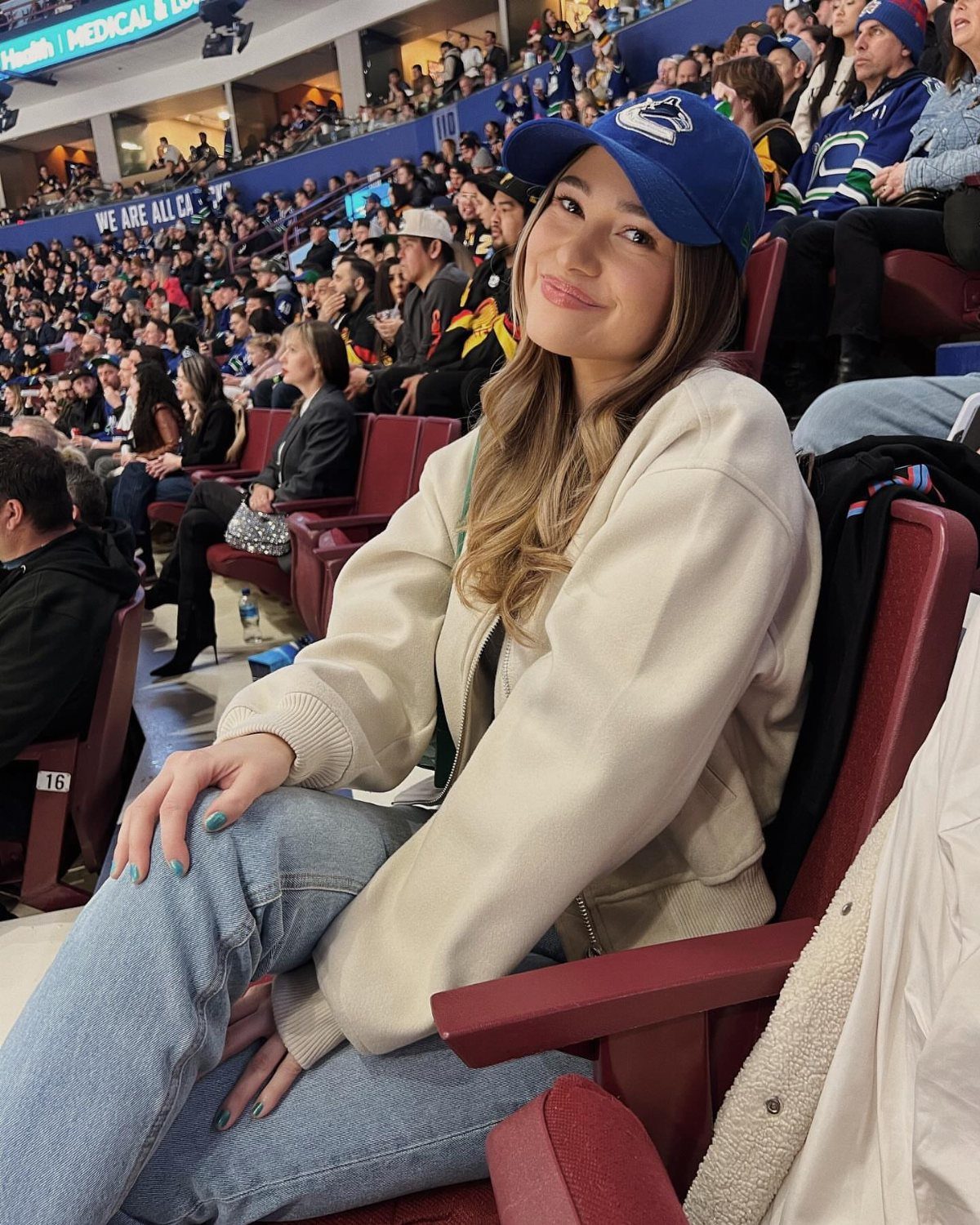
A cream jacket and team cap is the lowest-effort way to look like you planned this, and it works for games where you are coming straight from other weekend plans.
The bomber or quilted cut in cream reads cleaner over light jeans than a darker shade would; it reflects arena light rather than absorbing it.
The Vancouver cap carries the fan signal so the jacket can stay neutral and reusable. White sneakers keep the palette continuous, though a scuffed rink floor will test them by the final horn.
I would size the jacket to fit a thin hoodie underneath; the layer matters more than the silhouette here.
The cap is doing most of the team work, so any cream outer layer you already own gets you most of the way there.
9. Houndstooth Skirt Suit
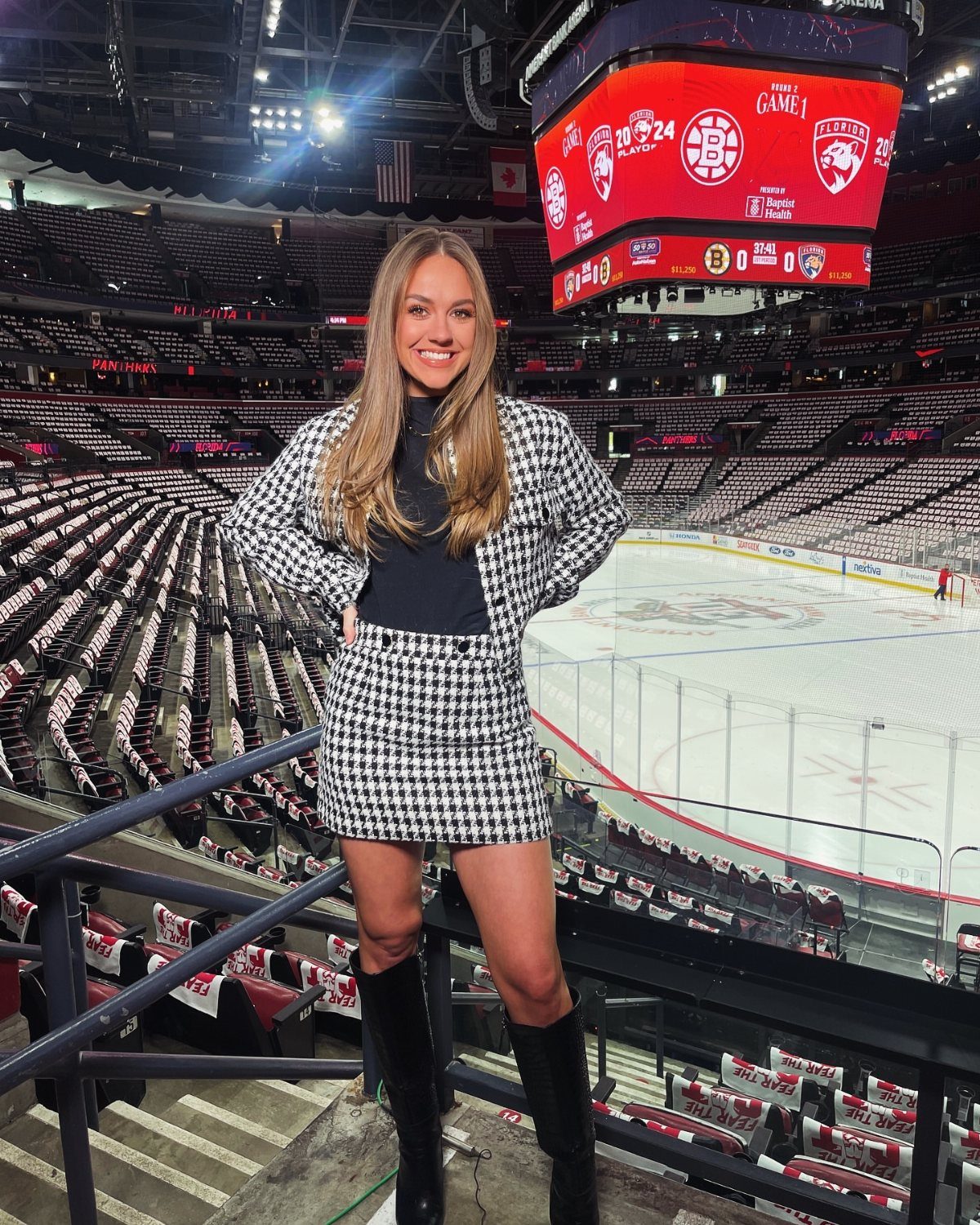
A houndstooth suit at a hockey arena is unexpected, which is exactly why it registers. The skirt suit with tall boots lands in the space between office hours and puck drop, and the boots keep it from reading too corporate.
Black and white houndstooth is the pattern that photographs well under arena lights; the contrast stays crisp where smaller prints blur.
The skirt length here hits above the knee, which means the boots need to reach at least mid-calf for coverage in cold seating. A fitted turtleneck or thin thermal under the jacket replaces a blouse for warmth without bulk.
This one trades some mobility for the look.
I would not wear it to a game with a lot of standing or climbing, but for a seated arena tour or a box suite it solves the question of what reads polished without trying too hard.
Importance of Layering
The ice needs constant cold, so the arena holds onto chill even when the concourse crowds heat up and you’re sandwiched between bodies in your seat. Layering is how you handle that without carrying a bag of extra clothes.
I always think about the order of removal. A sweater tied around your waist does the same job, though it skews more laid-back than a jacket with some shape.
The air conditioning in some rinks runs harder than others. Thermal leggings or tights worn under jeans or a skirt create that invisible layer, which is what makes a shorter hem or thinner fabric possible at all.
Since the temperature has to be cold to keep the ice frozen, it’s important to wear a hockey game outfit that keeps you warm.
— PopSugar
Footwear Recommendations
Most arena floors are concrete, and temperatures sit around 60-65°F. That combination kills feet in the wrong shoe.
Supportive sneakers with cushioned soles and solid arch support are what I would choose for any game with stairs or long concourse walks.
Waterproof sneakers or light boots with actual tread keep you from sliding on slushy sidewalks when the weather’s messy.
Break them in first. New shoes turn miserable fast in a cold building.
Thermal socks inside insulated boots are what I reach for in deep winter; wool socks with regular sneakers work fine when temps hover above freezing. Heels, flip-flops, and anything dress-shoe shaped give you neither warmth nor grip on slippery concrete.
Accessorizing for Comfort
You do not need a jersey to read as a fan.
Black or cream up top with dark slim jeans gives a bold team-colored scarf room to be the one loud piece. A beanie that matches the team logo gives the same nod without the hoodie bulk under your coat.
Head and hand coverage matters more than people think.
Ear warmers do the same job with less to carry. Gloves help near the ice or on cold metal railings; fingerless gloves keep your hands warm without blocking your phone during intermission.
The accessories are also where team pride lives when the rest of your outfit is neutral and reusable. One scarf or hat in the right color does more fan signaling than a full jersey sometimes.
Game Day Atmosphere
The right outfit keeps your energy on the ice, not on adjusting, shivering, or sore feet.
That is the practical side. The other side is how dressing for the event changes how you feel inside it.
Showing team spirit, even subtly, connects you to the crowd’s momentum. A jersey, a team-colored scarf, or a logo cap marks you as part of the building’s energy rather than a spectator passing through.
The arena photographs better too; color-blocked or coordinated outfits hold up under arena lighting where muddy palettes disappear.
I think the best game-day looks solve both problems at once: the beanie that warms and identifies, the puffer in team colors that carries spirit when the jersey is covered, the boots that handle stairs and still look deliberate.
Comfort and style are not tradeoffs here. They are the same plan, executed with the temperature and the concrete and the standing and the sitting all factored in.
Frequently Asked Questions
How should I dress to a hockey game?
Layers are the starting point, with a warm base you can peel off when the crowd heats up and pull back on during intermission.
Team colors or a jersey show spirit, but the real priority is footwear that handles concrete floors and stairs without killing your feet by the third period.
I throw a beanie and gloves in my bag every time; head and hand coverage matter more than people expect near the ice.
What is the NHL dress code?
There is no strict dress code for general seating, so a jersey and jeans is standard and welcome.
Club level and suite areas at some arenas ask for business casual, and premium sections during rivalry games may discourage opposing team colors.
Offensive clothing or oversized hats that block views get you asked to change, so checking your specific arena’s guest policy beforehand is worth doing if you splurged on good seats.