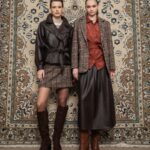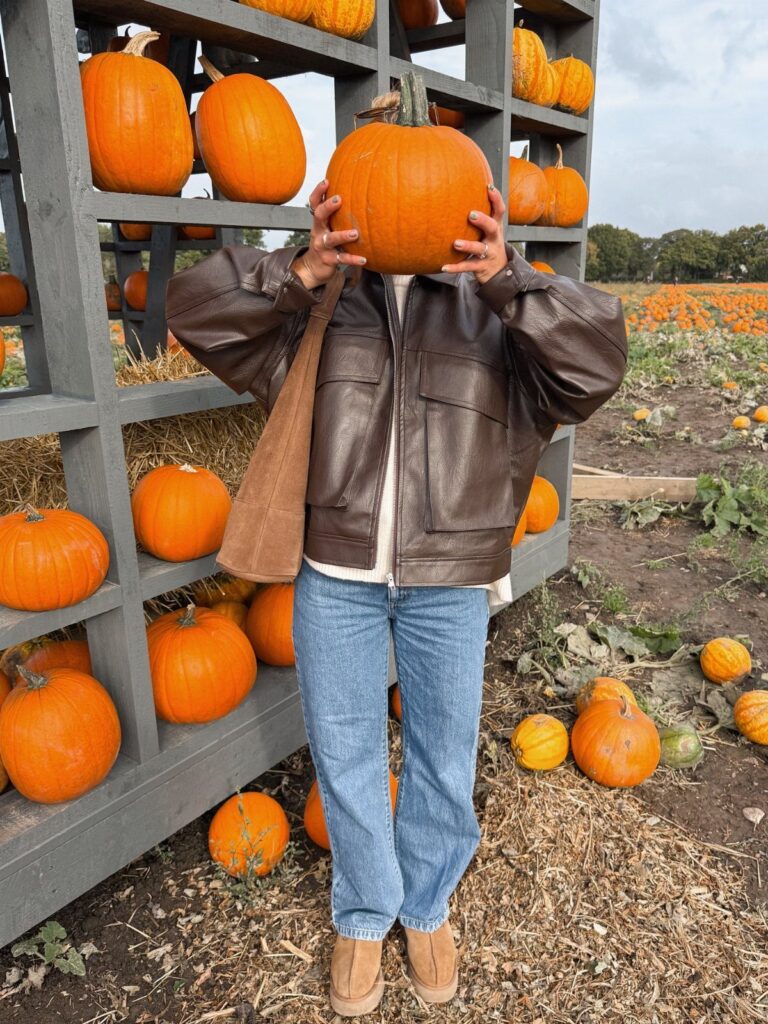
These outfits run from a tucked flannel and jeans you already own to a leather jacket and plaid skirt that trades some practicality for polish.
The one that fits your morning depends on whether the forecast starts in the 40s and stays dry, or warms fast and might turn wet.
The warmest look pairs a puffer jacket with a plaid skirt, while the most dressed-up layers a leather jacket over plaid with small hoops that finish it without competing.
1. Chunky Sweater + Jeans
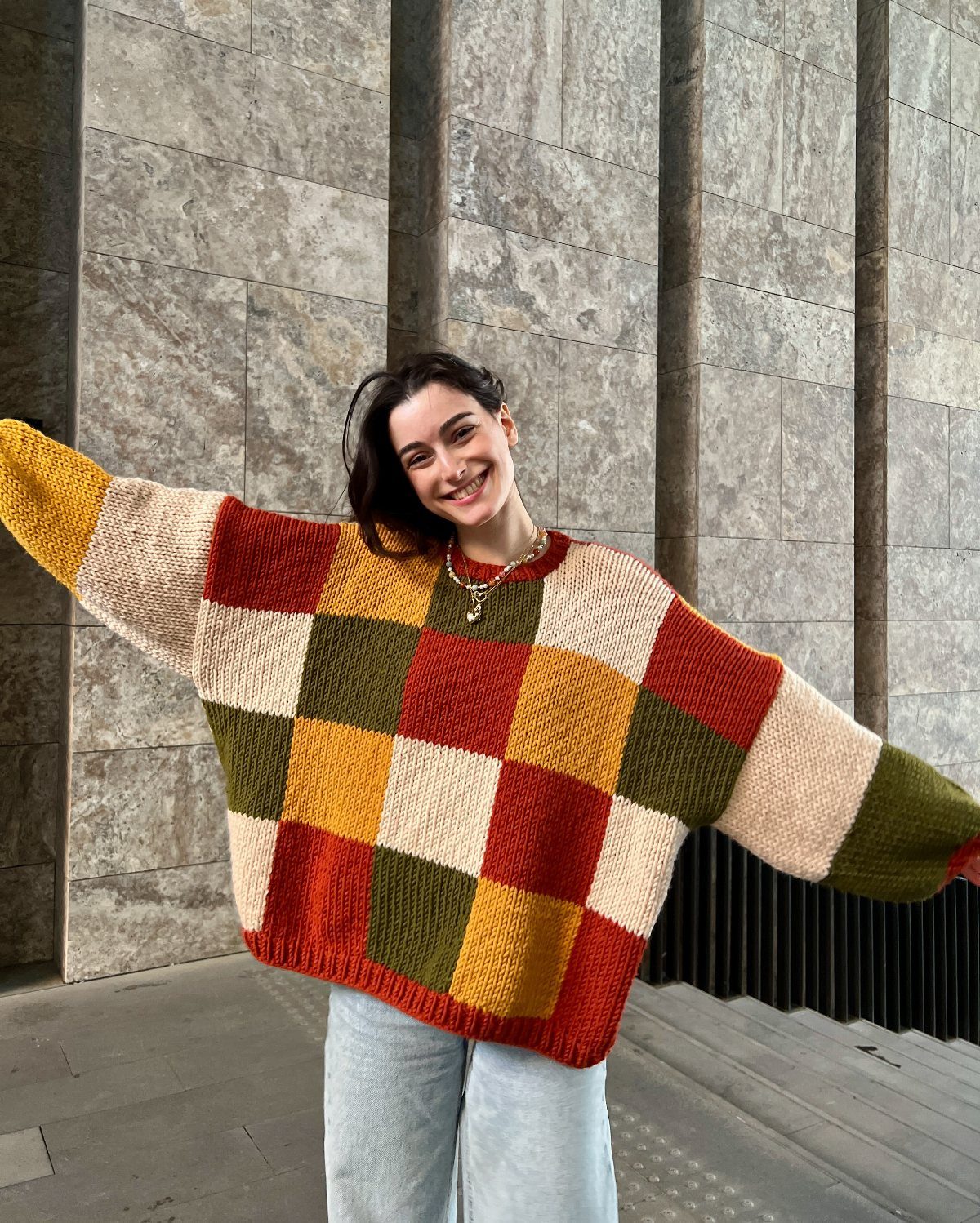
A patchwork knit in thick wool or acrylic holds its shape through hours of reaching and lifting, and the texture reads as intentional even when the morning starts rushed.
Light-wash denim keeps the whole thing from feeling too heavy, and the contrast of rough knit against clean jean is what makes this look work for photos without trying hard.
I would reach for a crewneck over a turtleneck here, since you’ll be bending down with kids or a camera, and the less fabric at your neck the better.
If the sweater runs oversized, a half-tuck at the front waist keeps you from swimming in it.
2. Oversized Sweater + Skirt
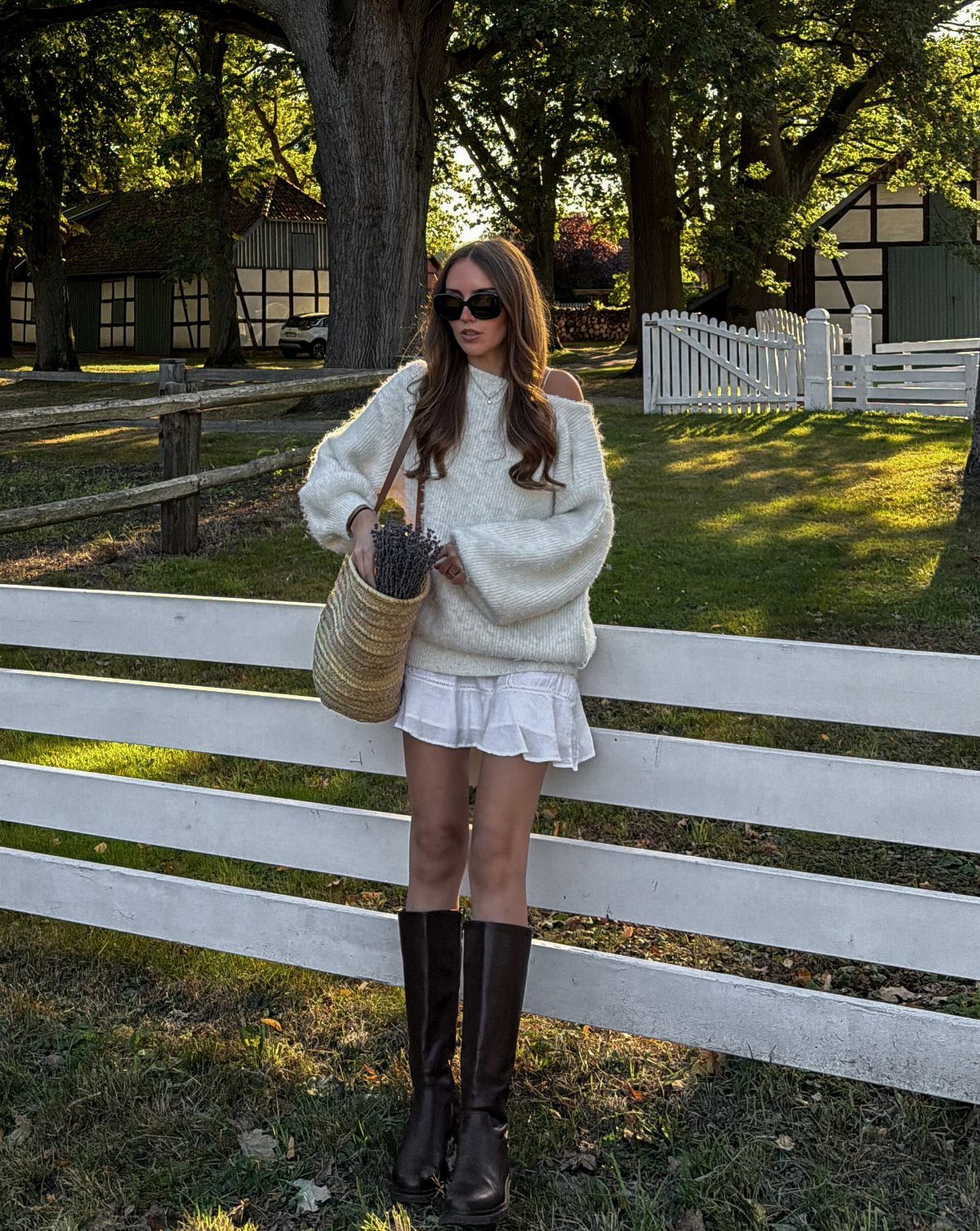
Bare shoulders in October sounds like a choice until you remember how warm a crowded patch can feel once the afternoon sun hits.
An off-the-shoulder cut in a cream or oatmeal knit gives you that exposed-collarbone line for photos while the rest of the sweater stays slouchy and warm.
The mini skirt here is doing more work than shorts would, since it photographs crisper against hay bales and dried cornstalks. Tall boots bridge the gap and keep your legs from looking bare.
I would add a thin pair of wool tights in a shade close to your skin tone if the forecast dips below 55, since goose bumps ruin the aesthetic faster than any outfit choice can.
3. Sweater Dress + Knee-High Boots
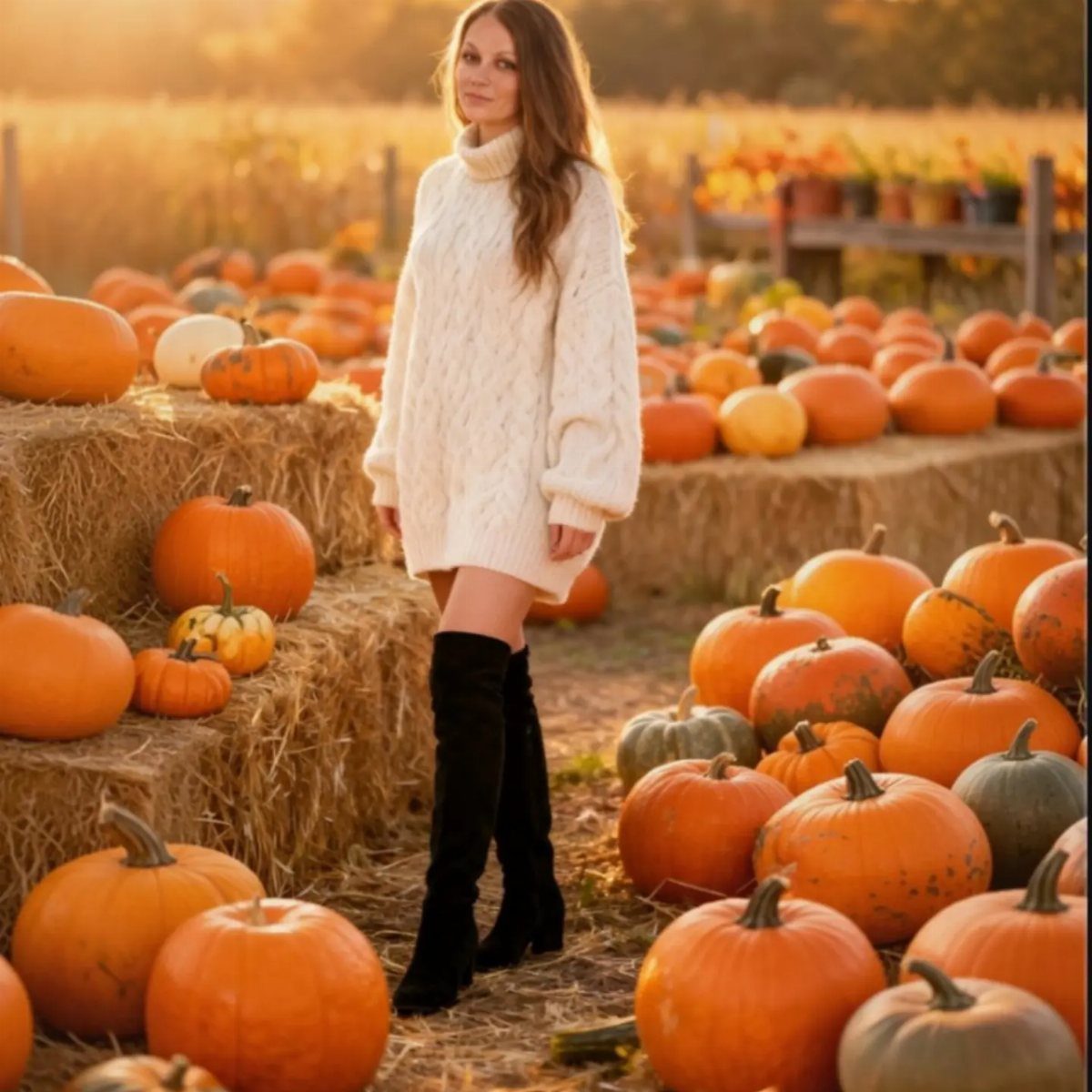
A sweater dress solves the problem of tucking and retucking every time you crouch to lift a pumpkin.
The turtleneck version keeps your neck warm without a scarf that could trail into the dirt, and the cable or ribbed texture adds visual interest even in a solid color.
Knee-high boots in smooth leather or suede create a long line that shorter boots would break. Black knee-high boots will show dust from the patch; I would pack a small lint brush or choose chocolate brown instead.
If the dress runs short, opaque tights in black or charcoal keep the look grounded without adding another color to manage.
4. Plaid Mini Dress + Boots
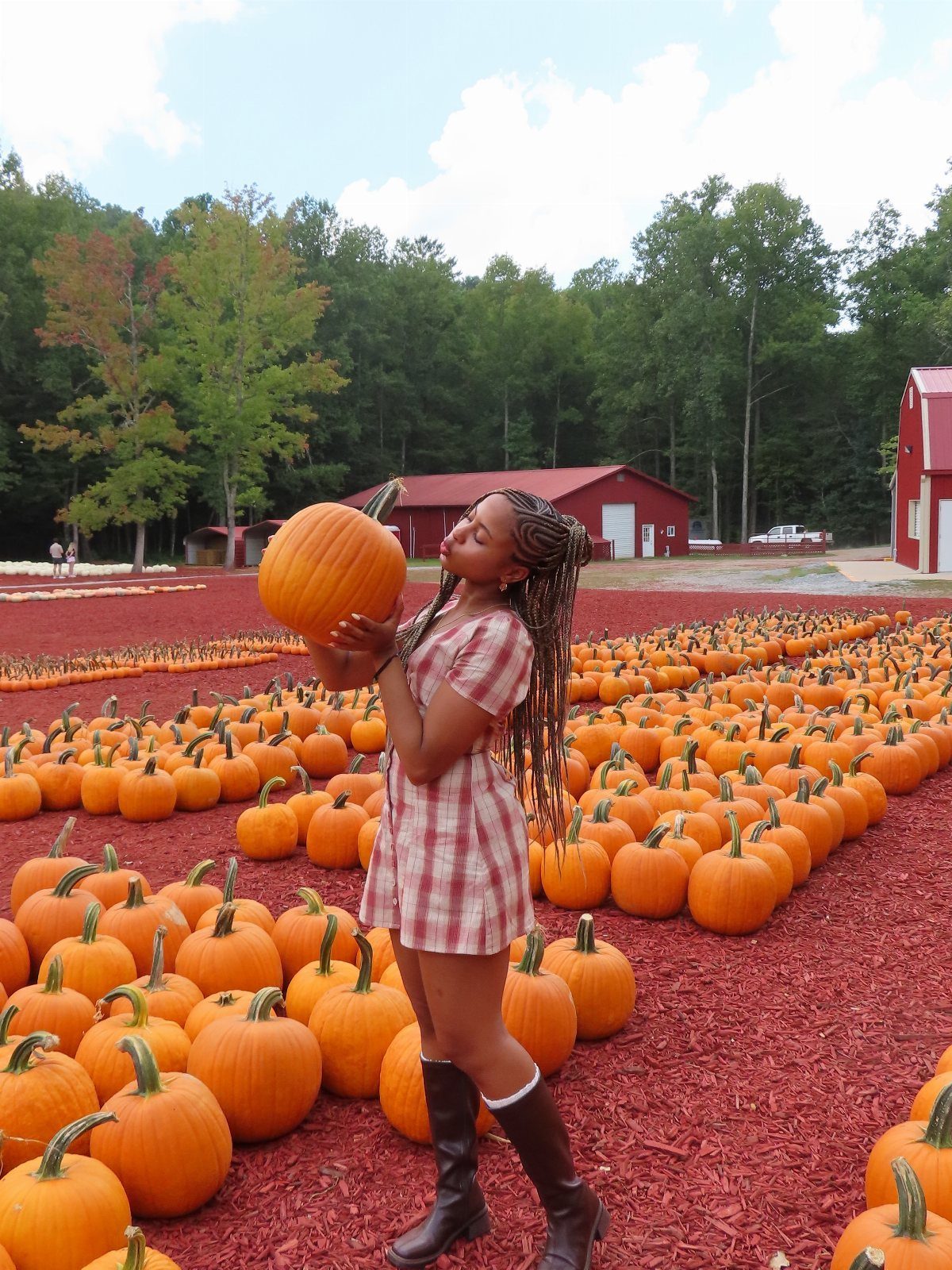
Plaid at a pumpkin patch risks cliché until you get the scale right.
A mini dress in a smaller check, not a blanket-sized buffalo pattern, reads as intentional rather than costume. The short hem works because the boots add coverage and the whole silhouette stays balanced.
A cotton or cotton-blend plaid dress wrinkles less than flannel but offers less warmth, so this works best on a milder day.
I would layer a thin long-sleeve tee underneath if the temperature justifies it, or add a cropped denim jacket rather than a cardigan that would hide the waistline.
The pumpkin you carry becomes the accessory; let the pattern do the rest of the work.
A pumpkin patch outfit needs a jacket that can handle a little October adventure! This embroidered barn jacket from Ree’s line has that cozy, countryside feel that looks right at home among the pumpkins.
5. Denim Overalls + White Top
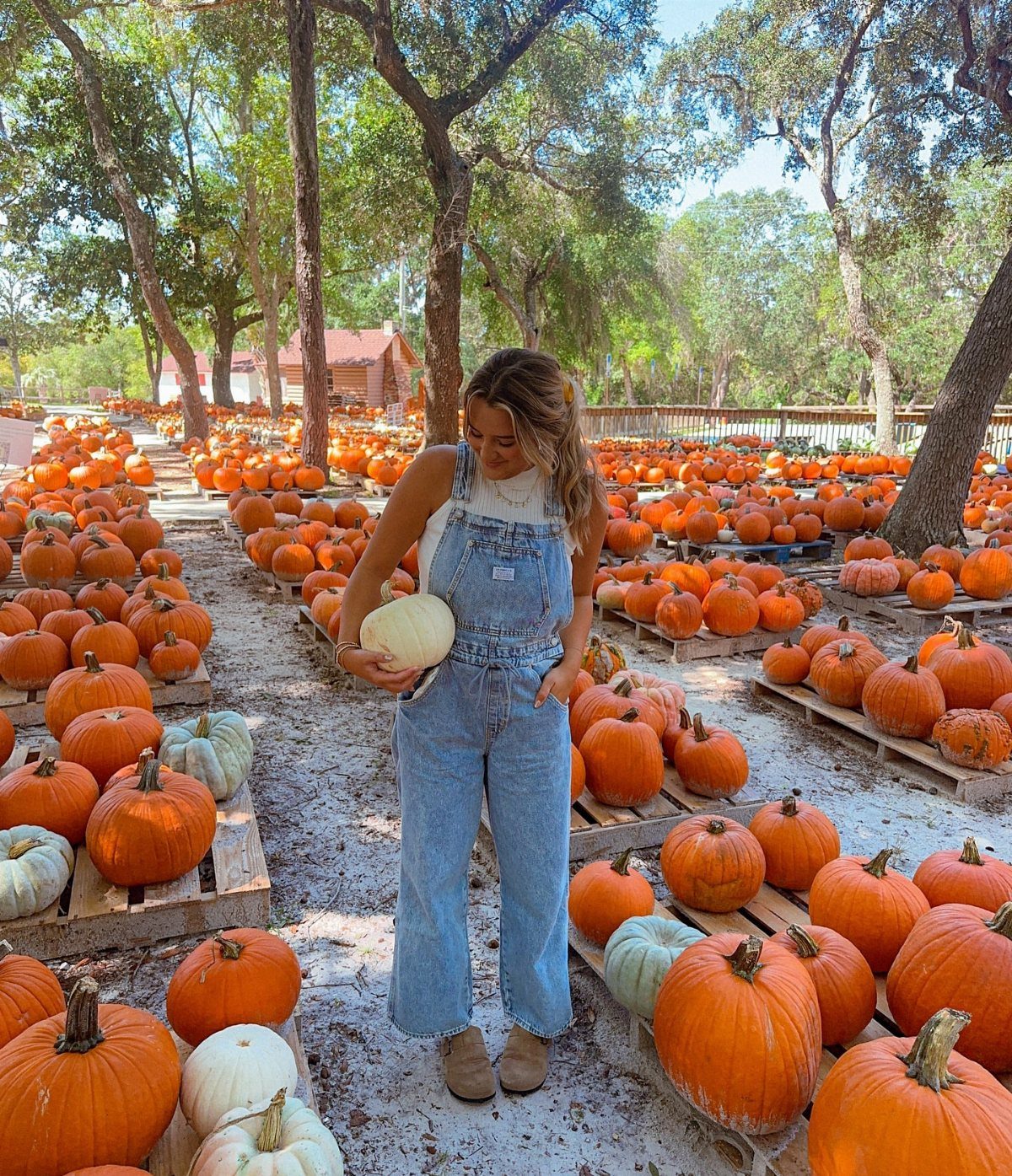
Overalls spread the work of an outfit across two pieces, which means neither one has to carry full price.
Light-wash denim softens with washing and only gets better, and the white top underneath reflects light onto your face in photos that a darker color would absorb.
The clogs here are a practical choice for dry ground; I would swap in ankle boots if rain is forecast, since wet denim against bare ankle is a feeling that lasts.
The bib pocket holds your phone and keys, which matters because pumpkin patches rarely leave you with a free hand.
A sleeveless top in late fall only works if the day is warm enough, and white-on-white keeps the overalls from looking busy.
6. Long-Sleeve Top + Plaid Skirt
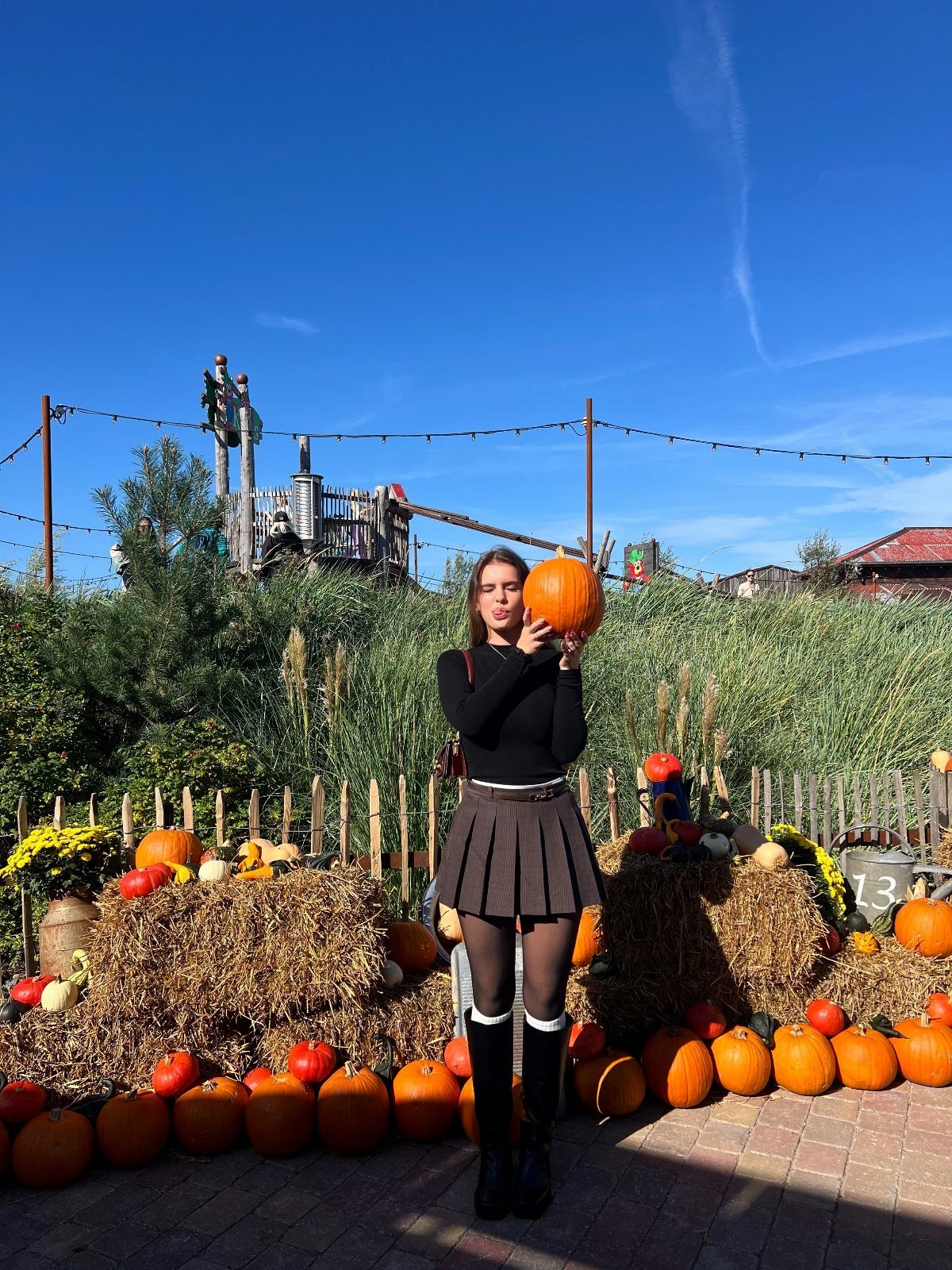
A pleated plaid skirt in wool or a wool blend holds its shape through sitting on hay bales and standing in line for cider.
The black top grounds the pattern and lets the skirt be the one statement, which is how you wear plaid without looking like you are trying to be seasonal wallpaper.
Tights in a solid opaque, not sheer, keep the look from tipping into party territory. The boots should hit just below the knee; anything taller competes with the pleat line, and anything shorter shortens the leg.
I would add a thin gold chain or small hoops, since the neckline is plain and the pattern below is doing enough. This is one of the few pumpkin patch looks that transitions to dinner afterward without a change.
7. Cardigan + Ruffled Mini Skirt
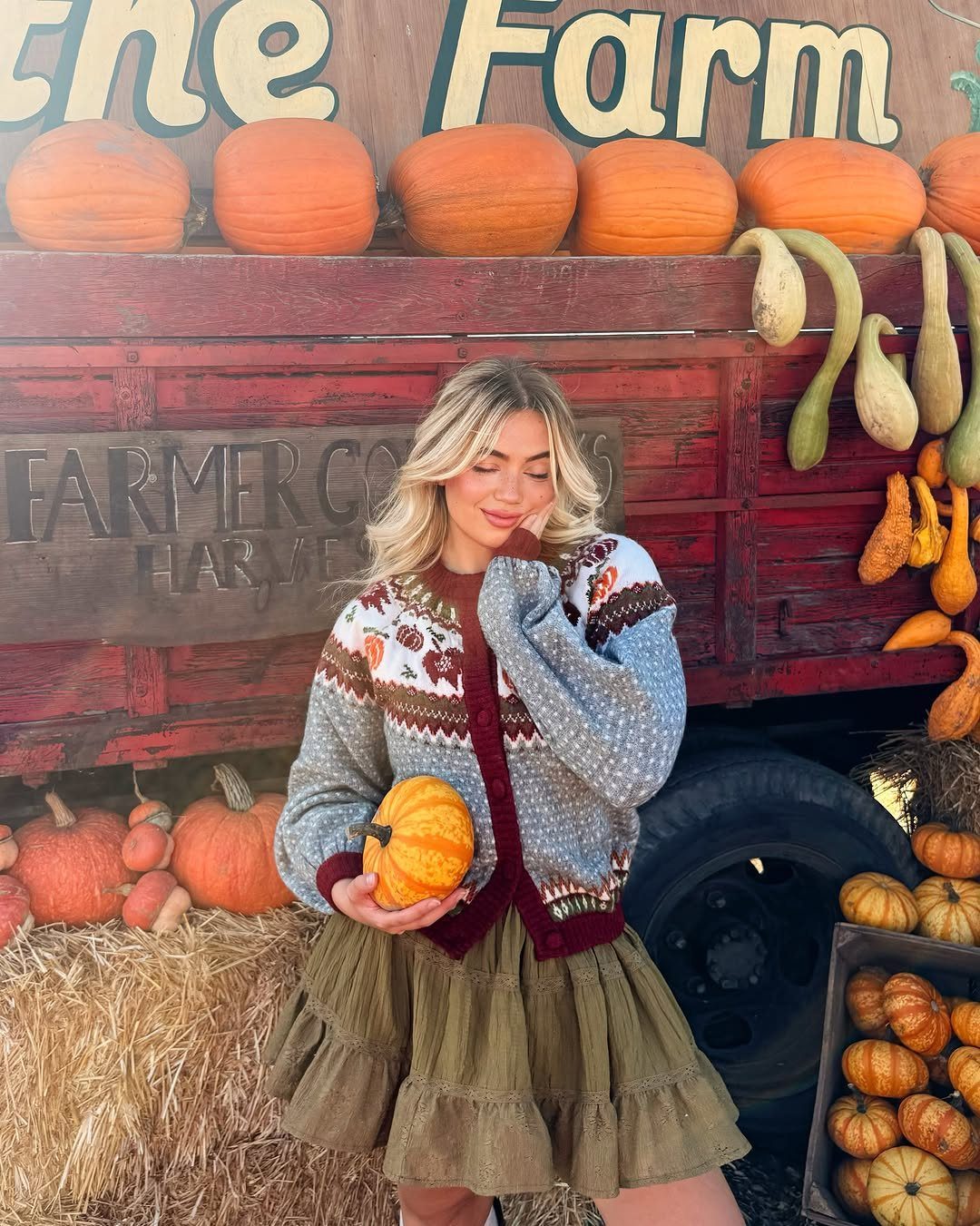
Autumnal pattern on a cardigan reads as seasonal without shouting it, especially when the skirt beneath is a solid olive that picks up one tone from the print.
The ruffle adds structure to the bottom half, which balances the looseness on top.
I would keep the underlayer thin, a cami or tee in cream, since bulk at the waist competes with the skirt’s gathering.
For warmth, a long-sleeve turtleneck in olive would work, but only if the cardigan is unbuttoned to show the neck; otherwise the layers blur together.
This is one of the few mini-skirt looks that feels right for day rather than evening, since the pattern and earth tones ground it.
8. Cardigan + Denim Jeans
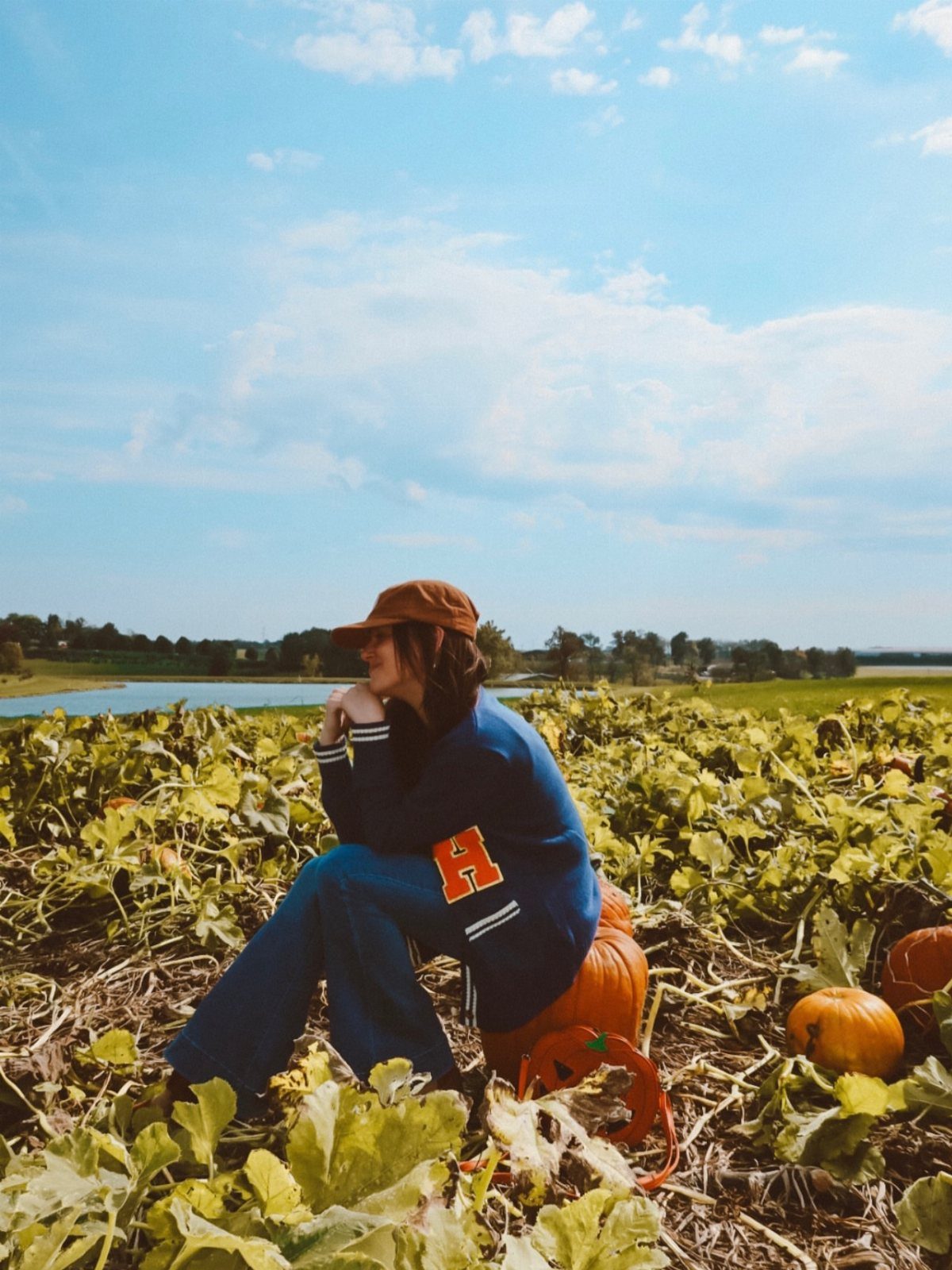
A varsity-style cardigan brings in color blocking that makes an otherwise simple outfit read as styled rather than thrown on. The denim here is standard straight-leg, not skinny, which keeps the collegiate reference from feeling dated.
I would wear this with a cropped or fitted tee underneath, since the cardigan is doing the visual work and a loose layer underneath would add bulk where the waist meets the jeans.
The cap is optional but useful; patches get dusty, and hair under a hat stays neater longer than hair in the wind. Brown boots, not black, bridge the blue and the cream or gold tones in the letter.
9. Puffer Jacket + Plaid Skirt
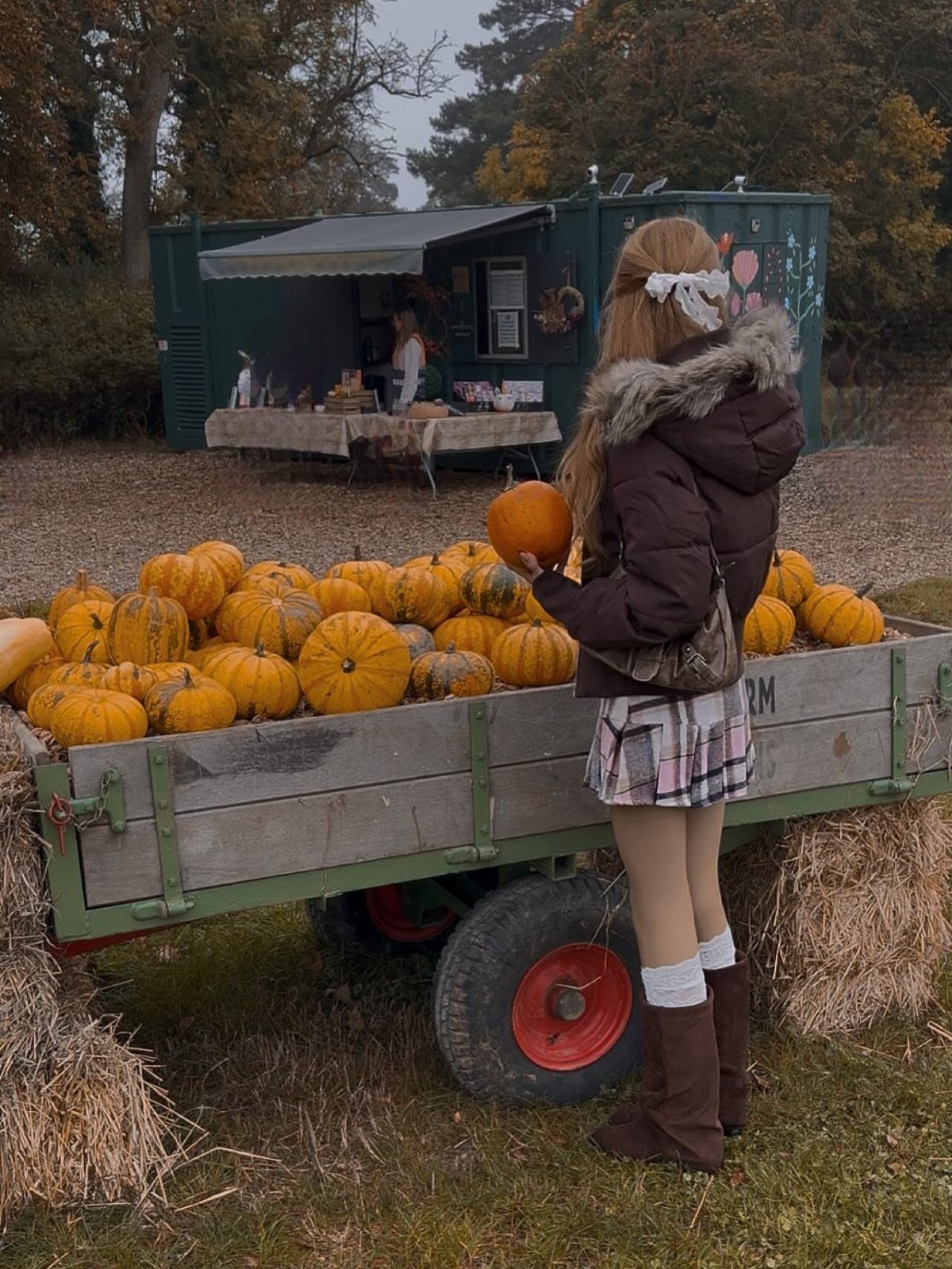
Puffer and plaid together risk looking like 2 separate outfits stacked, so keep the palette tight. The brown jacket here picks up one tone from the skirt’s check, and the repetition makes the pair feel chosen.
A mini length on the skirt keeps the puffer from overwhelming the silhouette; midi would make the jacket feel like a coat you forgot to remove.
Tights in black, not a color, keep the line clean, and boots should hit mid-calf, leaving a slim band of leg between skirt top and boot rim.
This is the warmest look on the list, and the one I would pack for a morning that starts in the 40s and needs to carry through.
10. Oversized Sweater + Rain Boots
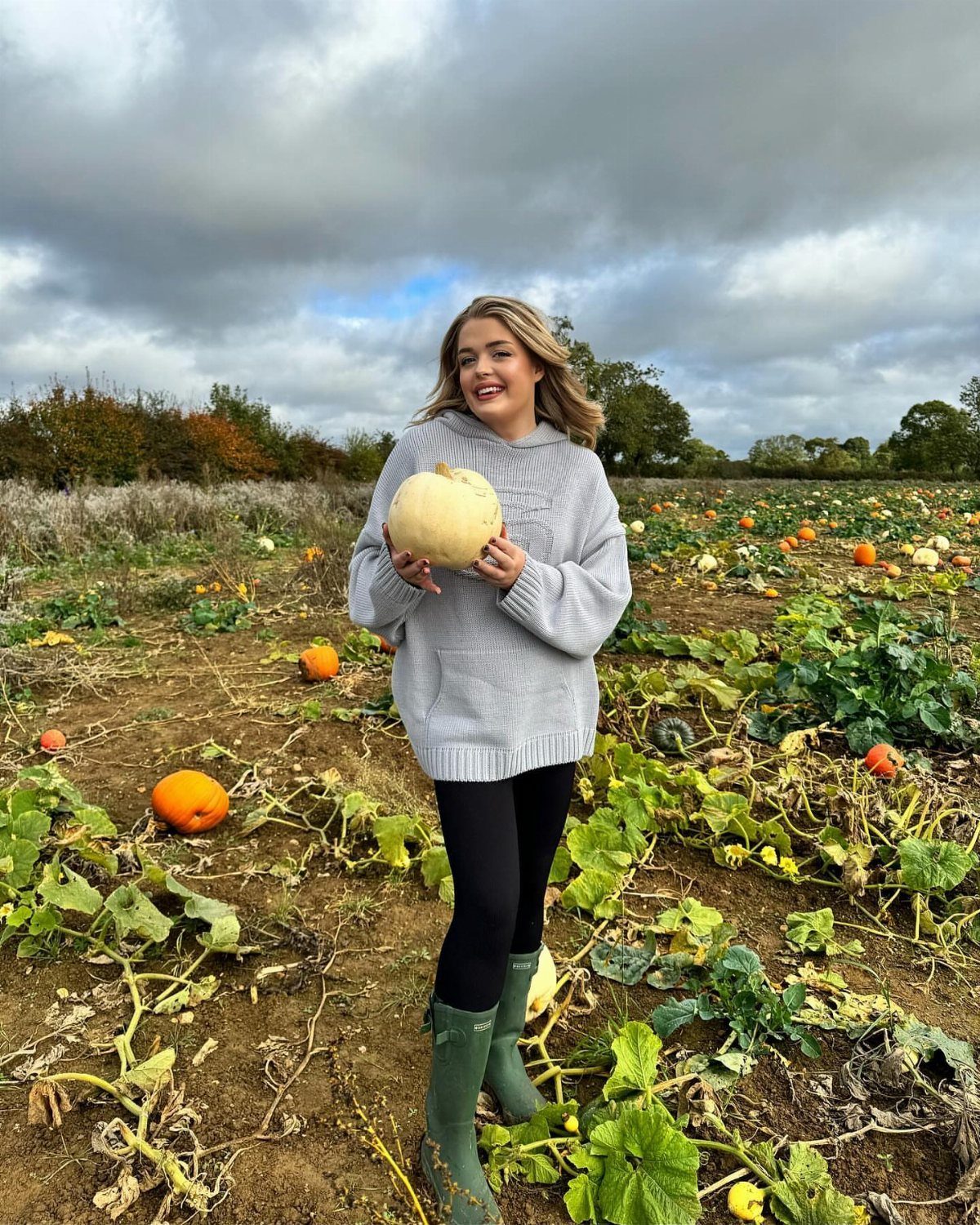
Green rain boots are a practical choice that still photographs well against orange pumpkins and grey sky, and the tall shaft keeps legging hems from riding up in mud.
The oversized sweater here is hooded, which adds coverage you will actually use if drizzle turns to rain.
I would choose fleece-lined leggings over standard jersey; wet denim or thin cotton against skin chills fast, and you will be kneeling or sitting on damp ground.
The hooded knit is harder to layer under a jacket if the weather turns, so check the forecast before committing to this as your only top. A spare light layer in the car is worth the stop.
11. Leather Jacket + Plaid Skirt
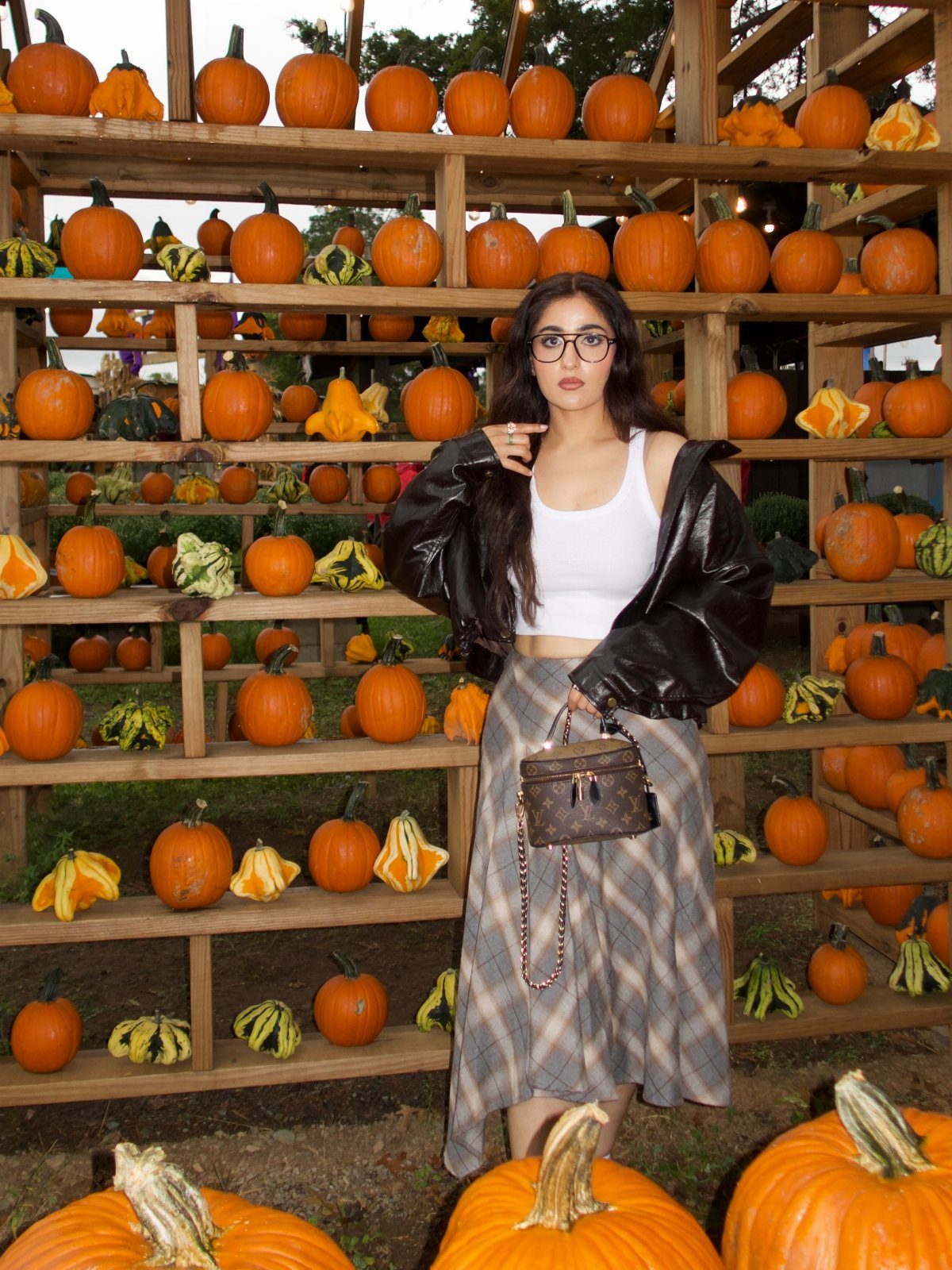
A moto jacket against plaid gives you edge without sacrificing the autumn mood, as long as the skirt stays in a grey or muted check rather than bright red.
This is the most dressed-up of the patch looks, and it trades some practicality for that. The cropped jacket leaves your lower back exposed when you bend, so a high-waist skirt is essential, not optional.
I would skip this if rain is forecast, since leather spots and suede muds; a coated or faux version handles weather better and still photographs similarly. Small hoops or a thin chain finish it without competing.
12. Plaid Flannel Shirt + Jeans
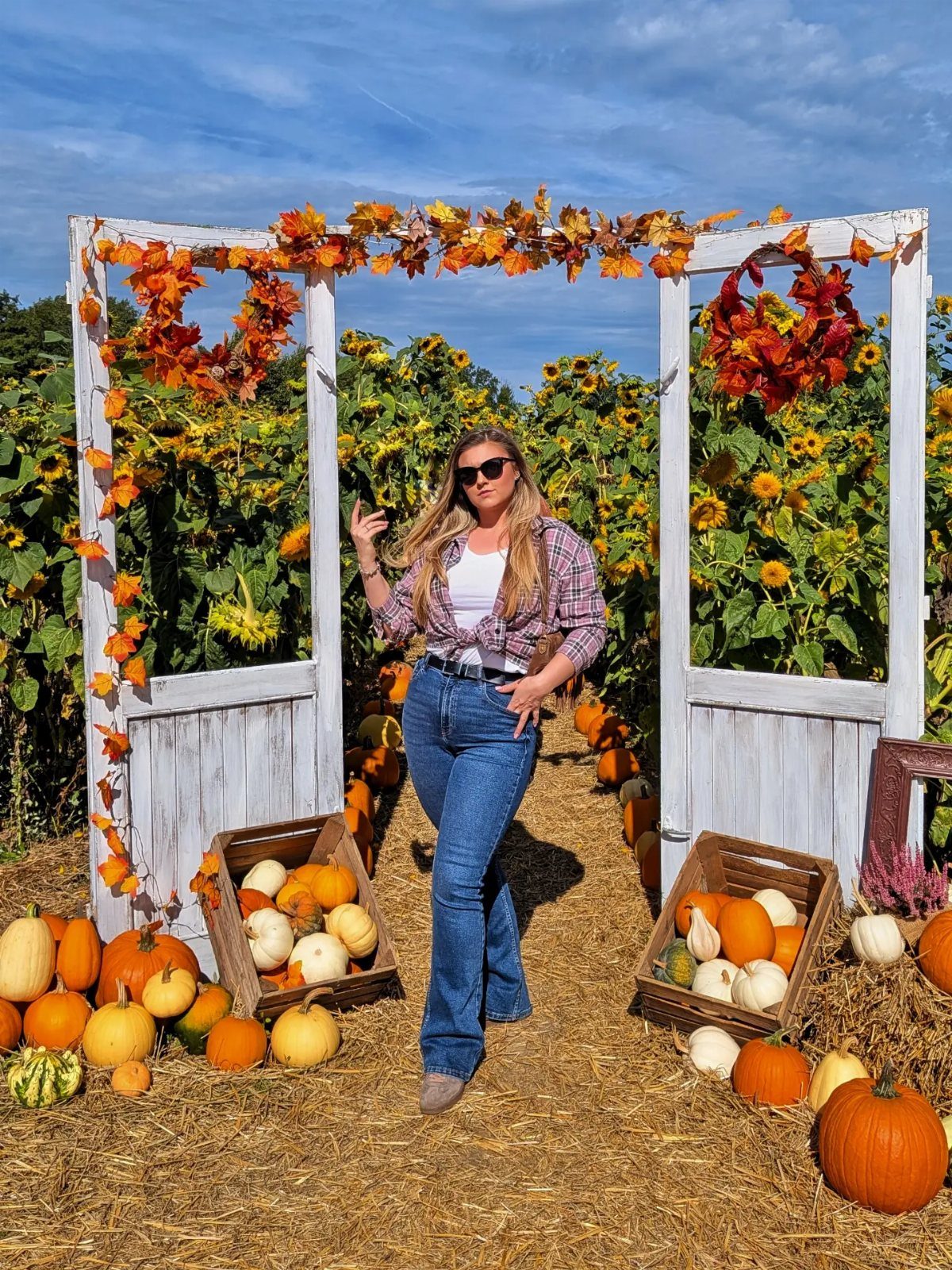
A standard flannel shirt becomes the outfit when the jeans are the right wash and the boots have some detail, a buckle or a shaped toe, that upgrade them from whatever you garden in.
The shirt here is worn buttoned and tucked, which is cleaner than the open-layered version, and the collar frames the face in photos.
I would choose a slimmer cut in the leg than the vintage wide-leg that is coming back; the shirt is already relaxed, and 2 loose pieces read as sloppy rather than easy.
The sleeve can be rolled to forearm for temperature control, since flannel holds heat once you are moving. This is the most rely-on-what-you-own entry on the list, and it works because the pieces are common but the fit is deliberate.
13. Puffer Vest + Sweater
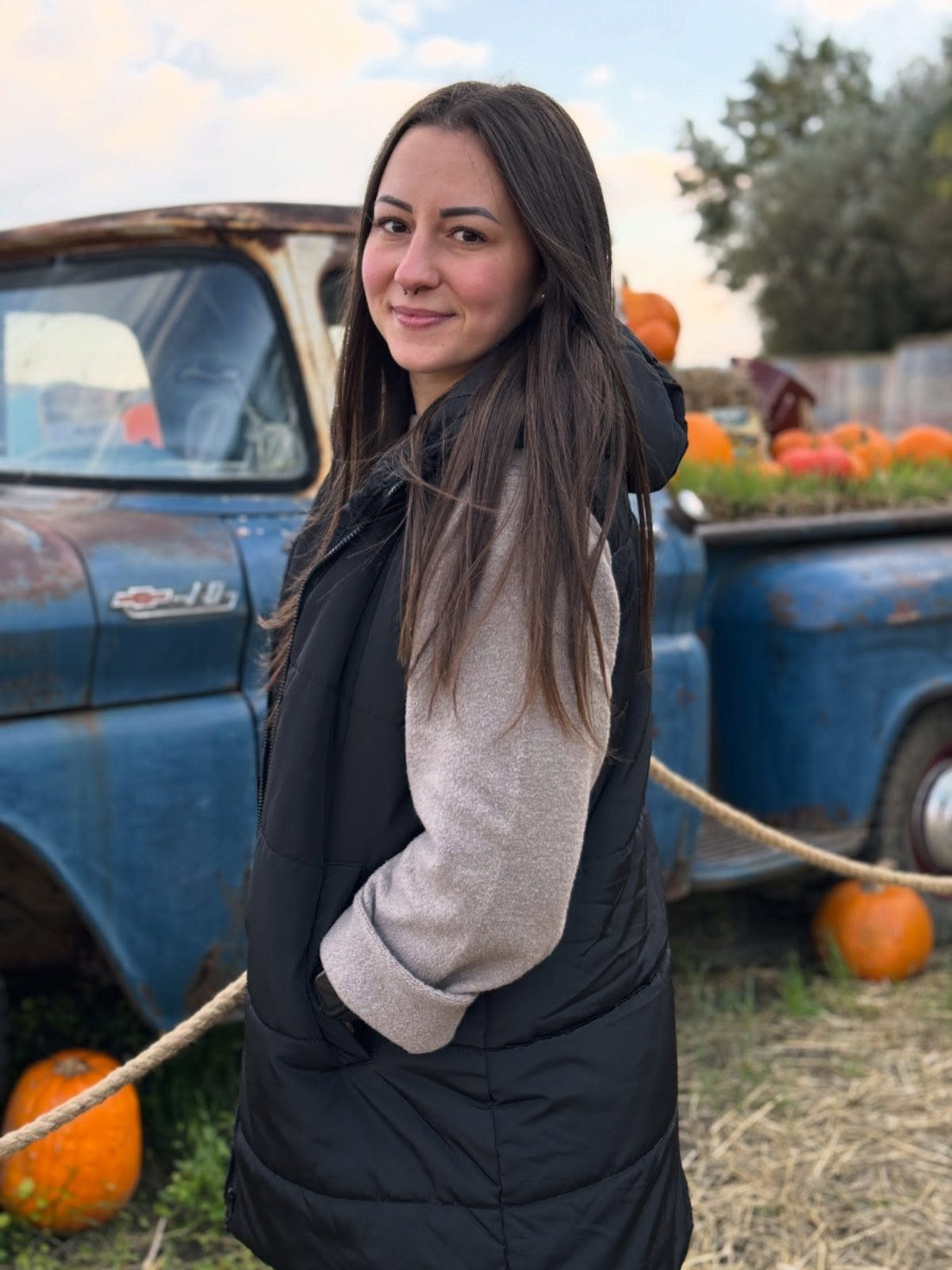
A puffer vest keeps your arms free for lifting pumpkins and carrying cider, which sounds like a small thing until you are halfway across a muddy field with a twenty-pounder.
The beige sweater visible here is a mid-weight crewneck, thick enough to stand alone but not so bulky that the vest cannot zip.
The black vest and neutral top are a safe pair, but the look comes alive when one piece carries texture: a cable knit, a brushed fleece, a quilted nylon with some sheen.
I would keep the vest cropped or hip-length; longer cuts ride up when you bend and make the silhouette feel borrowed.
This is the outfit I would wear when the day starts cold and warms fast, since the vest layers off and on without requiring a bag.
14. Sweater + Ruffled Shorts
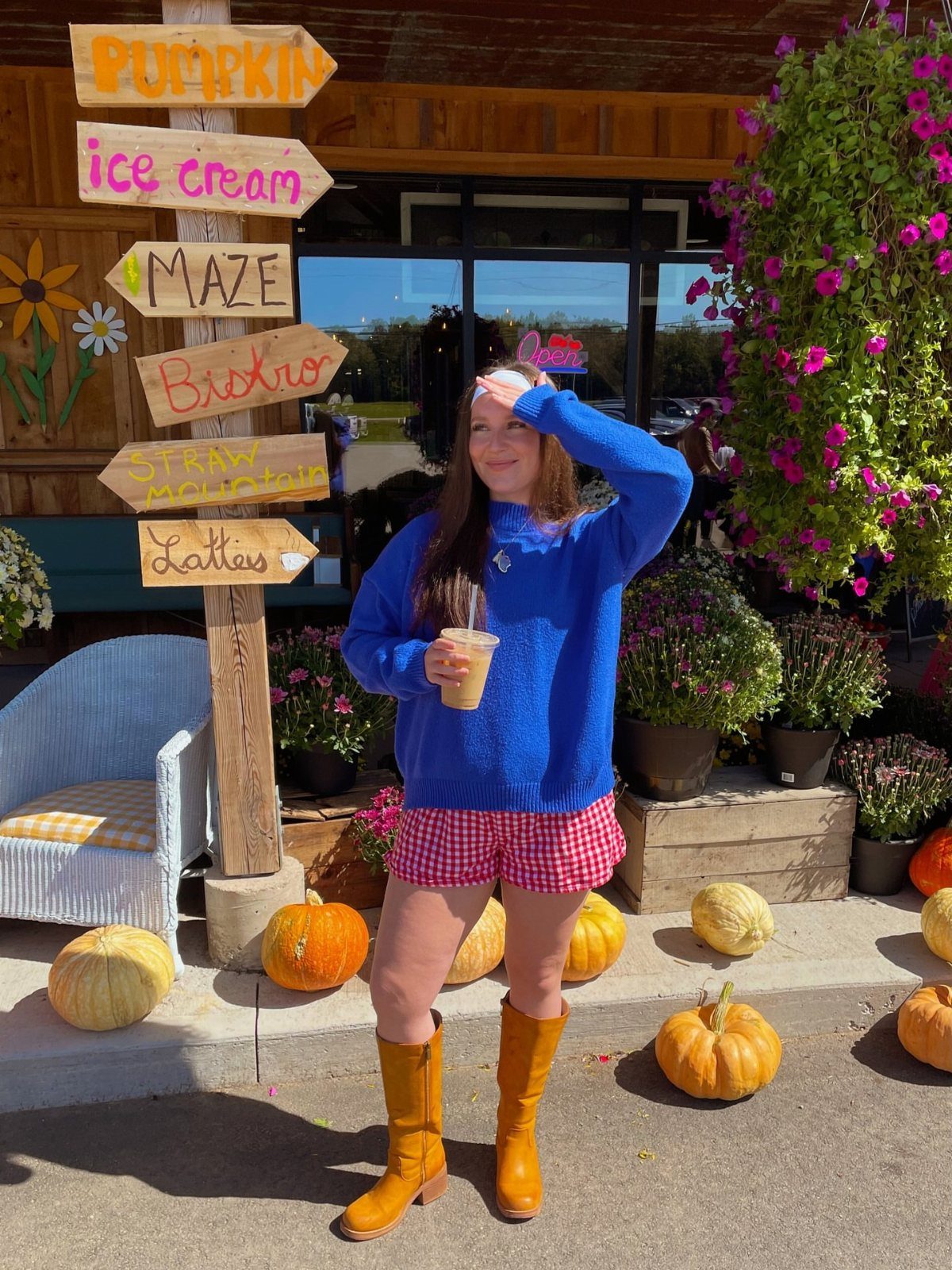
Red ruffled shorts against a blue sweater are a color combination that reads as styled rather than stumbled into, and the ruffle adds volume where a pumpkin patch outfit usually runs flat.
The shorts here are likely cotton or a cotton blend, which means they wrinkle less than linen and dry faster if you sit on damp ground.
A fitted sweater on top balances the fullness below; swap in an oversized knit and the whole silhouette becomes shapeless.
Opaque tights in burgundy or navy extend the wear into October, though I would skip this look if the forecast calls for under 50, since exposed thigh in wind chills fast.
The iced coffee in her hand is optional, but brown boots are not: they ground the brightness and keep the look from tipping into costume.
15. Floral Midi Dress + Boots
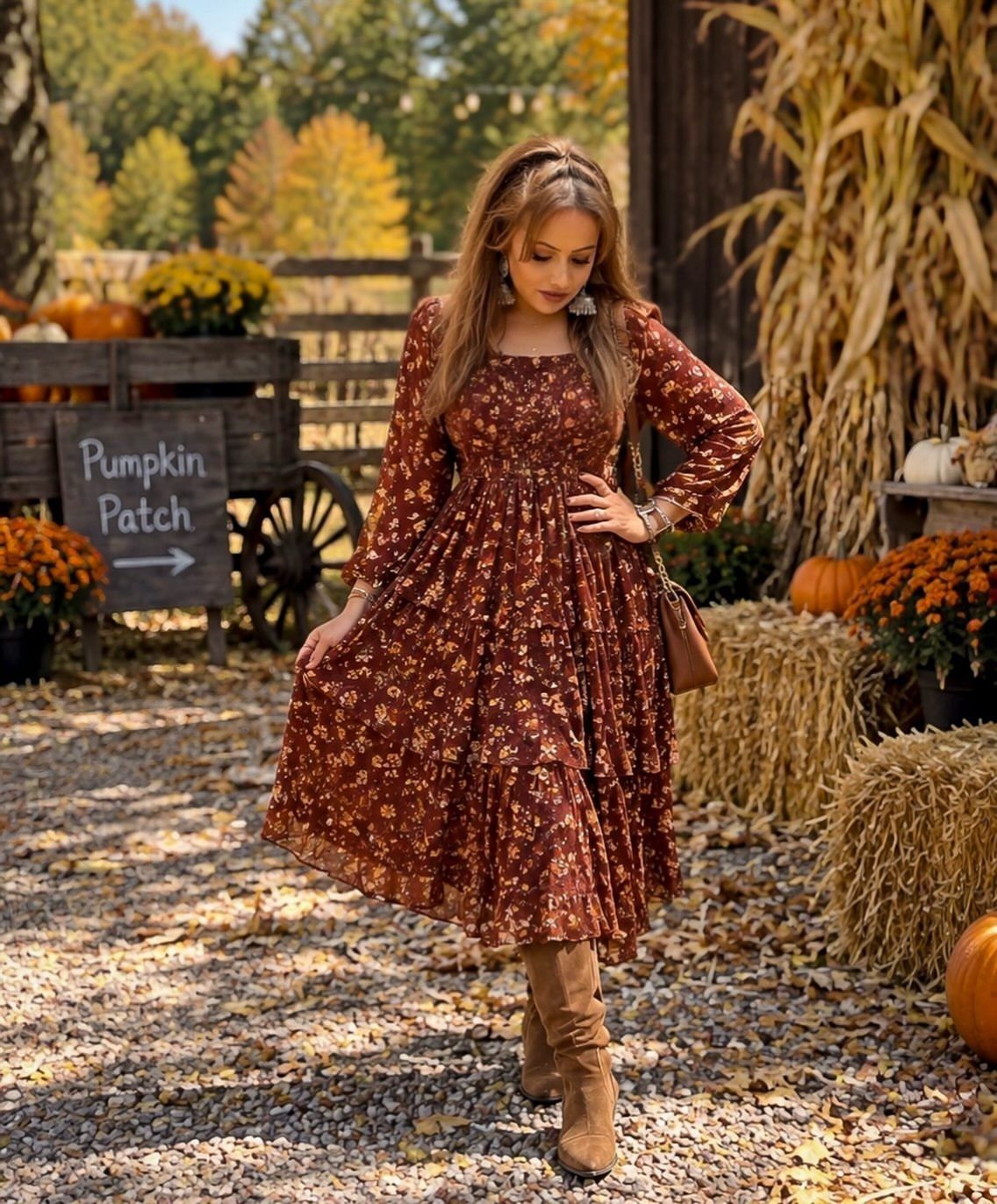
A brown floral on a tiered midi reads as autumn rather than summer because the base is dark and the print is scattered, not dense.
The tan boots here are suede, which photographs warmly against straw but spots in rain; I would check the weather or choose a smooth leather option.
The tiered skirt moves well in photos and hides sitting creases, though the volume can swallow a petite frame.
A denim jacket over top, as some versions suggest, works only if it hits at the waist; anything longer cuts the leg line that the boots are meant to extend.
Layered necklaces add interest at the neckline, which matters because a midi dress offers no belt to break the expanse of fabric.
This is the most conventionally feminine entry on the list, and it suits someone who wants to feel dressed up without risking heels in a field.
16. Utility Jacket + Denim
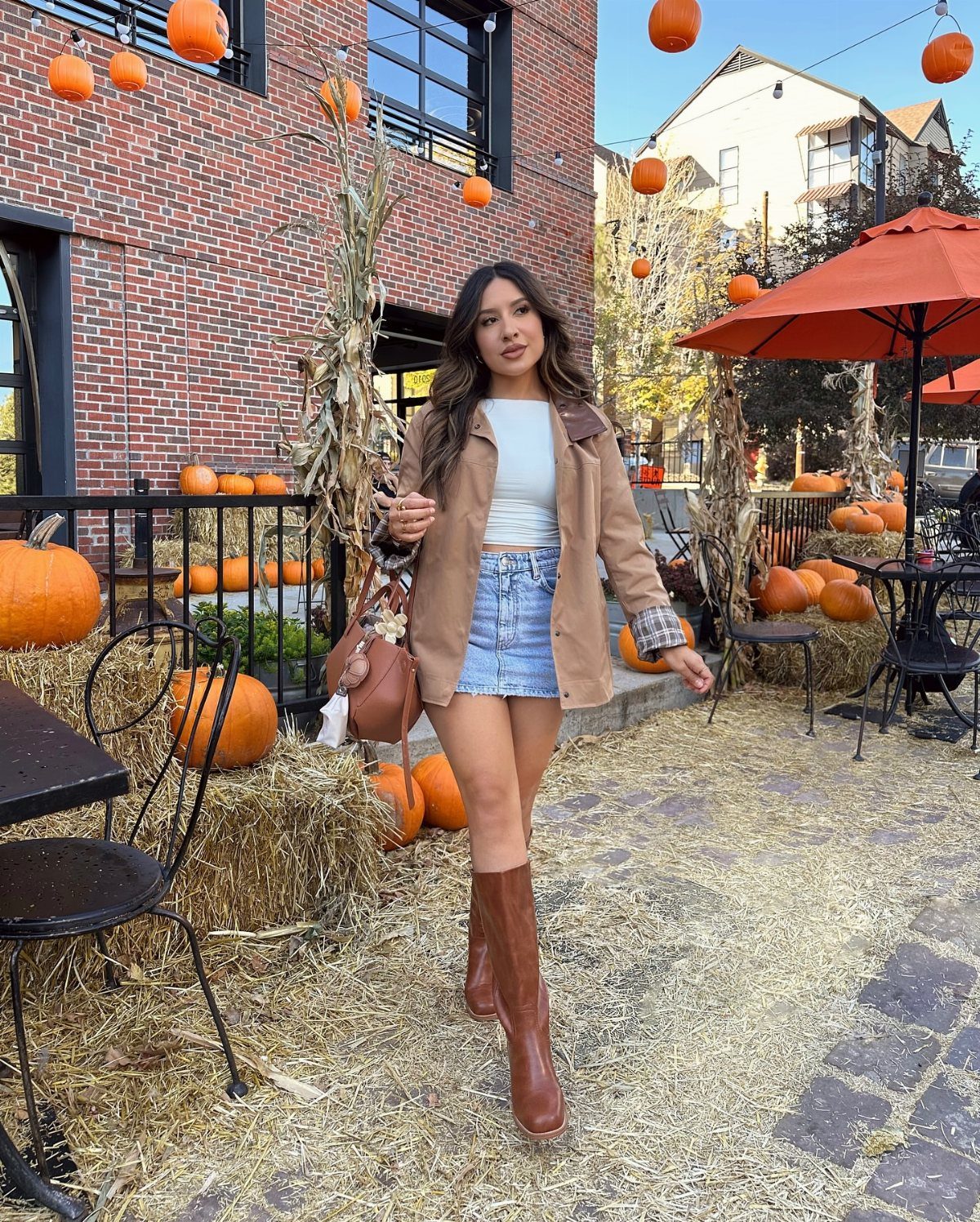
A utility jacket in tan is neutral enough to wear 10 times a season and structured enough to make a white tee and denim feel intentional.
The jacket here has a barn-style cut, which means a straight body, pointed collar, and pockets that actually hold things; the workwear reference keeps the outfit from feeling too polished for dirt and hay.
The denim miniskirt and tall boots create a longer leg line than jeans and ankle boots would, though the short hem limits this to milder days.
A graphic tee instead of plain white would push the look toward street style, which some readers want and others do not.
I would add a thin scarf or headband if the wind picks up, since utility jackets rarely close at the throat.
This outfit trades maximum warmth for mobility and style, and it is the one I would pack for an afternoon that might end with photos on a patio.
Colors for Fall Outfits
Warm browns, olive greens, and cream work at pumpkin patches because they belong to the place rather than fight it.
Rust or burnt orange pick up the pumpkin tones without matching them exactly; mustard yellow adds brightness without the costume effect of a true harvest gold.
Deep red and burgundy hold up against the orange backdrop in photos without washing out.
Cool-tone cream, which Lovetoknow mentions, is worth distinguishing from warm ivory; the cooler shade reads as intentional against autumn’s heat rather than faded.
Taupe falls in the middle and tends to muddy against straw and dirt, so I would leave it for city days.
Gold and yellow are easy to overdo. One piece in a rich tone does the work; a full outfit of harvest colors reads as theme dress.
Practical Accessories
A crossbody bag wins at pumpkin patches because both hands stay free for lifting pumpkins, holding cider, or grabbing a child. A tote or backpack works too, though a tote without a closure spills when you bend.
Hats serve more purpose here than most outings. Dust from dry fields and sudden sun through thin October clouds both hit above the shoulders; a beanie or cap keeps hair presentable through hours of wind.
I would skip wide brims that lift in gusts and block the camera angle from below.
Scarves are practical only when they stay tied.
A loose loop trailing into pumpkin slurry becomes a problem fast. Thin wool or cotton neckerchief styles stay put and add warmth without bulk.
Layering Techniques
Summer pieces can carry into October with the right underlayer. Decorative tights under shorts extend a warm-weather cut into fall without hiding the silhouette entirely, which matters for photos against hay bales.
A plaid flannel worn open over a basic top gives you two looks in one temperature swing: buttoned against morning cold, open as a jacket when noon warms. The layering order matters for photos.
Vests layer faster than full jackets because they come off without a full stop. The puffer vest in the list works this way; it zips over a mid-weight knit and packs small when the sun hits.
A scarf and beanie together risk costume territory. Quiet textures without pom-poms or loud pattern let you keep both, or you can choose one or the other.
Comfort Vs. Style
The list favors looks that move through both categories rather than choosing one. Denim overalls with a white tee, the utility jacket with a miniskirt, and the hooded sweater with rain boots all commit to activity first and photograph second.
The leather jacket entry is the exception. I would treat it as the ceiling for how dressed-up to go, not the standard.
Comfort at a pumpkin patch means more than standing. Kneeling for photos with a child, sitting on damp ground, carrying weight across uneven rows: each outfit in the list accounts for at least one of these.
The rain boot look commits most fully, with fleece-lined leggings and a hood that actually deploys.
Style here means looking like you meant what you put on, even in a casual setting. The flannel and jeans entry depends on fit for this; 2 loose pieces would not carry it.
Frequently Asked Questions
What colors are good to wear in the fall and winter?
Warm browns, olive greens, and cream belong to the season rather than fight it.
Rust and burnt orange echo the pumpkins without mirroring them, and mustard yellow brings in light without going full mascot. Taupe feels better for sidewalk days; it goes flat against straw and dirt.
What is the 3-3-3 rule for clothes?
This rule sets a nine-piece trip capsule: three tops, three bottoms, three shoes, with everything mixing.
What’s the point of a pumpkin patch?
Pumpkins grow there, and the farms layer on hayrides, corn mazes, and petting zoos to keep you around. People come to take pumpkins home for carving or pie, and the open-air rows give photos that actually look like fall.
What colors to wear to a pumpkin patch?
Earthy tones like warm brown, olive green, and cream blend with the setting rather than compete.
Rust, burnt orange, and deep burgundy hold up against pumpkin backdrops in photos, and one rich piece does the work without tipping into theme dress. True harvest gold risks full costume territory; mustard yellow hits the same note brighter.