These outfits run from a graphic tee and boots to a suede fringe jacket that will pick up grass stains, so the deciding factor is what the venue does to clothes and whether you will stand on asphalt all night.
Cowboy boots are the one item that shifts the whole outfit from regular clothes to something that belongs at a country show, and whether you go for broken-in leather or something newer changes how the rest of the look comes together.
1. Graphic Tees
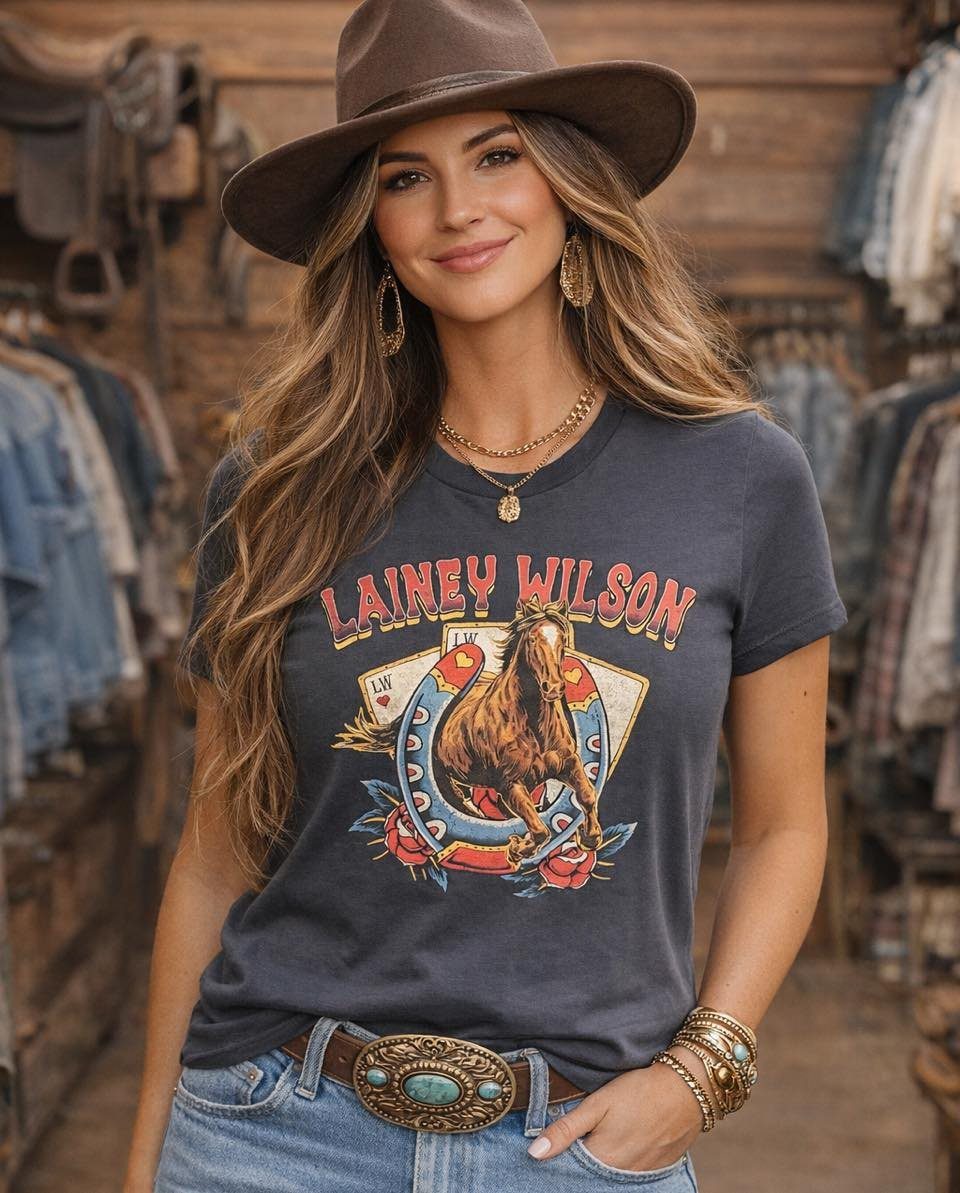
A charcoal Lainey Wilson tee with horseshoe graphics turns a basic shirt into the reason you came.
I like these because they start conversation without trying too hard, and the worn-in feel means you bought it at last year’s show or found it vintage.
Tuck it into high-rise denim or leave it loose over a skirt; either way, a turquoise belt breaks up the line so the graphic stays central.
A brown hat pulled from the same warm tone as the print is the kind of small coordination that makes an outfit look considered rather than assembled.
2. Flannel or Plaid Tops
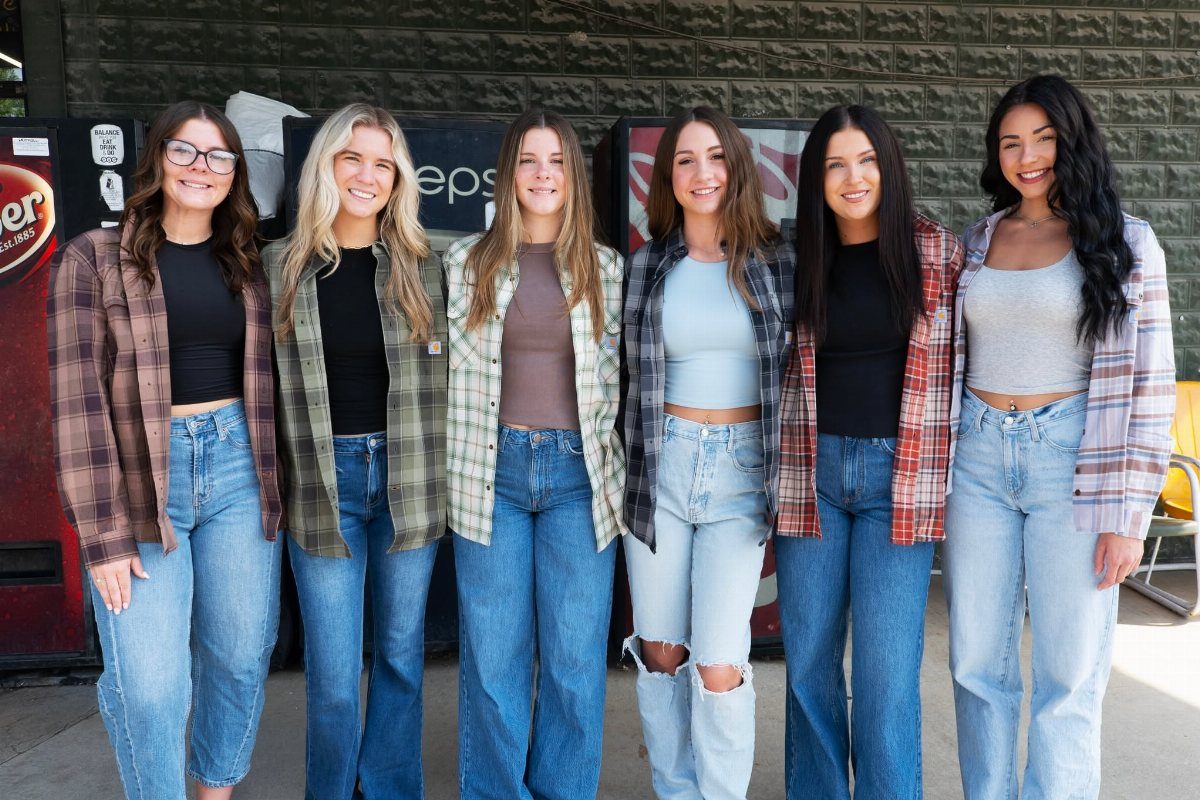
A group of women all in different plaids, still readable together: that is the trick of flannel at a country show. The shirt does the pattern work so everything else can stay simple.
Carhartt’s Clarksburg pullover and Scully’s floral-embroidered western cut give 2 different directions, workwear or rodeo.
I would layer either over a solid tee and push the sleeves to the elbow once the crowd warms up. The texture reads from a distance, which matters when you are one body in a packed lawn.
3. Lightweight Jackets
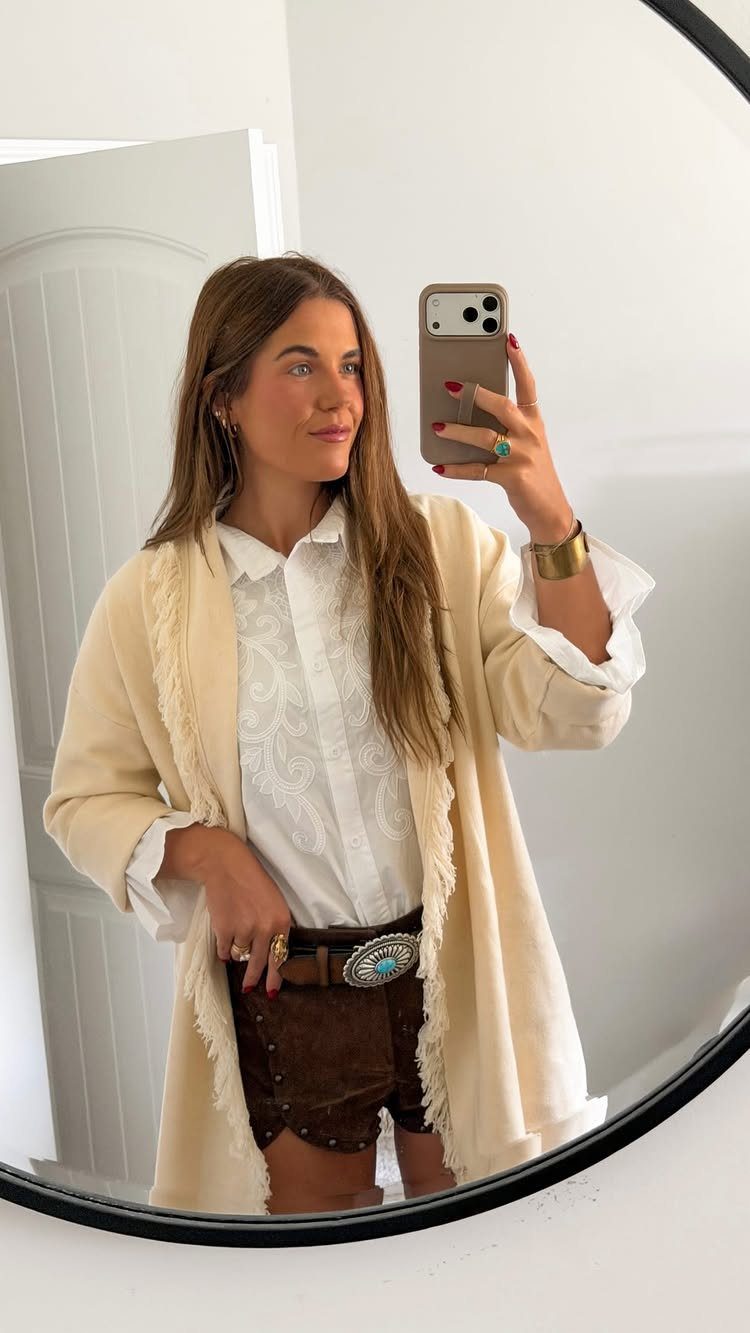
Fringe trim on a cream jacket catches light when you move, but the weight stays light enough to tie around your waist once the set starts.
I have learned to check the lining before I buy; unlined jackets fold small into a crossbody bag, lined ones do not.
The cream color here works because dirt shows less on woven texture than on flat leather, a small mercy in outdoor venues.
4. Cowgirl Boots
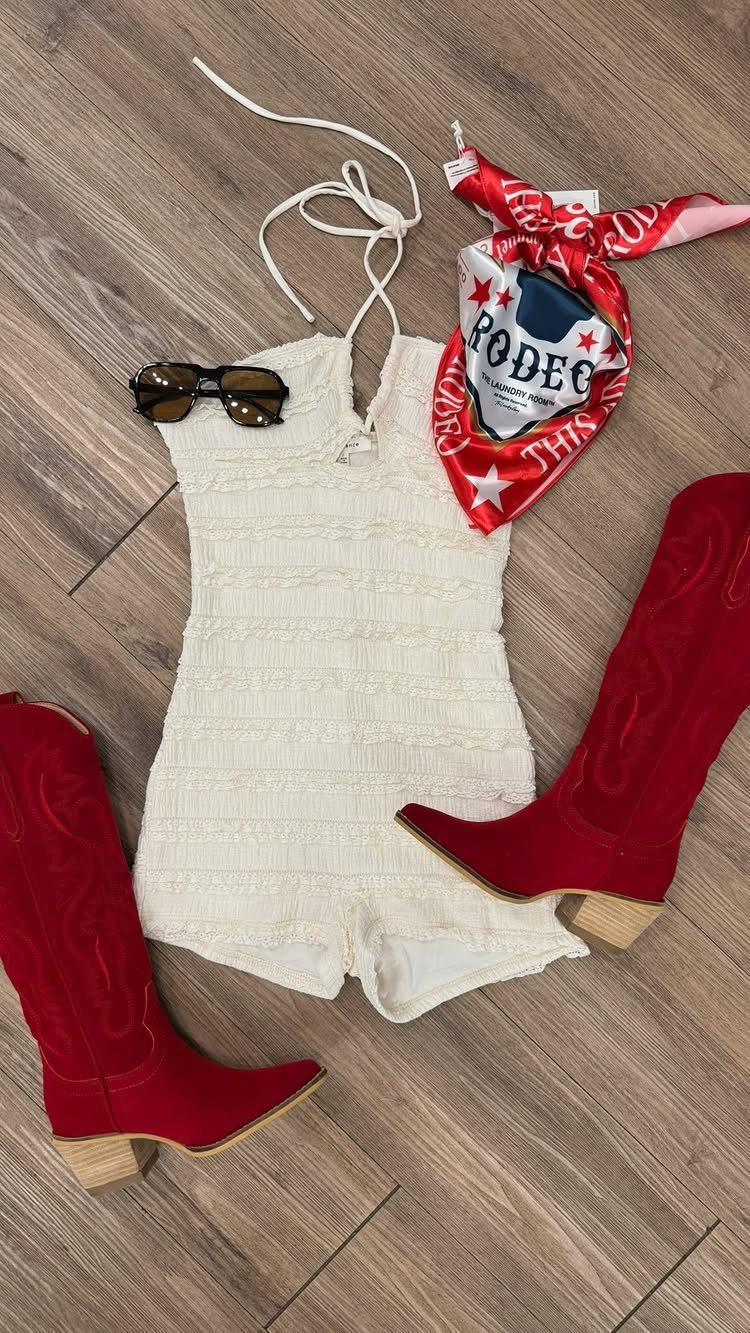
Red boots against a white romper: the flat lay makes the point that boots are not background, they are the outfit’s center.
Ariat’s studded booties work for evening shows when you want height without the wobble of heels, and the capri or dress pairing they suggest carries the same logic as the romper here.
Bold color or Southwestern pattern, the boot does the statement so the rest can stay plain. I break mine in with thick socks well before a show; blisters at hour two of standing are not a look.
5. Denim Jeans
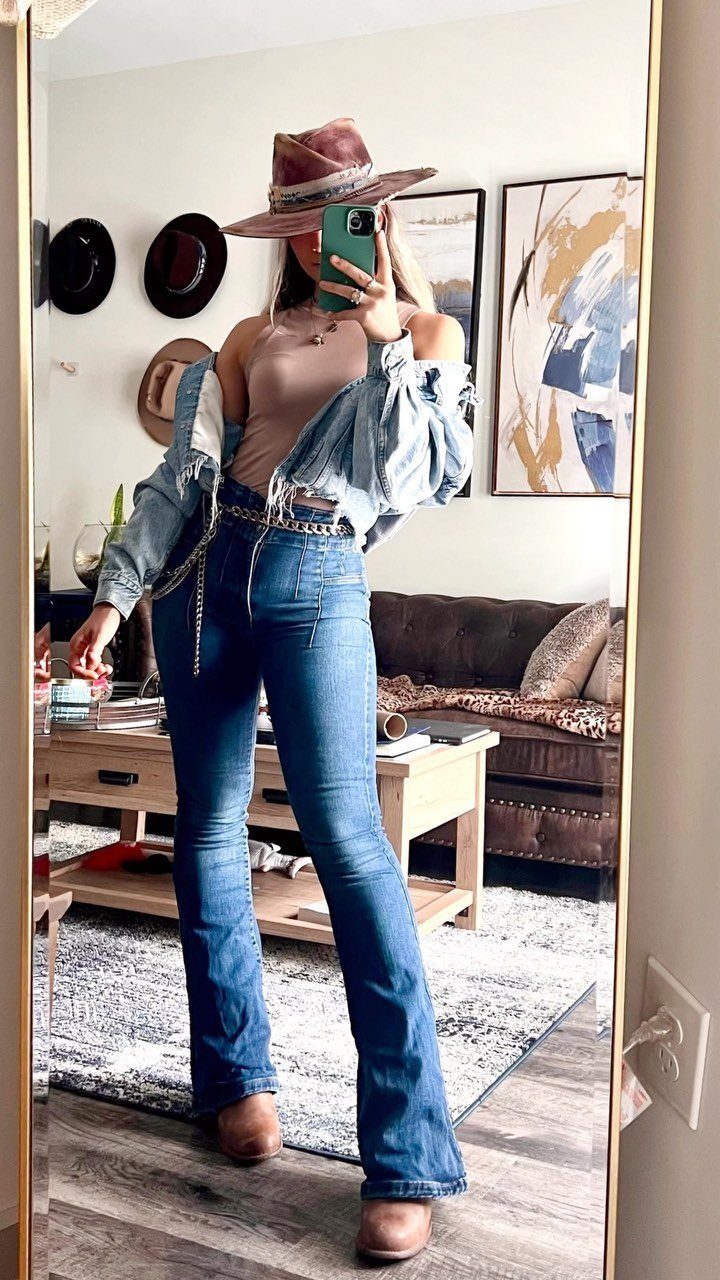
Flared jeans with a cropped denim jacket and a wide-brim hat: the silhouette is vintage but the wash reads current, which is how denim stays relevant. Skinny, boot-cut, or high-rise all work because the fabric itself is the constant.
The double-denim risk is managed by the gap between jacket and jean wash, a lighter top layer over darker legs.
I find high-rise most comfortable for long standing because the waistband stays put; boot-cut balances best with a heeled boot under the flare.
6. Denim Shorts
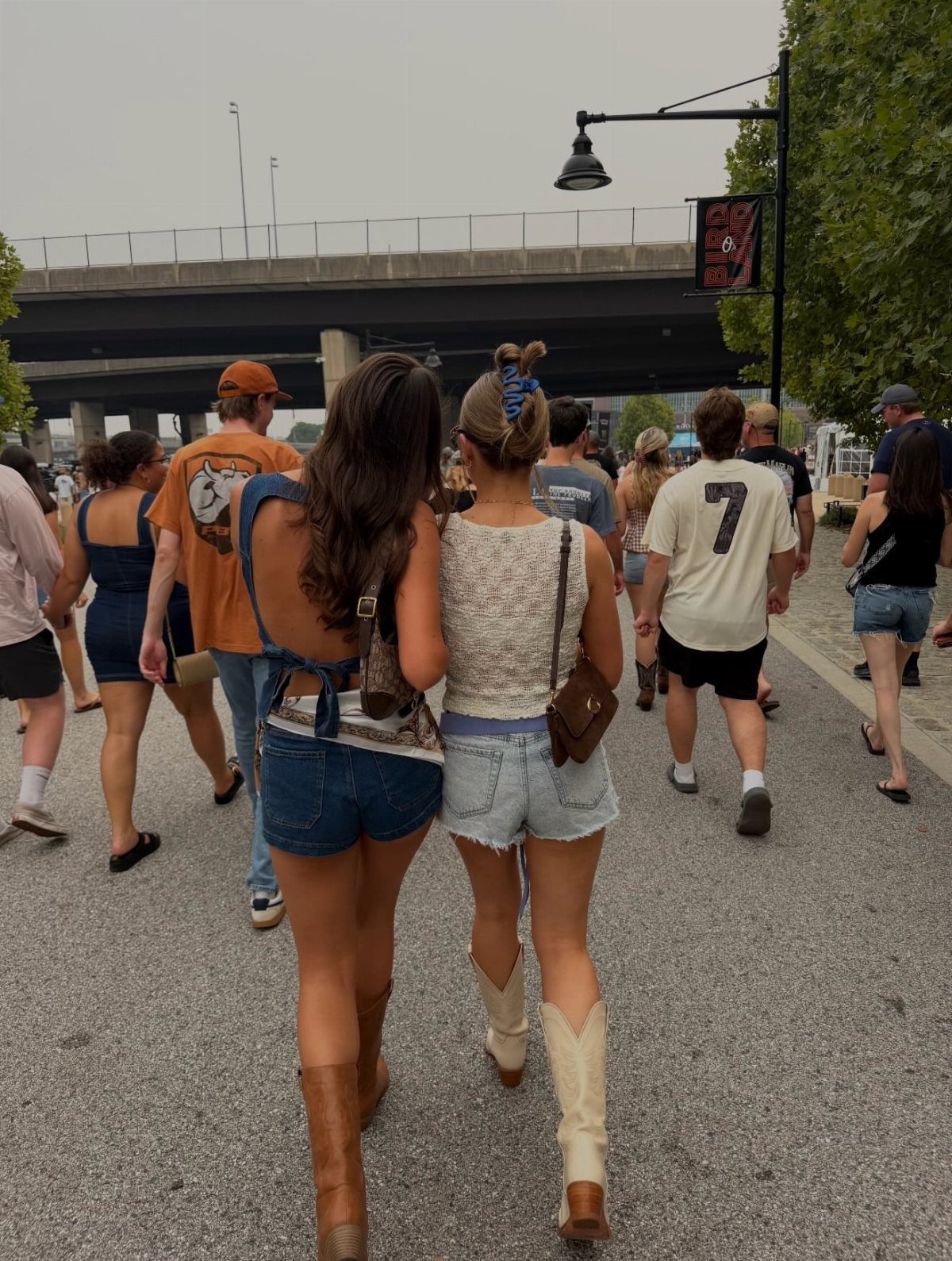
Two women walking into a crowd in shorts and boots, the backs of their legs visible: this is the summer version, heat management as style.
High-waisted denim shorts with a fitted tank or tee keep the look simple and let you move, which matters more than any trend when you’re on your feet for hours.
Boots traditionally go with pants, but outdoor summer shows changed that rule.
I would pack a light long-sleeve to tie at the waist for after sunset, when asphalt venues cool fast. The shorts keep you moving; the boots keep you country.
7. Rompers and Jumpsuits with Boots
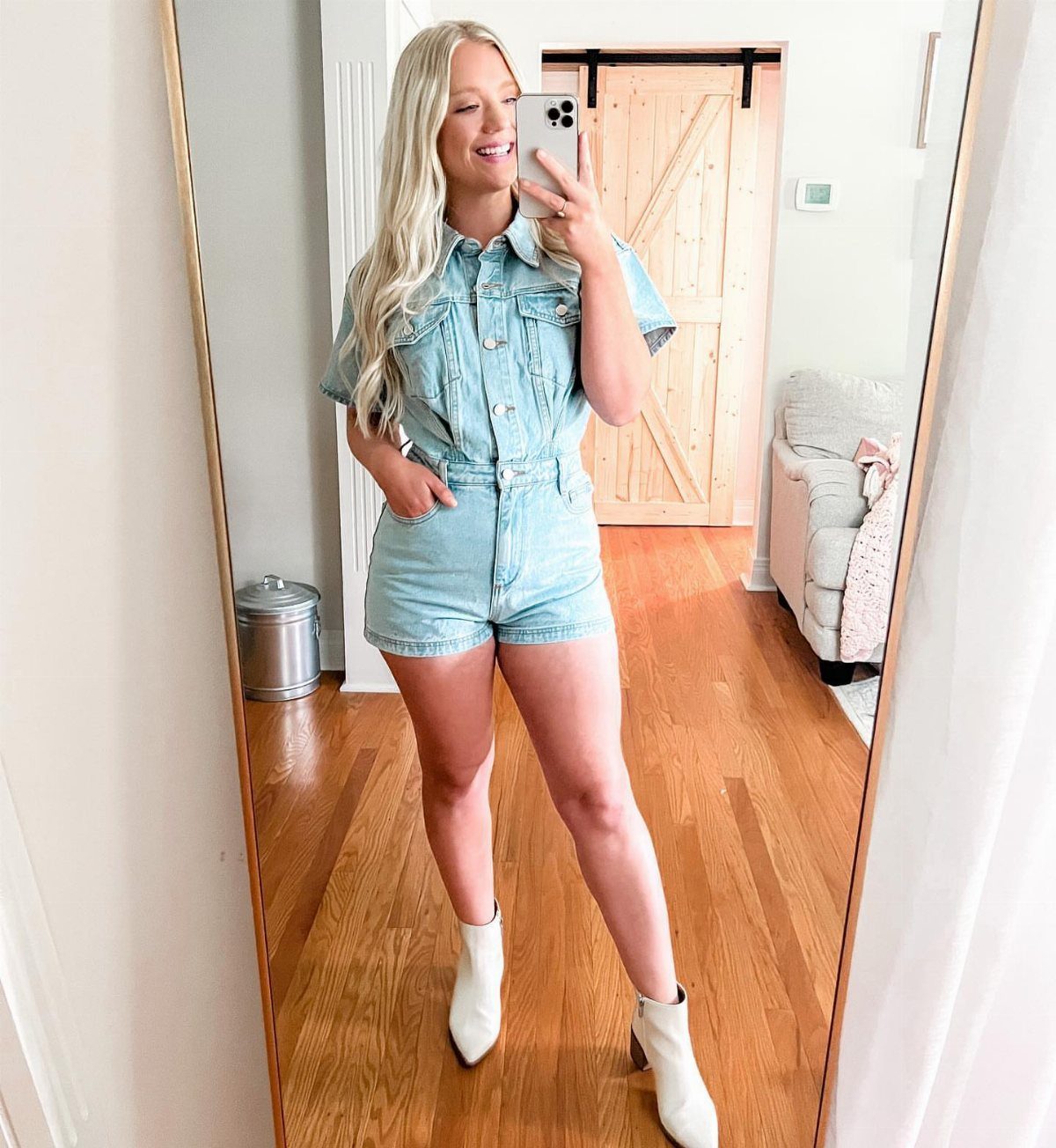
A denim romper saves the decision of what top goes with what bottom, which matters when you are dressing for a show and want your mind on the set list.
The light wash reads country without needing a costume, and the short sleeves handle heat in a packed crowd.
White ankle boots instead of traditional cowgirl styles shift the look toward city, but a wide-brim hat pulls it back.
I would add the hat and maybe a concho belt; without them, the outfit drifts toward generic summer. The romper length matters too: too short and sitting on bleachers gets awkward, too long and the line fights the boots.
8. Flowy Maxi Dress with Western Hat
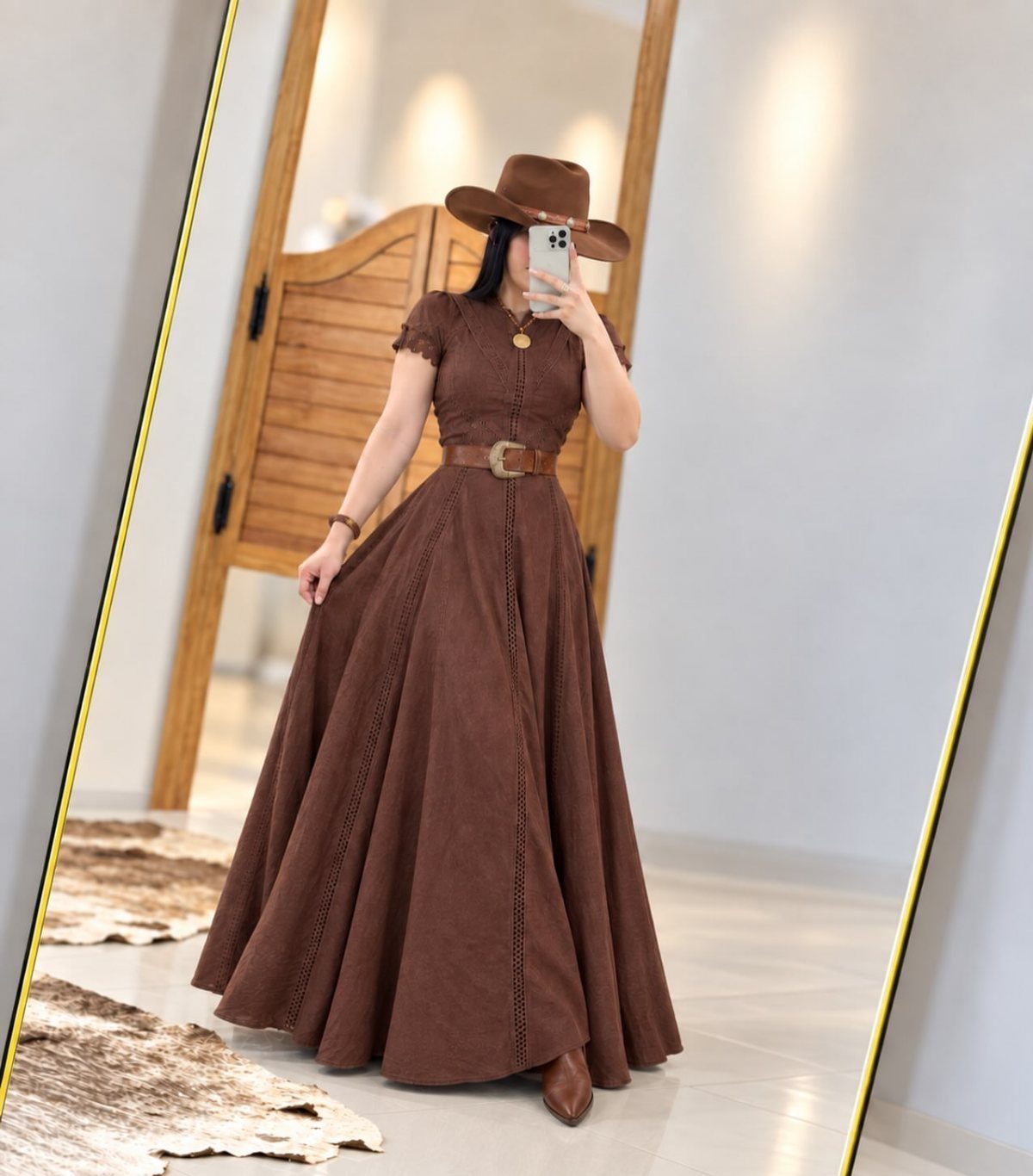
A brown maxi dress with a matching hat is the full silhouette in one gesture, no layering required.
The belt breaks the column so the shape does not overwhelm a smaller frame, and the boots grounding the hem keep it from reading as beachwear.
The fabric weight is the decision here: too light and evening wind turns it transparent, too heavy and you are carrying the skirt through August heat.
I would check the lining before buying, same as with jackets. A dress this long needs heeled boots or you are hemming it with scissors the morning of the show.
9. Suede Fringe Jacket with White Pants
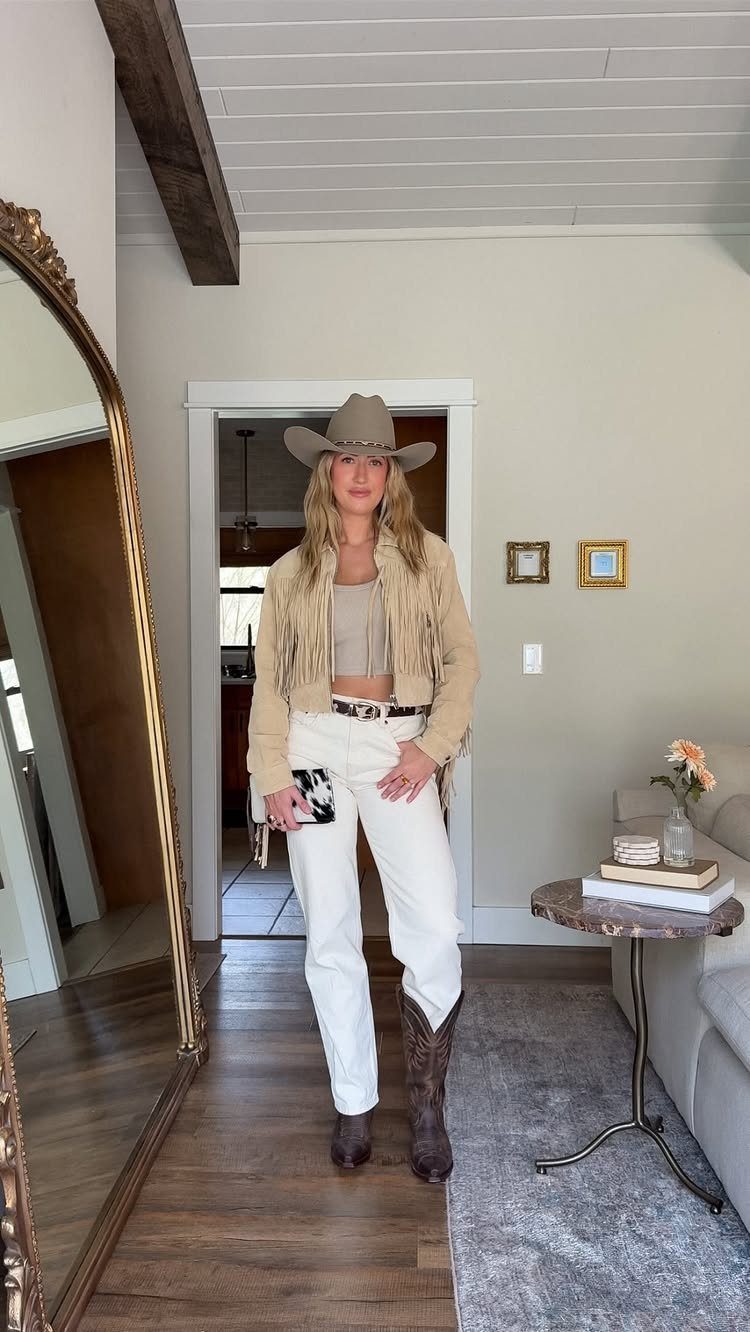
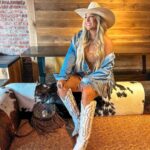
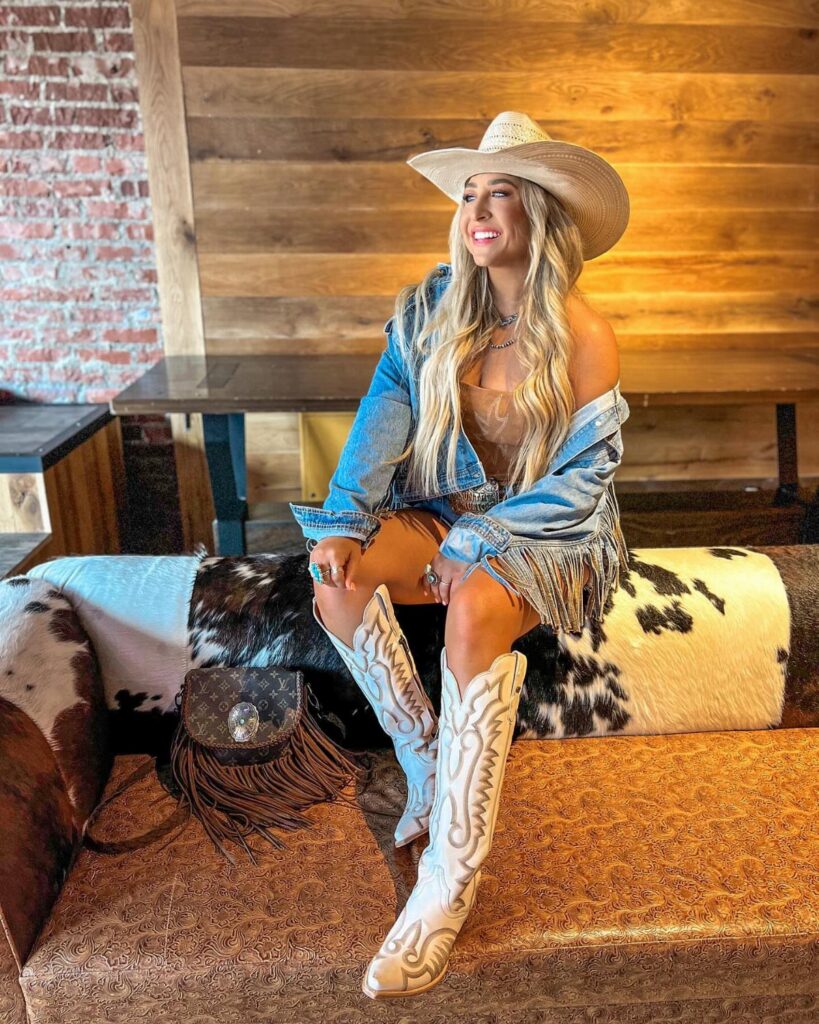
Tan suede fringe against white pants is high contrast that photographs well, the jacket doing all the movement when you walk. The crop top keeps the proportion from going bulky; without that visible waist, fringe on fringe collapses into shapelessness.
The clutch is real cowhide, which means it is stiff and holds little. I would swap it for a crossbody before a show, hands free for drinks and phone.
White pants at an outdoor venue are a risk I have taken and regretted; grass stains and dust do not brush off. Save this pairing for concrete floors or accept the dry-cleaning bill.
10. Turquoise Jewelry and Decorative Belts
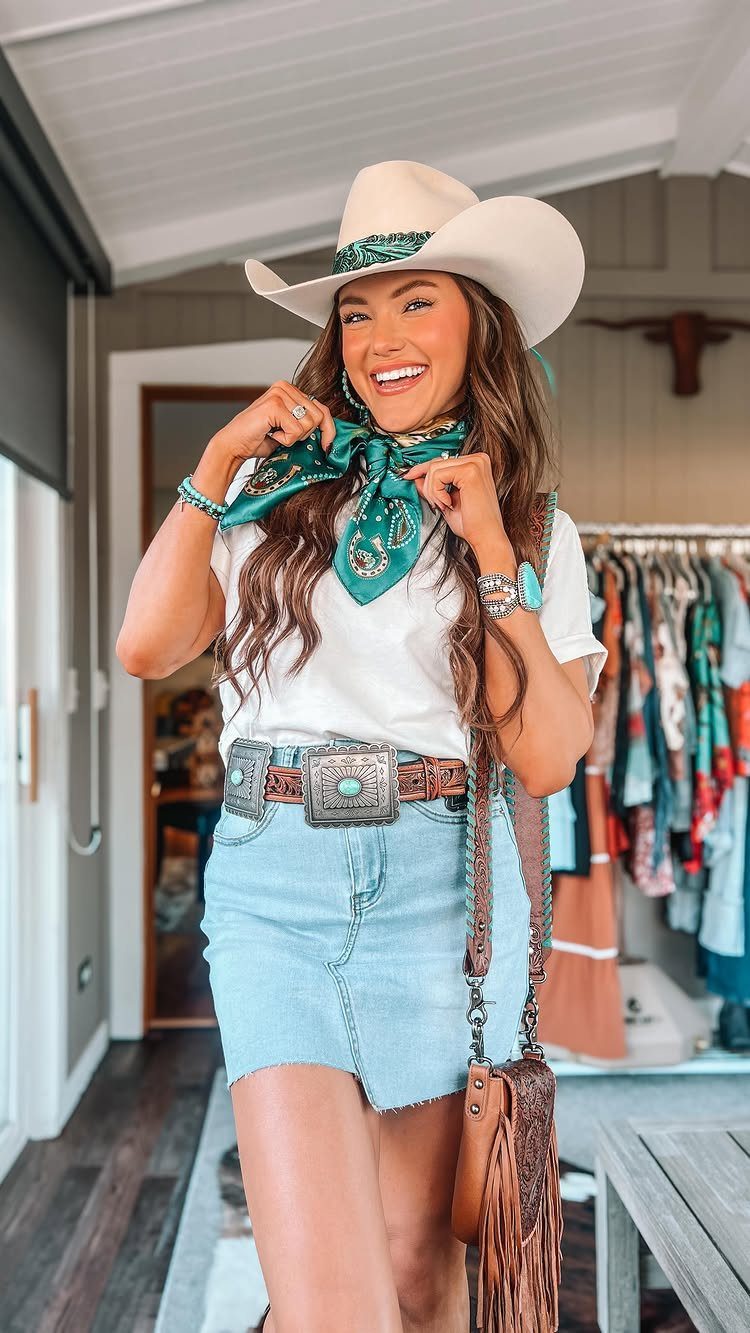
A neck scarf and turquoise against white is how you add color without committing to a full pattern.
The ornate belt buckle draws the eye to the waist, which works especially well with a plain tee and skirt that would otherwise read as basic.
Turquoise varies enormously in saturation; the greener stones here look different from the sky-blue version most people picture.
Match your other silver to the buckle’s tone, warm or cool, or the metals clash. I would keep the hat in the same family as the belt, white felt or tan straw, rather than introducing a third color story.
Consider the Venue
Indoor shows heat up fast once the crowd fills in, so I plan lighter layers than I would for an outdoor field.
I have worn long sleeves to an arena show and spent the set holding my jacket, so now I check the venue type before I decide on layers.
Outdoor amphitheaters cool fast after sunset, and the swing from afternoon parking lot to last song can mean sleeves and long pants by the end.
A jacket that ties at the waist or fits in a bag solves this without the coat-check line.
Standing room means your feet take the punishment.
The broad heel on western boots spreads weight better than a stiletto, which matters when you are standing on asphalt or concrete the whole night. Even seated shows involve lines; comfortable boots handle both.
Focus on Comfort
You will stand, walk, and probably dance. The outfit has to move with you, not against you.
High-rise denim stays put through all of it; a waistband that slides or gaps is a distraction in a crowd.
Rompers solve the top-and-bottom decision, but the length has to work for bleachers. I check this by sitting in the fitting room.
Light fabrics for summer outdoor shows need enough weight that wind does not turn them transparent.
Mix and Match Styles
The list entries already cover how each piece mixes. What they share is a rule: one element carries the statement, the rest stay plain.
A graphic tee with a turquoise belt and brown hat is casual pieces read as intentional because the tones coordinate. Neither direction wins; the tension is the point.
Double denim works when the washes differ enough to read as layers, not a mistake. In each case, the combination only holds because one piece is doing the work of contrast.
Your personal style is which piece you pick to stand out. The boots, the belt, the jacket: choose one, let the others support it.
Accessorize Wisely
A concho belt does the same work as ornate turquoise: it centers the outfit at the waist. More and you are wearing a costume.
Crossbody bags beat clutches in a crowd. Hands free for drinks, phone, and the rail.
Fringe on a jacket moves when you walk, which is the point.
In a packed space, that movement brushes people. I keep fringe above the waist or accept that it will catch on bag straps and chair backs.